Loading video…


 11 Concepts
 5.6K views

Video Summary: The Delta to Delta Circuit Explained
Did you know that the three-phase power system delivering electricity to your local shopping mall uses the same delta to y circuit principles found in electrical engineering textbooks? The delta to y circuit conversion is a fundamental technique that simplifies complex three-phase power analysis, transforming delta-connected sources and loads into their Y-equivalents for easier calculation. This method is essential for analyzing power distribution systems across American cities, from residential neighborhoods to industrial complexes. Watch the full video on JoVE Coach to master this concept with expert-led visuals and step-by-step explanations.
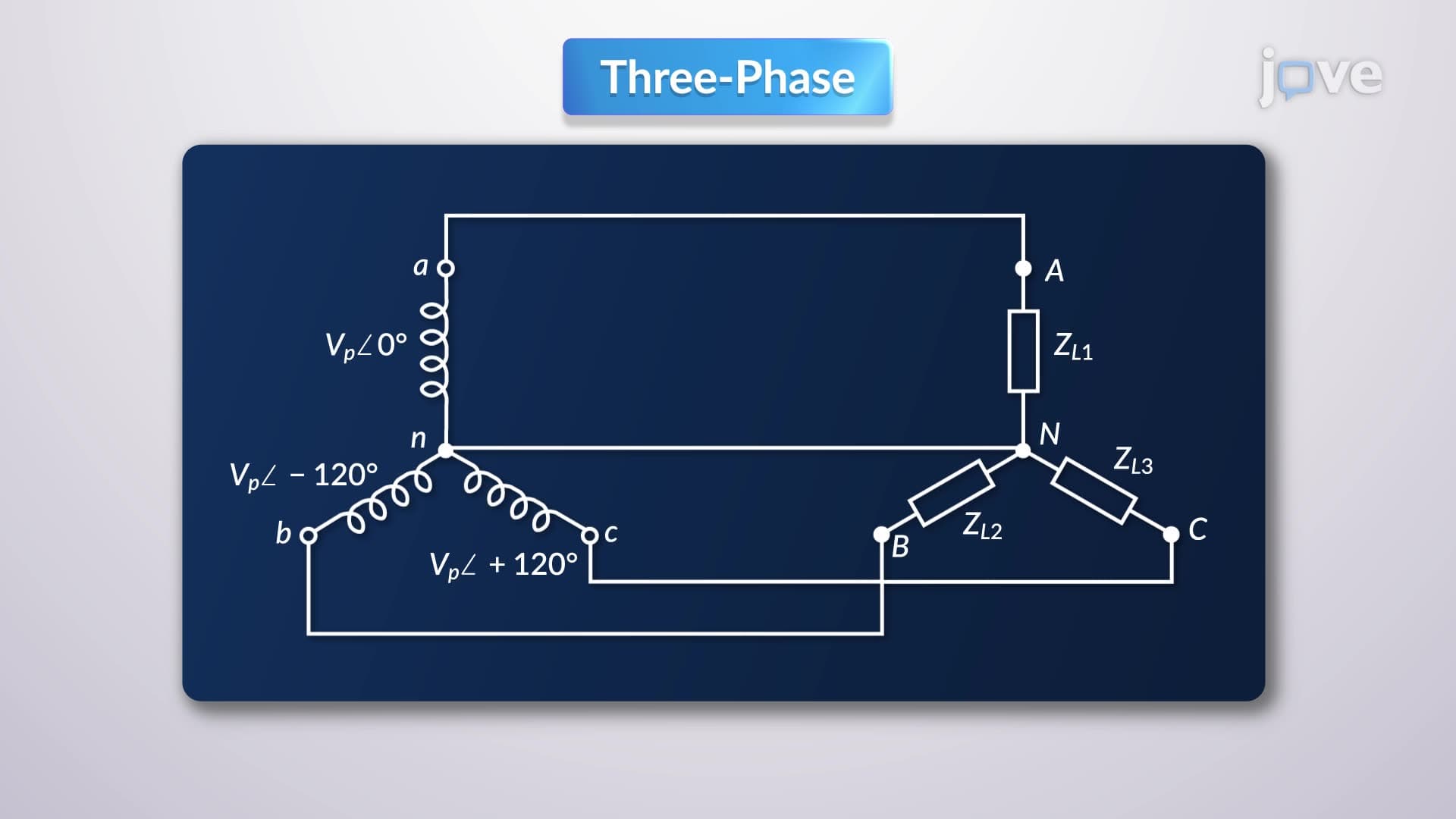
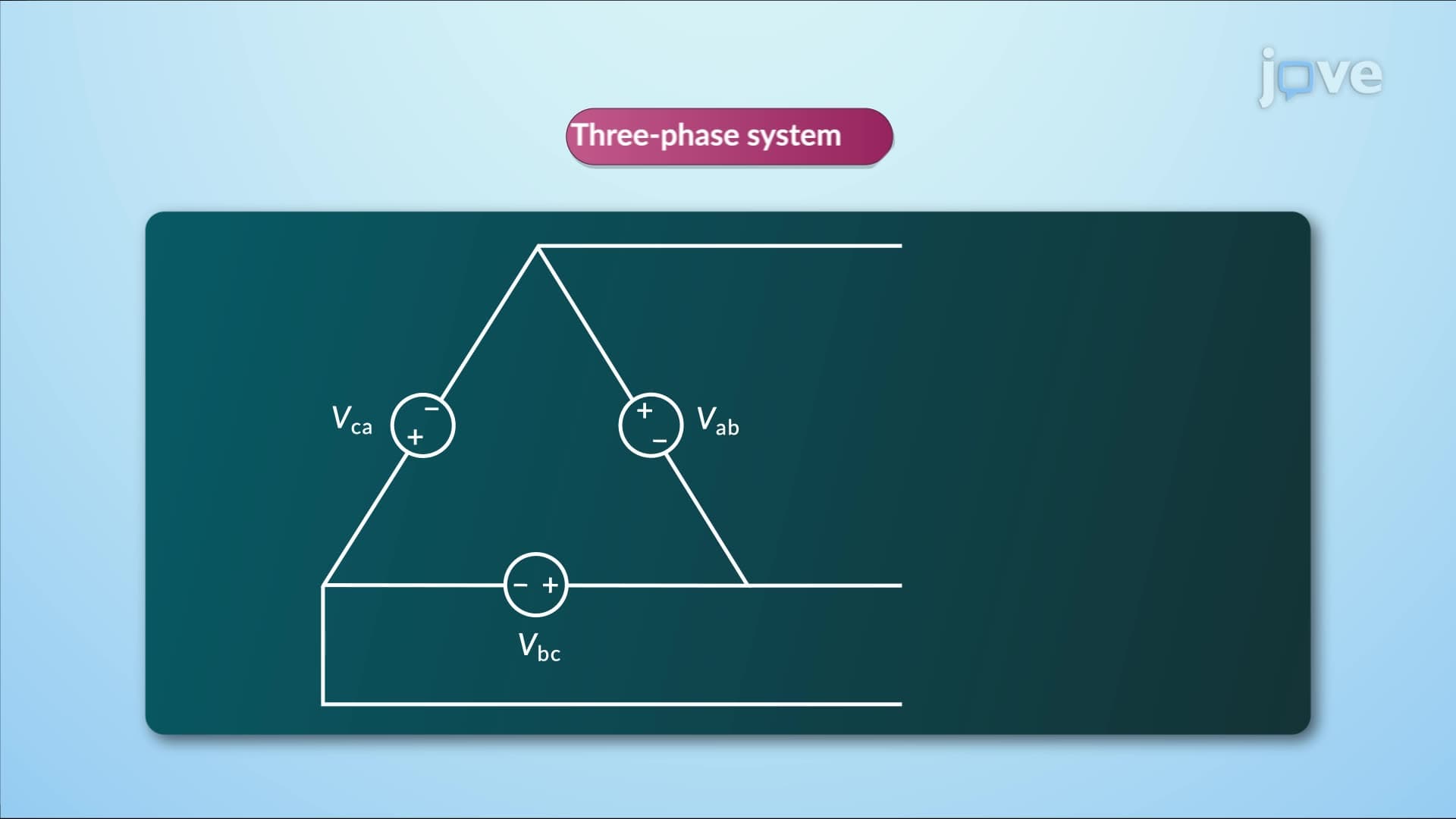
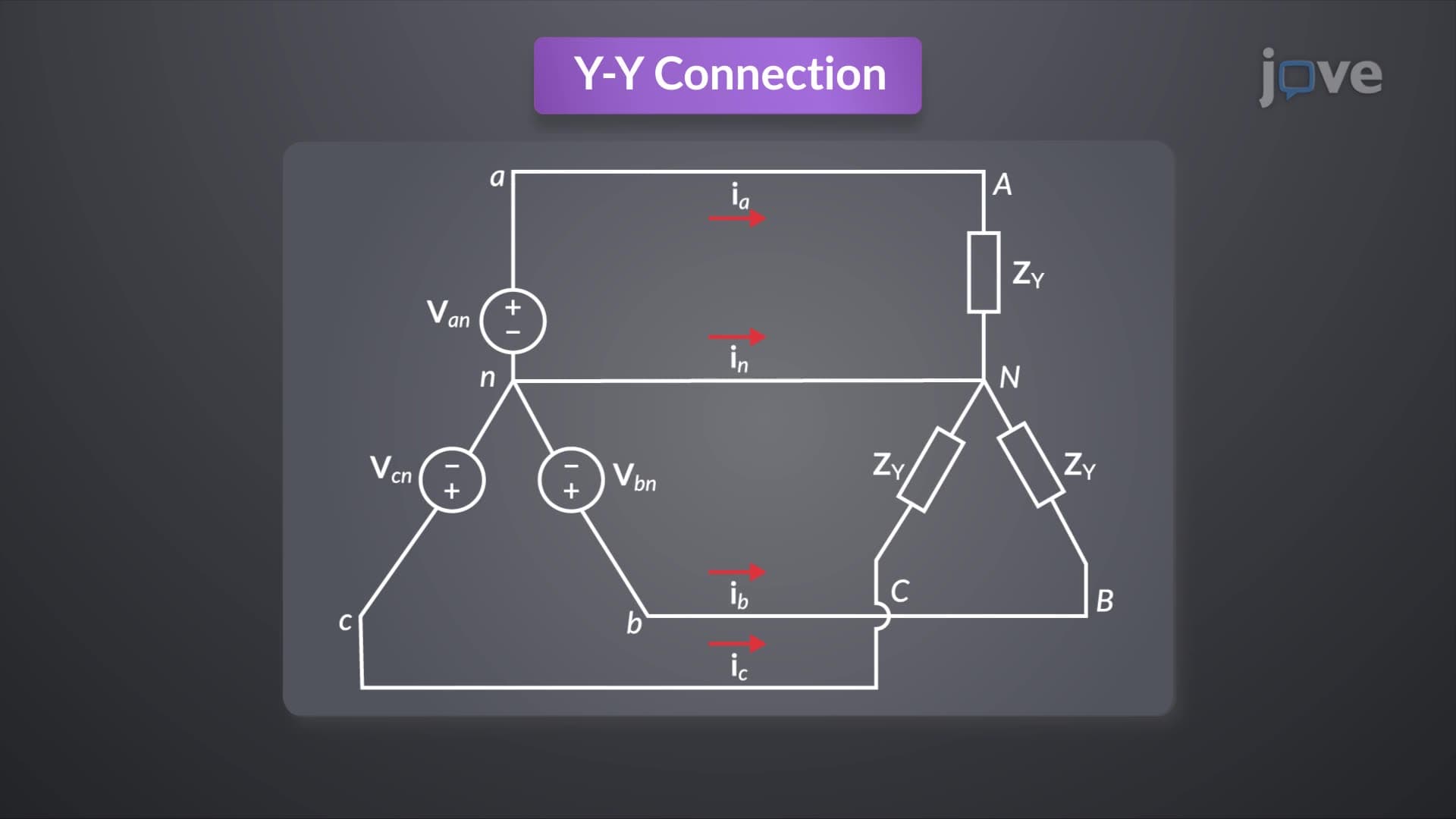
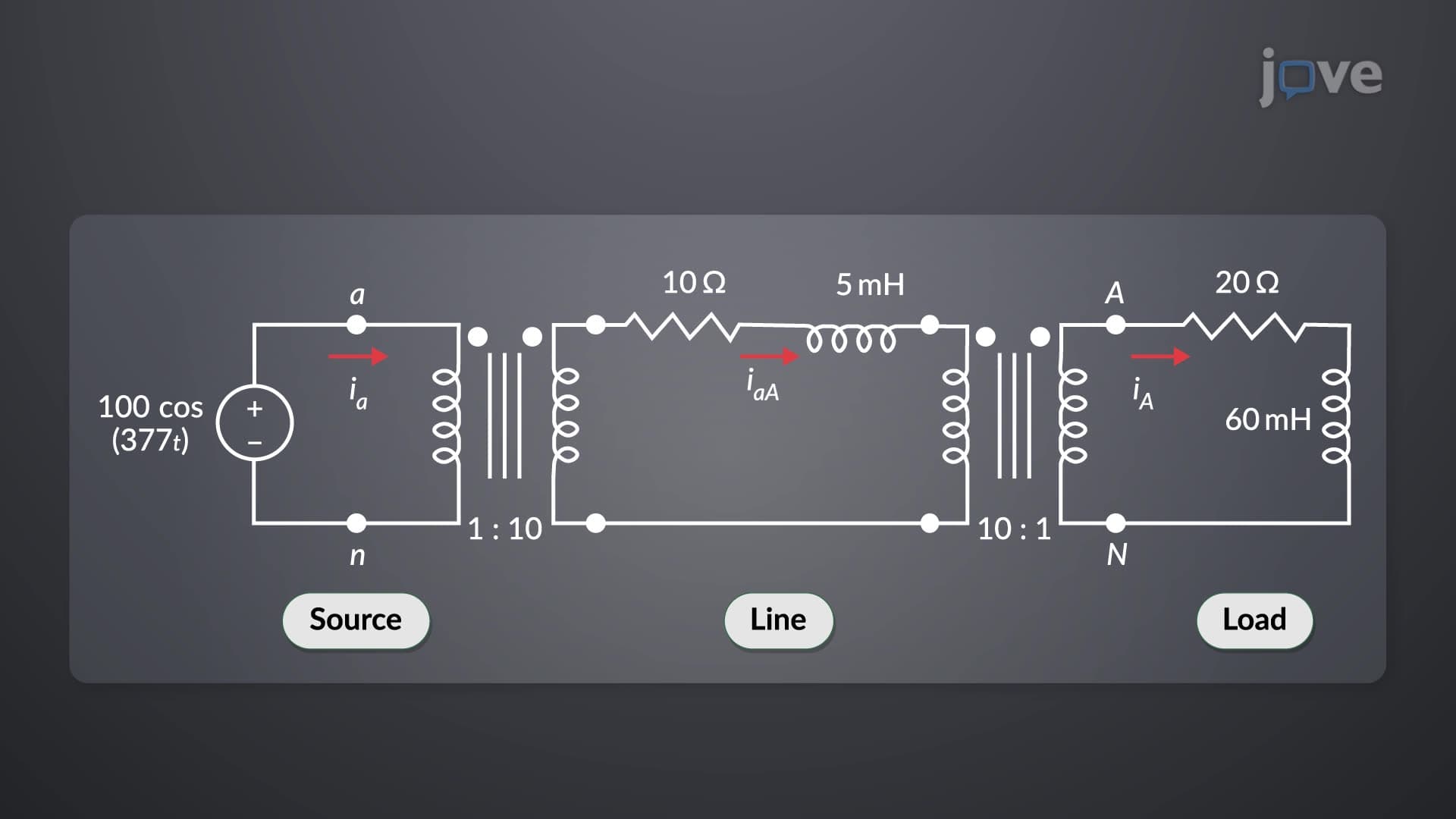
The delta to delta circuit represents one of the most important configurations in three-phase power systems, forming the backbone of electrical power distribution across the United States. In this arrangement, both the power source and load are connected in delta configurations, creating a closed-loop system where each phase voltage equals the corresponding line voltage. This differs significantly from Y-connected systems, where line and phase quantities maintain distinct relationships.
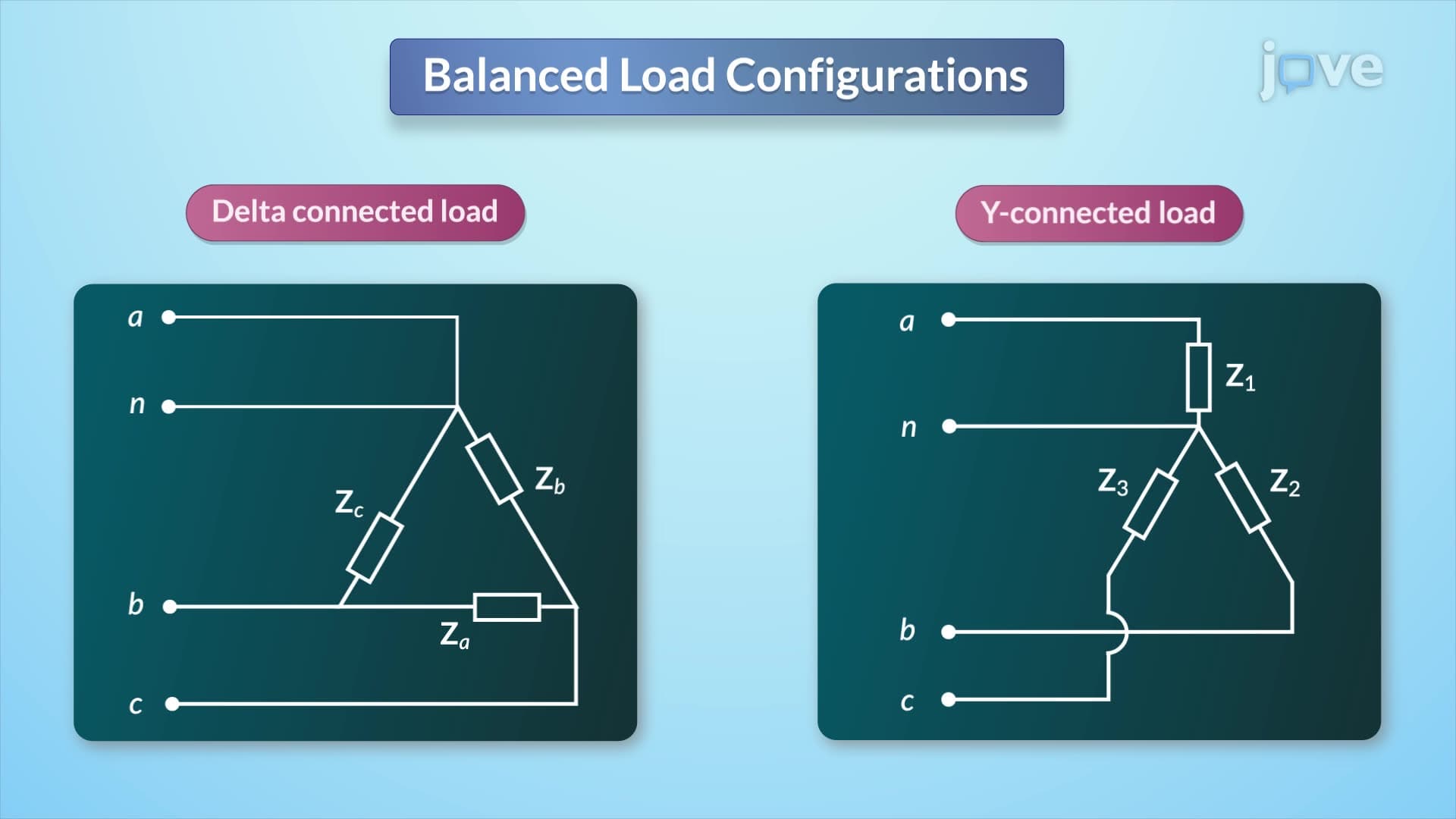
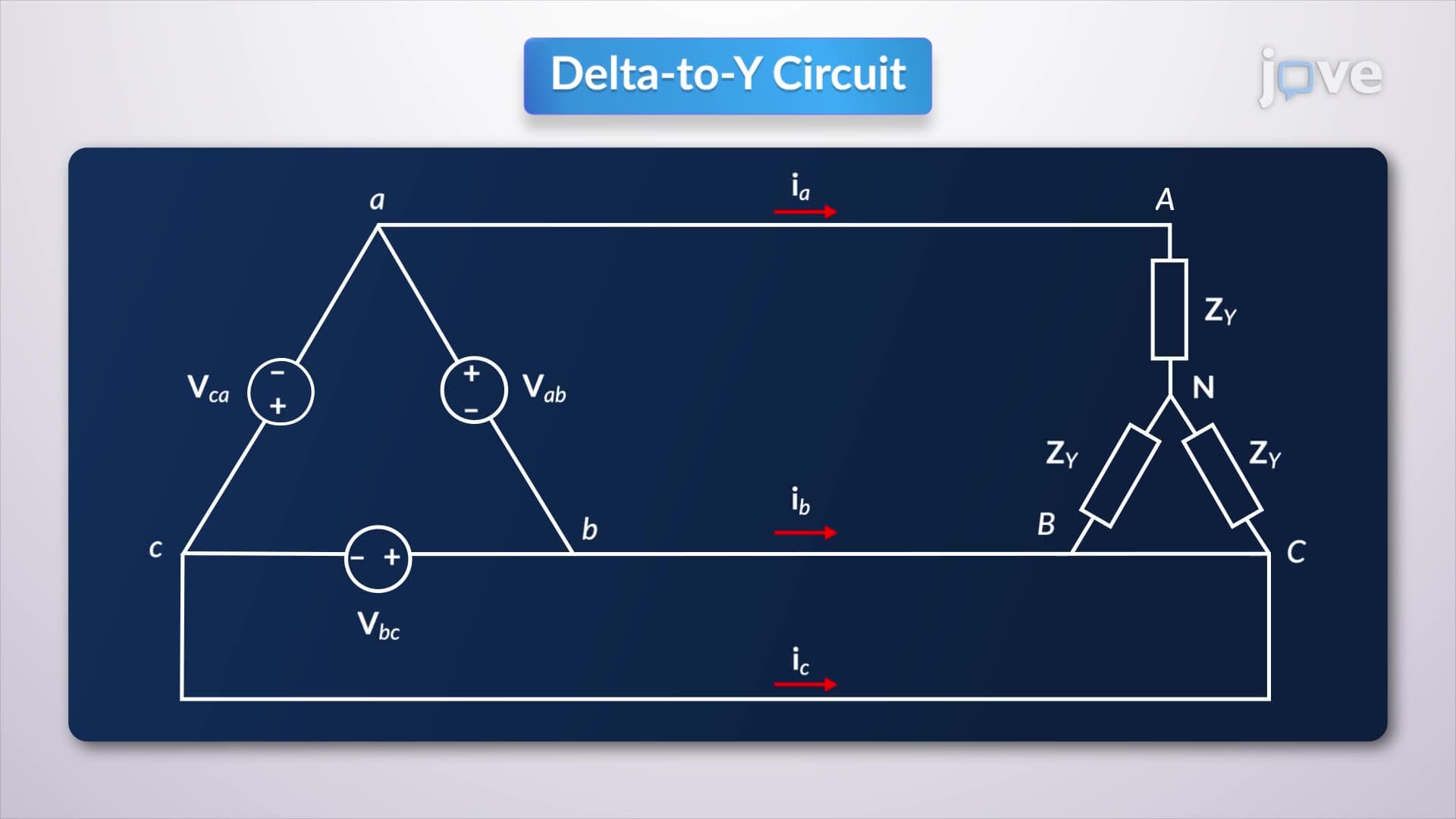
When analyzing complex delta circuits, engineers often employ delta-to-Y conversion techniques to simplify calculations. The conversion process involves two key transformations: voltage scaling and impedance modification. For Y-connected equivalents, each phase voltage equals the corresponding delta line voltage divided by the square root of three, with a 30-degree phase shift applied. Similarly, the equivalent Y-connected load impedance equals the original delta impedance divided by three, maintaining the same power consumption while simplifying circuit analysis.
The relationship between phase and line currents in delta systems follows predictable patterns governed by Kirchhoff's Current Law. At each node of the delta-connected load, the algebraic sum of currents equals zero, allowing engineers to determine line currents from known phase currents. Each line current lags its corresponding phase current by 30 degrees, with a magnitude equal to the square root of three times the phase current magnitude. This relationship proves essential for power system design and troubleshooting applications.
Delta-to-Y circuit analysis appears frequently on Advanced Placement Physics exams and college-level electrical engineering courses across American universities like MIT, Stanford, and Georgia Tech. Students encounter these concepts in power systems analysis, where three-phase motors, transformers, and transmission lines utilize delta configurations. Industrial applications include manufacturing plants, where three-phase delta systems power heavy machinery, and commercial buildings, where balanced loads ensure efficient power distribution. Understanding these principles prepares students for professional engineering licensure exams and careers in power system design.
Related Micro-courses