Loading subject page…


13,348 views

Video Summary: What are Secondary Data Collection Methods
When Amazon decides to enter a new market, they don't start from scratch-they leverage secondary data collection methods to analyze competitor pricing, consumer trends, and market dynamics using existing industry reports and government databases. These proven research techniques help business leaders make strategic decisions by utilizing internal company data like sales reports and customer databases, plus external sources including market research and industry publications. Understanding secondary data collection methods definition explained enables professionals to quickly identify opportunities while avoiding costly primary research. Watch the full video on JoVE Coach to master this concept with expert-led visuals and step-by-step explanations.
When Starbucks expanded internationally, their leadership team didn't conduct expensive field research in every potential market. Instead, they mastered secondary data collection methods-the strategic use of existing information originally gathered for other purposes. This approach enabled rapid market assessment while preserving capital for actual expansion efforts.
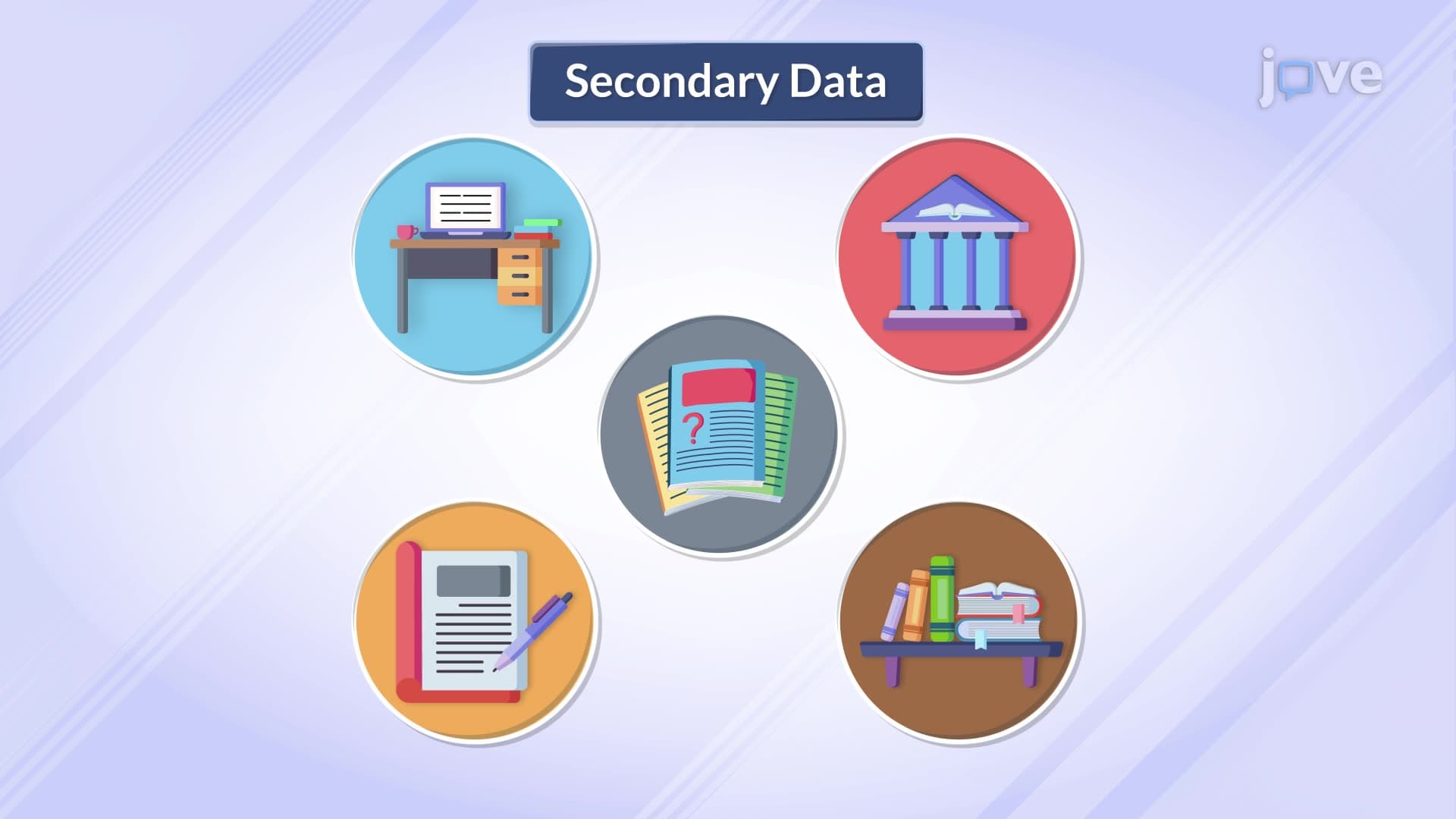
Internal secondary data represents your organization's most valuable and accessible information repository. Sales reports reveal customer purchasing patterns and seasonal trends, while customer databases provide insights into demographic shifts and loyalty behaviors. Financial statements offer performance benchmarks and operational efficiency metrics. Companies like General Electric have built competitive advantages by systematically analyzing their internal data to identify cross-selling opportunities and operational inefficiencies before competitors recognize these patterns.
The strategic value lies in immediate accessibility and perfect alignment with your business model. Unlike external sources, internal data reflects your specific customer base, operational constraints, and market positioning. However, smart executives recognize that internal data alone creates dangerous blind spots about competitive threats and market evolution.
External secondary data collection methods provide the market context that internal data cannot deliver. Industry reports from firms like McKinsey & Company or Deloitte offer benchmarking opportunities and trend analysis. Government publications, particularly from the Bureau of Labor Statistics and Census Bureau, provide demographic and economic indicators crucial for strategic planning.
Academic studies and market research reports help validate strategic assumptions with independent analysis. When Netflix transitioned from DVD-by-mail to streaming, they relied heavily on telecommunications infrastructure reports, broadband adoption studies, and entertainment consumption research to time their strategic pivot perfectly.
Successful secondary data collection methods require systematic evaluation of source credibility, data recency, and methodological rigor. The most common executive mistake involves assuming all published data maintains equal reliability. Smart professionals develop evaluation frameworks that assess original research purposes, sample sizes, and potential conflicts of interest.
Companies like Apple have built competitive intelligence teams specifically to synthesize secondary data sources into actionable strategic insights, enabling faster decision-making than competitors who rely solely on expensive primary research.
Related Micro-courses