Loading video…


 16 Concepts
 22.8K views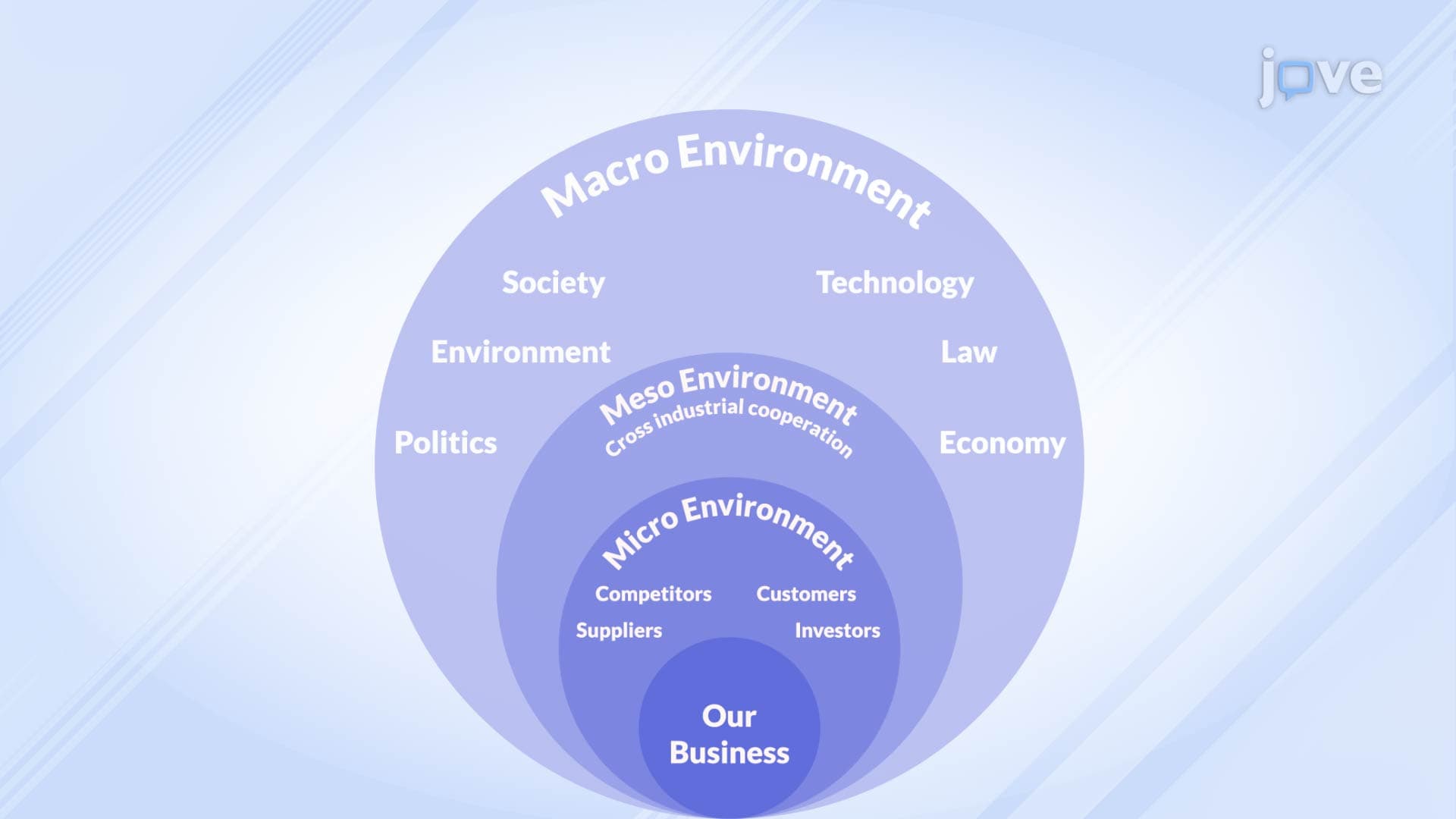

Video Summary: What Is Meso Environment
Market disruption often starts at the industry level-consider how Tesla transformed automotive meso environment dynamics, forcing Ford, GM, and traditional automakers to pivot entire strategies around electric vehicle regulations and consumer preferences. The meso environment represents the industry-specific forces that directly shape competitive positioning and operational decisions, from trade associations to media partnerships. Harley-Davidson's strategic navigation of motorcycle industry trends, regulatory shifts, and enthusiast communities demonstrates how Fortune 500 companies leverage meso environment analysis for sustainable competitive advantage. Watch the full video on JoVE Coach to master this concept with expert-led visuals and step-by-step explanations.
When Netflix disrupted the entertainment industry, traditional media companies like Disney and Warner Bros faced a classic meso environment challenge: how to navigate industry-wide digital transformation while managing existing stakeholder relationships, regulatory frameworks, and competitive dynamics. The meso environment encompasses industry-specific factors that operate between broad economic conditions (macro) and internal company operations (micro), creating a critical strategic layer that directly influences business performance and competitive positioning.
Smart executives recognize that meso environment analysis begins with systematic evaluation of industry trends and regulatory shifts. In the automotive sector, Ford's strategic pivot toward electric vehicles demonstrates how companies must monitor evolving emissions standards, safety regulations, and consumer preference shifts within their specific industry context. These regulatory changes don't just affect compliance costs-they reshape entire value propositions and require fundamental business model adaptations.
Trade associations like the American Bankers Association or National Association of Manufacturers serve as powerful meso environment forces, influencing policy development and industry standards that directly impact member companies' operational strategies and competitive dynamics.
The meso environment extends beyond regulations to encompass customer communities and industry stakeholders that shape brand perception and market dynamics. Harley-Davidson's relationship with HOG (Harley Owners Group) demonstrates how customer communities become strategic assets, influencing product development decisions, marketing strategies, and brand positioning within the motorcycle industry ecosystem.
Technology companies like Apple leverage developer communities and media partnerships as meso environment advantages, creating industry-specific competitive moats that extend far beyond individual product features or pricing strategies.
Forward-thinking organizations treat partnership networks and supplier relationships as critical meso environment components requiring active management and strategic alignment. Amazon's marketplace ecosystem illustrates how companies can reshape entire industry structures through strategic partnership frameworks that create competitive advantages while managing complex stakeholder relationships.
Effective meso environment navigation requires continuous competitive intelligence and stakeholder engagement strategies that align with industry-specific frameworks, enabling organizations to anticipate market shifts and capitalize on emerging opportunities while mitigating industry-specific risks.
Related Micro-courses