Loading video…


 16 Concepts
 22.8K views

Video Summary: What Is 5 Forces Model Concept
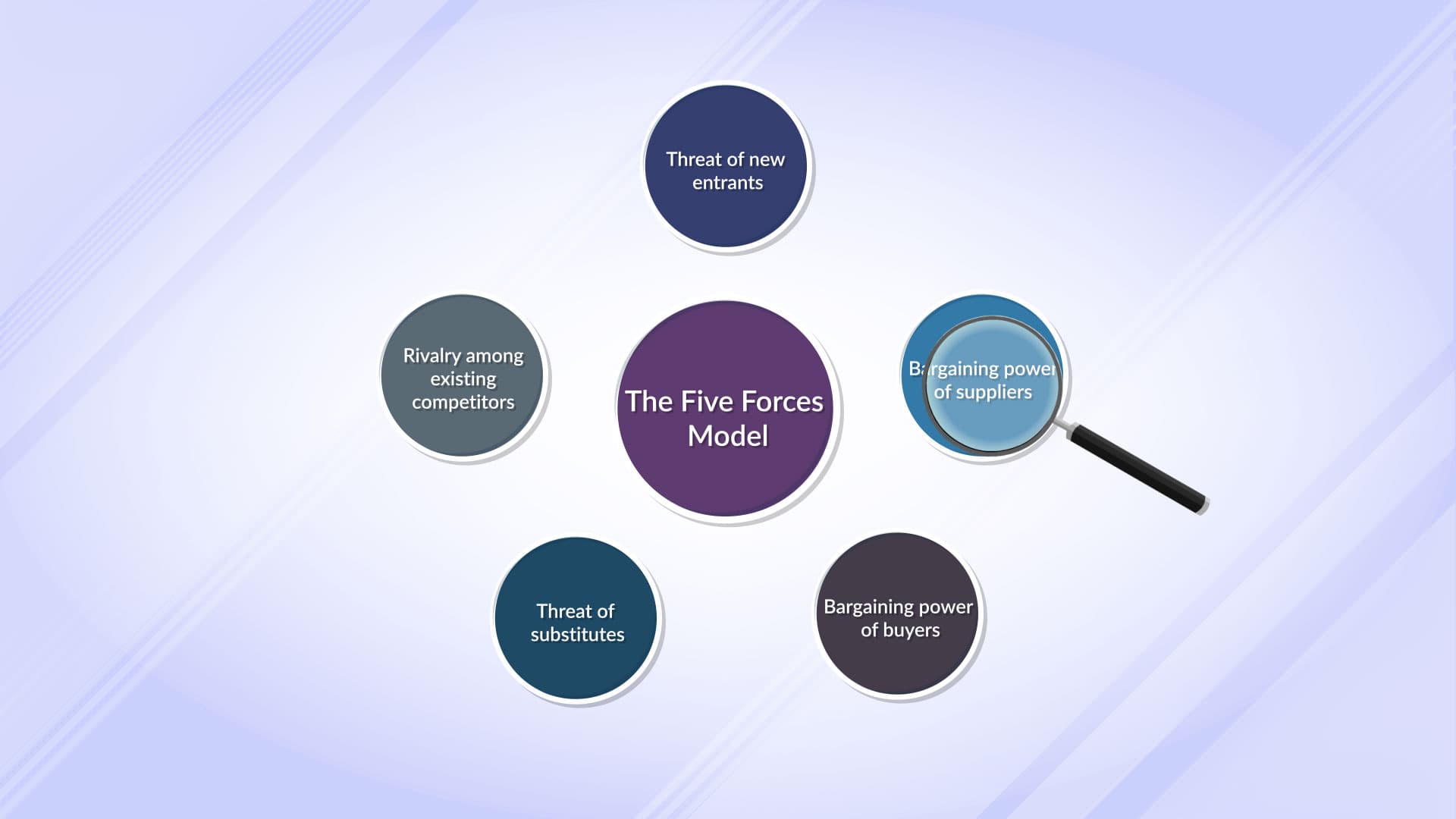
Market leaders like Amazon and Walmart didn't achieve dominance by accident-they systematically analyzed competitive forces that shape industry profitability. The 5 forces model concept provides a strategic framework for evaluating external threats that can erode your business margins and market position. This analytical tool examines supplier power, buyer influence, new market entrants, substitute products, and competitive rivalry to inform critical business decisions. Understanding these forces enables executives to identify vulnerabilities, strengthen competitive advantages, and develop sustainable profit strategies. Watch the full video on JoVE Coach to master this concept with expert-led visuals and step-by-step explanations.
When Netflix disrupted Blockbuster, it wasn't just about technology-it was a masterclass in understanding competitive forces. The 5 forces model concept, developed by Harvard Business School's Michael Porter, provides executives with a systematic approach to analyzing the external factors that determine industry profitability and competitive intensity.
Supplier power significantly impacts your bottom line through pricing leverage and supply chain control. Companies like Apple demonstrate masterful supplier management by diversifying their component sources and building long-term partnerships that reduce dependency risks. When suppliers are concentrated or offer unique resources, they can squeeze margins through higher prices or reduced service levels. Smart executives assess supplier switching costs, alternative sourcing options, and the criticality of supplied components to their value proposition.
Customer bargaining power directly affects pricing flexibility and profit margins. In the enterprise software market, large corporate buyers often negotiate significant discounts due to their purchasing volume and switching capabilities. Companies like Salesforce counter buyer power by creating switching costs through data integration and customization, making it expensive for customers to change providers. Understanding buyer concentration, price sensitivity, and switching costs helps executives develop pricing strategies that maintain profitability while satisfying customer demands.
The threat of new competitors entering your market depends on barriers to entry and expected retaliation. Capital requirements, regulatory compliance, and economies of scale create natural barriers that protect established players. Amazon's massive distribution network and technology infrastructure create formidable barriers for new e-commerce entrants. However, digital disruption has lowered barriers in many industries, forcing traditional companies to innovate or risk displacement.
Intense rivalry among existing competitors can trigger price wars that erode industry profitability. The airline industry exemplifies high rivalry with multiple competitors, standardized products, and high fixed costs leading to aggressive pricing. Similarly, substitute products can limit pricing power-streaming services like Netflix and Spotify displaced traditional media through superior value propositions. Successful executives monitor both direct competitors and potential substitutes that could fulfill customer needs differently.
Related Micro-courses