Loading subject page…


22,796 views


Video Summary: What Is Pestel Analysis
When Amazon shifted from physical retail to cloud computing dominance, strategic leaders used PESTEL analysis to navigate regulatory changes, economic pressures, and technological disruption across multiple markets. PESTEL analysis systematically evaluates Political, Economic, Social, Technological, Environmental, and Legal factors that shape business environments and competitive landscapes. This framework enables executives to anticipate market shifts, assess expansion opportunities, and mitigate external risks before they impact revenue streams. Watch the full video on JoVE Coach to master this concept with expert-led visuals and step-by-step explanations.
When Netflix pivoted from DVD-by-mail to streaming in 2007, the company's leadership team faced a complex web of external factors that would determine success or failure. Political considerations included international content licensing regulations, economic factors involved broadband infrastructure costs, social trends showed changing consumer entertainment preferences, technological advances enabled cloud-based delivery, environmental concerns pushed toward digital distribution, and legal frameworks around intellectual property required careful navigation.
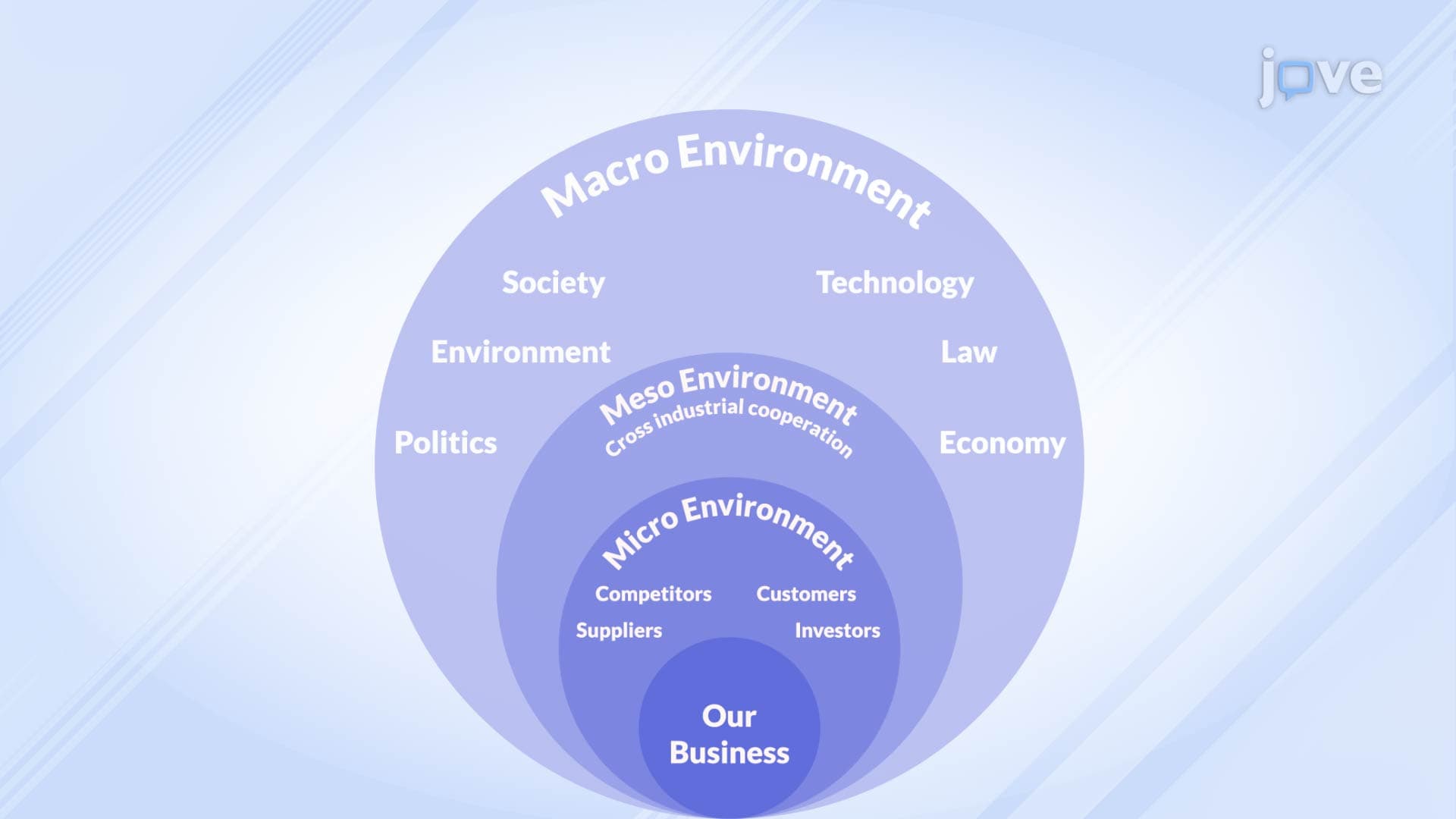
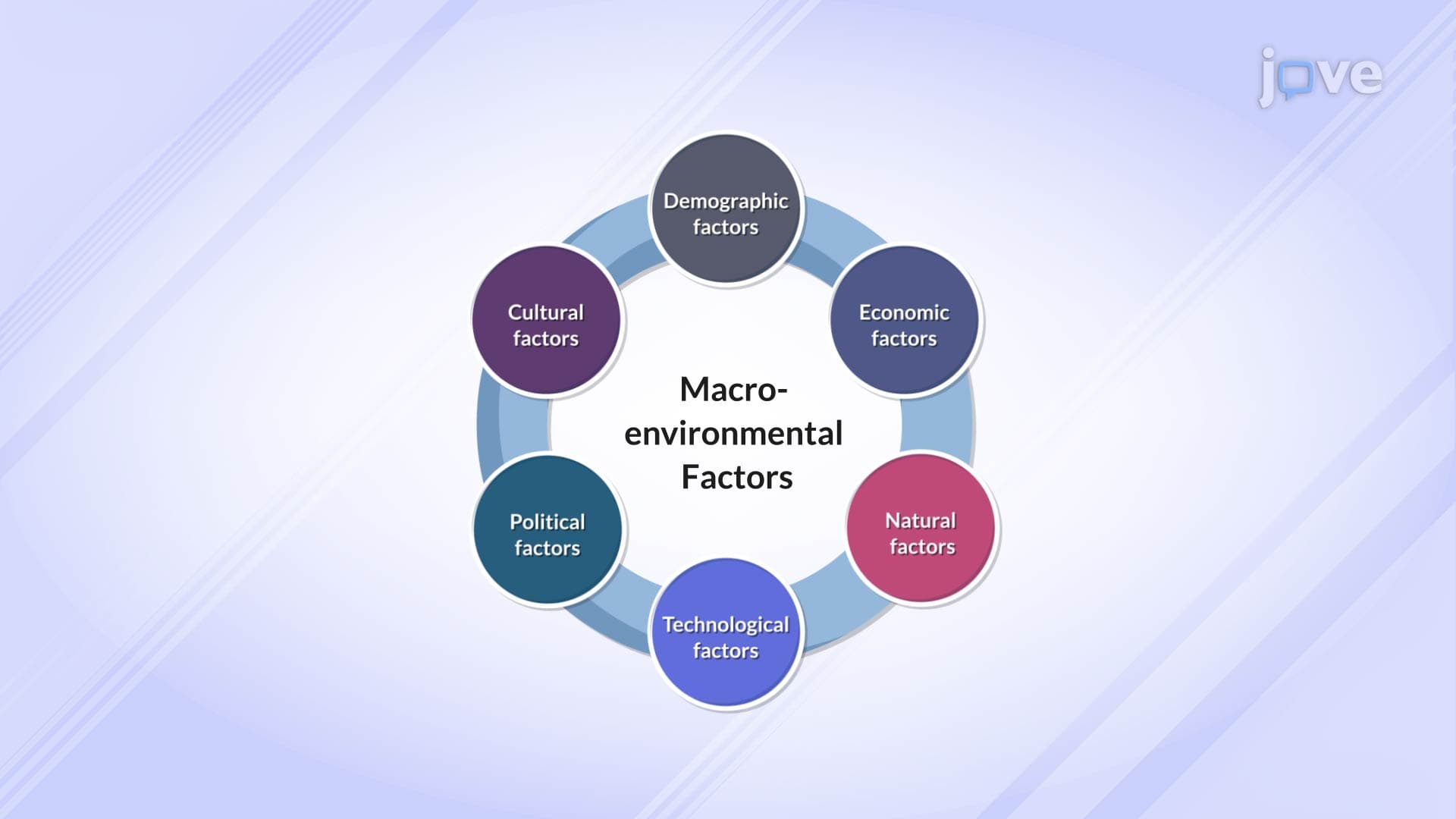
This scenario exemplifies why PESTEL analysis has become an essential strategic planning tool for C-suite executives, investment committees, and business development teams. The framework provides a systematic approach to scanning the macro-environment, enabling organizations to identify opportunities and threats that traditional competitive analysis might miss.
Political factors encompass government policies, regulatory changes, political stability, and public sector initiatives that directly impact business operations. For financial services firms like JPMorgan Chase, political factors include banking regulations, Federal Reserve policies, and international trade agreements that affect cross-border transactions and compliance costs.
Economic factors focus on macroeconomic conditions that influence market demand, operational costs, and investment returns. Interest rate fluctuations affect borrowing costs for capital-intensive industries, while inflation impacts both input costs and consumer purchasing power. Technology companies like Microsoft must consider currency exchange rates when evaluating international market expansion, as economic volatility in emerging markets can significantly impact revenue projections and profit margins.
Social factors examine demographic trends, cultural shifts, and lifestyle changes that reshape market demand and workforce dynamics. The rise of remote work has fundamentally altered commercial real estate demand, forcing companies like WeWork to reassess their business models and market positioning strategies.
Technological factors evaluate innovations, automation potential, and digital transformation trends that create competitive advantages or render existing business models obsolete. Environmental factors increasingly influence investor relations, regulatory compliance, and brand reputation. Companies like General Electric have integrated environmental sustainability into their strategic planning process, recognizing that environmental regulations and stakeholder expectations directly impact market valuation and operational licenses.
Legal factors encompass regulatory compliance, intellectual property rights, employment law changes, and industry-specific legislation. For healthcare companies like Johnson & Johnson, FDA approval processes, patent protection, and liability regulations significantly influence product development timelines and market entry strategies.
Successful PESTEL implementation requires cross-functional collaboration between legal, finance, marketing, and operations teams to ensure comprehensive environmental scanning and strategic alignment across all business units.
Related Micro-courses