Loading video…

 14 Concepts
 1.1K views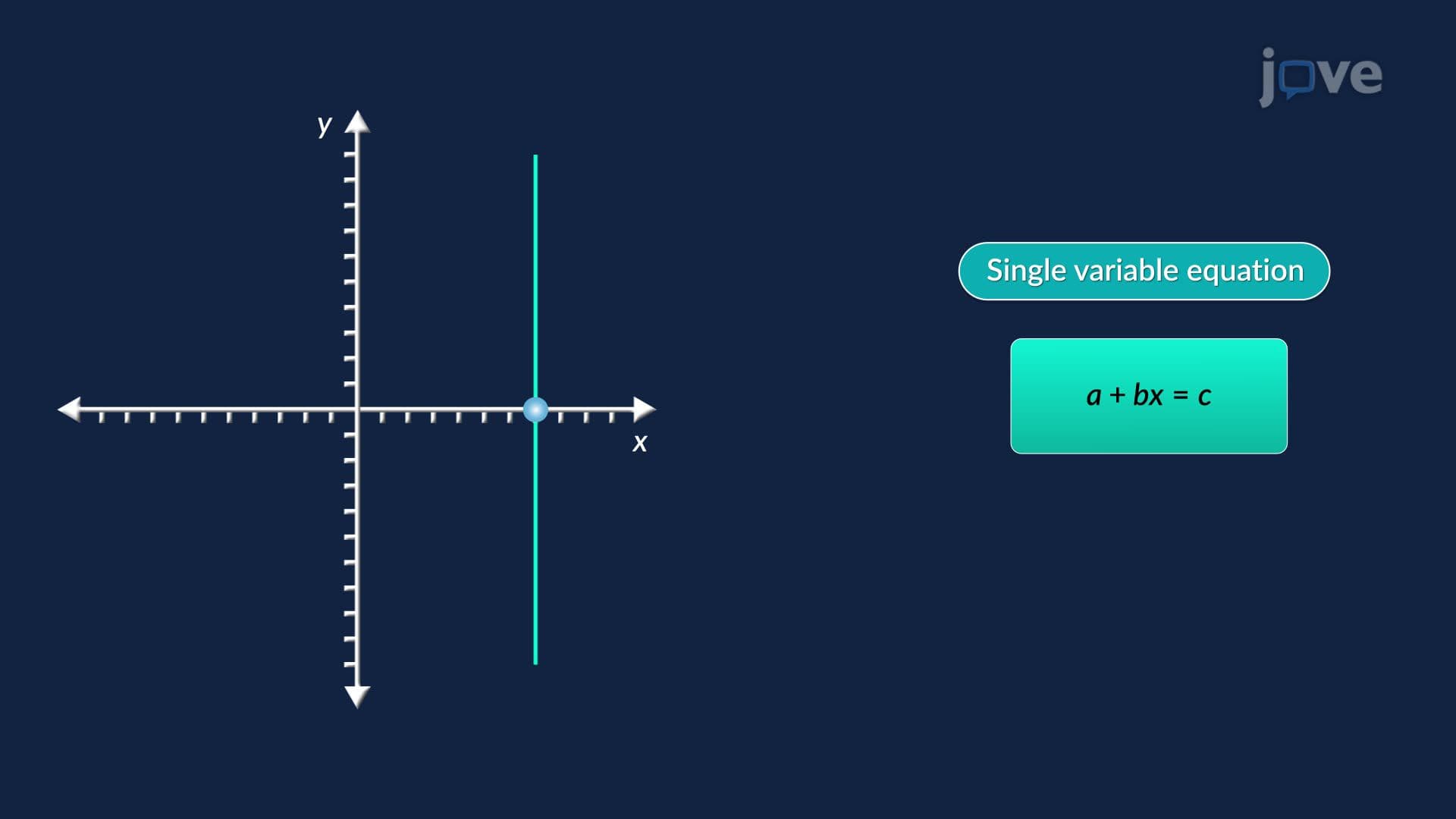

Video Summary: What are Linear Equations
Ever wonder how Uber calculates your fare before you even get in the car? Linear equations form the mathematical foundation behind ride-sharing pricing, where a base fee plus distance creates predictable costs. These fundamental algebraic expressions involve one or more variables and graph as straight lines, making them essential tools for solving real-world problems from taxi rates to Netflix subscription models. Watch the full video on JoVE Coach to master this concept with expert-led visuals and step-by-step explanations.
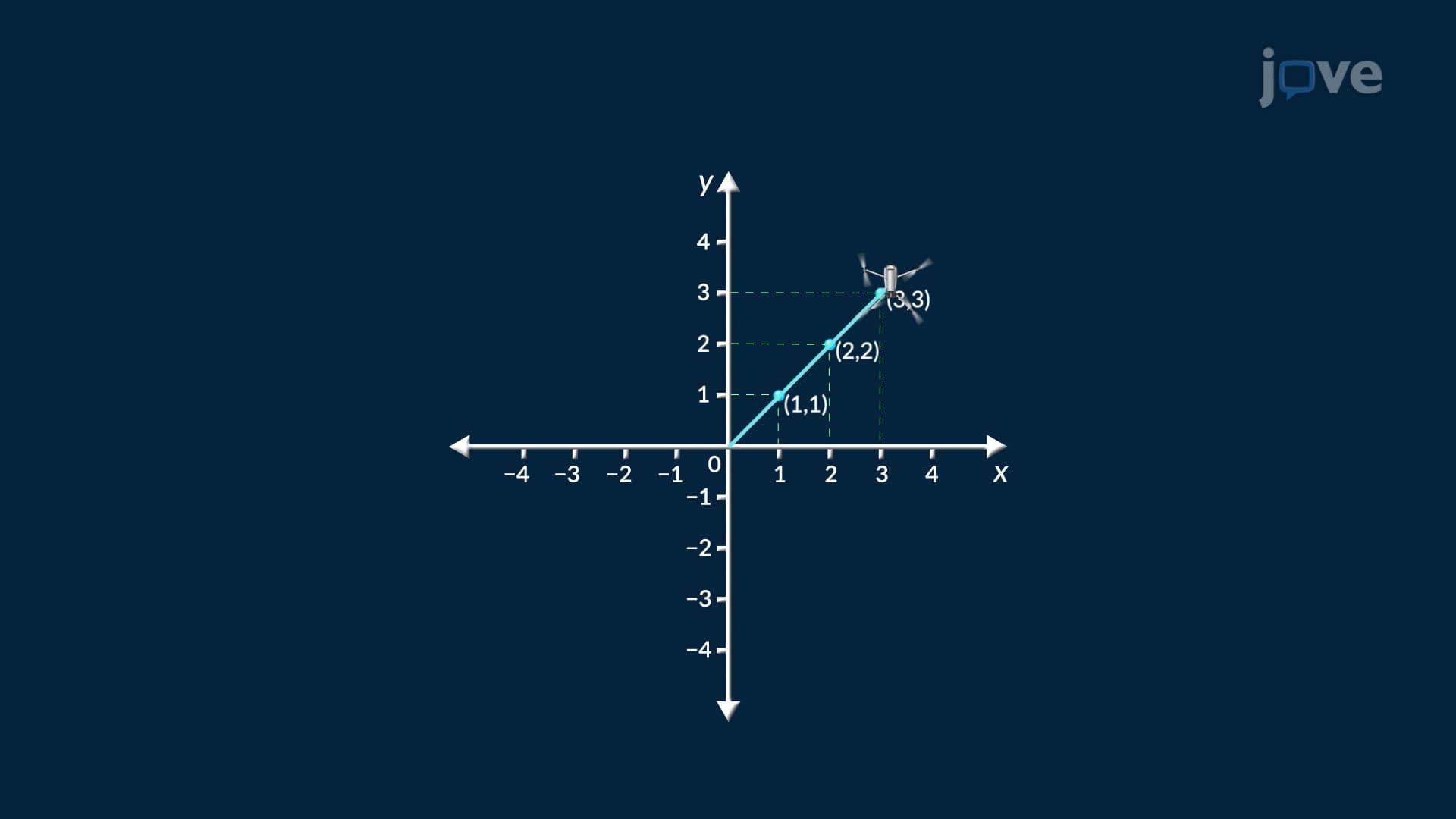
What are linear equations? At their core, linear equations are algebraic expressions where variables appear to the first power only-no squares, cubes, or other exponents. The term "linear" comes from their graphical representation: when plotted on a coordinate plane, these equations always form straight lines. This predictable behavior makes them invaluable tools in mathematics, science, and real-world problem-solving.
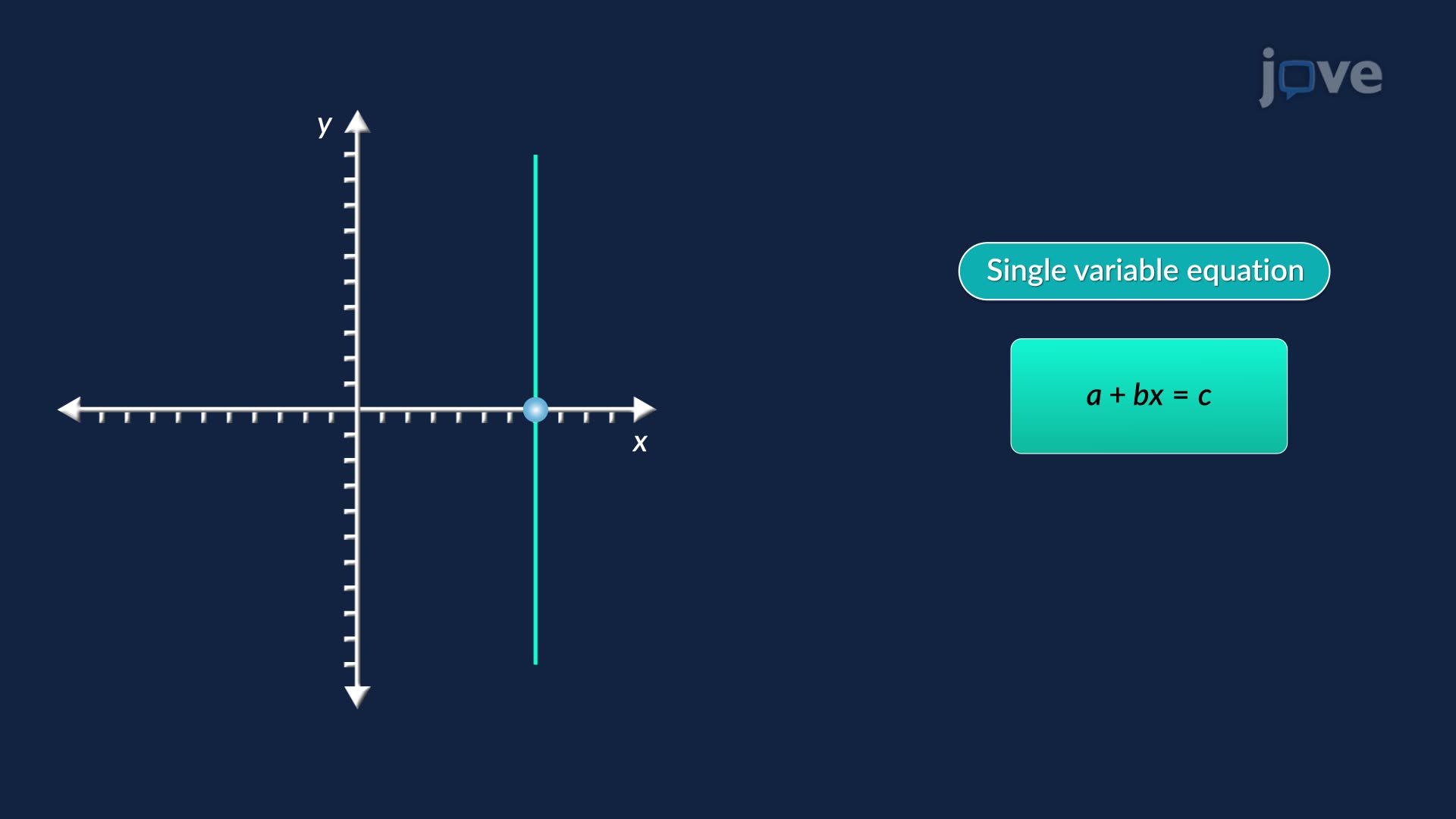
Linear equations are classified by the number of variables they contain. Single-variable linear equations take the form ax + b = c, where solving means finding the specific value that makes the equation true. For example, if a streaming service charges $15 monthly plus $3 per premium movie, and your bill is $27, you can determine how many premium movies you watched: 3x + 15 = 27.
Two-variable linear equations appear as ax + by = c and represent relationships between two quantities. These are crucial in AP Algebra courses and appear frequently on the SAT Math section. A classic example involves mixing solutions in chemistry labs-if you combine 40% and 60% alcohol solutions to create a 50% mixture, linear equations help determine the exact proportions needed.
Three-variable linear equations extend to ax + by + cz = d, commonly encountered in college-level courses like multivariable calculus and linear algebra. These become essential in engineering applications, such as calculating material costs where steel, aluminum, and labor contribute to total project expenses.
Linear equations excel at modeling situations with constant rates of change. Consider cell phone plans: Verizon might charge $30 monthly plus $0.10 per text message. If your bill is $47, the linear equation 30 + 0.1x = 47 reveals you sent 170 texts. This type of problem appears regularly on standardized tests and college placement exams.
The key to mastering linear equations lies in recognizing patterns and translating word problems into mathematical expressions. Students preparing for the MCAT encounter these in physics problems involving motion at constant velocity, while business majors use them in economics courses to analyze supply and demand relationships. The systematic approach-identify variables, set up equations, solve through algebraic manipulation, and verify solutions-remains consistent across all applications and academic levels.
Related Micro-courses