Loading video…

 14 Concepts
 1.1K views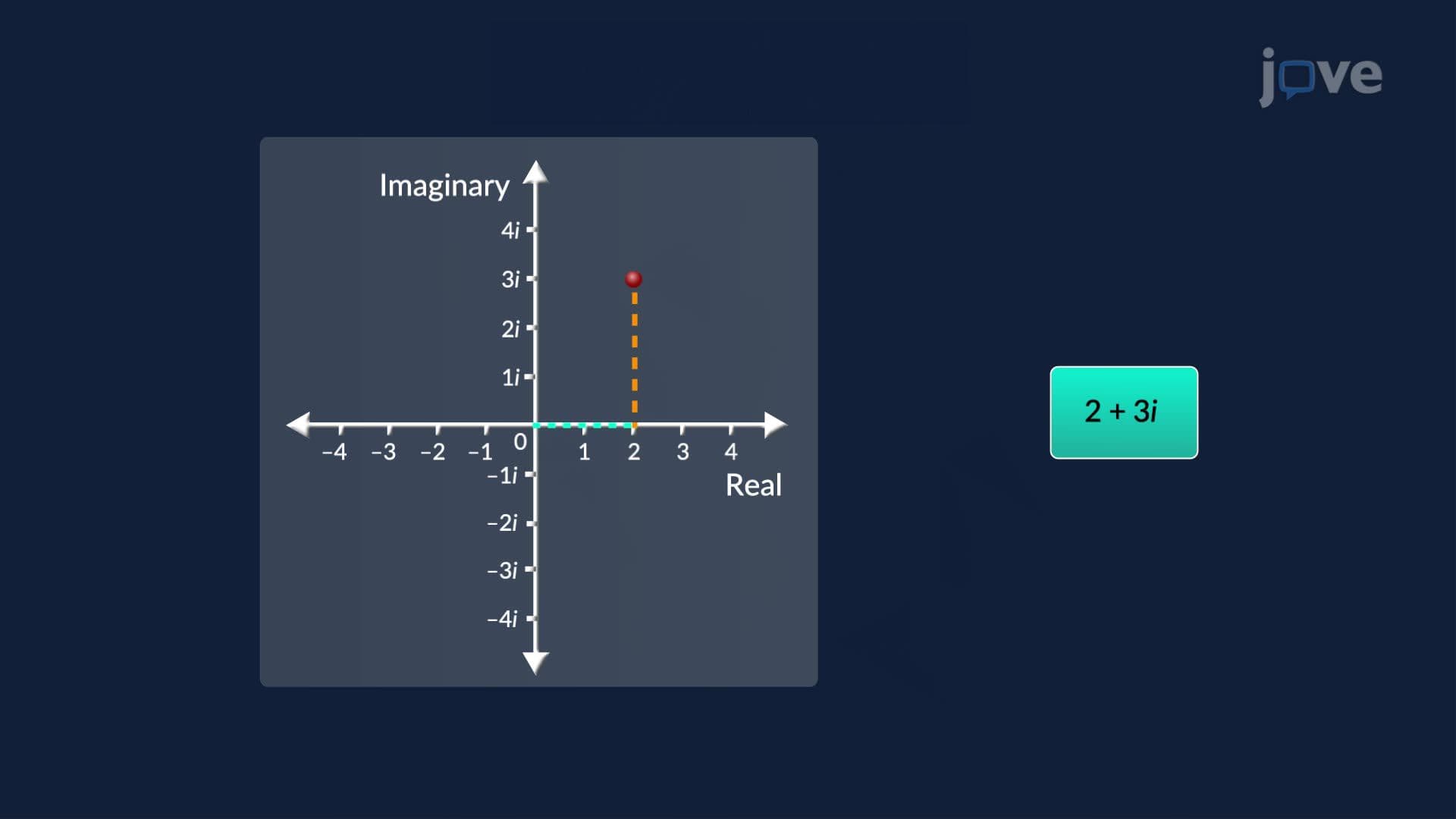

Video Summary: What Is Complex Numbers
Ever wondered why your calculator shows "error" when you try to find the square root of a negative number? Complex numbers solve this mathematical puzzle by introducing the imaginary unit *i*, where *i* = √(-1). These numbers combine real and imaginary components, creating a powerful mathematical tool used in everything from electrical engineering to medical imaging. For instance, MRI machines at hospitals across America rely on complex numbers to process k-space data and generate detailed brain scans. Watch the full video on JoVE Coach to master this concept with expert-led visuals and step-by-step explanations.
Complex numbers represent one of mathematics' most elegant solutions to an impossible problem. When mathematicians encountered equations like x² = -4, they faced a fundamental limitation: no real number squared equals a negative value. Rather than accepting defeat, they expanded the number system by defining the imaginary unit *i* = √(-1).
A complex number takes the standard form a + bi, where *a* represents the real part and *b* represents the imaginary part. For example, 3 + 4i has a real part of 3 and an imaginary part of 4. This structure allows us to work with previously unsolvable equations while maintaining all familiar algebraic properties.
Adding and subtracting complex numbers follows intuitive rules: combine like terms separately. For (3 + 4i) + (2 - 3i), add real parts (3 + 2 = 5) and imaginary parts (4i - 3i = i), yielding 5 + i.
Multiplication requires careful attention to the fundamental property i² = -1. When multiplying (3 + 4i)(2 - 3i), apply the distributive property: 6 - 9i + 8i - 12i². Since i² = -1, this becomes 6 - i + 12 = 18 - i.
Division involves a clever technique using complex conjugates. To divide by a + bi, multiply both numerator and denominator by the conjugate a - bi. This eliminates the imaginary part from the denominator, creating a real number that's easier to work with.
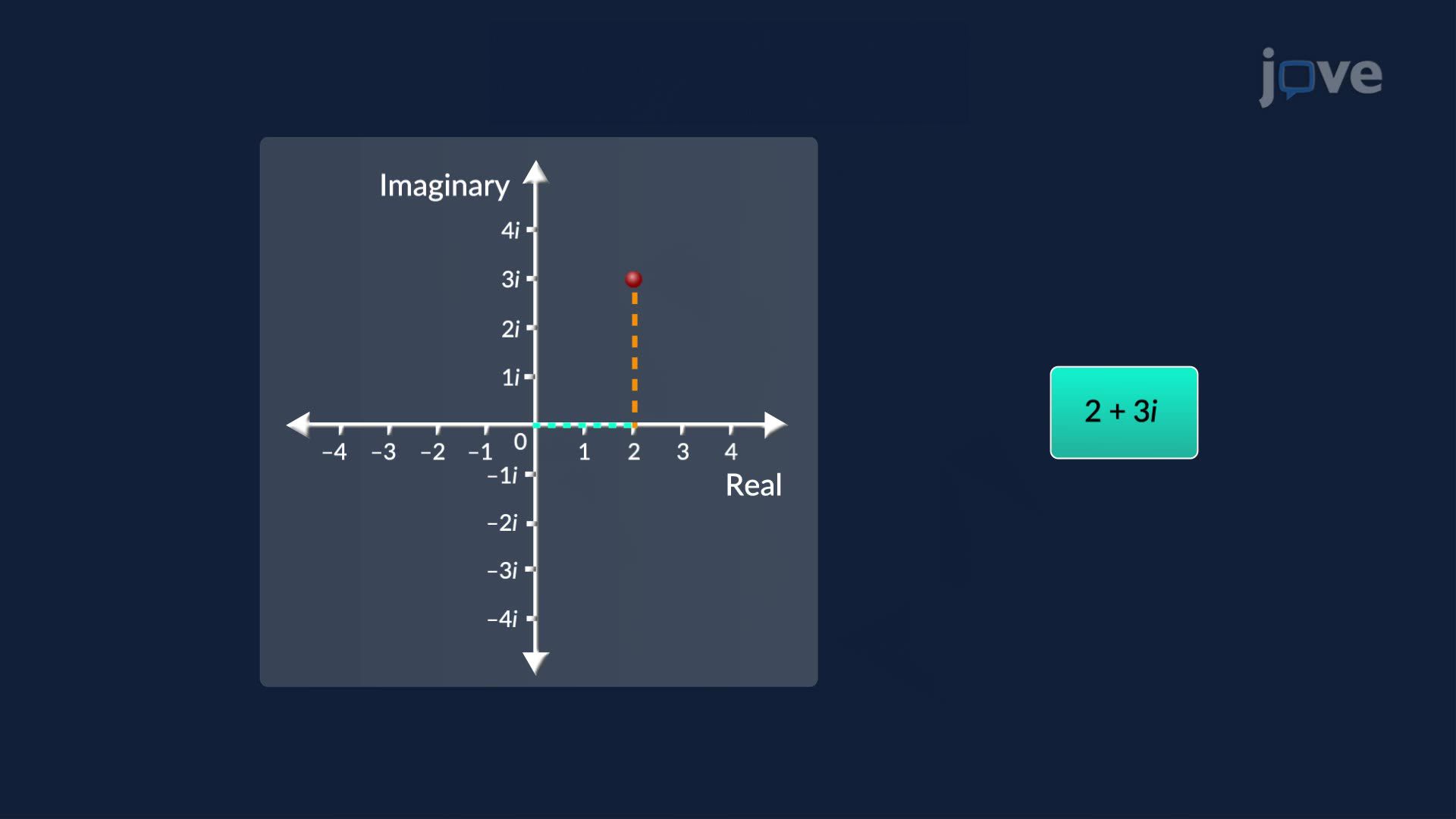
Visualizing complex numbers on the complex plane provides powerful geometric insights. The horizontal axis represents real parts, while the vertical axis represents imaginary parts. Each complex number becomes a unique point, transforming abstract algebra into concrete geometry.
This visualization proves especially valuable in advanced applications. Electrical engineers use complex plane analysis to study AC circuits, while control systems engineers rely on it for stability analysis.
Complex numbers appear throughout American higher education. AP Calculus BC students encounter them in advanced integration techniques. Engineering programs at universities like MIT and Stanford use complex analysis extensively in signal processing and quantum mechanics courses.
In medical applications, MRI machines at hospitals nationwide process complex-valued k-space data. The inverse Fourier transform, which converts this data into visible images, relies fundamentally on complex number arithmetic. Similarly, electrical power grids across the United States use complex number analysis for efficient power transmission calculations.
Related Micro-courses