Loading subject page…

1,088 views

Video Summary: What Is Real Number System
Did you know that every measurement you've ever made-from your height to the distance between cities-relies on the real number system? This comprehensive mathematical framework encompasses all numbers that can be positioned on a number line, from simple counting numbers to complex irrational values like π. Whether you're calculating your GPA or measuring ingredients for a recipe, understanding what is real number system helps you navigate both academic math and everyday quantitative reasoning. Watch the full video on JoVE Coach to master this concept with expert-led visuals and step-by-step explanations.
The real number system represents one of mathematics' most fundamental organizational structures, encompassing every number that corresponds to a point on the infinite number line. This system provides the mathematical foundation for virtually all quantitative reasoning, from basic arithmetic through advanced calculus. For US students preparing for standardized tests like the SAT Math section or AP Calculus, mastering this hierarchy proves essential for success.
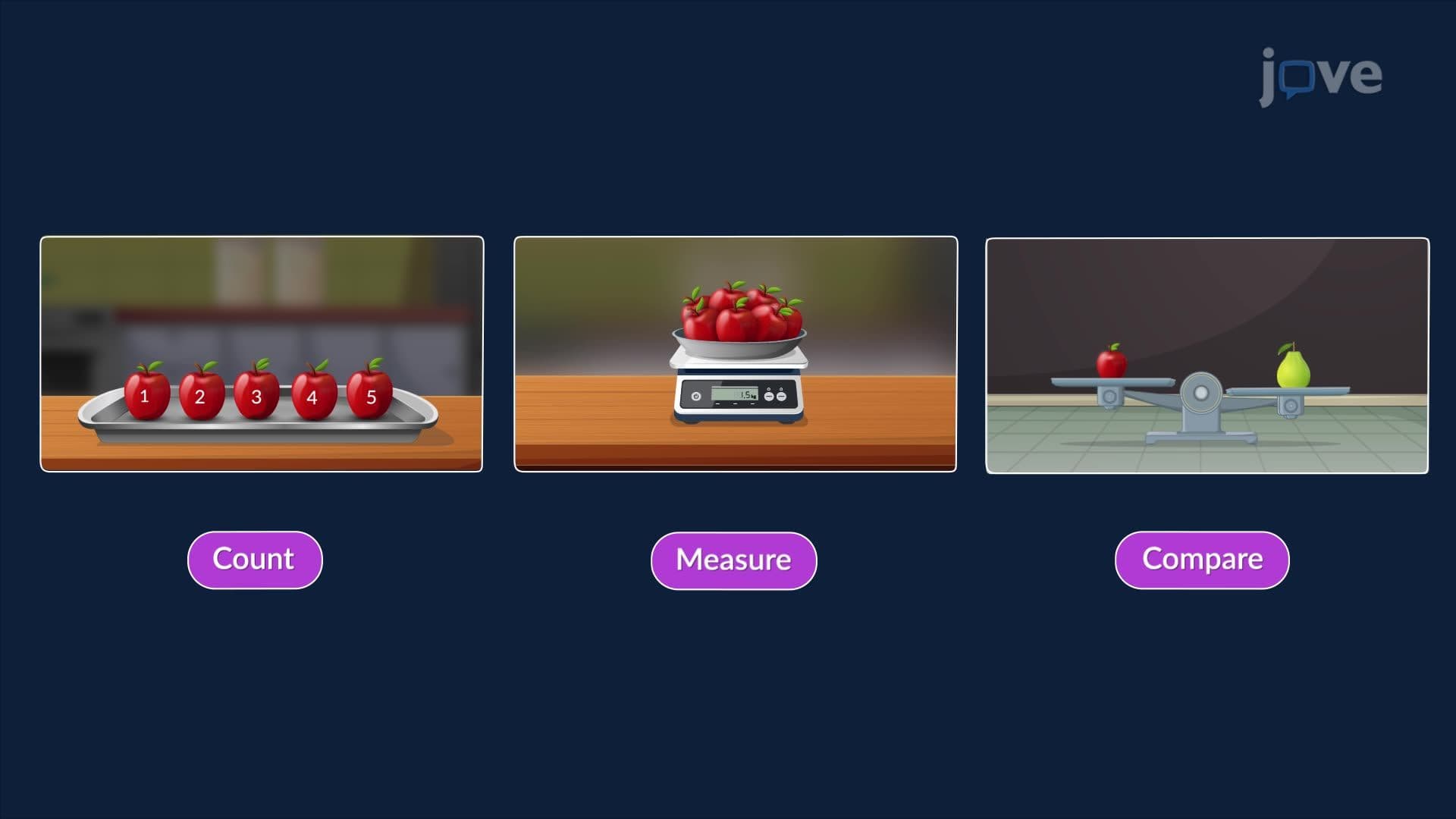
Natural numbers (1, 2, 3, 4, ...) form the most intuitive subset, representing discrete counting scenarios. Consider counting students in a typical American high school classroom or tracking touchdowns in an NFL game-these applications rely exclusively on natural numbers. When we expand this set to include zero, we create the whole numbers (0, 1, 2, 3, ...), which accommodate situations like "zero points scored" or "no items remaining."
Integers extend whole numbers to include negative values (..., -3, -2, -1, 0, 1, 2, 3, ...), essential for representing concepts like temperature below freezing, debt amounts, or elevation below sea level. Students encounter integers frequently in algebra courses and on standardized tests, particularly when solving equations involving opposite operations or interpreting coordinate plane problems.
Rational numbers represent any value expressible as a fraction a/b where b ≠ 0. This category includes terminating decimals (like 0.75 = 3/4) and repeating decimals (like 0.333... = 1/3). In practical US contexts, rational numbers appear in measurements (3.5 inches), financial calculations (interest rates like 4.25%), and statistical data (batting averages like 0.285). College algebra courses heavily emphasize rational number operations, making this knowledge crucial for academic success.
Irrational numbers, such as √2, π, and e, cannot be expressed as simple fractions and feature non-repeating, non-terminating decimal expansions. These numbers frequently appear in geometry (π for circle calculations), trigonometry (√2 in 45-45-90 triangles), and scientific applications. Understanding irrationals proves particularly important for AP Calculus students and those pursuing STEM majors at US universities.
Related Micro-courses