Loading subject page…

- Anatomy and Physiology
- Tissues of the Human Body
- Classification of Epithelial Tissues: Stratified Epithelium
Micro-course: Tissues of the Human Body
323,100 views
Learn key concepts and earn your certificate.



Classification of Epithelial Tissues: Stratified Epithelium

00:00
01:29
Video Summary: What Is Epithelial Tissues Stratified Classification
Ever wondered why your palms don't absorb water like a sponge when you wash dishes? The answer lies in stratified epithelium classification, a fascinating multi-layered tissue system that protects our most vulnerable body surfaces. From the tough, keratinized layers on your feet that handle daily wear to the flexible transitional epithelium in your bladder that stretches during urination, understanding what is epithelial tissues stratified classification reveals how our bodies masterfully balance protection with function. Watch the full video on JoVE Coach to master this concept with expert-led visuals and step-by-step explanations.
- Understand what is epithelial tissues stratified classification and how multi-layered structure provides superior protection compared to simple epithelium
- Identify the three main stratified epithelial types: squamous, cuboidal, and columnar based on surface cell shape and location
- Compare keratinized versus non-keratinized stratified squamous epithelium and their distinct protective functions
- Analyze how transitional epithelium uniquely changes cell shape from cuboidal to squamous during organ stretching
- Recognize specific anatomical locations where each stratified epithelial type provides optimal protection
- Apply knowledge of stratified epithelium function to explain why certain body surfaces require multi-layered protection
- Evaluate the relationship between epithelial structure and protective function in different body systems
- Explore how continuous cell division in basal layers maintains tissue integrity despite surface cell loss
Understanding Epithelial Tissues Stratified Classification Fundamentals
Stratified epithelium classification represents one of nature's most elegant protective solutions, creating multiple cellular layers where the bottom continuously regenerates while the top sacrifices itself for protection. Unlike simple epithelium with its single layer, stratified epithelium's multi-layered architecture makes it ideal for high-stress environments. The basal layer acts as a cellular factory, constantly dividing through mitosis to replace worn surface cells, ensuring continuous protection without compromising tissue integrity.
Stratified Squamous Epithelium: The Body's Armor System
Stratified squamous keratinized epithelium dominates our external surfaces, particularly skin epidermis, palms, and foot soles. These tissues feature flattened surface cells packed with keratin proteins, creating a virtually waterproof barrier. The keratinization process transforms living cells into tough, anucleated scales that resist mechanical damage and prevent water loss, crucial for surviving terrestrial life.
Non-keratinized stratified squamous epithelium lines moist internal surfaces like the oral cavity, esophagus, and vaginal canal. These tissues maintain nucleated surface cells with reduced keratin content, balancing protection with the need for nutrient exchange and flexibility. This distinction becomes critical in medical pathology, where abnormal keratinization can indicate disease states.
Specialized Stratified Types and Transitional Epithelium
Stratified cuboidal epithelium appears in sweat gland ducts and mammary gland ducts, where its cube-shaped surface cells provide moderate protection while maintaining secretory function. Stratified columnar epithelium protects specific pharyngeal and epiglottal regions, offering enhanced barrier function through its tall surface cells.
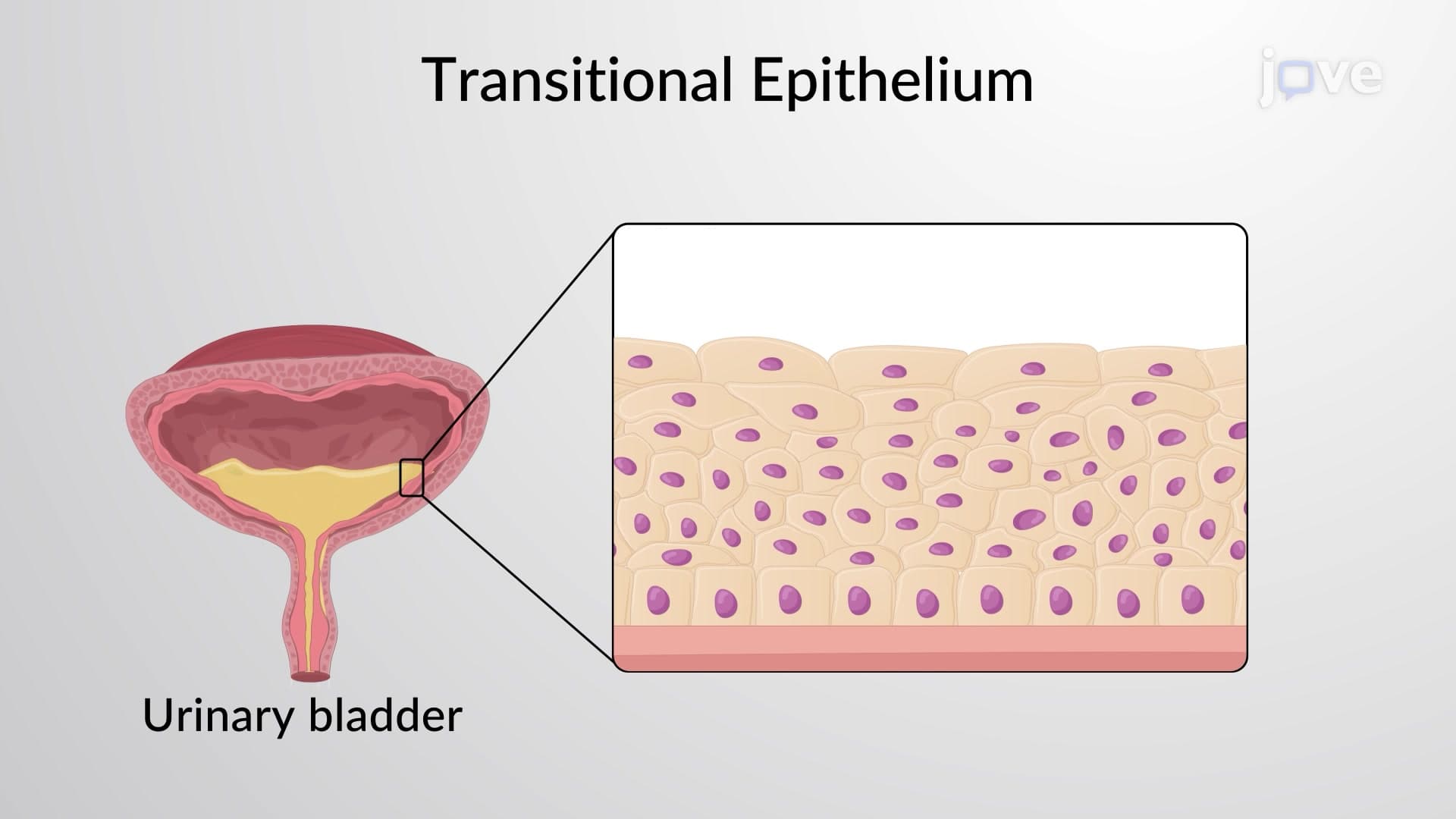
Transitional epithelium represents the ultimate in adaptive protection, exclusively lining the urinary system. When unstretched, cells appear cuboidal, but during bladder filling, they flatten into squamous shapes, allowing dramatic tissue expansion. This remarkable plasticity enables the bladder to increase capacity 5-10 fold while maintaining barrier integrity, a feat impossible with rigid epithelial types.
Clinical and Academic Relevance
Understanding stratified epithelial classification proves essential for AP Biology students tackling tissue structure-function relationships and pre-med students preparing for MCAT passages on integumentary and urinary systems. Medical students encounter these concepts extensively in histology courses and USMLE Step 1 questions focusing on epithelial pathology and normal tissue architecture.
Frequently Asked Questions
Stratified epithelium classification refers to multi-layered epithelial tissues where cells stack in multiple layers for enhanced protection. Unlike simple epithelium's single layer designed for absorption or secretion, stratified epithelium prioritizes durability and barrier function. The bottom basal layer continuously divides to replace surface cells that wear away from mechanical stress or environmental exposure.
The MCAT frequently includes stratified epithelium in biology passages about tissue structure-function relationships. USMLE Step 1 tests histological identification of different stratified types, while nursing exams like NCLEX focus on clinical applications like wound healing and skin integrity. AP Biology students encounter these concepts in cellular structure and organ system units.
Look for surface cell characteristics: keratinized epithelium has anucleated (no nucleus) surface cells densely packed with keratin, found in dry areas like skin epidermis. Non-keratinized epithelium retains nucleated surface cells with less keratin, lining moist areas like the mouth and esophagus. Remember: dry surfaces need more keratin protection, moist surfaces need less.
Transitional epithelium exclusively lines the urinary system and changes shape dramatically during organ stretching. Surface cells transition from cuboidal when relaxed to squamous when stretched, allowing organs like the bladder to expand significantly. This shape-shifting ability is impossible in other stratified types, making transitional epithelium perfectly adapted for organs requiring variable capacity.
Construction workers rely on keratinized stratified squamous epithelium in their palms and fingertips to handle rough materials safely. Athletes depend on thick stratified epithelium on foot soles during intense training on various surfaces. Hospital patients with urinary catheters benefit from transitional epithelium's ability to accommodate bladder drainage and refilling cycles.
Absolutely not! High school students successfully master this concept by connecting structure to familiar functions. Start with simple analogies: skin as body armor, bladder lining as a stretchy balloon coating. Focus on the logical relationship between tissue location and protection needs. Most students find the real-world applications make the classification system intuitive and memorable.
Create location-based memory maps linking each type to specific body regions. Use mnemonics like "Skin Keeps Keratin" for keratinized stratified squamous epithelium. Practice with unlabeled histology images, focusing on surface cell shapes and layering patterns. Draw concept maps connecting structure, location, and function for each stratified type to reinforce understanding.
Explore epithelial tissue regeneration and stem cell biology to understand how basal layers maintain themselves. Study epithelial-mesenchymal transitions in development and cancer metastasis. Investigate how hormones like estrogen affect stratified epithelium in reproductive tissues, or examine how aging impacts epithelial barrier function and wound healing processes.
College courses emphasize histological identification using microscopy, requiring students to distinguish stratified types based on cellular morphology and staining patterns. Labs include tissue sectioning and identification exercises with real human samples. Exams test integration with physiological processes like wound healing, hormone effects on reproductive epithelium, and pathological changes in epithelial diseases.
Related Micro-courses

18 Concepts

19 Concepts

11 Concepts