Loading…
Loading video…

10,864 views
Ever wonder how electrical engineers design power grids that keep your smartphone charged 24/7? Understanding kirchoff's laws using phasors is the key to analyzing complex AC circuits that power everything from your home to Tesla's Supercharger stations across America. Phasor relationships for circuit elements explained reveals how resistors, inductors, and capacitors behave differently in AC circuits, transforming time-domain voltage and current into manageable frequency-domain representations. Watch the full video on JoVE Coach to master this concept with expert-led visuals and step-by-step explanations.
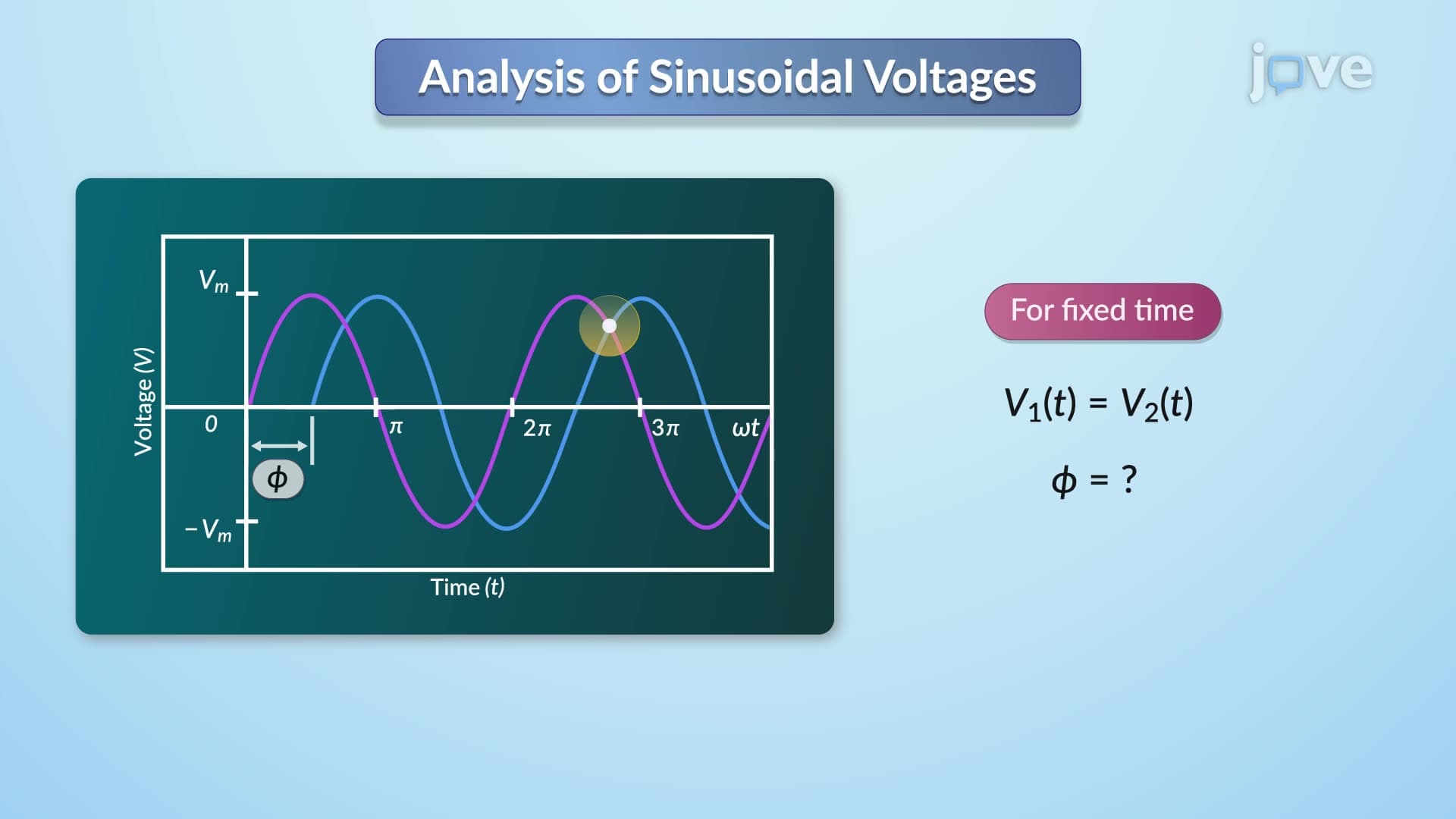
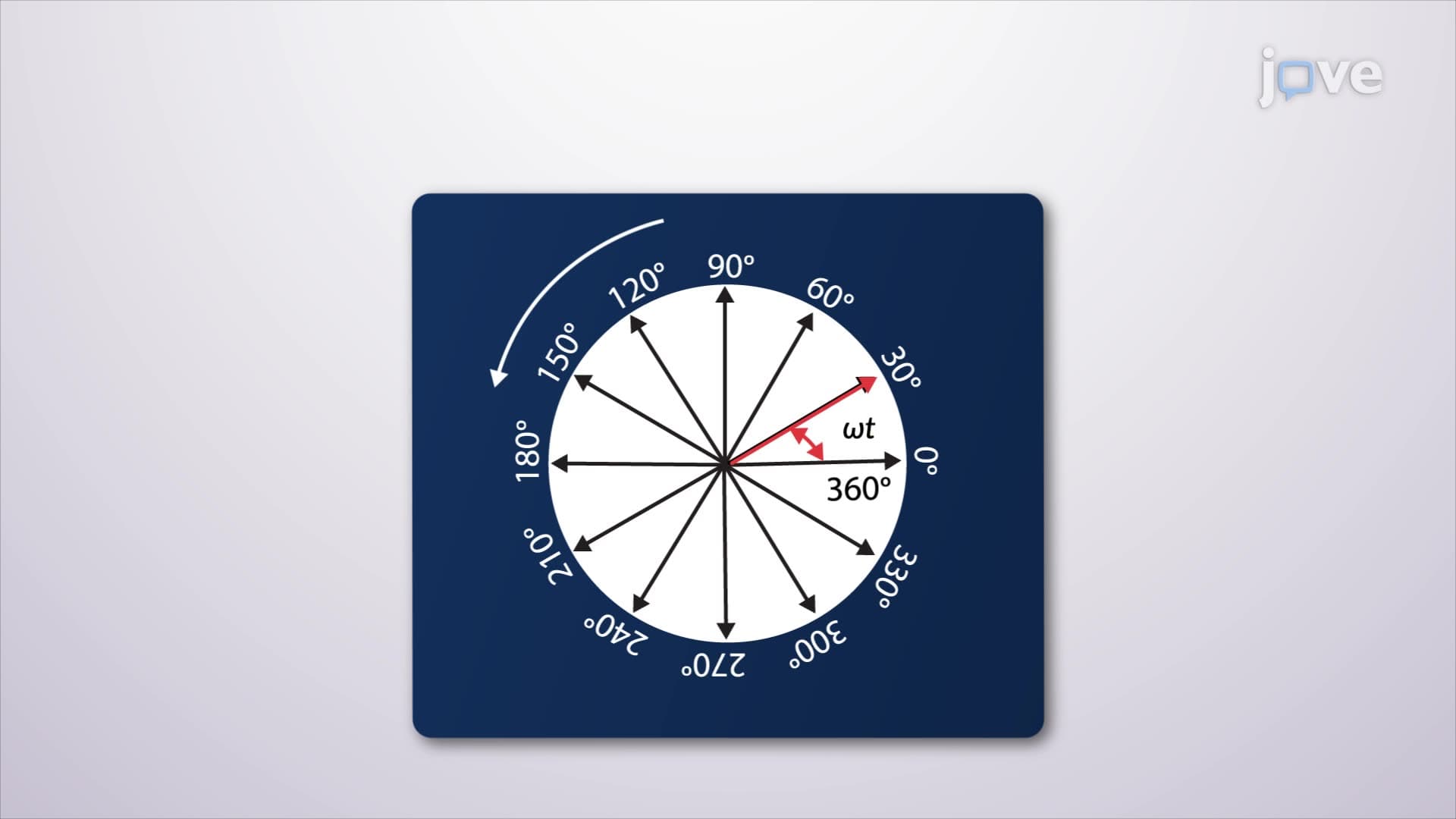
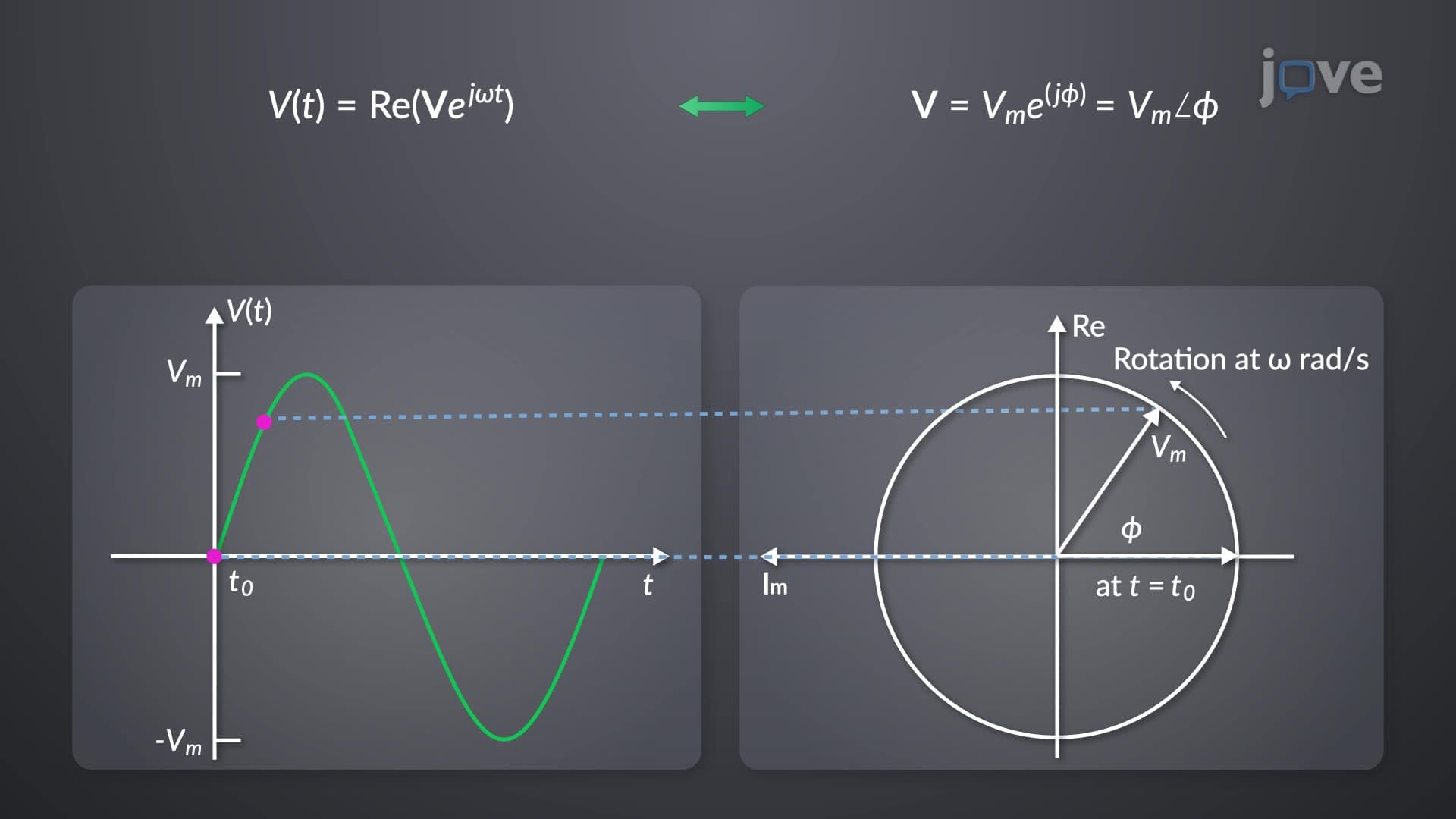
Phasor analysis revolutionizes how we understand AC circuits by converting complex time-varying sinusoidal functions into simple algebraic expressions. This mathematical transformation is essential for electrical engineering students preparing for AP Physics C, college-level circuit analysis courses, and professional engineering exams.
In resistive circuits, voltage and current maintain a direct, in-phase relationship regardless of whether we're working in time or frequency domain. Ohm's law (V = IR) applies identically in both domains, making resistors the simplest elements to analyze. This concept frequently appears on AP Physics C exams and forms the baseline for understanding more complex reactive elements.
For practical applications, consider the heating elements in electric ovens manufactured by companies like GE or Whirlpool. These resistive loads consume power continuously, with voltage and current always synchronized, making them ideal for steady-state power calculations.
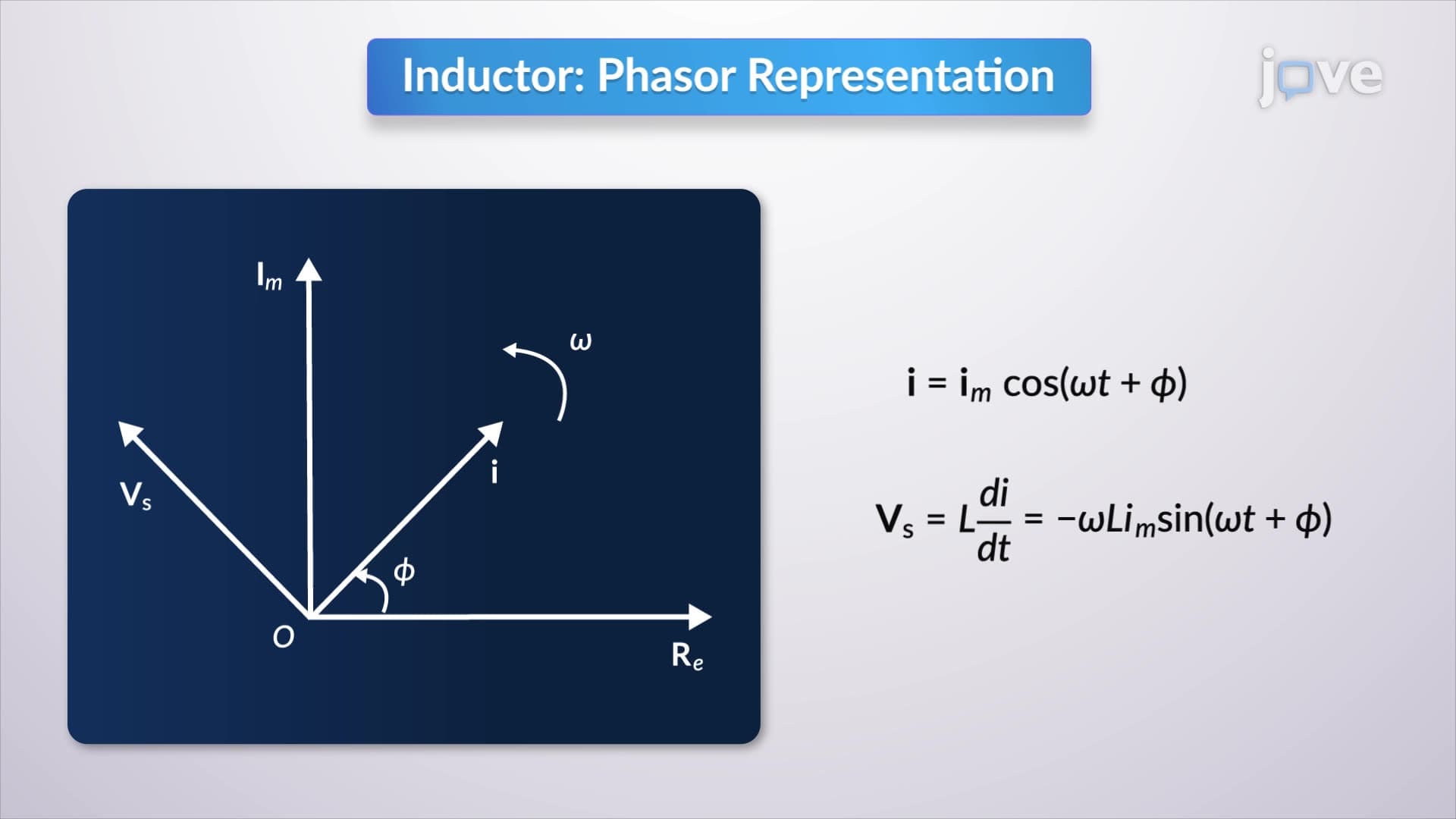
Inductors create a fascinating phase shift where current lags voltage by exactly 90 degrees. This relationship stems from the fundamental property that voltage across an inductor equals L(di/dt). When we transform this time-domain derivative into phasor notation, we get the impedance ZL = jωL, where j represents the 90-degree phase shift.
This concept is crucial for understanding power transmission systems used by utilities like Pacific Gas & Electric or ConEd. Large transformers and transmission lines exhibit significant inductive properties, requiring careful phase management to maintain grid stability.
Capacitors exhibit the opposite behavior to inductors – current leads voltage by 90 degrees. The fundamental relationship i = C(dv/dt) transforms into the impedance ZC = 1/(jωC) in phasor form. This negative phase shift has profound implications for power factor correction in industrial applications.
Modern electric vehicle charging stations, like those manufactured by ChargePoint across US highways, incorporate capacitive elements for power factor correction, ensuring efficient energy transfer while meeting utility company requirements for reactive power management.
Frequently Asked Questions
Phasor relationships describe how voltage and current interact in AC circuits using complex numbers instead of time-varying functions. They simplify circuit analysis by converting calculus operations into basic algebra, making it easier to solve complex power systems like those used in US electrical grids. This mathematical tool is essential for any student pursuing electrical engineering or physics.
AP Physics C frequently tests phasor analysis through problems involving RC, RL, and RLC circuits, particularly in the electricity and magnetism section. College circuits courses extensively use phasors for impedance calculations, power analysis, and frequency response. Students typically encounter these concepts in sophomore-level electrical engineering coursework and on the Fundamentals of Engineering (FE) exam.
Most students find capacitive relationships slightly more challenging because the concept of current leading voltage seems counterintuitive at first. However, both concepts become clearer when you remember the underlying physics: inductors resist changes in current while capacitors resist changes in voltage. Practice with both types using circuit simulation software helps solidify understanding.
Power utilities like Duke Energy and Southern Company use phasor analysis daily for grid management, load flow studies, and stability analysis. Manufacturing facilities with large motor loads, such as Ford's Michigan assembly plants, require phasor calculations for power factor correction. Renewable energy installations, including California's solar farms, depend on phasor analysis for grid synchronization.
You need solid algebra skills and basic trigonometry, plus an understanding of complex numbers and Euler's identity (e^jθ = cos(θ) + jsin(θ)). Most high school students can learn phasors after completing Algebra II and Trigonometry. The math becomes intuitive with practice, especially when you focus on the physical meaning rather than just memorizing formulas.
Start by mastering the three fundamental relationships: resistors (no phase shift), inductors (current lags 90°), and capacitors (current leads 90°). Practice converting between rectangular and polar forms of complex numbers. Work through numerous circuit problems, progressing from simple single-element circuits to complex RLC combinations. Use memory devices like "ELI the ICE man" (voltage leads current in inductors, current leads voltage in capacitors).
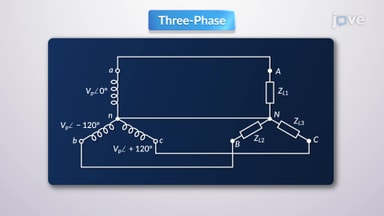
Progress to three-phase power systems, which are fundamental to industrial and utility applications throughout the US. Study power calculations using complex power (S = P + jQ) and power factor correction techniques. Advanced topics include symmetrical components for unbalanced systems and phasor measurement units (PMUs) used in modern smart grid applications.
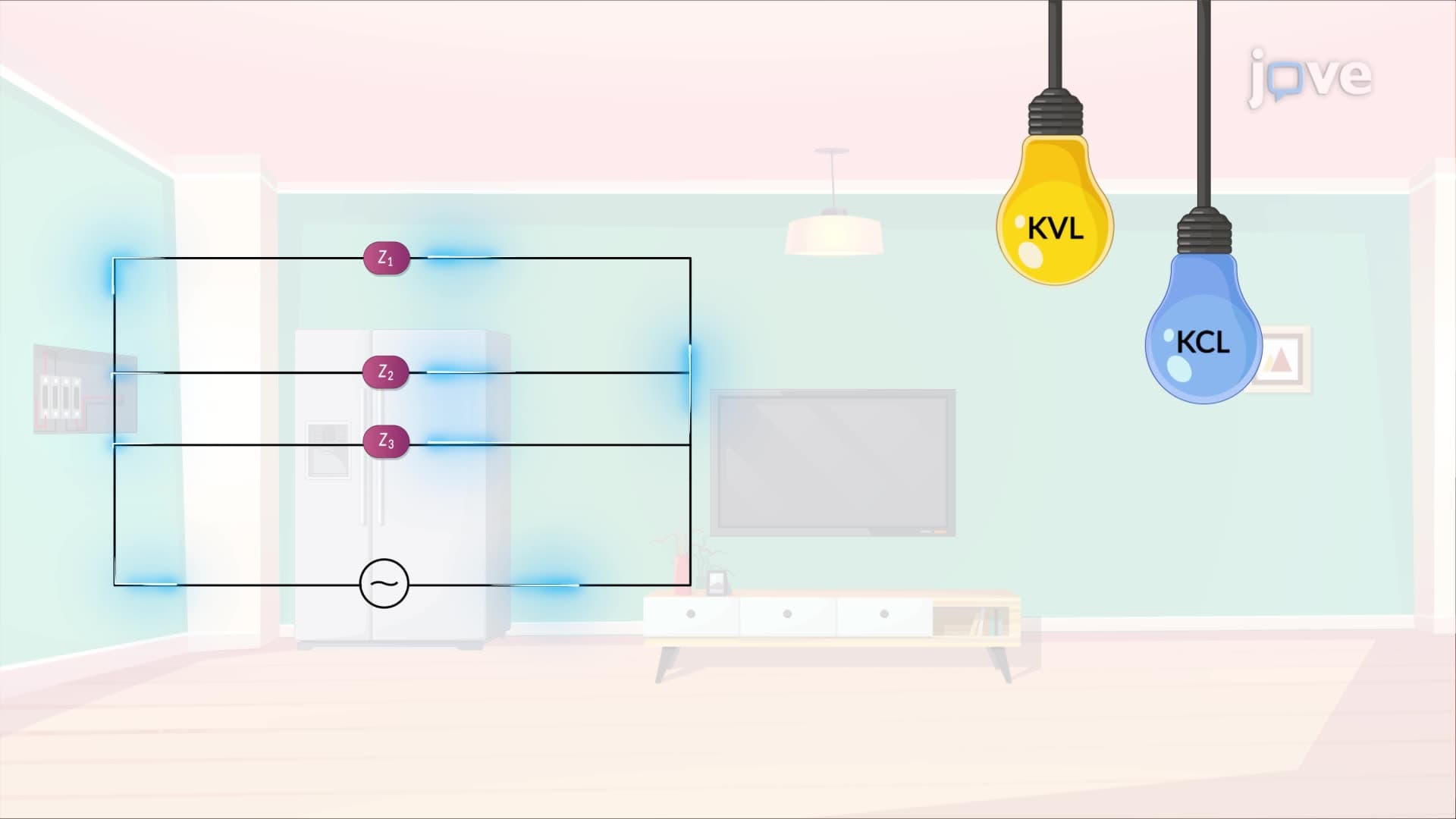
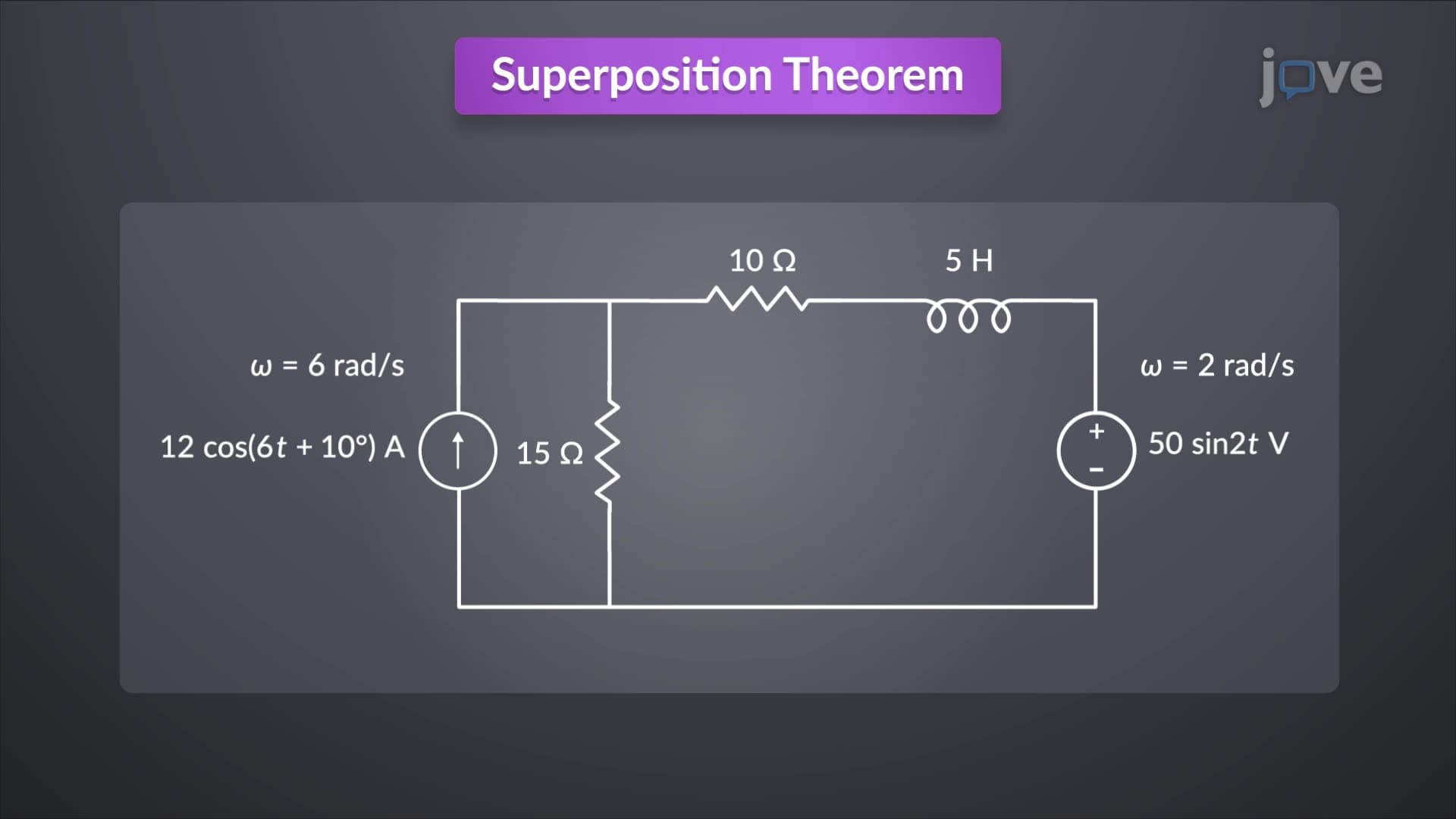
Kirchoff's voltage and current laws remain mathematically identical in phasor form, but now you're working with complex numbers instead of real numbers. KVL states that the phasor sum of voltages around any closed loop equals zero, while KCL requires the phasor sum of currents at any node to be zero. The key difference is accounting for phase relationships between different circuit elements, which doesn't exist in DC analysis.
Related Micro-courses
Related Subjects
 Civil Engineering 30 micro-courses›Mechanical Engineering 28 micro-courses›