Loading…
Loading video…

10,864 views
Ever wonder how Tesla's electric vehicles manage complex power distribution systems so efficiently? The superposition theorem for ac circuits and Norton equivalent circuits work together to simplify intricate electrical networks into manageable components. Consider how engineers at General Electric design power grids—they use Norton equivalent circuits to replace complex multi-branch networks with a simple current source and parallel resistance. What are Norton Equivalent Circuits? They're powerful tools that transform complicated electrical systems into basic, analyzable forms. Watch the full video on JoVE Coach to master this concept with expert-led visuals and step-by-step explanations.
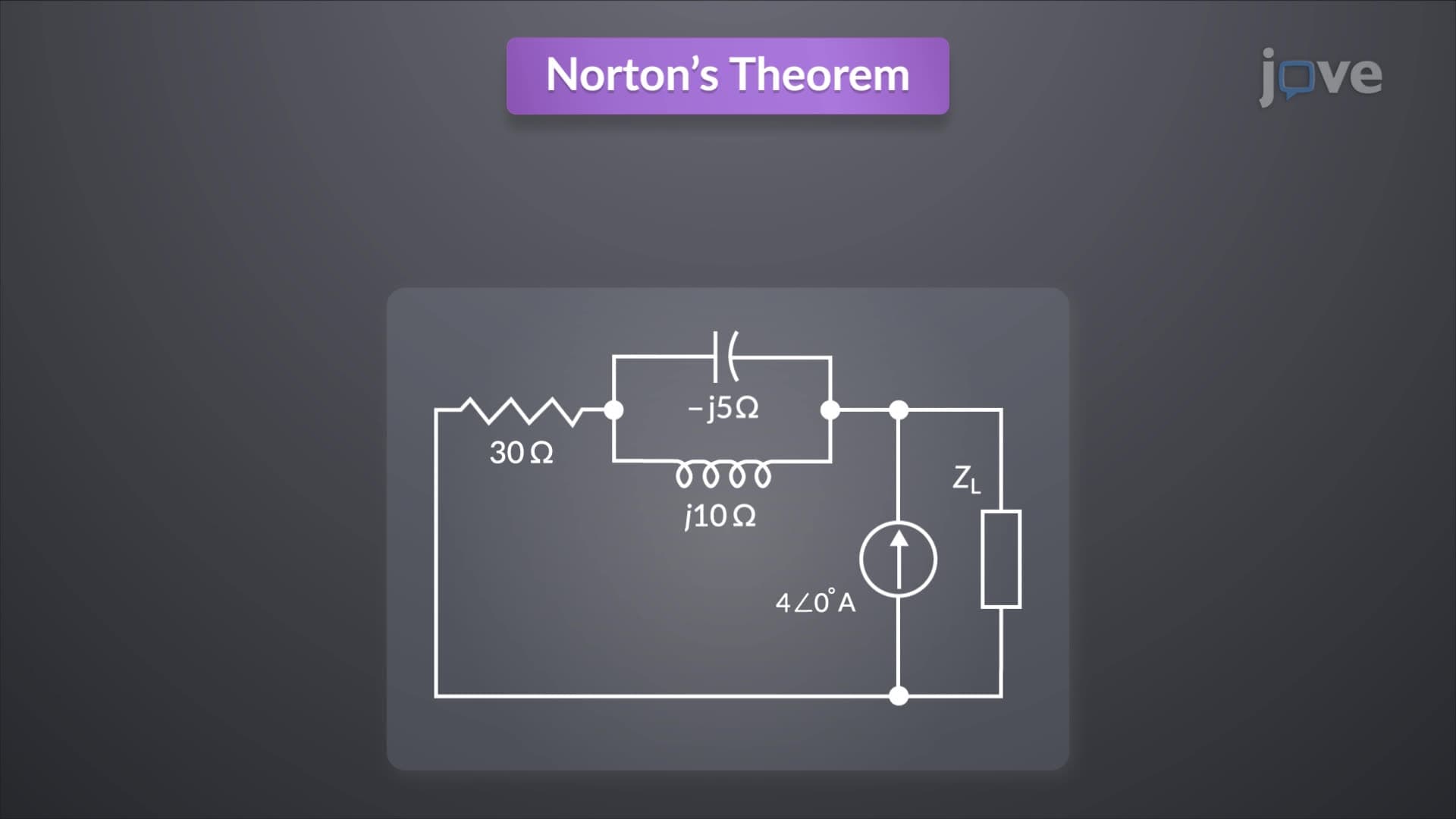
Norton's theorem revolutionizes how electrical engineers approach complex circuit analysis by transforming any linear two-terminal network into an equivalent circuit containing just a current source in parallel with an impedance. This powerful concept builds upon the superposition theorem for ac circuits, which allows engineers to analyze circuits with multiple AC sources by considering each source's effect individually.
When you encounter a complex circuit—like those found in smartphone charging systems or electric vehicle battery management—Norton equivalents provide a pathway to simplification. The Norton current represents the short-circuit current that would flow if you connected the two terminals together, while the Norton resistance equals the equivalent resistance seen from the terminals when all independent sources are deactivated.
The connection between Norton equivalents and the superposition theorem for ac circuits tutorial approach becomes clear when analyzing multi-source networks. In AC circuits, where sinusoidal voltages and currents operate at different frequencies, Norton's theorem allows you to replace complex impedance networks with simple equivalent circuits.
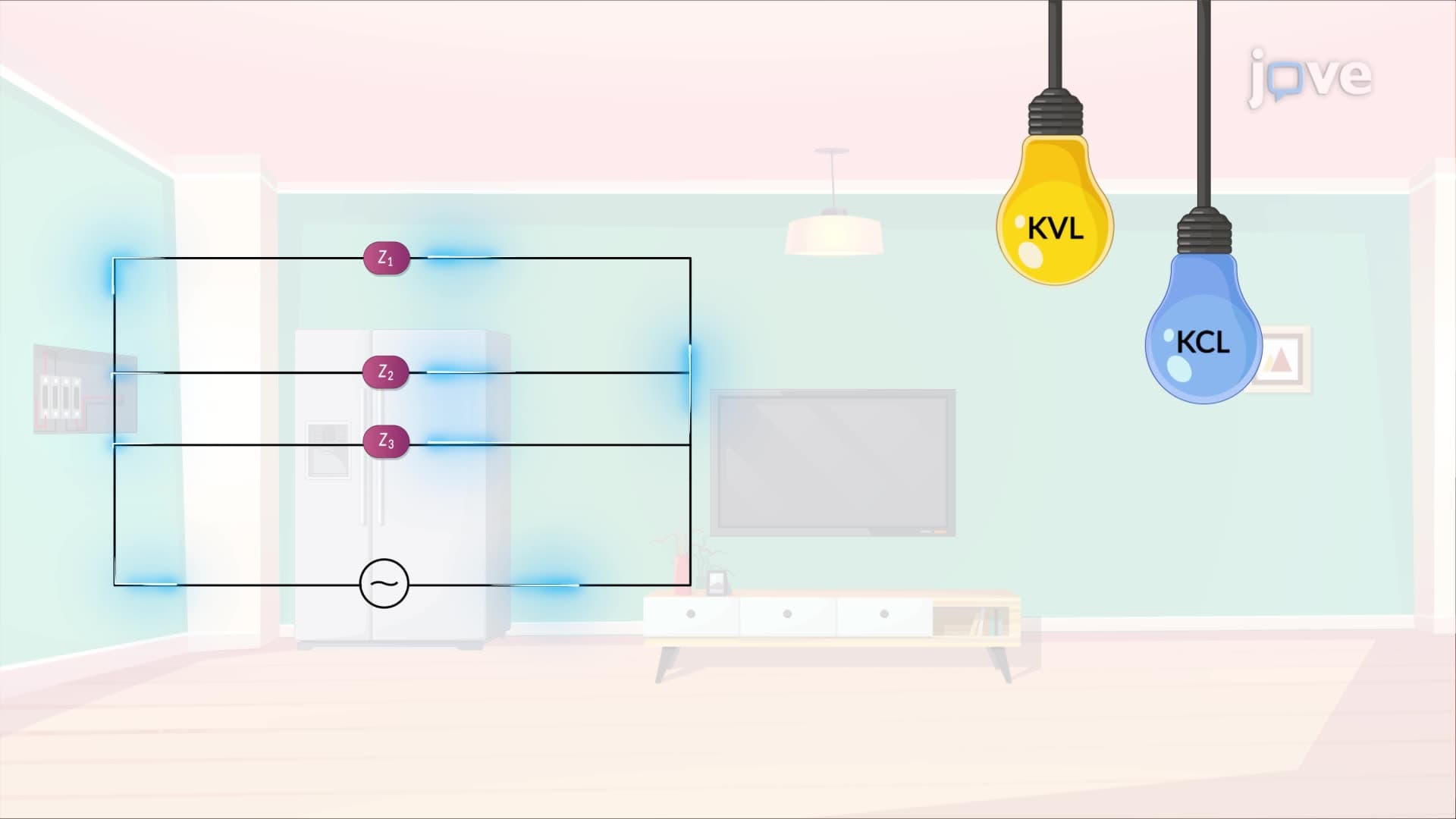
Consider analyzing the power distribution system in a typical American home. The electrical panel receives 240V split-phase power, which gets distributed through multiple branch circuits. Using Norton equivalents, electrical contractors can model each major appliance circuit as a current source with parallel resistance, dramatically simplifying load calculations and troubleshooting procedures.
The superposition theorem for ac circuits overview demonstrates how Norton equivalents prove invaluable in real-world applications. At companies like Intel, circuit designers use Norton models when analyzing power delivery networks for microprocessors. These complex circuits contain thousands of components, but Norton equivalents allow engineers to focus on critical performance parameters without getting lost in circuit complexity.
Students preparing for AP Physics C or college-level electrical engineering courses will encounter Norton's theorem in contexts ranging from simple resistor networks to sophisticated filter designs. The theorem proves especially useful when analyzing circuits containing dependent sources—common in amplifier designs used throughout American electronics manufacturing.
Understanding how superposition theorem for ac circuits works alongside Norton's theorem provides students with powerful problem-solving tools for standardized tests and college coursework. The mathematical relationship between Norton current (In), Thevenin voltage (Vth), and Thevenin resistance (Rth) follows the simple formula: In = Vth/Rth.
This relationship proves crucial when solving circuit problems on exams like the Fundamentals of Engineering (FE) exam, required for engineering licensure in the United States. Students who master Norton equivalent concepts demonstrate strong analytical thinking skills valued by admissions committees at top engineering programs like those at MIT, Stanford, and UC Berkeley.
Frequently Asked Questions
A Norton Equivalent Circuit replaces any complex linear two-terminal network with a simple current source in parallel with a resistance. Unlike mesh analysis or nodal analysis, Norton's theorem provides a direct simplification that makes circuit calculations more intuitive. This approach proves especially valuable when you need to analyze how different loads affect a circuit's performance.
Norton's theorem frequently appears on AP Physics C: Electricity and Magnetism exams as multi-part problems requiring circuit simplification and analysis. College midterms and finals often test your ability to find Norton equivalents, then use them to calculate power transfer or voltage regulation. Practice problems typically involve converting between Norton and Thevenin equivalents, which demonstrates mastery of fundamental circuit analysis principles.
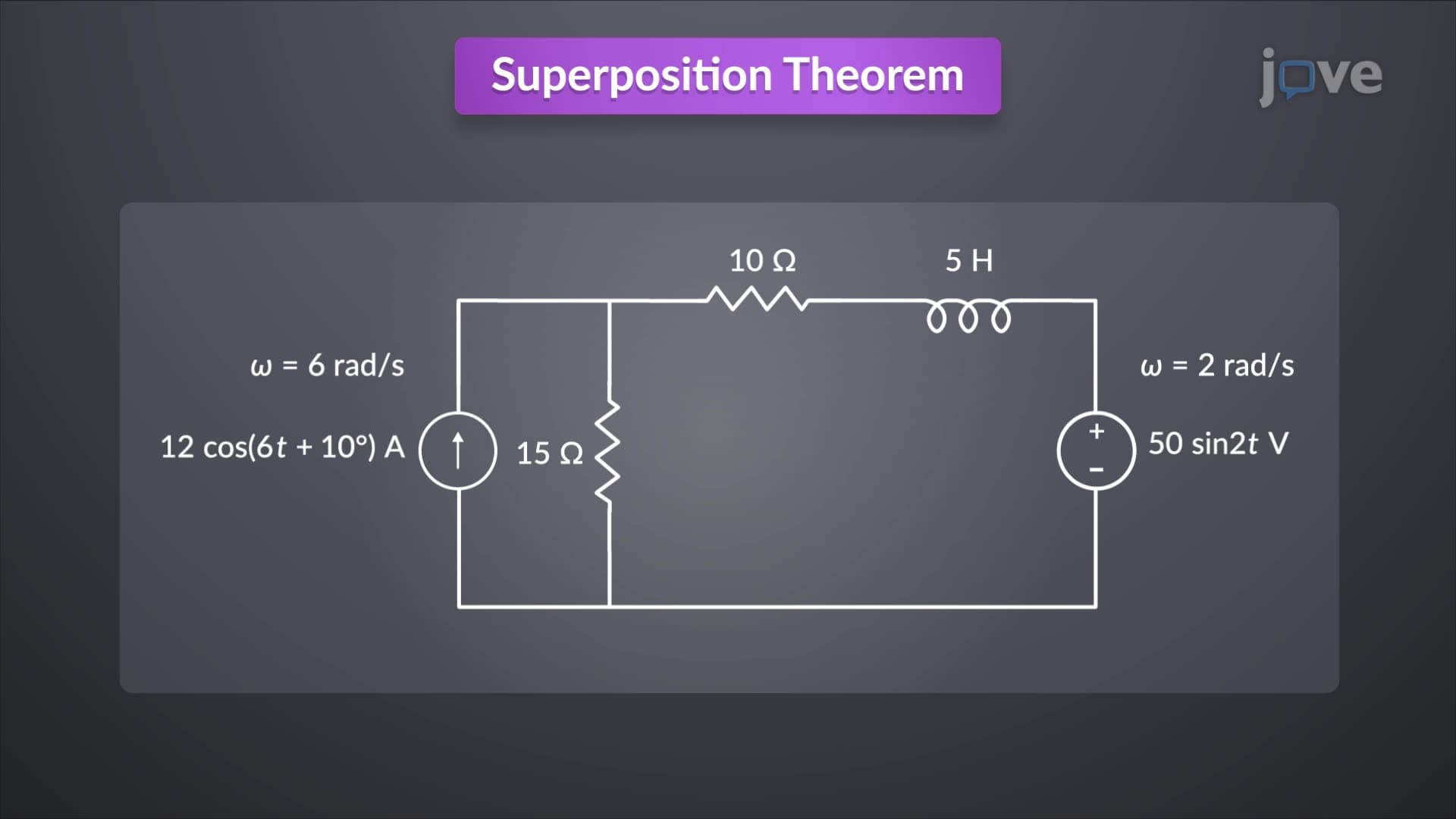
Norton current calculation directly applies superposition principles when dealing with multiple AC sources. You determine the Norton current by analyzing the short-circuit current contribution from each independent source separately, then algebraically summing these contributions. This approach proves essential when working with circuits containing sources operating at different frequencies or phases.
Major US companies like Boeing use Norton equivalents when designing aircraft electrical systems, simplifying complex power distribution networks into manageable analysis units. Tesla engineers apply Norton models when optimizing battery pack configurations, while semiconductor companies like Qualcomm use these techniques for integrated circuit design. The simplification allows engineers to focus on critical performance parameters without circuit complexity overwhelming the analysis process.
Norton's theorem requires only basic algebra and Ohm's law knowledge, making it accessible to high school students in AP Physics courses. While complex impedance calculations involve some trigonometry for AC circuits, the fundamental concepts rely on straightforward mathematical relationships. Students comfortable with solving simultaneous equations and working with fractions can master Norton equivalent analysis with consistent practice.
Focus on practicing the three-step Norton analysis process: find Norton resistance, calculate Norton current, then draw the equivalent circuit. Create flashcards linking Norton parameters with their Thevenin counterparts, since exam problems often require conversions between these equivalent forms. Work through progressively complex practice problems, starting with DC resistor networks before advancing to AC impedance circuits with multiple sources.
After mastering Norton equivalents, explore maximum power transfer theorem, which builds directly on Norton analysis principles. Study AC power calculations, including apparent, real, and reactive power relationships in complex circuits. Advanced topics include frequency response analysis and filter design, where Norton models provide foundation knowledge for understanding how circuits behave across different frequency ranges.
College electrical engineering programs teach Norton's theorem as a practical application of superposition principles, particularly in courses like Circuit Analysis I and II. The combination allows you to tackle complex multi-source AC circuits systematically, breaking them into manageable analysis steps. This integrated approach proves crucial for advanced coursework in power systems, electronics, and control systems engineering.
Common errors include forgetting to deactivate independent sources when calculating Norton resistance, confusing Norton current direction conventions, and incorrectly handling complex impedances in AC analysis. Students also frequently mix up Norton and Thevenin parameter relationships, particularly the conversion formulas. Practice with clearly labeled diagrams and systematic problem-solving steps helps avoid these typical pitfalls.
Related Micro-courses
Related Subjects
 Civil Engineering 30 micro-courses›Mechanical Engineering 28 micro-courses›