Loading…
Loading video…

10,864 views
Ever wonder how electrical engineers analyze the complex AC power grid that delivers electricity to your home? Phasor arithmetics transforms bewildering sinusoidal waves into manageable mathematical representations, making AC circuit analysis as straightforward as DC circuits. Consider how utility companies like Pacific Gas & Electric must coordinate voltage phases across thousands of miles of transmission lines. What is phasors becomes clear when you understand they're complex number representations that capture both magnitude and phase angle of AC signals. Watch the full video on JoVE Coach to master this concept with expert-led visuals and step-by-step explanations.
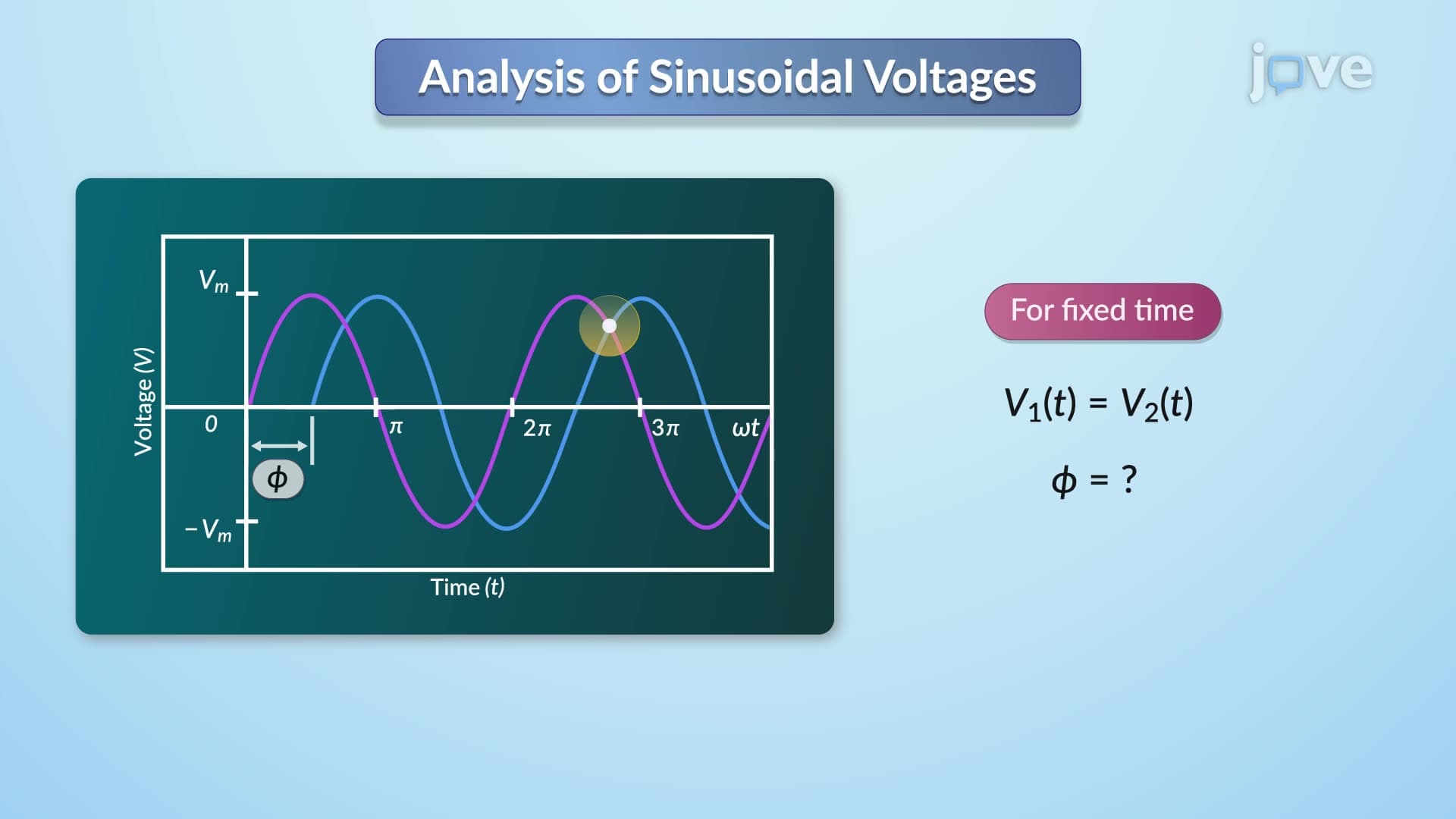
Phasor arithmetics revolutionizes how we approach alternating current circuits by transforming time-varying sinusoids into stationary complex numbers. Unlike DC circuits where voltages and currents remain constant, AC circuits involve continuously changing values that follow sinusoidal patterns. Phasors capture the essential characteristics—amplitude and phase—while eliminating the mathematical complexity of time dependence.
Phasor arithmetics definition encompasses three equivalent mathematical forms. The rectangular form (a + jb) explicitly shows real and imaginary components, making addition and subtraction straightforward. The polar form (r∠θ) directly represents magnitude r and angle θ, ideal for multiplication and division. The exponential form (re^jθ) leverages Euler's identity (e^jθ = cos θ + j sin θ) for advanced mathematical operations.
Consider a household voltage of 120V RMS at 60 Hz with 30° phase lead. In polar form, this appears as 169.7∠30° V (using peak amplitude). Students preparing for the AP Physics C exam frequently encounter problems requiring conversion between these forms, particularly when analyzing three-phase power systems used by utilities like ConEd in New York.
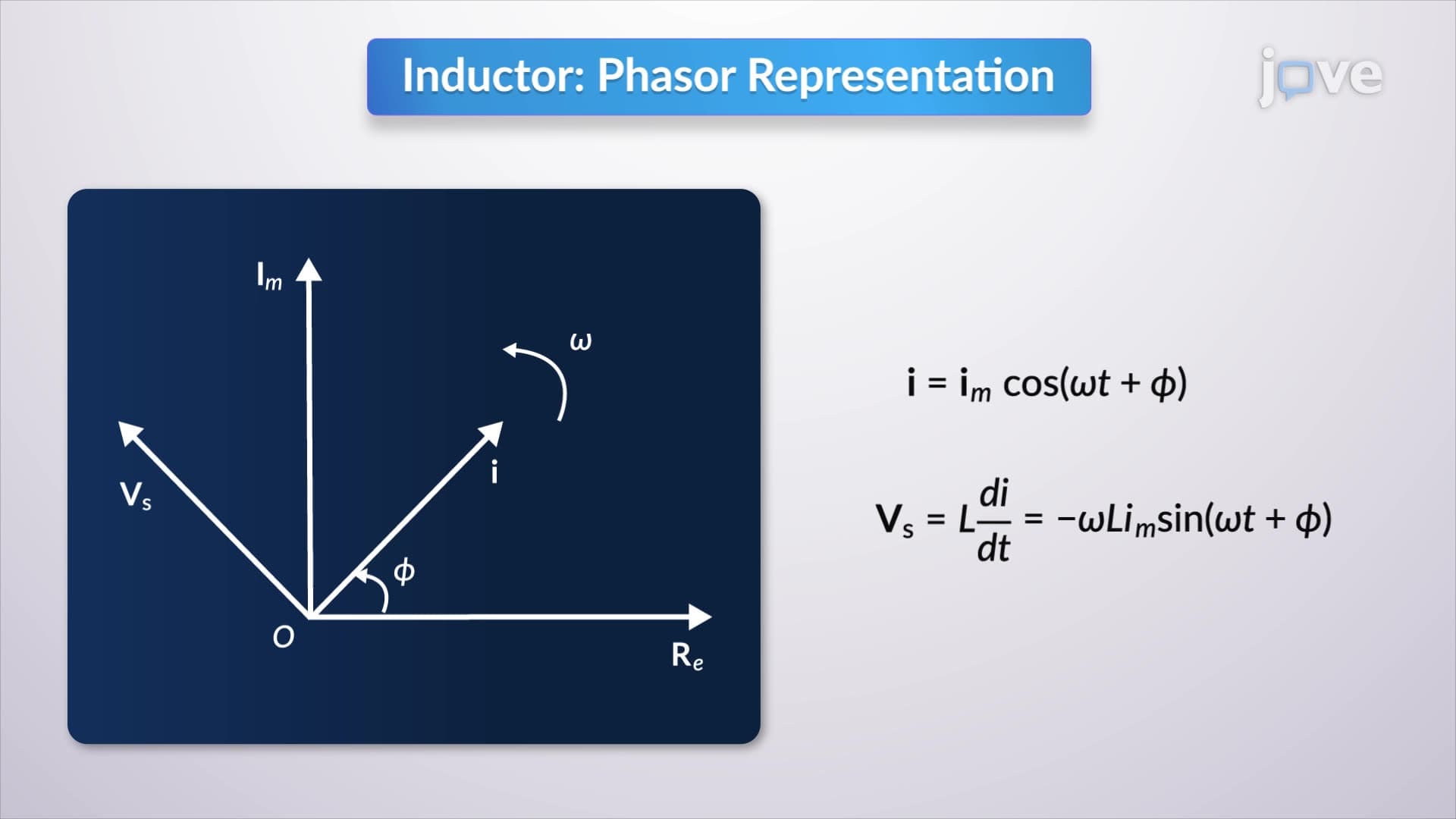
What is phasor arithmetics in detail involves systematic conversion procedures. To obtain a phasor from a sine function, first convert to cosine form using trigonometric identities: sin(ωt + φ) = cos(ωt + φ - 90°). Then express as the real part of a complex exponential: Re[Ae^j(ωt + φ)]. The phasor equals the time-independent portion: Ae^jφ or A∠φ.
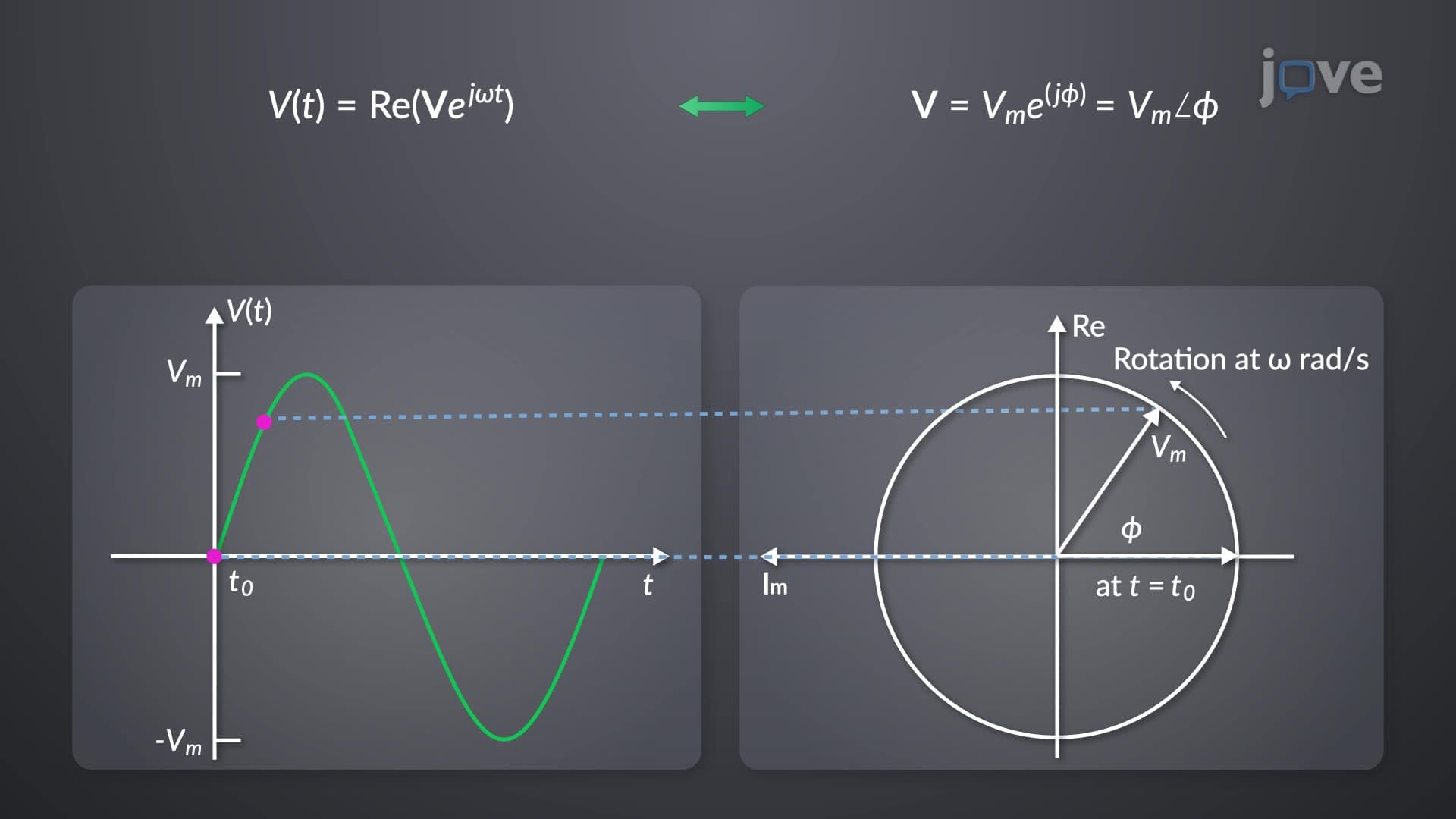
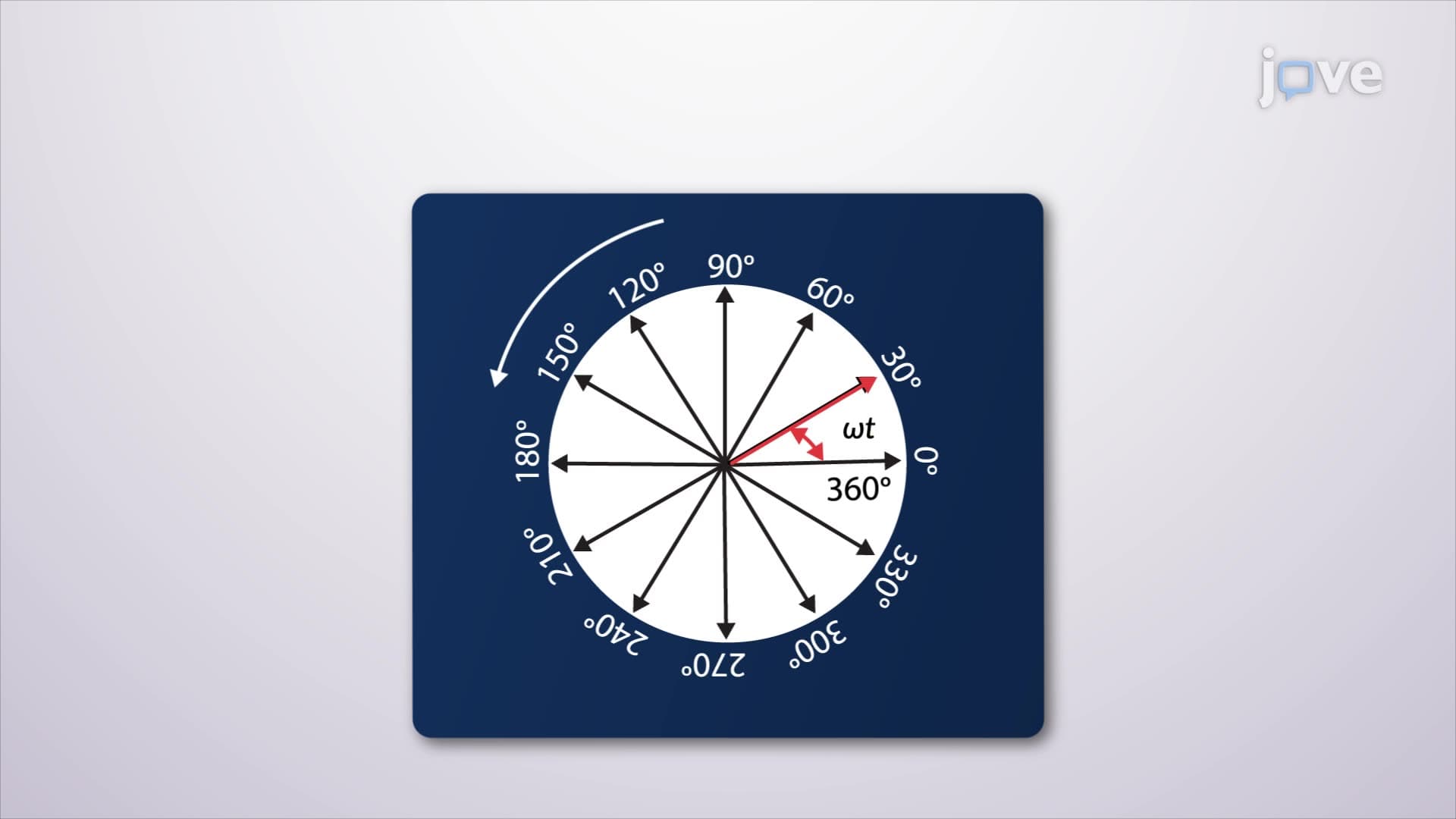
Phasor arithmetics basics include visualization through phasor diagrams. These show phasors as vectors rotating counterclockwise at angular frequency ω. The vector length represents amplitude, while the angle from the positive real axis indicates phase. At any instant, projecting the rotating vector onto the real axis yields the sinusoid's instantaneous value.
This concept proves invaluable in power engineering courses at institutions like MIT and Stanford. Students analyzing three-phase systems for companies like General Electric use phasor diagrams to visualize voltage and current relationships, ensuring proper motor operation and power factor correction.
Frequently Asked Questions
Phasors are complex number representations of sinusoidal AC signals that capture magnitude and phase information while eliminating time dependence. They transform complicated differential equations in AC circuit analysis into simple algebraic equations, making calculations far more manageable. This simplification is essential for analyzing power grids, motor drives, and communication systems.
Phasor arithmetics builds directly on complex number operations from high school algebra, applying them to electrical engineering problems. The same rectangular (a + jb) and polar (r∠θ) forms you studied now represent AC voltages and currents. Addition, subtraction, multiplication, and division follow identical complex number rules, making your algebra skills immediately applicable.
Yes, phasor concepts frequently appear on AP Physics C: Electricity and Magnetism exams, particularly in AC circuit analysis problems. College physics and engineering programs also test phasor arithmetics in courses like Circuit Analysis and Electromagnetics. The MCAT occasionally includes basic AC circuit questions where phasor understanding proves helpful.
Power companies use synchrophasor technology to monitor grid stability across their transmission networks in real-time. These measurements help operators detect disturbances, prevent blackouts, and optimize power flow between generating stations. Smart grid systems rely heavily on phasor measurement units (PMUs) installed at substations throughout states like North Carolina and South Carolina.
You need solid trigonometry skills, basic complex number operations, and familiarity with exponential functions. Most high school Algebra II or Pre-Calculus courses provide sufficient preparation. Don't worry if you haven't taken calculus yet—phasor analysis itself doesn't require differentiation or integration, just algebraic manipulation of complex numbers.
Focus on understanding the physical meaning rather than memorizing formulas mechanically. Practice converting between rectangular, polar, and exponential forms using Euler's identity as your foundation. Create flashcards with different sinusoid examples and work through the sine-to-cosine conversion process repeatedly until it becomes automatic.
Progress to AC circuit analysis using impedance concepts, where phasors become the foundation for analyzing resistive, inductive, and capacitive elements. Then explore three-phase power systems, transformer analysis, and frequency domain techniques. Advanced topics include Fourier analysis and Laplace transforms used in control systems and signal processing.
Phasor diagrams show the rotating magnetic field relationships in AC motors, illustrating how three-phase voltages create smooth rotation. The voltage phasors separated by 120° create a constant-magnitude rotating field that induces rotor motion. Companies like Tesla and General Motors use these principles in electric vehicle motor design and control systems.
Related Micro-courses
Related Subjects
 Civil Engineering 30 micro-courses›Mechanical Engineering 28 micro-courses›