Loading…
Loading video…

10,864 views
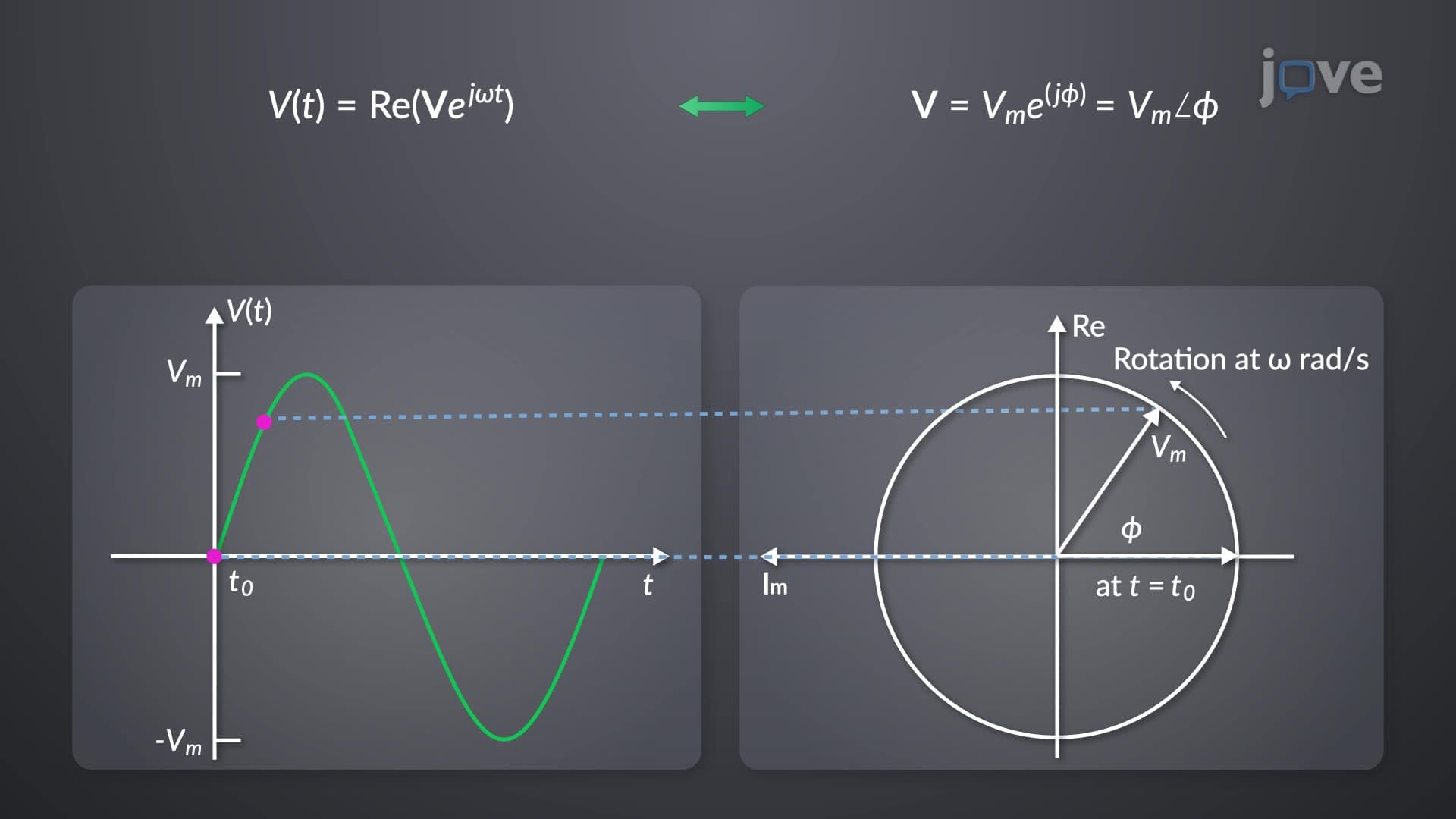
Ever wonder how engineers at Boeing analyze the complex electrical systems powering a 787 Dreamliner's flight controls? Phasor relationships for circuit elements provide the mathematical foundation for understanding how AC circuits behave in everything from household appliances to aerospace systems. What is Phasor Arithmetics involves transforming time-domain sinusoidal functions into frequency-domain representations, enabling simplified analysis of steady-state AC circuits through algebraic operations rather than complex differential equations. Watch the full video on JoVE Coach to master this concept with expert-led visuals and step-by-step explanations.
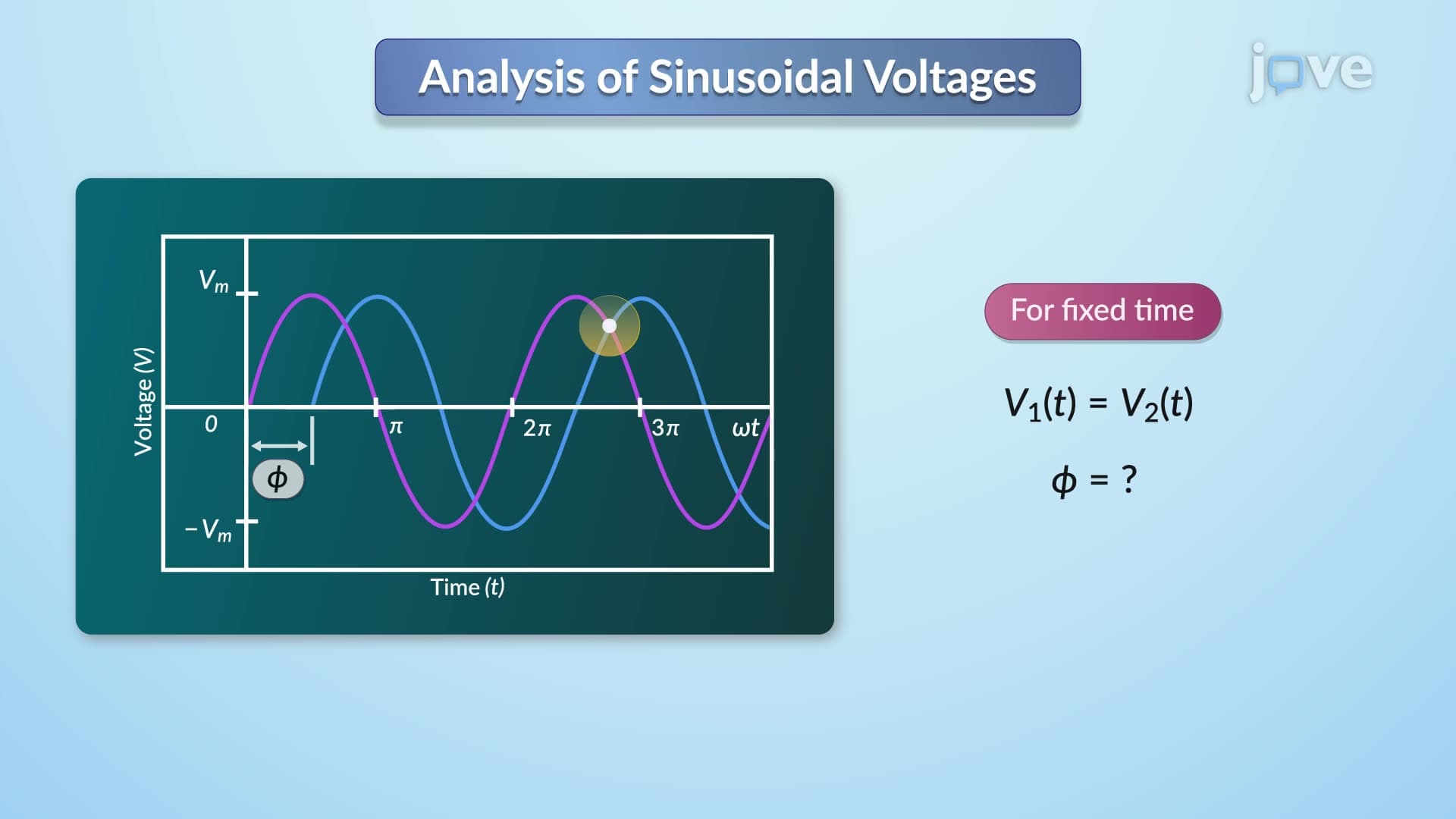
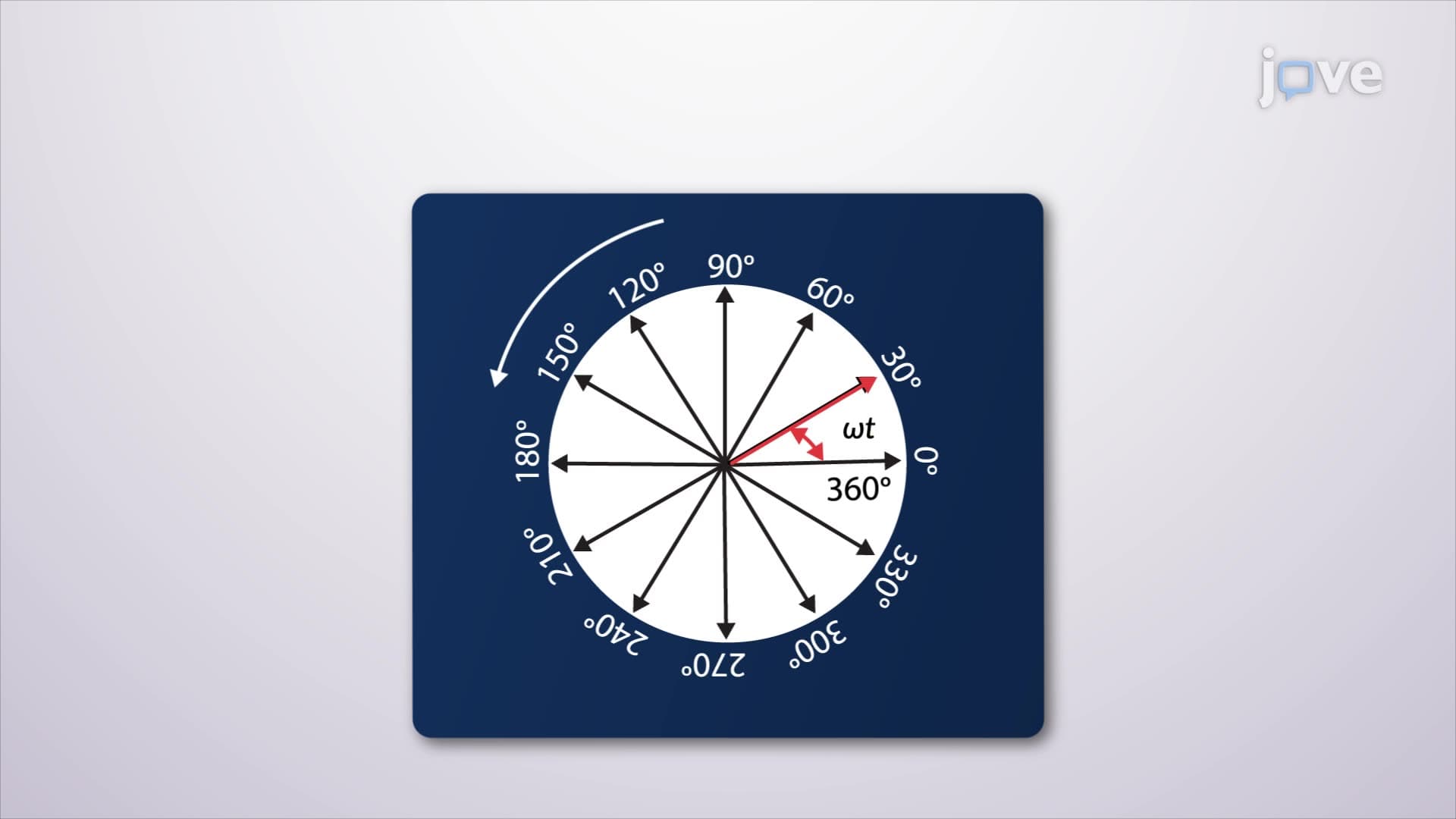
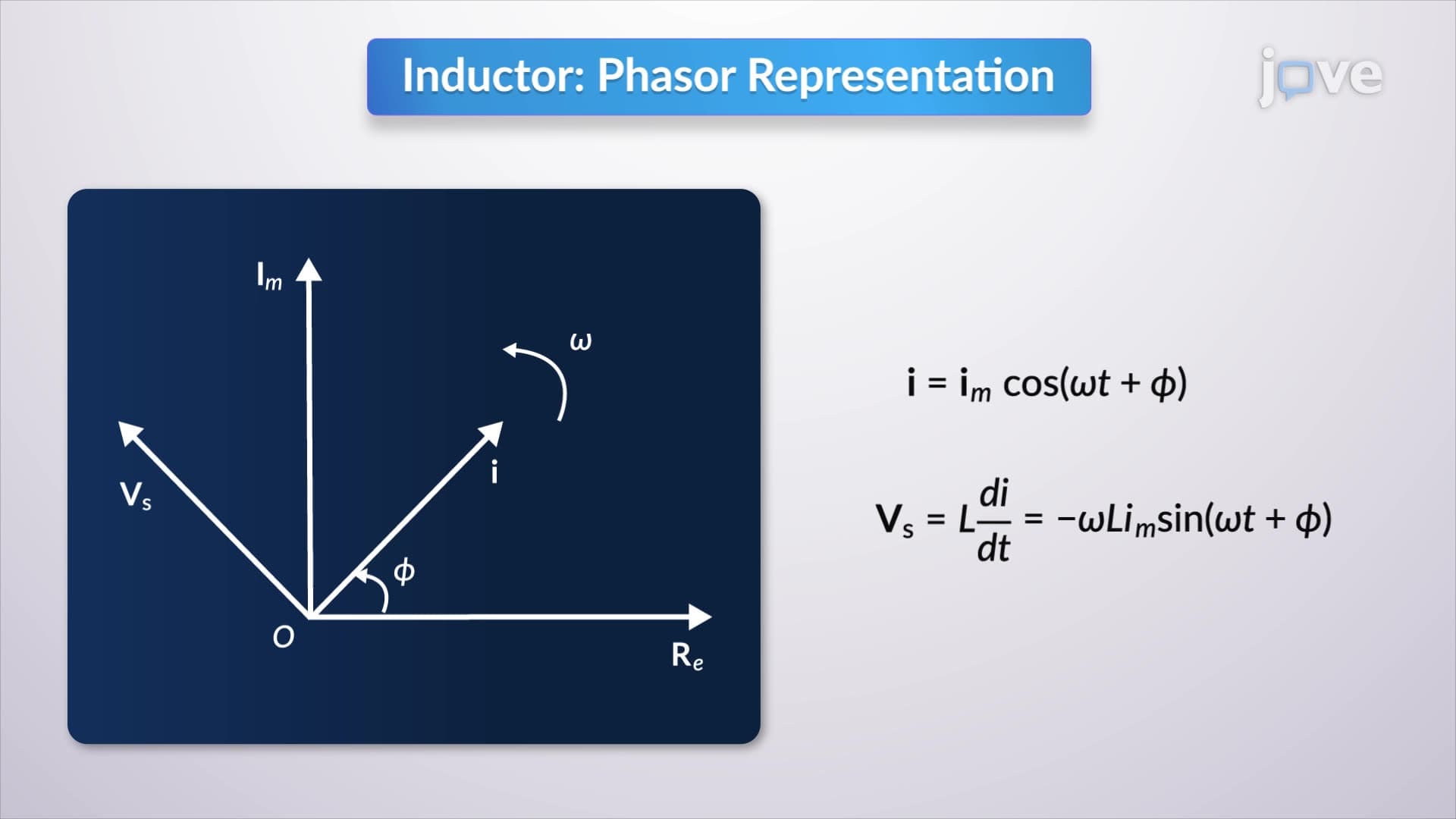
Phasor arithmetics forms the cornerstone of AC circuit analysis, transforming complex time-varying sinusoidal functions into manageable algebraic expressions. This mathematical technique revolutionizes how electrical engineers approach circuit problems by converting differential equations into simple algebraic manipulations. In the phasor domain, a sinusoidal voltage v(t) = V cos(ωt + φ) becomes a complex number V∠φ, where V represents magnitude and φ represents phase angle.
The transformation's power lies in its ability to handle derivatives and integrals algebraically. When differentiating a sinusoid in time domain, the corresponding phasor simply multiplies by jω. Conversely, integration in time domain translates to division by jω in phasor domain. This relationship eliminates the need for complex calculus operations, making AC analysis accessible to students taking AP Physics C or introductory electrical engineering courses.
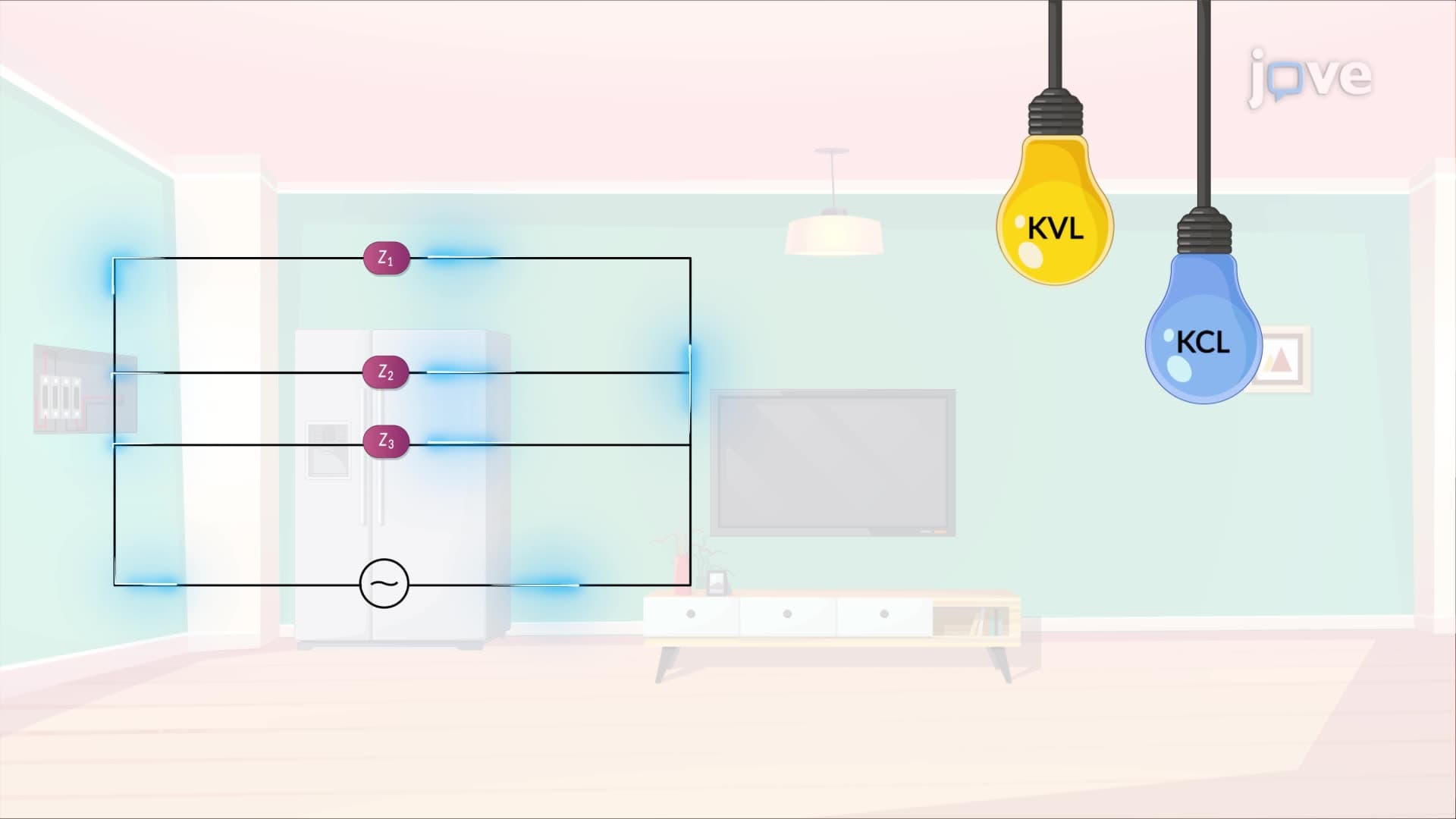
Rectangular form proves most efficient for phasor addition and subtraction. Consider two phasors: A = a1 + ja2 and B = b1 + jb2. Their sum becomes (a1 + b1) + j(a2 + b2), where real parts combine separately from imaginary parts. This principle applies directly to Kirchhoff's voltage law in AC circuits, where voltage phasors around a closed loop must sum to zero.
Subtraction follows identical logic: A - B = (a1 - b1) + j(a2 - b2). Students preparing for the MCAT's physics section or electrical engineering midterms frequently encounter these operations when analyzing RC, RL, and RLC circuits. Power companies like Pacific Gas & Electric use these calculations daily to balance three-phase distribution systems serving California's electrical grid.
Polar form simplifies multiplication and division operations significantly. When multiplying phasors A∠θ1 and B∠θ2, the result becomes AB∠(θ1 + θ2). Magnitudes multiply while angles add. Division follows as (A/B)∠(θ1 - θ2), where magnitudes divide and angles subtract.
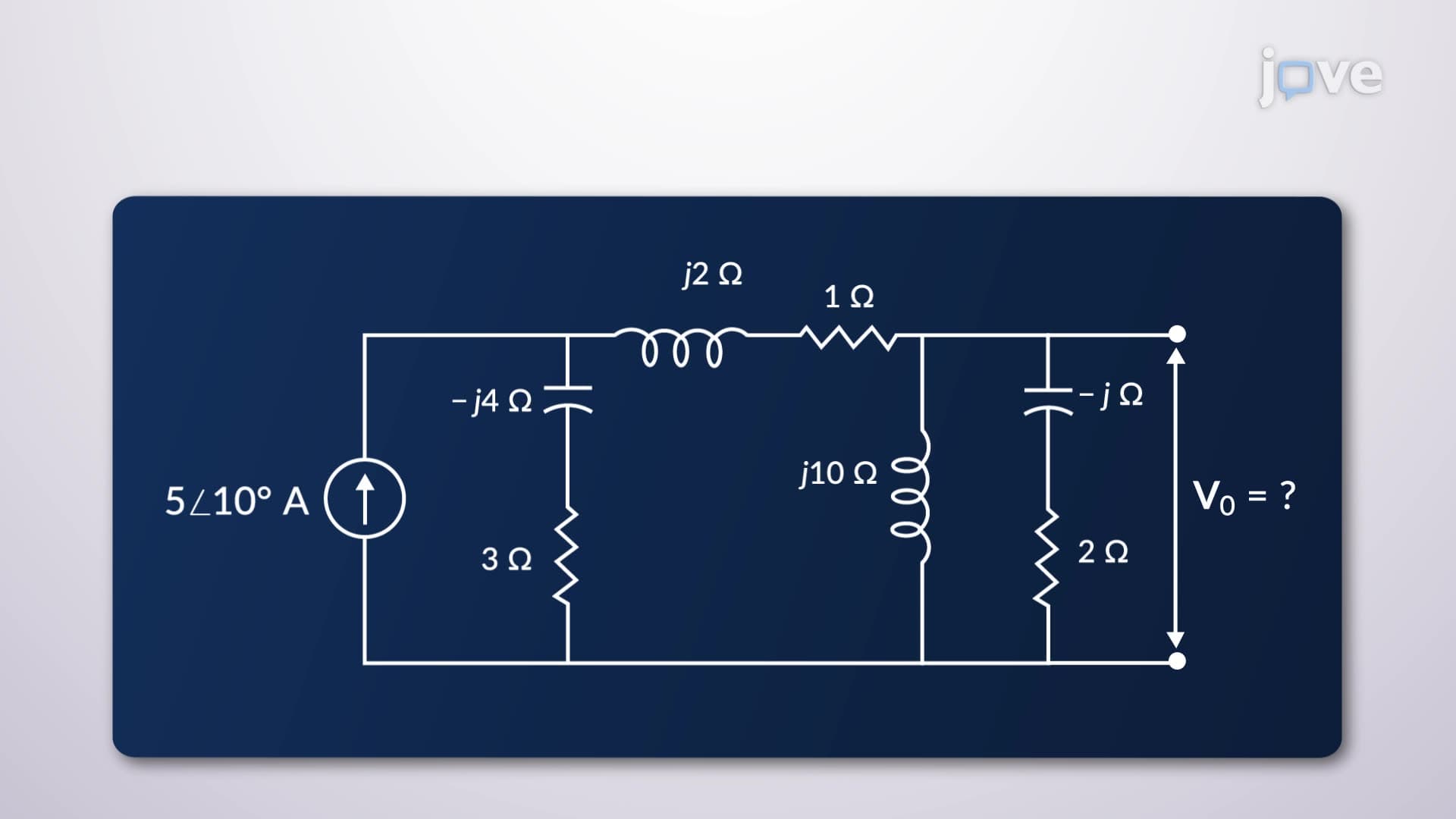
This technique proves invaluable when calculating impedances in series and parallel combinations. For instance, analyzing the impedance characteristics of Tesla's electric vehicle charging systems requires extensive phasor multiplication to determine power transfer efficiency. Students taking college-level circuit analysis courses use these operations to solve complex network problems that would be computationally intensive using time-domain methods.
Complex conjugates play crucial roles in power calculations and impedance matching. If A = a + jb, then its conjugate A* = a - jb in rectangular form, or A∠-θ in polar form. Power calculations in AC systems require multiplying voltage phasors by current conjugate phasors, yielding both real power (watts) and reactive power (VARs).
Major US utilities like Con Edison use phasor analysis to optimize power factor correction, reducing transmission losses across New York's electrical infrastructure. Students preparing for professional engineering licensing exams must master these conjugate relationships to analyze three-phase systems and power quality issues affecting industrial facilities.
Frequently Asked Questions
Phasor arithmetics converts time-varying AC circuit problems into algebraic operations using complex numbers. This mathematical technique eliminates the need for solving differential equations, making AC circuit analysis much simpler. It's essential for understanding power systems, motor control, and electronic devices that operate with alternating current.
AP Physics C frequently tests phasor concepts through RLC circuit problems and AC power calculations. Students must demonstrate understanding of impedance calculations, phase relationships between voltage and current, and resonance conditions. The exam emphasizes conceptual understanding rather than complex mathematical manipulations.
Rectangular form (a + jb) works best for addition and subtraction since you simply combine real and imaginary parts separately. Polar form (r∠θ) excels for multiplication and division because magnitudes multiply/divide while angles add/subtract. Choose the form that simplifies your specific calculation.
Power companies like Duke Energy use phasor analysis to monitor grid stability, calculate power flow, and coordinate protective relay systems. Smart grid technologies rely on phasor measurement units (PMUs) to synchronize measurements across vast transmission networks. This enables real-time monitoring and control of electrical power distribution.
No, phasor analysis actually simplifies calculus by converting derivatives and integrals into algebraic operations. You need basic trigonometry, complex number arithmetic, and understanding of sine/cosine functions. High school students in AP Physics or college freshmen can master these concepts with proper foundation.
Practice converting between time-domain and phasor-domain representations repeatedly. Create reference cards showing derivative/integral transformations (multiply/divide by jω). Solve numerous problems involving both rectangular and polar operations. Focus on understanding when to use each form rather than memorizing formulas.
Progress to three-phase systems, power calculations using complex power, and frequency-domain analysis techniques. Advanced topics include Fourier transforms, Laplace transforms, and filter design. These concepts build naturally on phasor foundations and appear in senior-level electrical engineering coursework.
Related Micro-courses
Related Subjects
 Civil Engineering 30 micro-courses›Mechanical Engineering 28 micro-courses›