Loading subject page…


9,886 views

Video Summary: What are Types of Semiconductors
Ever wonder how your iPhone processes billions of calculations per second? The secret lies in carrier generation and recombination within semiconductor materials that power every computer chip. Silicon wafers manufactured by companies like Intel start as intrinsic semiconductors with minimal conductivity, but through precise doping processes, engineers create N-type and P-type semiconductors that form the foundation of modern electronics. Understanding what are types of semiconductors reveals how temperature and impurities control electron movement between energy bands. Watch the full video on JoVE Coach to master this concept with expert-led visuals and step-by-step explanations.
Semiconductors form the backbone of modern electronics, from smartphones to solar panels. These materials possess electrical conductivity between that of conductors (like copper) and insulators (like glass). The two fundamental categories-intrinsic and extrinsic semiconductors-differ significantly in their electrical properties and manufacturing applications.
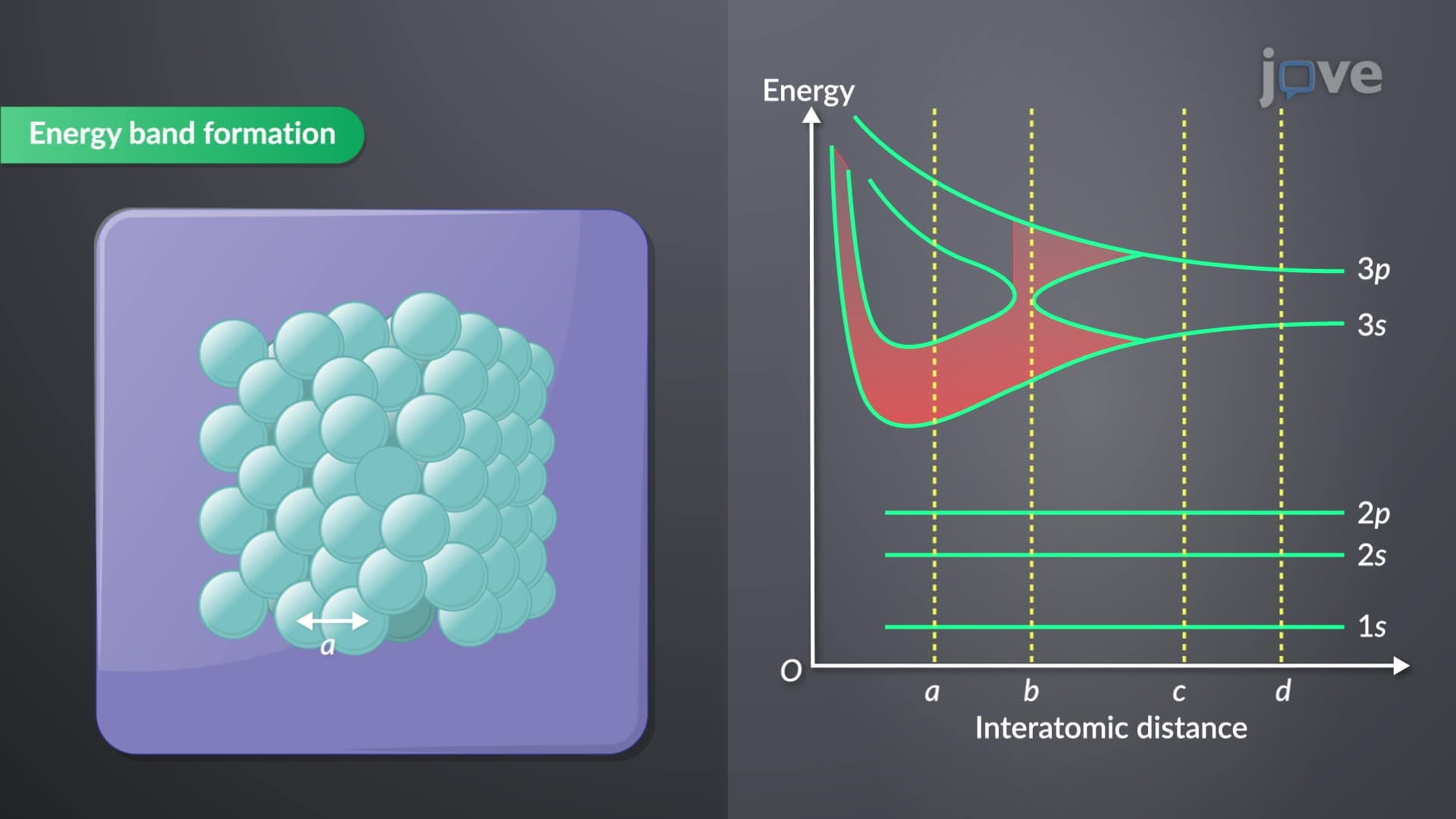
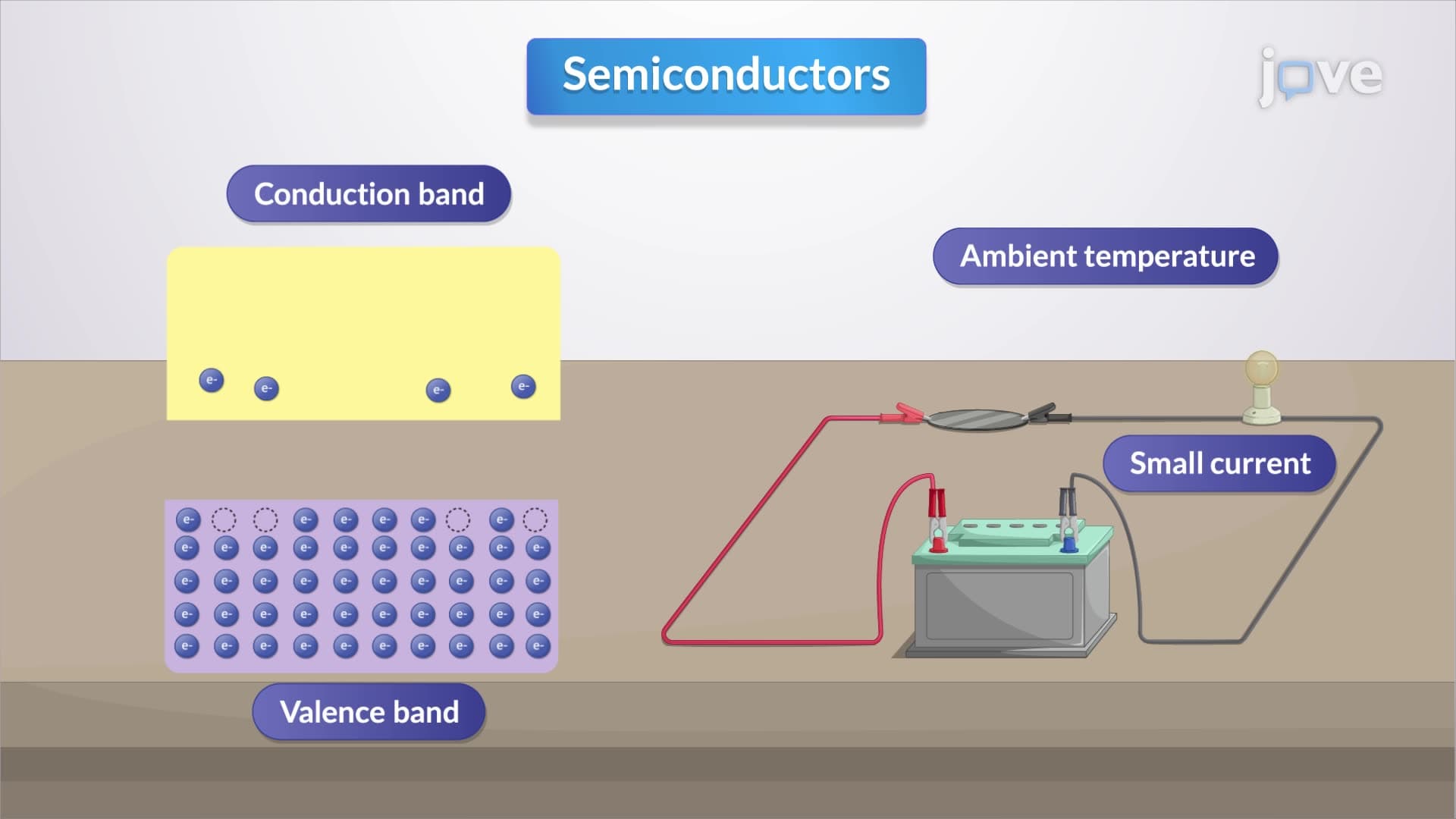
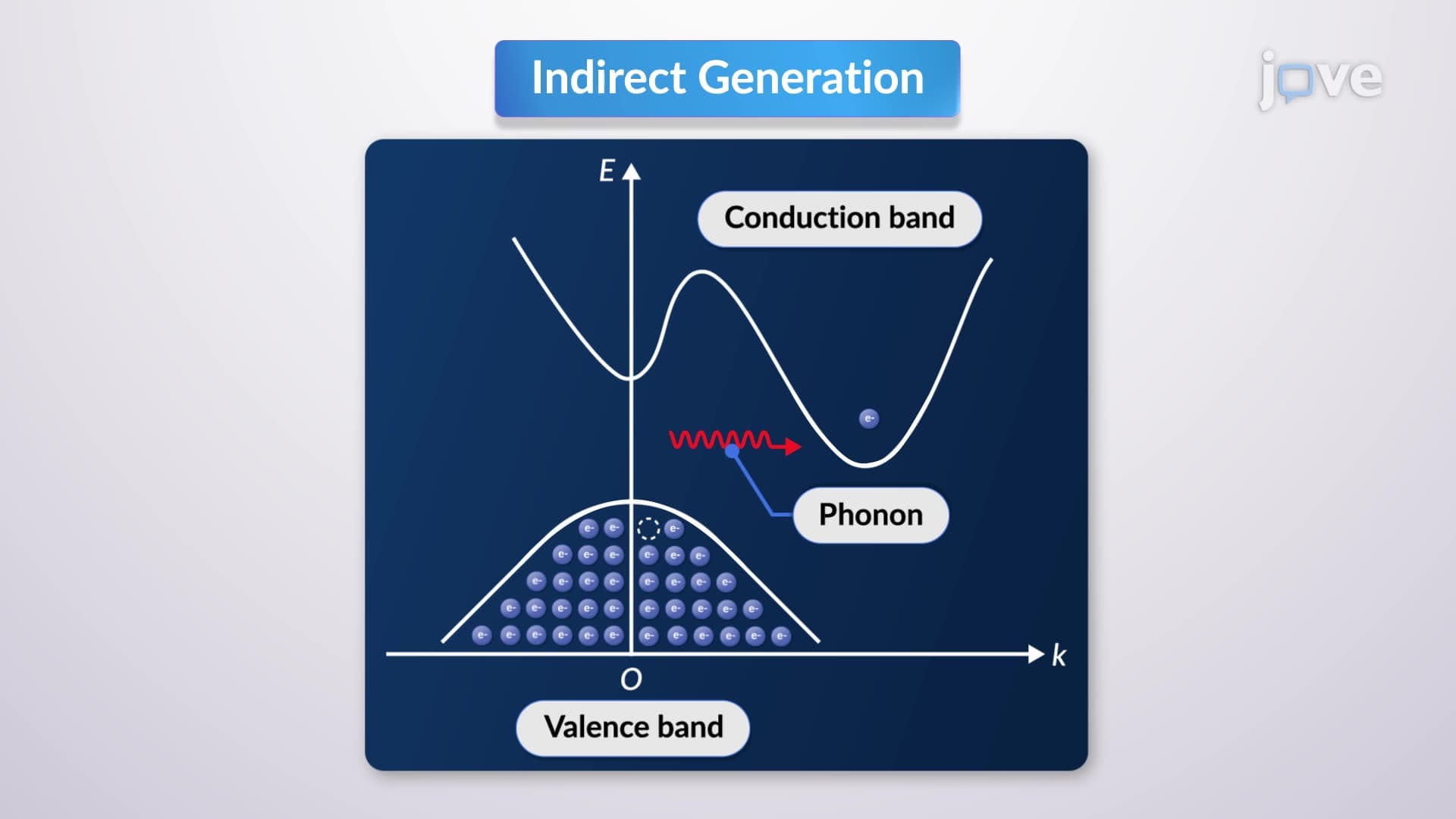
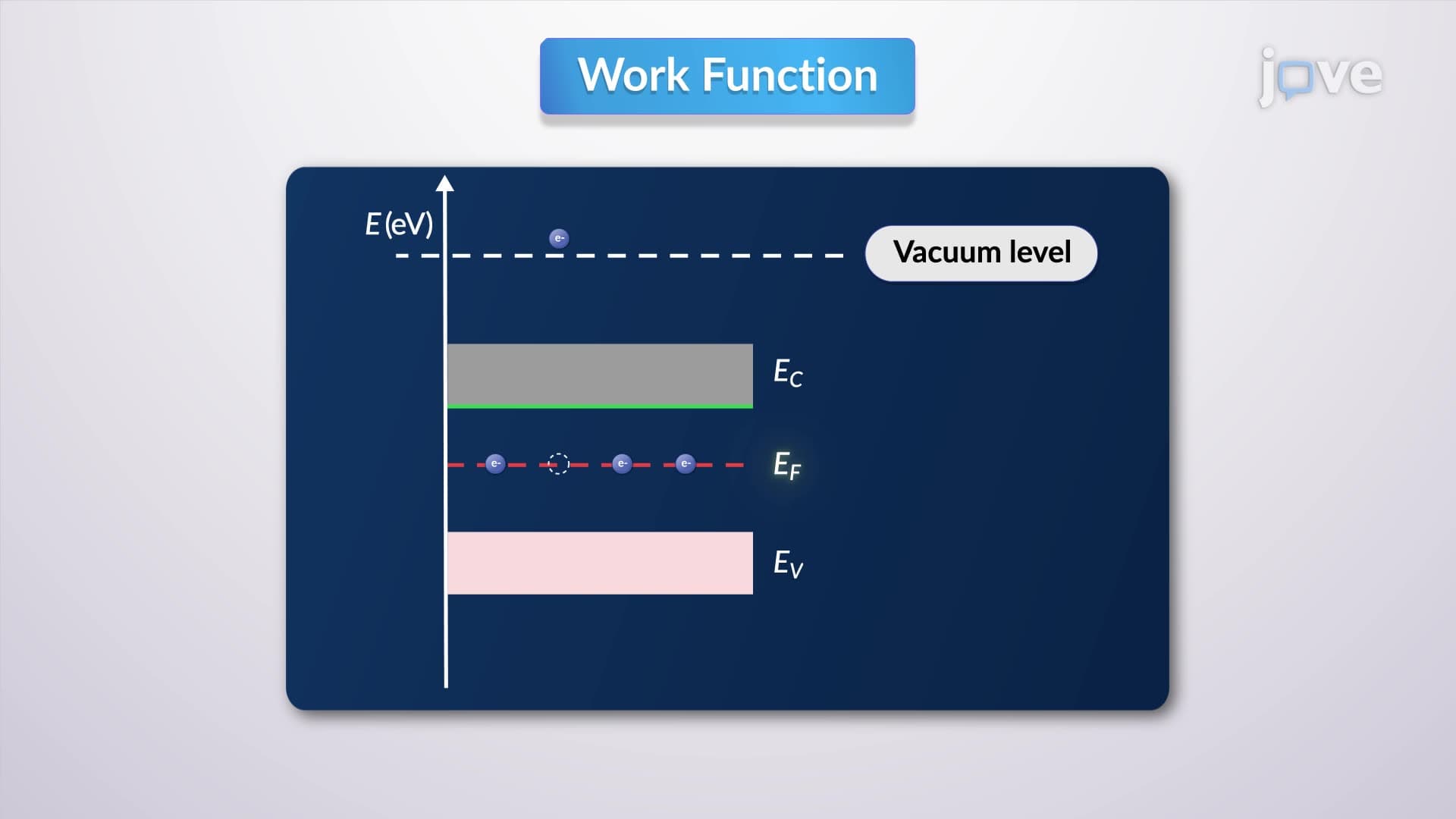
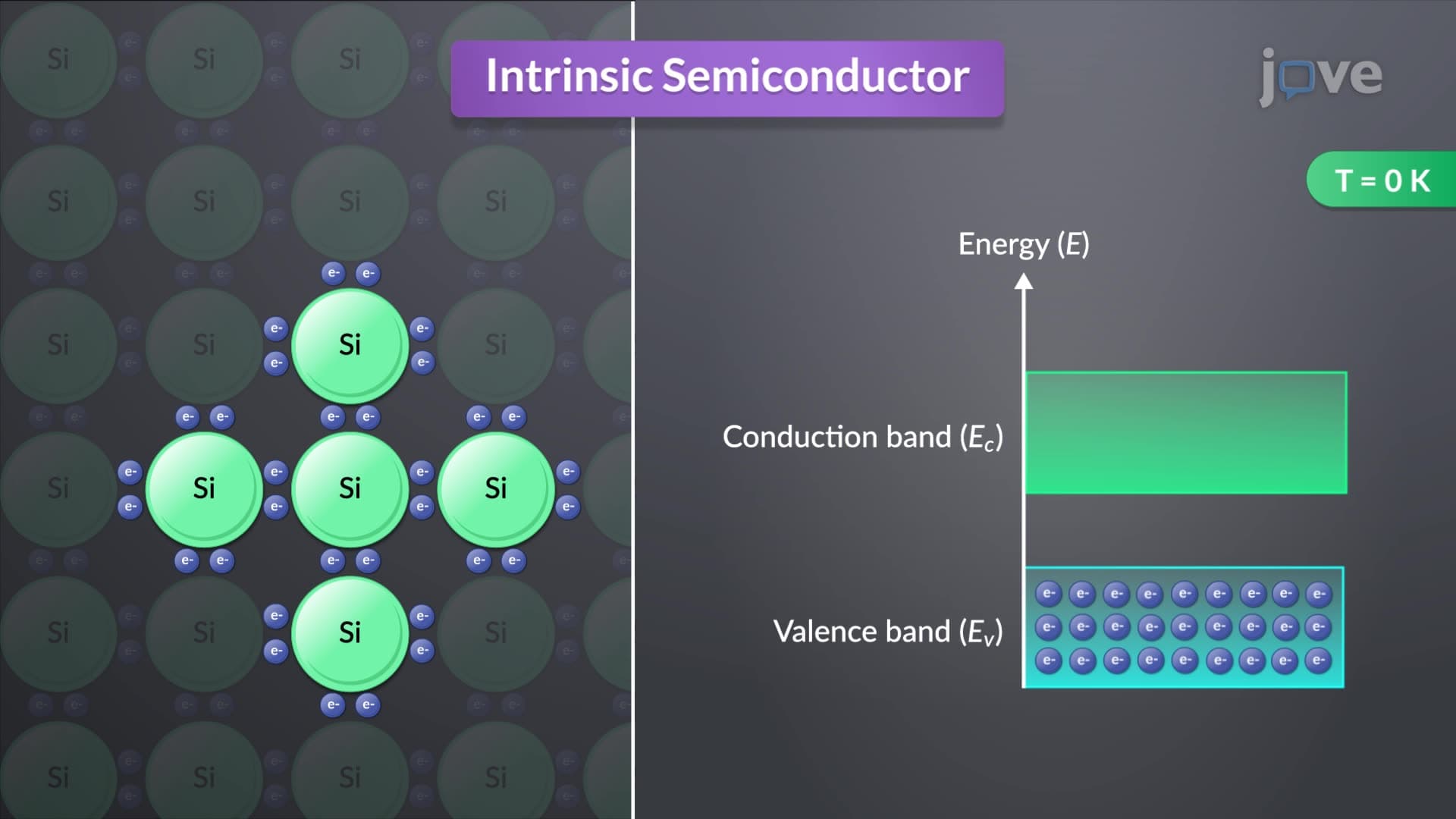
Pure silicon represents the classic example of an intrinsic semiconductor. At absolute zero temperature, all electrons remain in the valence band, making the material an insulator. However, as temperature increases, thermal energy promotes electrons across the band gap into the conduction band through a process called carrier generation and recombination.
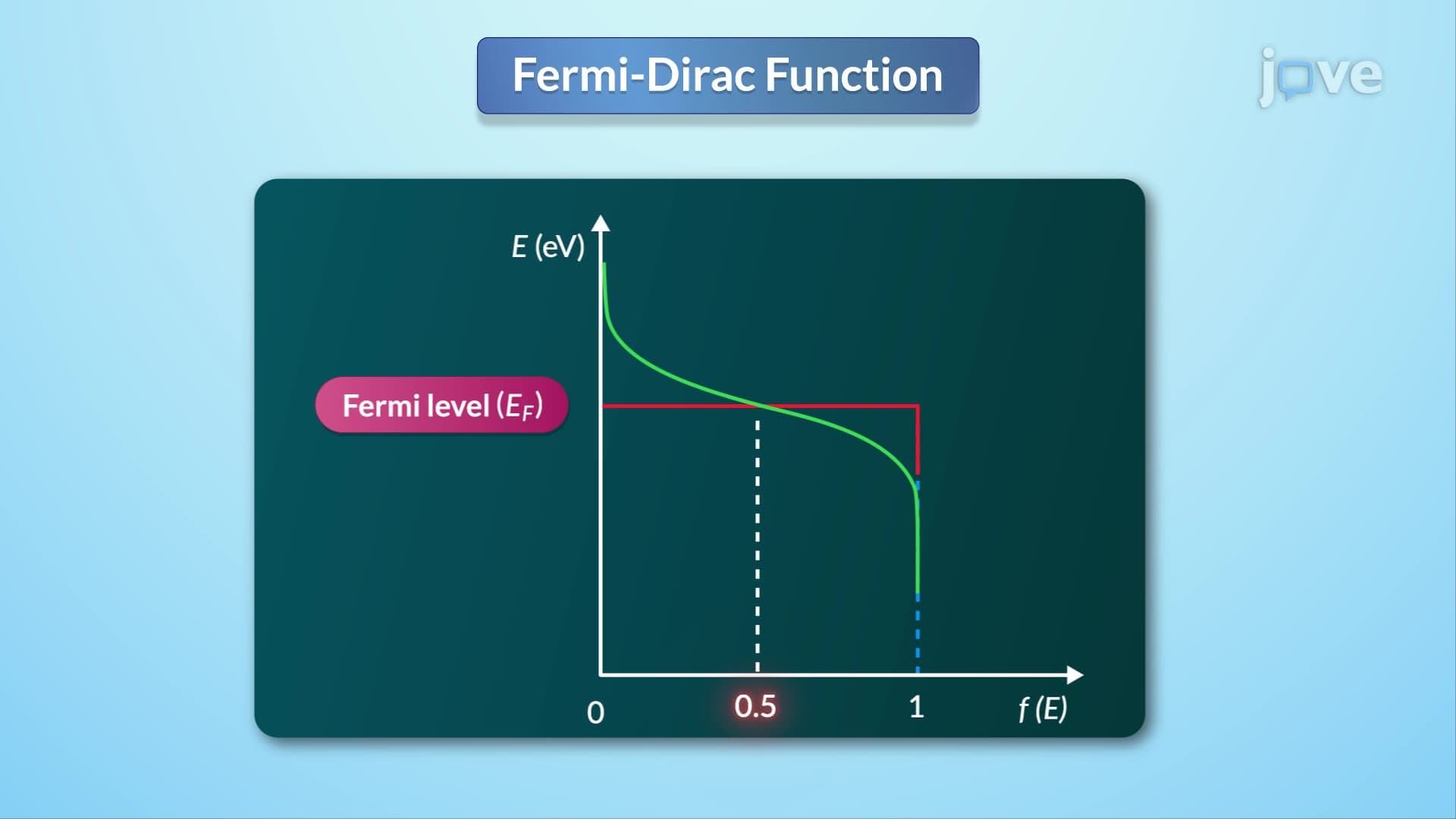
This thermal excitation creates equal numbers of free electrons (negative charges) and holes (positive charges), establishing charge neutrality. The Fermi level-representing the energy at which electron occupancy probability equals 50%-sits precisely at the band gap center in intrinsic materials. Companies like Applied Materials utilize this principle when manufacturing ultra-pure silicon wafers for semiconductor fabrication.
The carrier generation and recombination definition becomes more complex in extrinsic semiconductors, where controlled impurities dramatically alter electrical properties. Silicon's four valence electrons form covalent bonds with neighboring atoms, but introducing specific impurities disrupts this perfect crystalline structure.
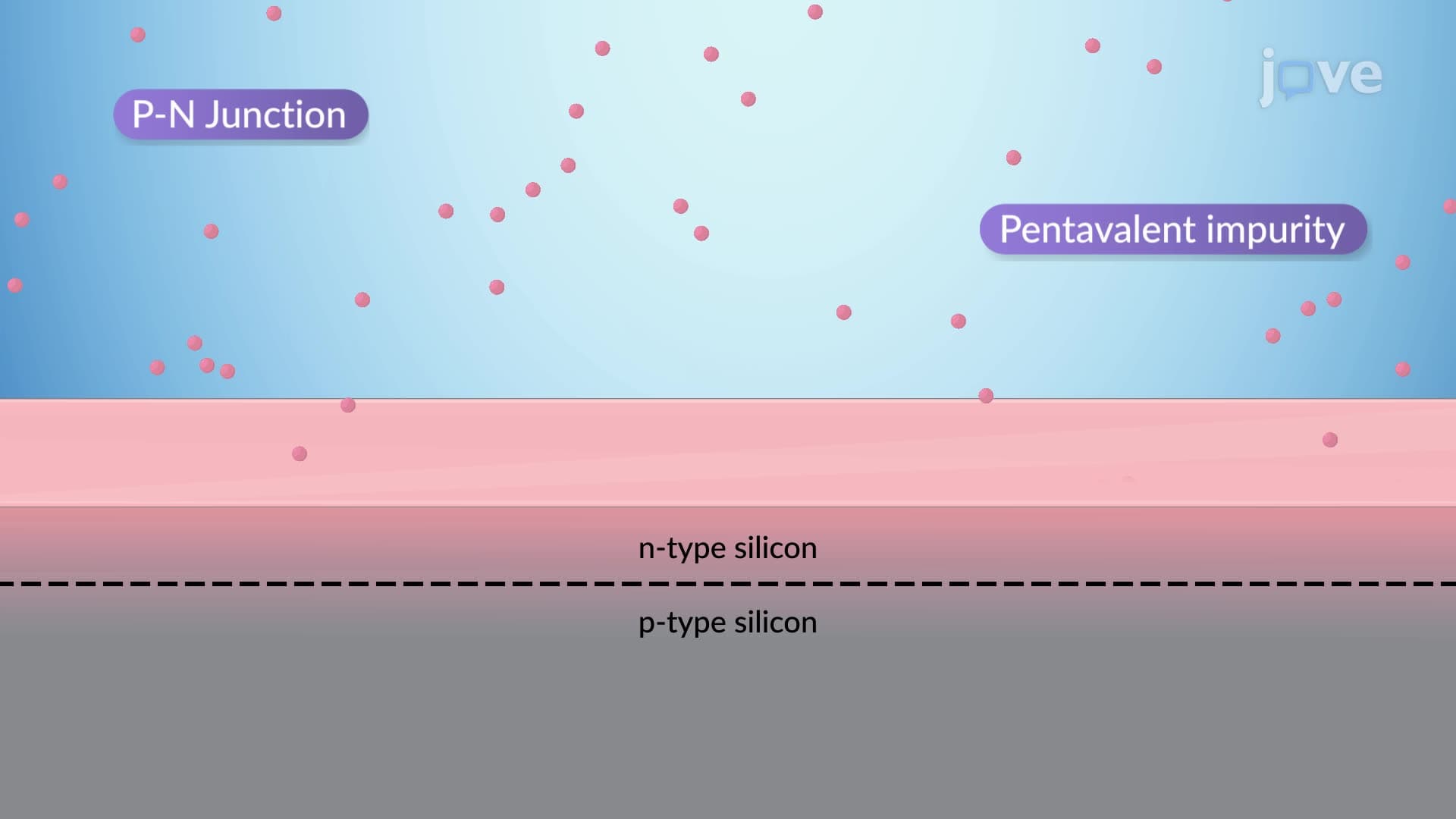
N-type semiconductors result from doping silicon with pentavalent elements like phosphorus or arsenic. These atoms contribute five valence electrons but only need four for bonding, leaving one electron free to conduct electricity. The excess electrons become majority carriers, while holes remain minority carriers. This shifts the Fermi level toward the conduction band, enhancing conductivity at room temperature.
Conversely, P-type semiconductors incorporate trivalent impurities like boron or gallium. With only three valence electrons, these atoms create "holes" in the crystal lattice-essentially missing electrons that behave as positive charges. Holes become majority carriers, shifting the Fermi level toward the valence band.
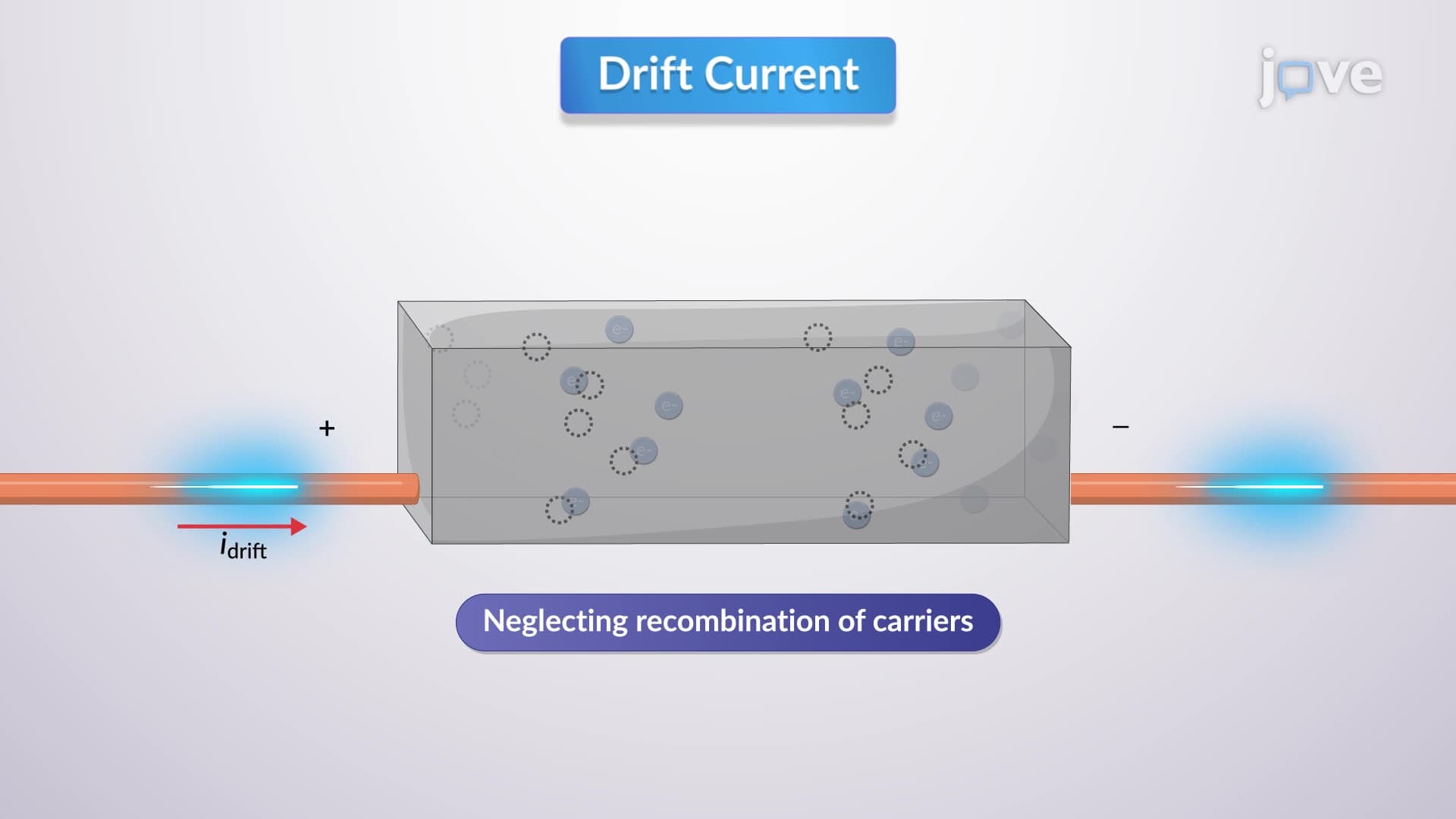
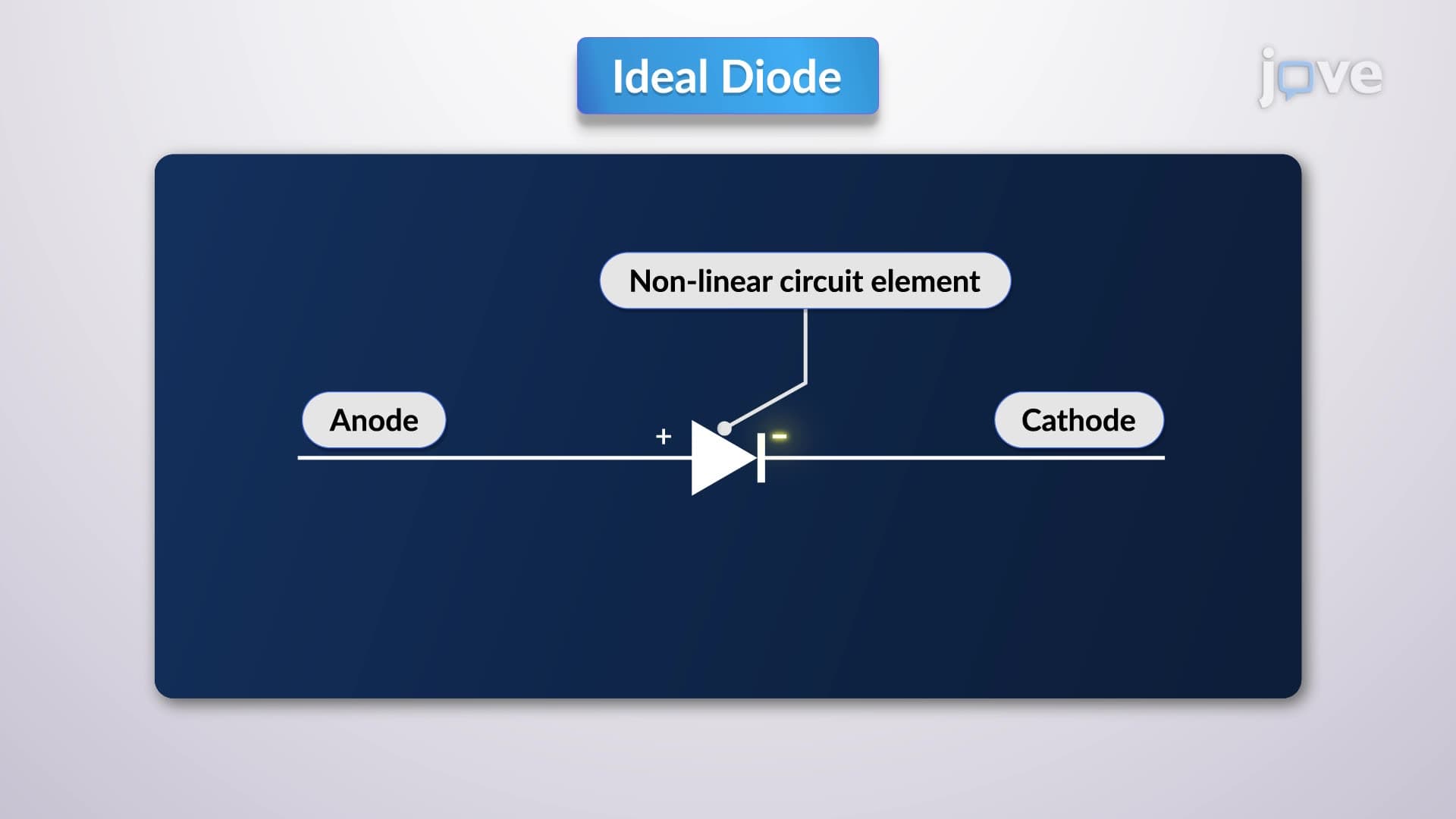
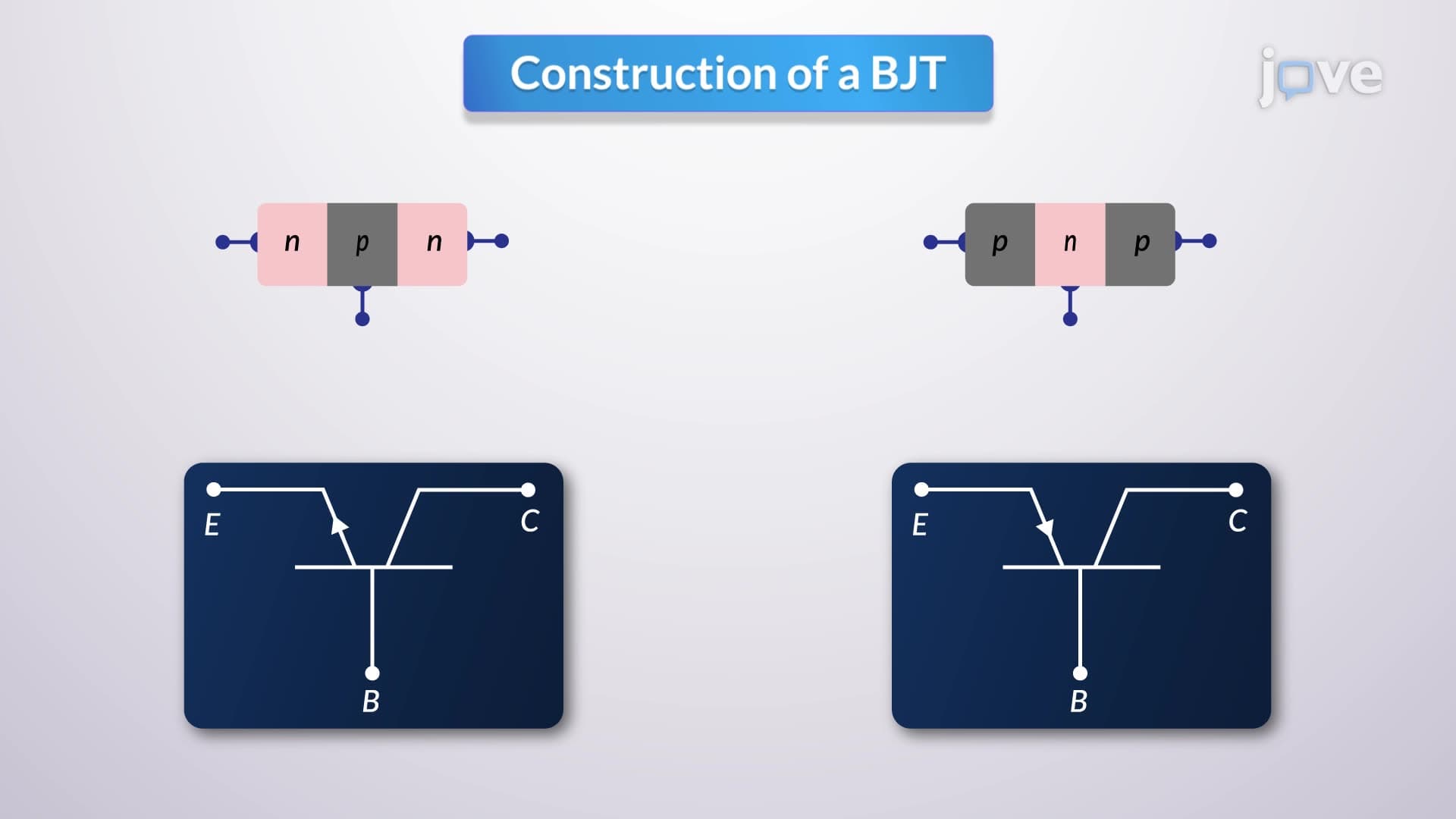
Understanding what is carrier generation and recombination in detail proves essential for AP Physics, college electronics courses, and engineering programs. Texas Instruments and other semiconductor manufacturers rely on precise control of these processes to create transistors, diodes, and integrated circuits that power everything from calculators to supercomputers.
Students preparing for standardized tests should master how temperature, doping concentration, and electric fields influence carrier behavior. This knowledge directly applies to solving problems involving semiconductor device characteristics, solar cell efficiency, and electronic circuit analysis in both academic and professional contexts.
Related Micro-courses