Loading subject page…

- Electrical Engineering
- Transistors
- Characteristics of MOSFET
Micro-course: Transistors
16,906 views
Learn key concepts and earn your certificate.

Characteristics of MOSFET

00:00
01:17
Video Summary: What are Characteristics of Mosfet
Ever wondered how your smartphone's processor contains billions of tiny switches that make modern computing possible? MOSFET enhancement mode transistors are the fundamental building blocks powering everything from Intel's latest processors to electric vehicle controllers like those in Tesla's Model 3. Understanding what are characteristics of MOSFET reveals how these microscopic devices control current flow through precise voltage manipulation, operating in three distinct regions that determine their behavior in electronic circuits. Watch the full video on JoVE Coach to master this concept with expert-led visuals and step-by-step explanations.
- Understand what are characteristics of MOSFET and identify the five essential parameters that define transistor performance: channel length, channel width, oxide thickness, junction depth, and substrate doping
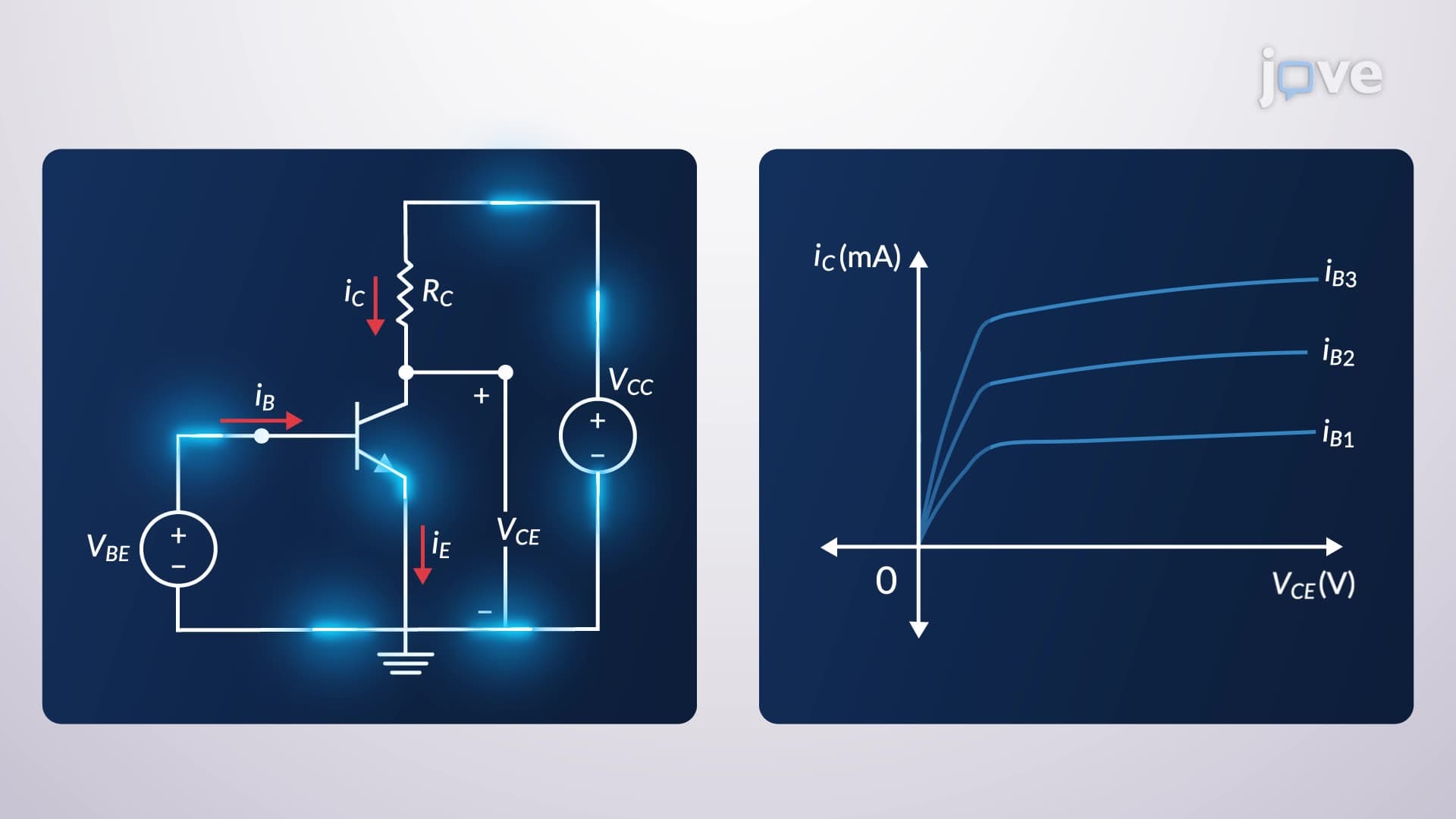
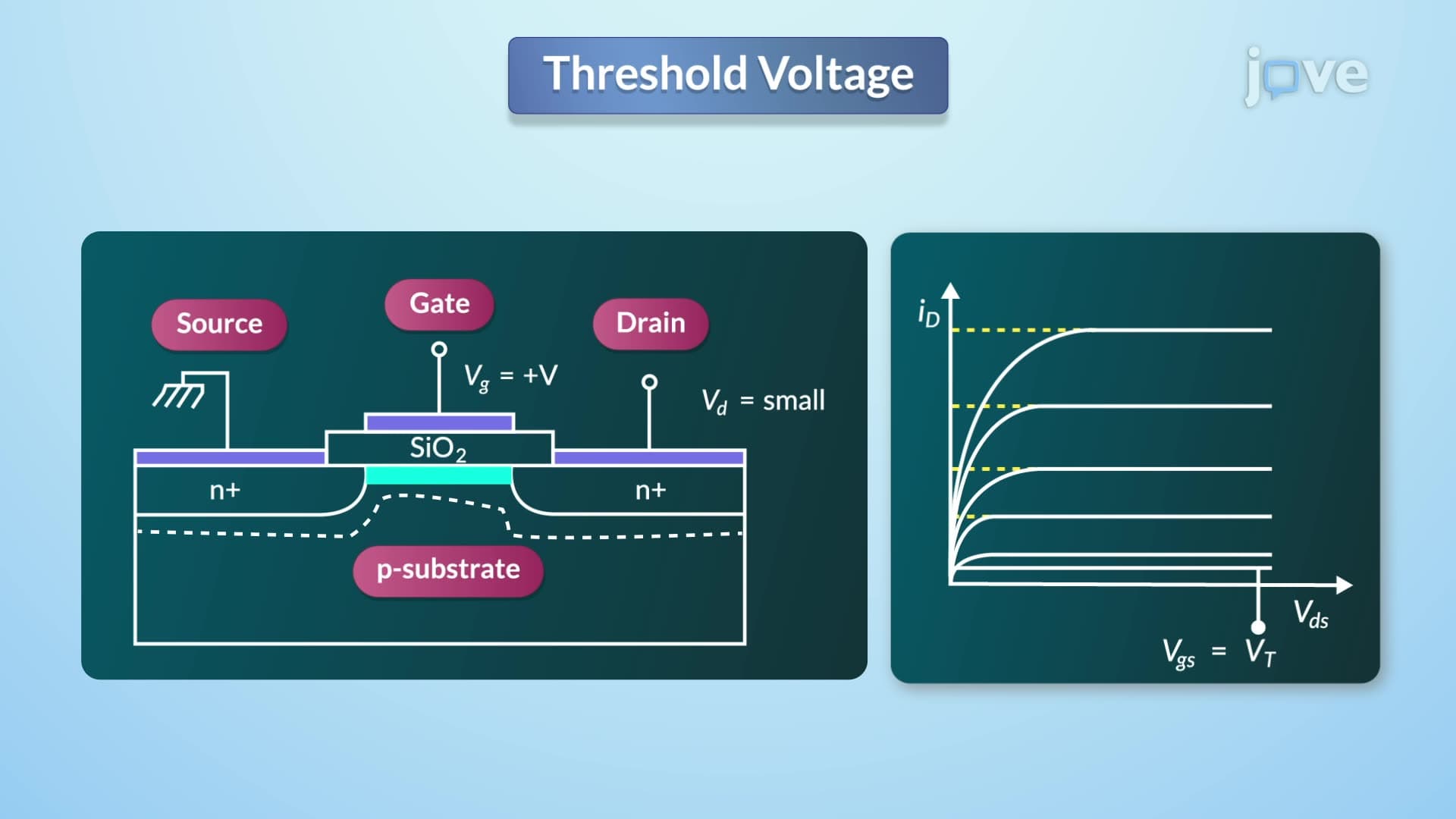
- Analyze the three distinct operating regions of MOSFETs: cutoff region (zero conductance), linear region (variable resistance), and saturation region (constant current)
- Identify the threshold voltage concept and recognize its critical role in determining when a MOSFET begins conducting current between source and drain terminals
- Compare the behavior of source-to-drain current flow across different gate voltage levels and understand how gate bias controls channel formation
- Evaluate how drain voltage affects the inversion layer thickness and recognize the pinch-off phenomenon that initiates saturation mode operation
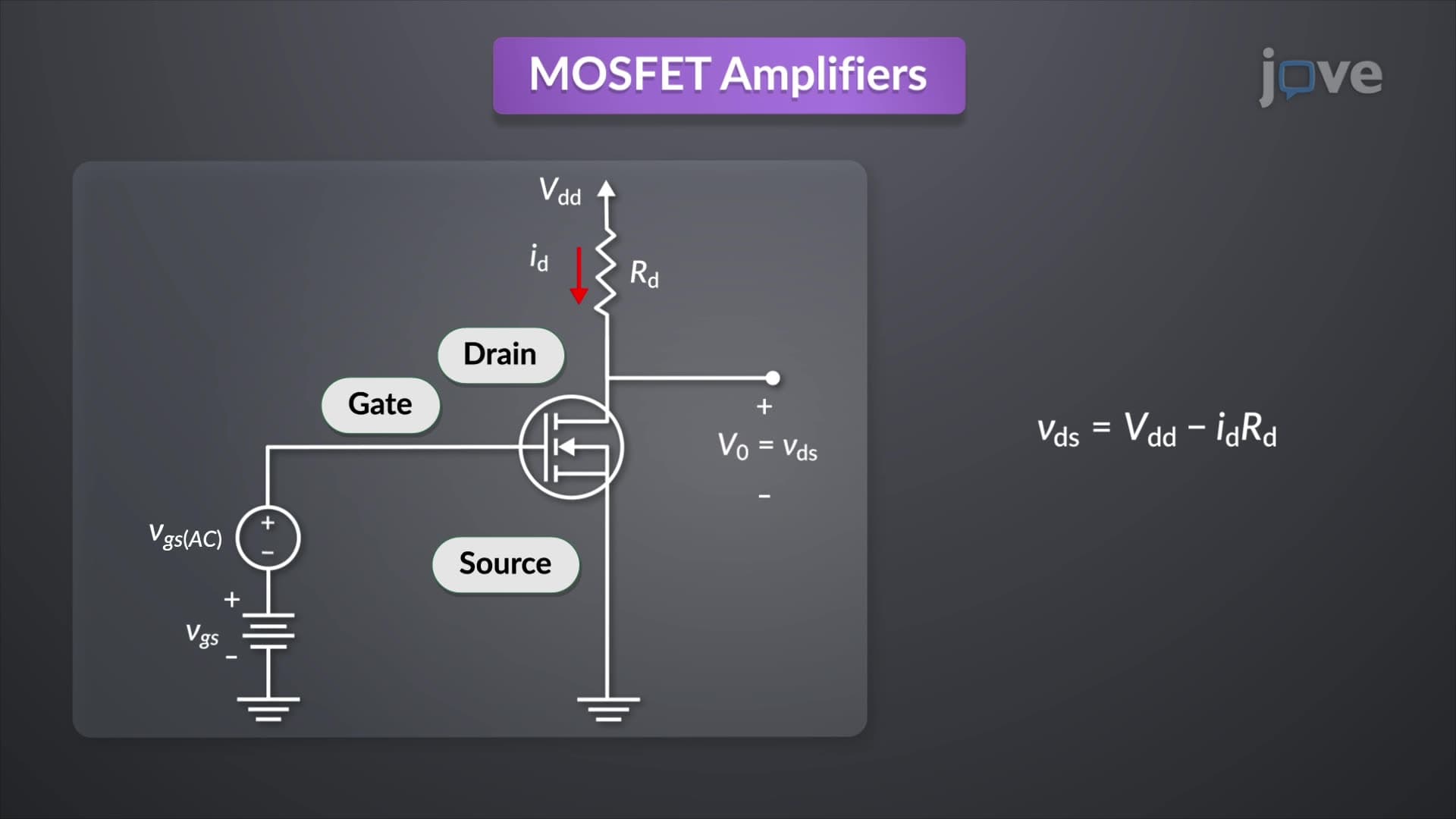
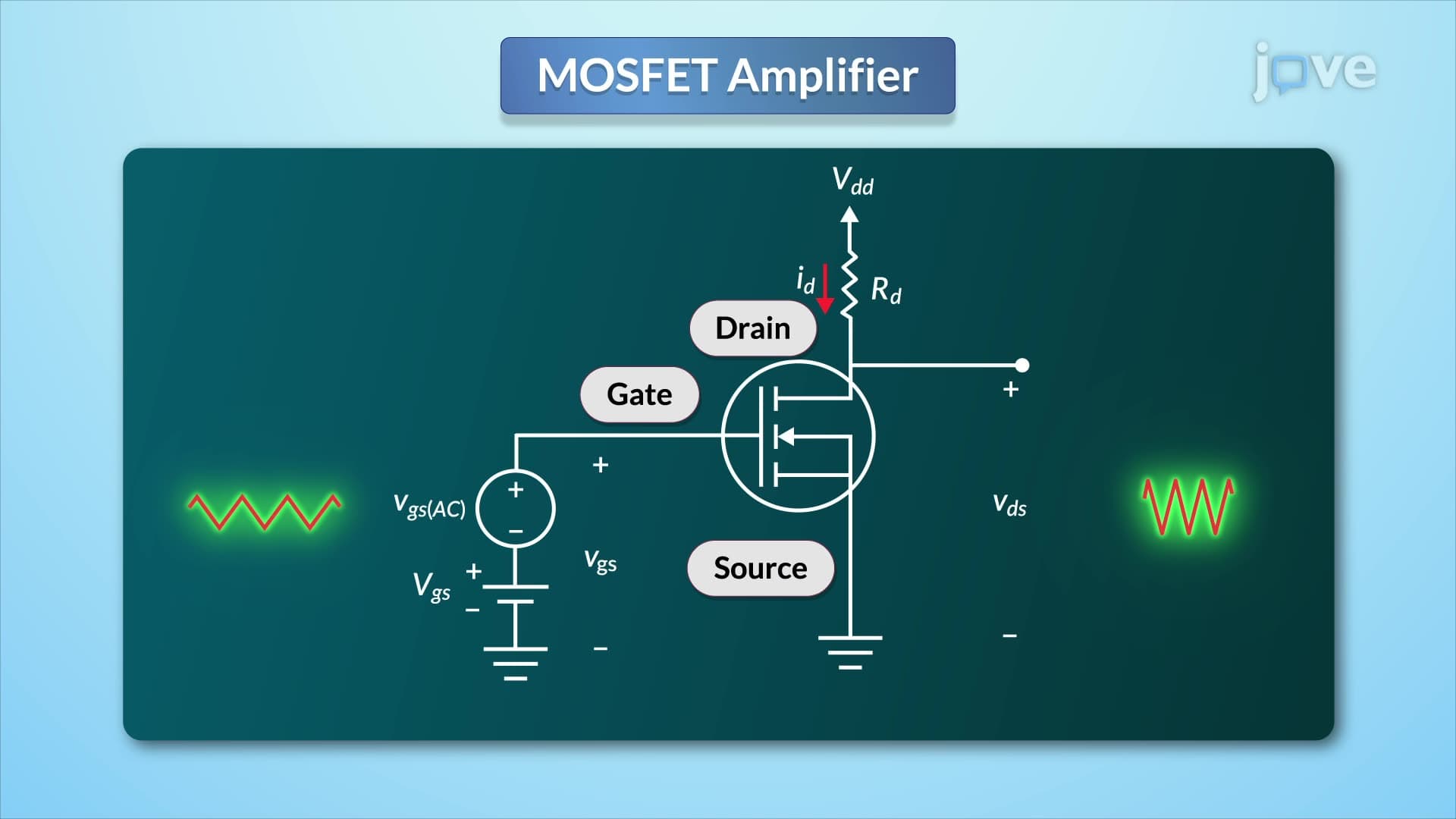
- Apply knowledge of MOSFET characteristics to predict transistor behavior in digital logic circuits and analog amplifier applications
- Explore the relationship between physical device geometry and electrical performance parameters in semiconductor design
- Recognize how back-to-back p-n junction formation creates the fundamental structure enabling MOSFET switching capabilities
Understanding What are Characteristics of MOSFET: Fundamental Parameters
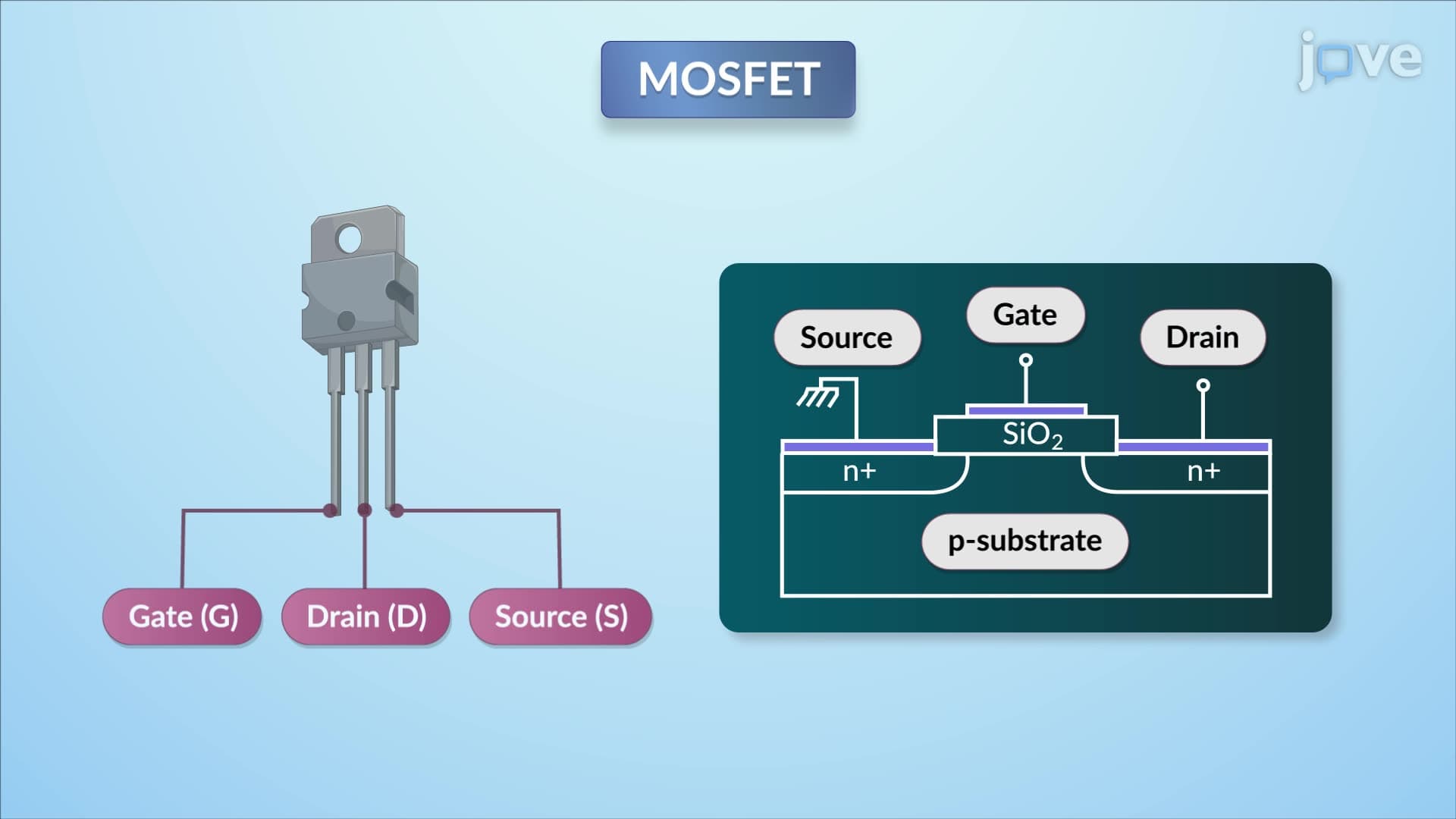
MOSFET (Metal-Oxide-Semiconductor Field-Effect Transistor) characteristics are defined by five critical physical parameters that engineers at companies like Texas Instruments and Analog Devices carefully optimize during chip design. The channel length determines switching speed-shorter channels enable faster operation but increase manufacturing complexity. Channel width directly impacts current-carrying capacity, with wider channels handling more current. Oxide thickness affects gate sensitivity, while junction depth and substrate doping levels influence threshold voltage and leakage characteristics. These parameters work together to create transistors capable of operating at frequencies exceeding several gigahertz in modern processors.
Three Operating Regions: From Cutoff to Saturation
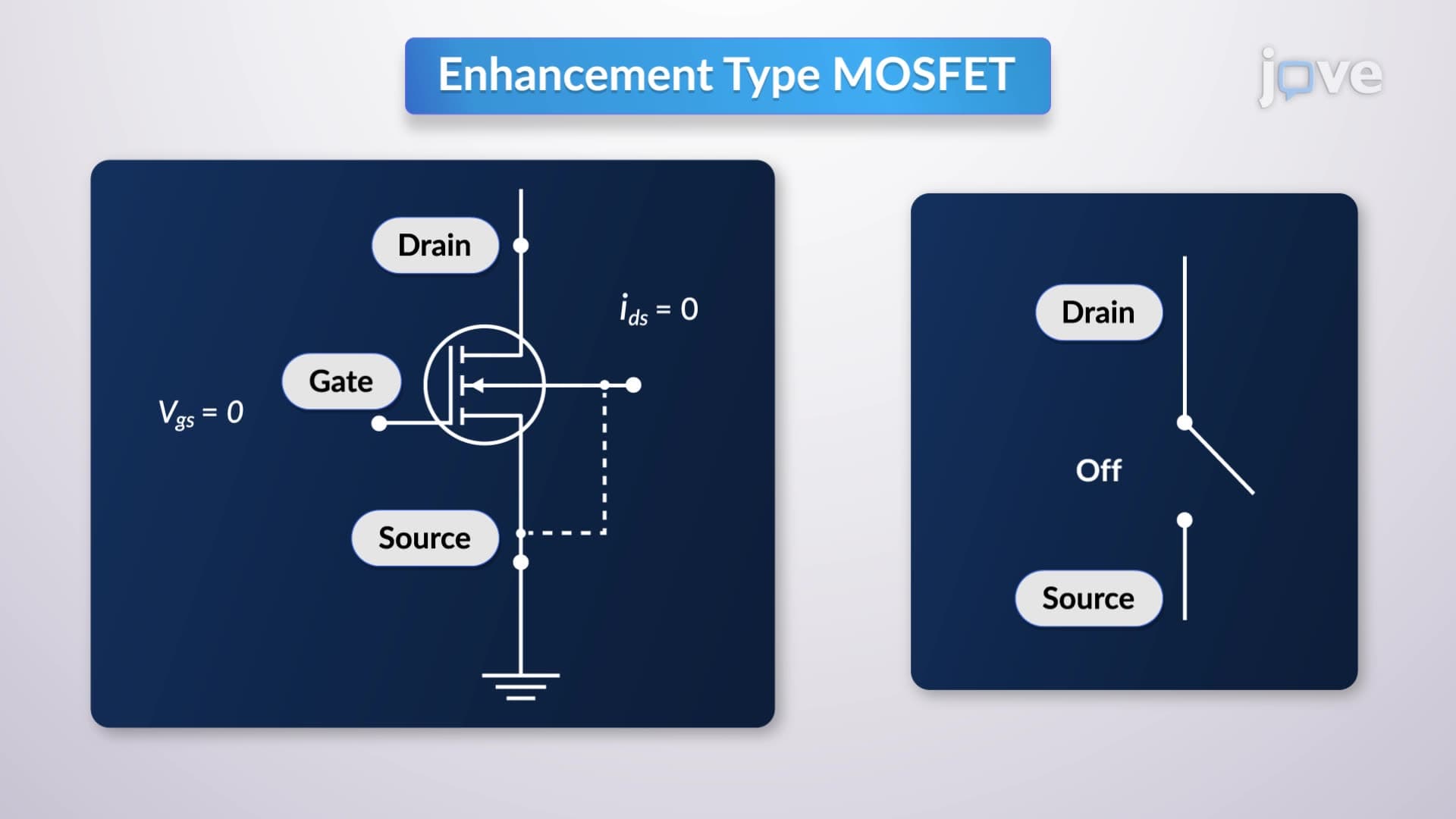
MOSFETs operate in three distinct regions that determine their electrical behavior. In the cutoff region, zero gate voltage creates two back-to-back p-n junctions between source and drain, allowing only minimal reverse-leakage current-typically measured in picoamperes. This state forms the "OFF" condition in digital circuits. When positive gate voltage exceeds the threshold level, it creates an inversion layer forming an n-channel, transitioning the device into the linear region. Here, the MOSFET behaves like a voltage-controlled resistor, with drain current proportional to drain-source voltage-essential for analog amplifier applications.
Threshold Voltage: The Critical Switching Point
The threshold voltage represents the minimum gate-source voltage required to establish a conducting path between source and drain terminals. This parameter, typically ranging from 0.5V to 4V depending on device design, determines switching characteristics crucial for digital logic operations. For AP Physics students studying semiconductor devices, understanding threshold voltage helps explain how binary logic states are maintained in computer processors. Modern low-power designs target lower threshold voltages to reduce power consumption while maintaining switching reliability.
Saturation Region and Pinch-Off Phenomenon
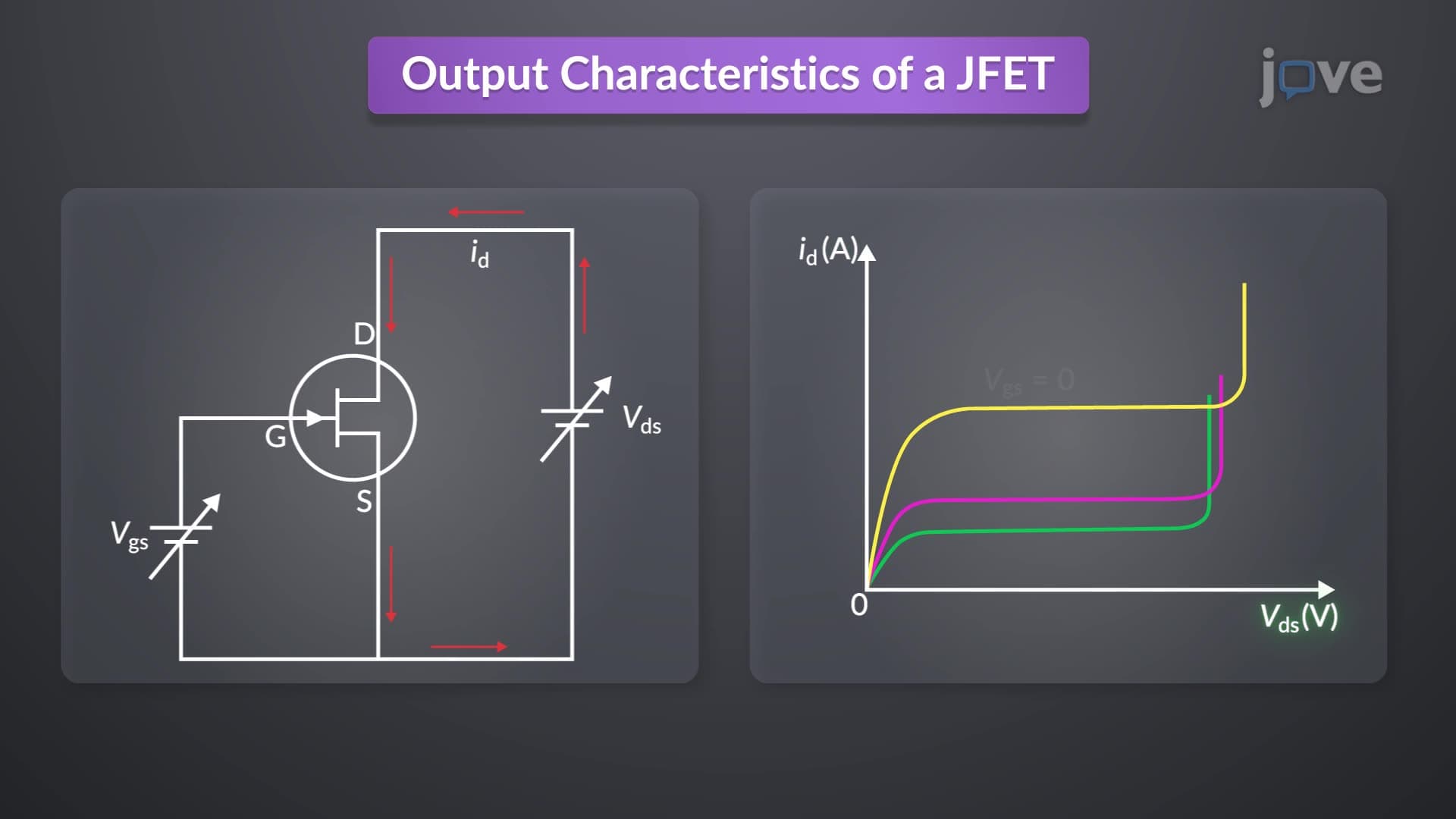
As drain voltage increases beyond a critical point, the inversion layer thickness near the channel's drain end reduces to zero, creating the pinch-off condition. This marks entry into the saturation region, where drain current remains essentially constant despite increasing drain voltage. This characteristic makes MOSFETs excellent current sources for analog circuits and enables stable operation in digital switching applications. Understanding this behavior is essential for college-level electronic circuit analysis and appears frequently in electrical engineering coursework and professional licensing examinations.
Frequently Asked Questions
MOSFET characteristics include five key parameters (channel dimensions, oxide thickness, junction depth, substrate doping) and three operating regions (cutoff, linear, saturation). These characteristics enable MOSFETs to function as voltage-controlled switches and amplifiers in everything from smartphone processors to electric vehicle controllers. Understanding these properties helps predict device performance and design reliable electronic systems.
AP Physics and college exams frequently test threshold voltage calculations, operating region identification, and I-V characteristic curve analysis. Students typically encounter problems involving current flow calculations in different regions and determining switching conditions. Practice problems often focus on relating physical parameters to electrical performance, especially in semiconductor physics units.
Professional exams emphasize practical applications of MOSFET characteristics in biomedical devices and engineering systems. MCAT questions may cover semiconductor physics principles, while engineering exams focus on circuit analysis using MOSFET models. Understanding how threshold voltage affects switching behavior and current flow relationships proves essential for exam success.
Intel and AMD processors contain billions of MOSFETs operating in cutoff and saturation regions to represent binary data. The threshold voltage determines switching speed and power consumption, while channel dimensions affect processing performance. Modern 7nm and 5nm manufacturing processes precisely control these characteristics to achieve higher transistor density and improved energy efficiency in consumer electronics.
Basic MOSFET characteristics require only high school algebra and understanding of voltage, current, and resistance relationships. While advanced device modeling uses calculus, the fundamental concepts-threshold voltage, operating regions, and current control-are accessible to students with introductory physics and chemistry knowledge. Focus on physical intuition before tackling complex mathematical models.
Create visual associations linking physical parameters to electrical behavior: channel width affects current capacity (wider = more current), oxide thickness impacts sensitivity (thinner = more sensitive). Practice drawing I-V characteristic curves for each operating region. Use mnemonics like "COL-SAT" for Cutoff-Linear-Saturation regions, and relate threshold voltage to "minimum gate voltage for conduction."
Progress to MOSFET amplifier configurations (common-source, common-gate, common-drain) and digital logic gate design using CMOS technology. Advanced topics include small-signal modeling, frequency response analysis, and integrated circuit design principles. These concepts build directly on fundamental MOSFET characteristics and appear in upper-level electrical engineering coursework.
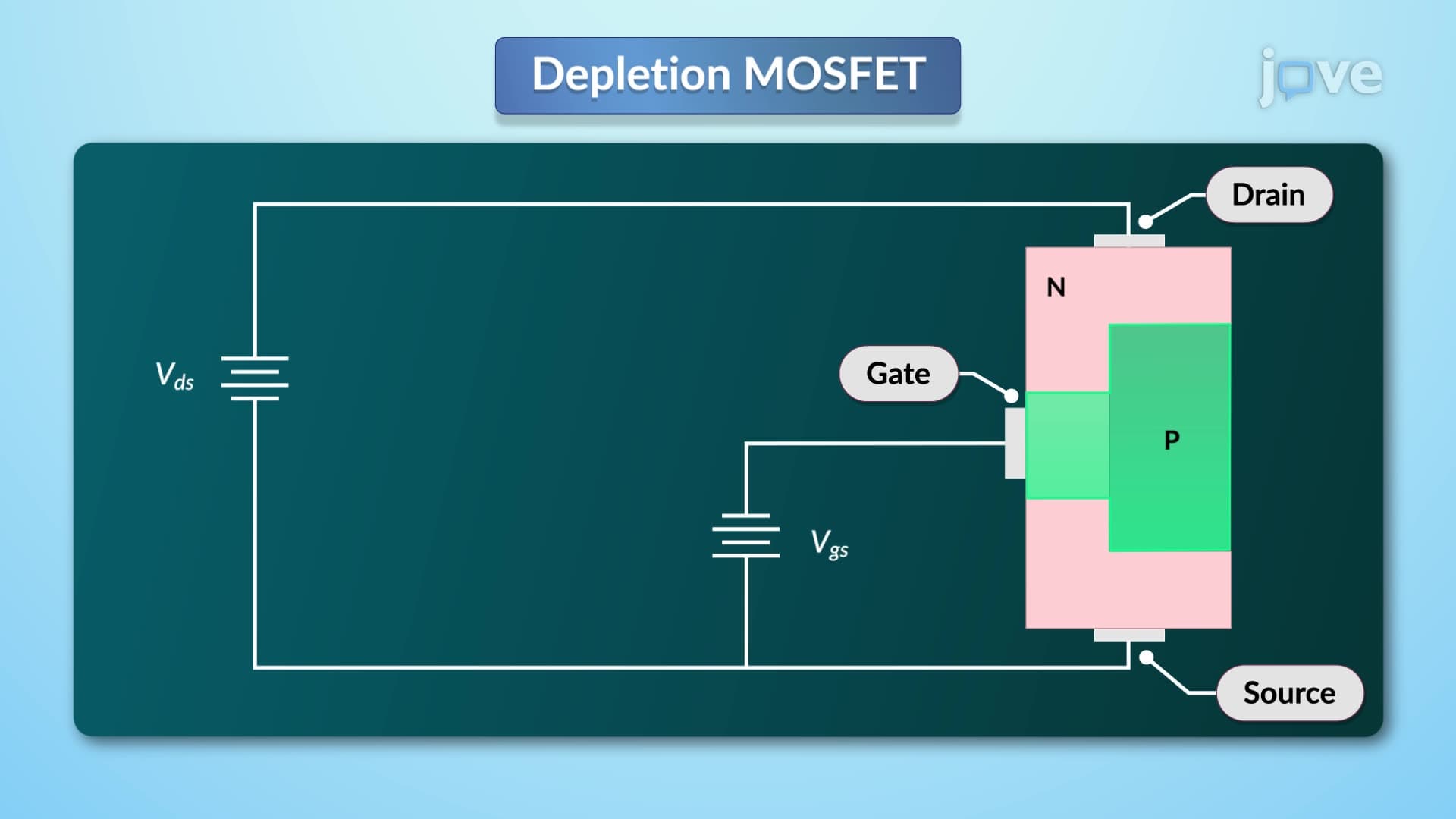
Enhancement mode MOSFETs require positive gate voltage to conduct (normally-off), unlike depletion mode devices that conduct with zero gate voltage. This characteristic makes them safer for digital applications since they naturally turn off without power. The voltage-controlled operation differs from current-controlled bipolar transistors, offering higher input impedance and lower power consumption in switching applications.
Related Micro-courses

11 Concepts

7 Concepts

5 Concepts