Loading subject page…

- Electrical Engineering
- Transistors
- Working Principle of BJT
Micro-course: Transistors
16,906 views
Learn key concepts and earn your certificate.
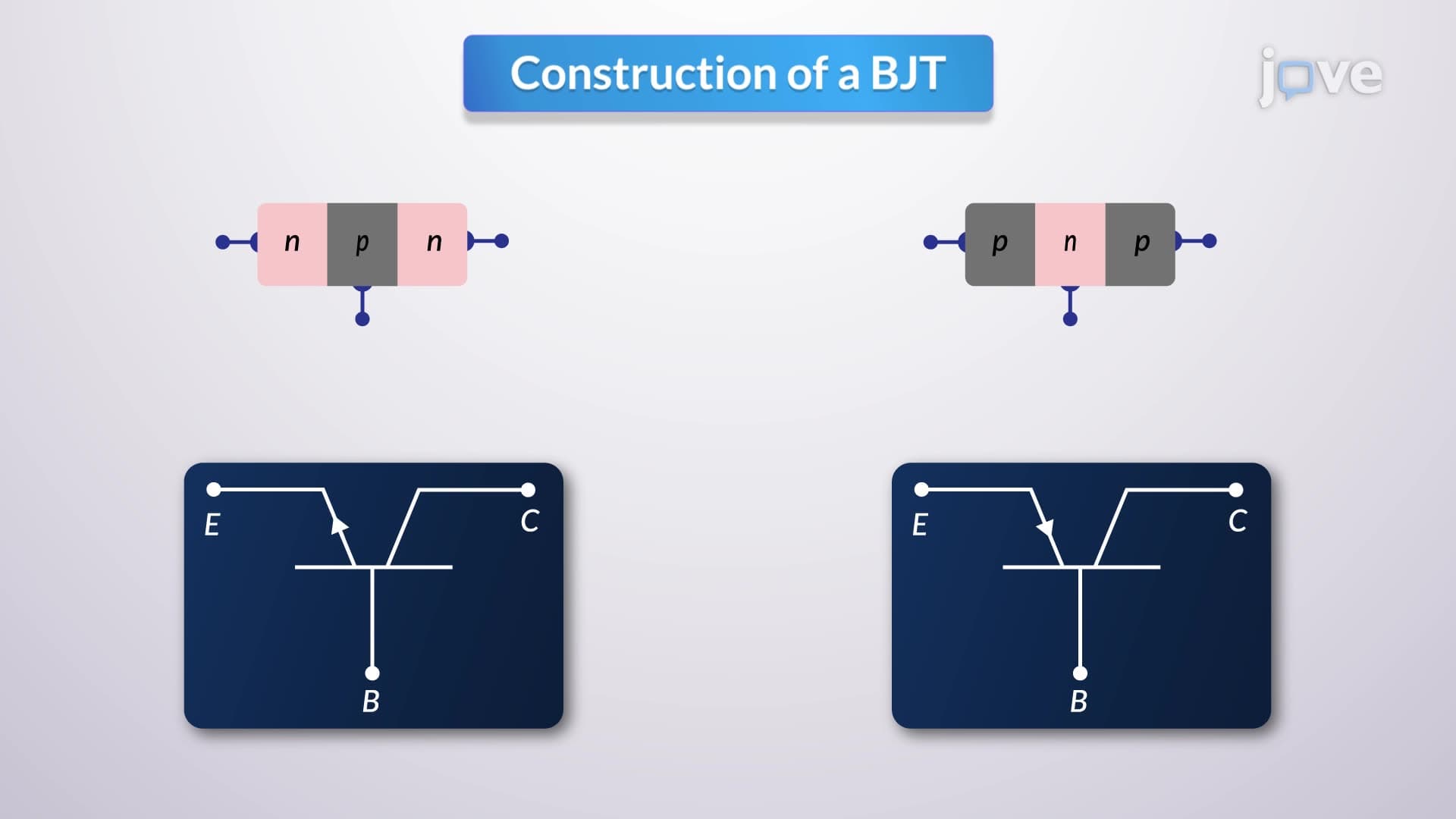

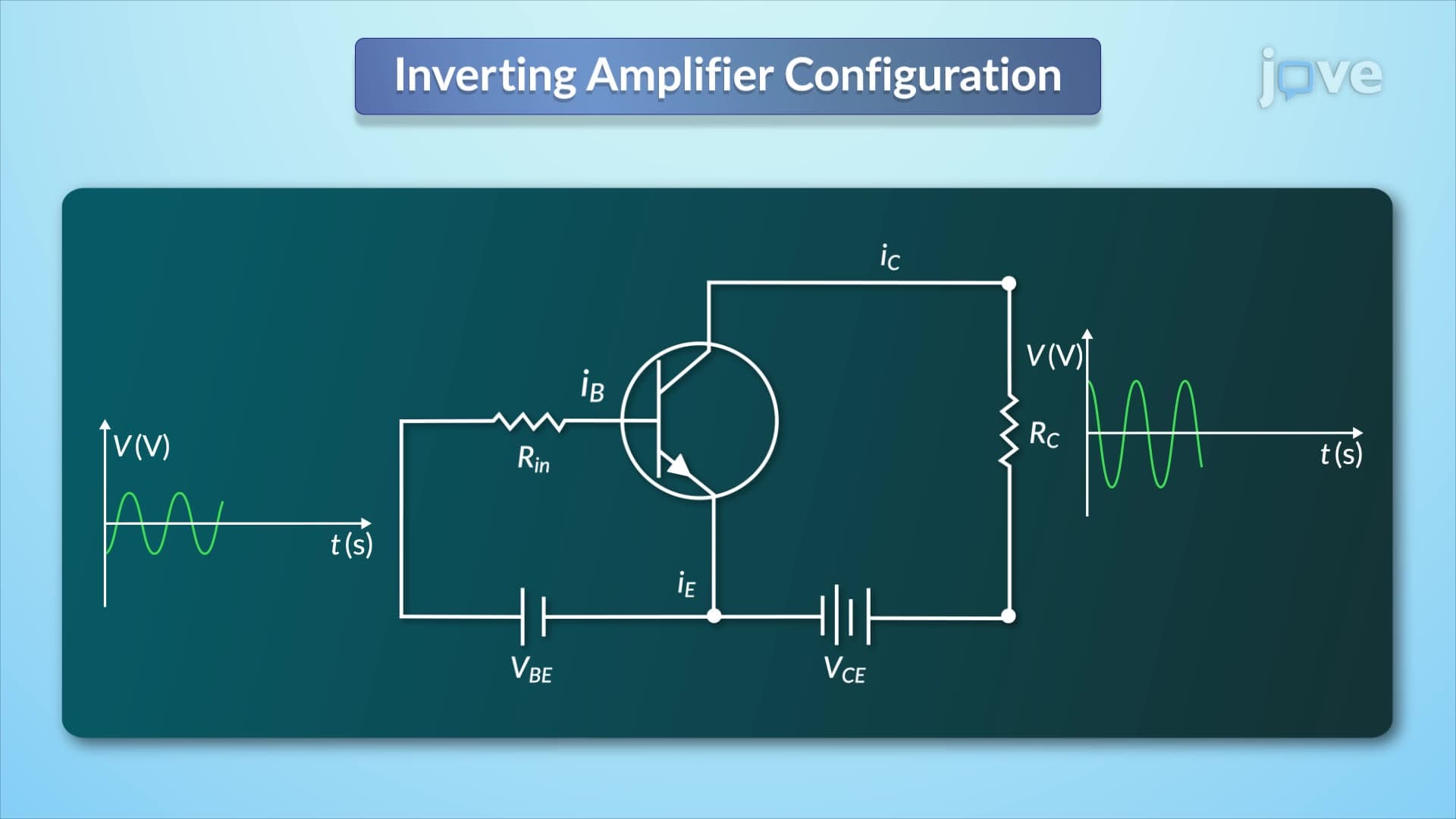
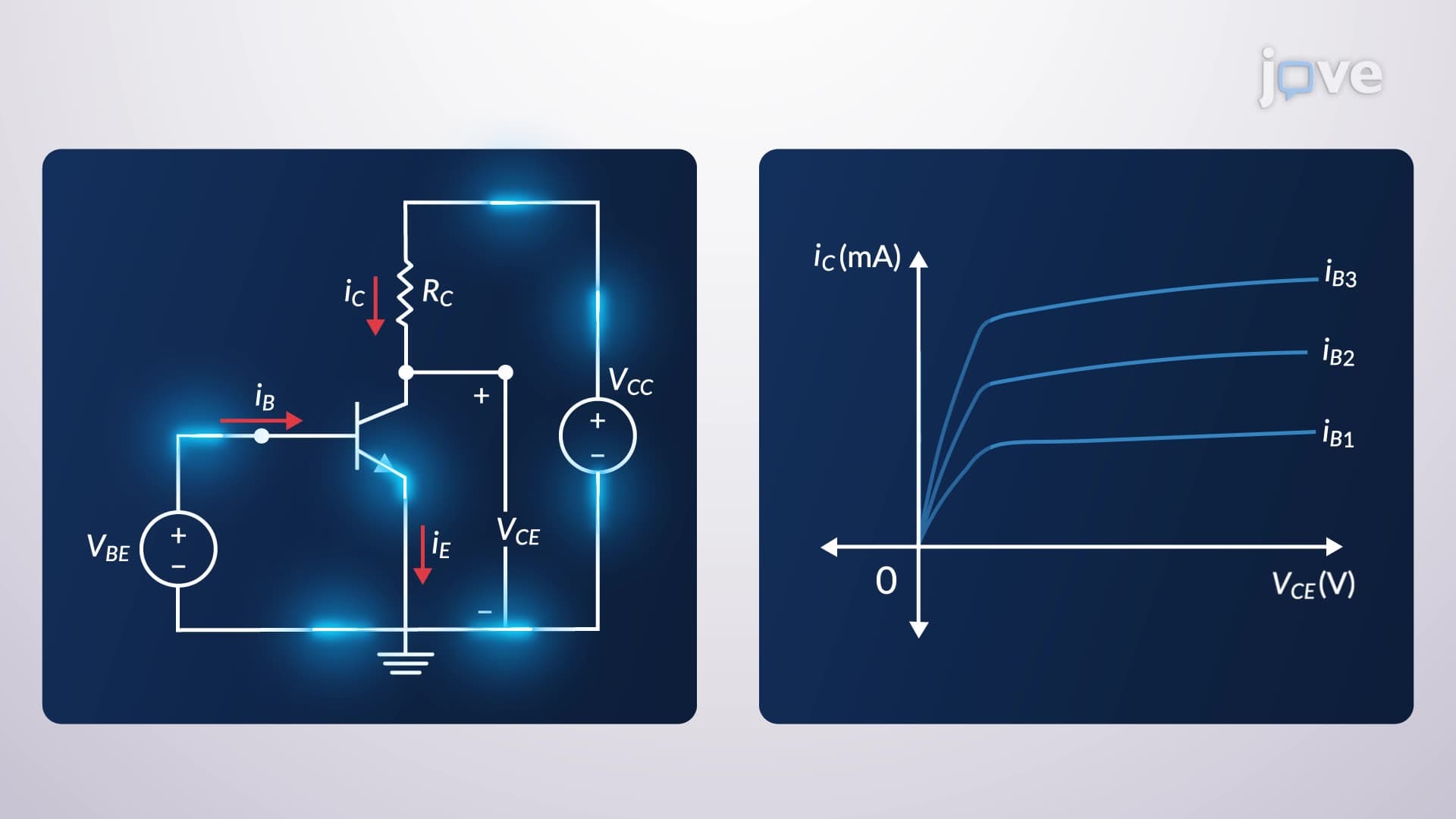
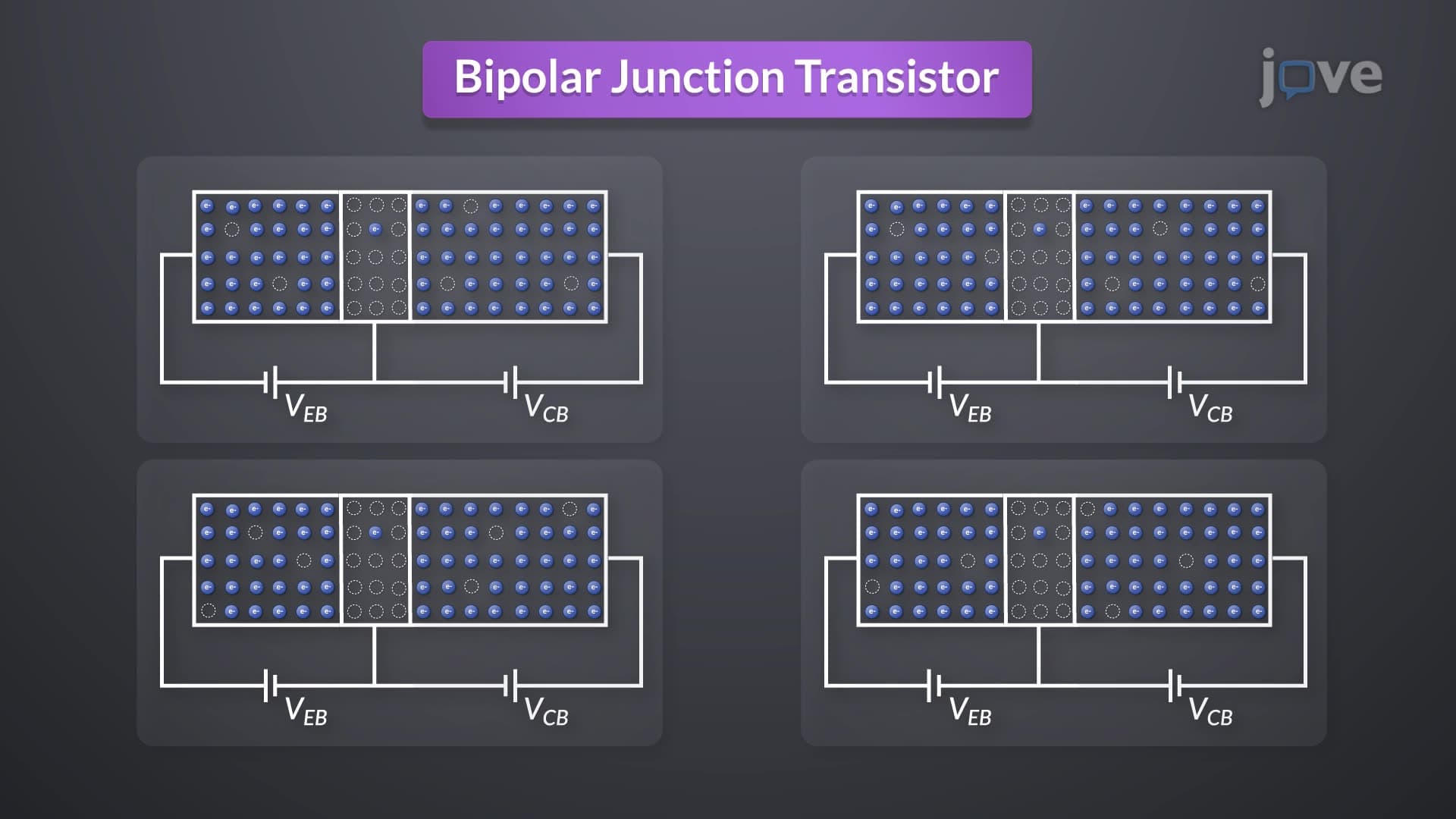
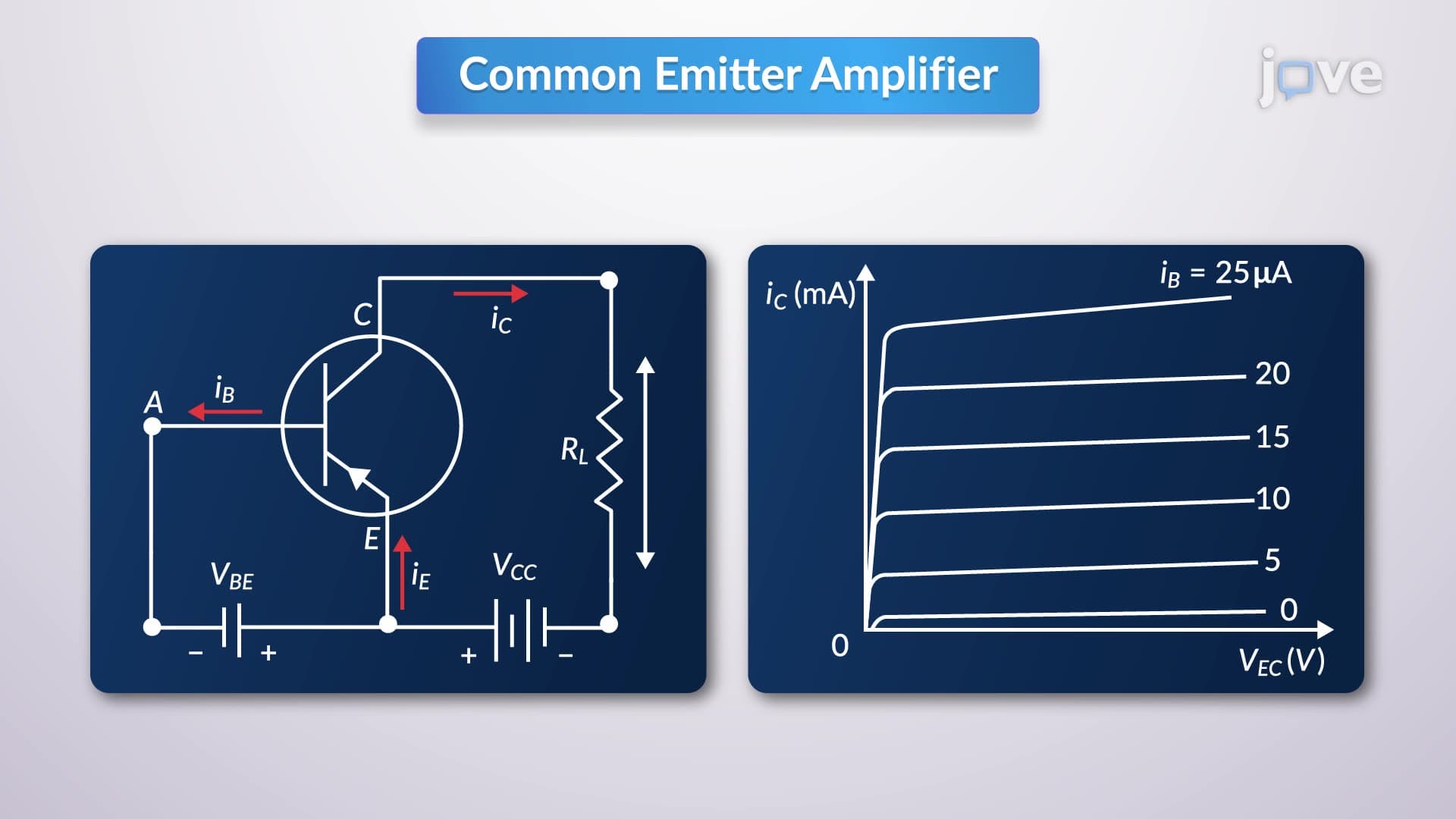
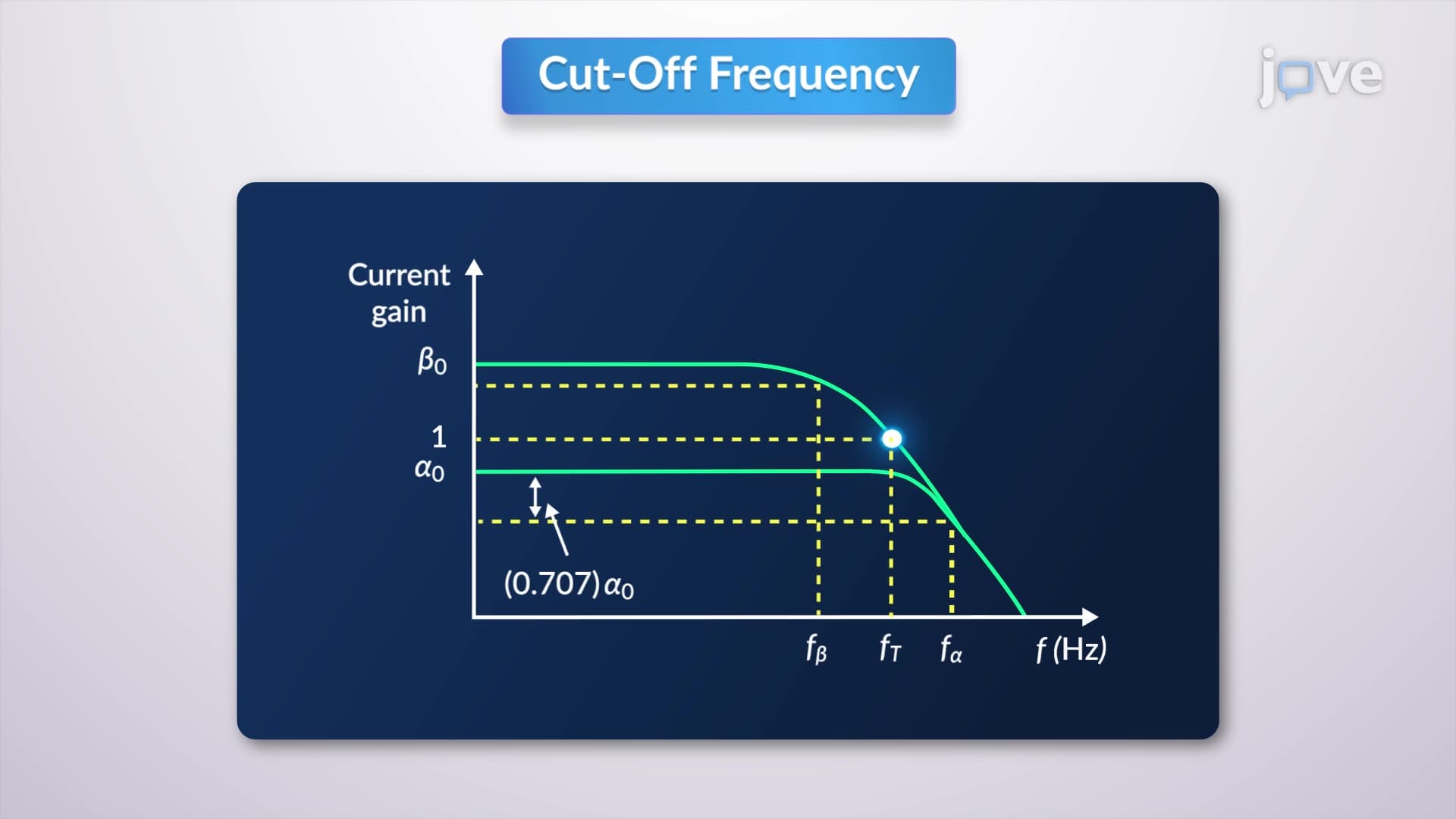
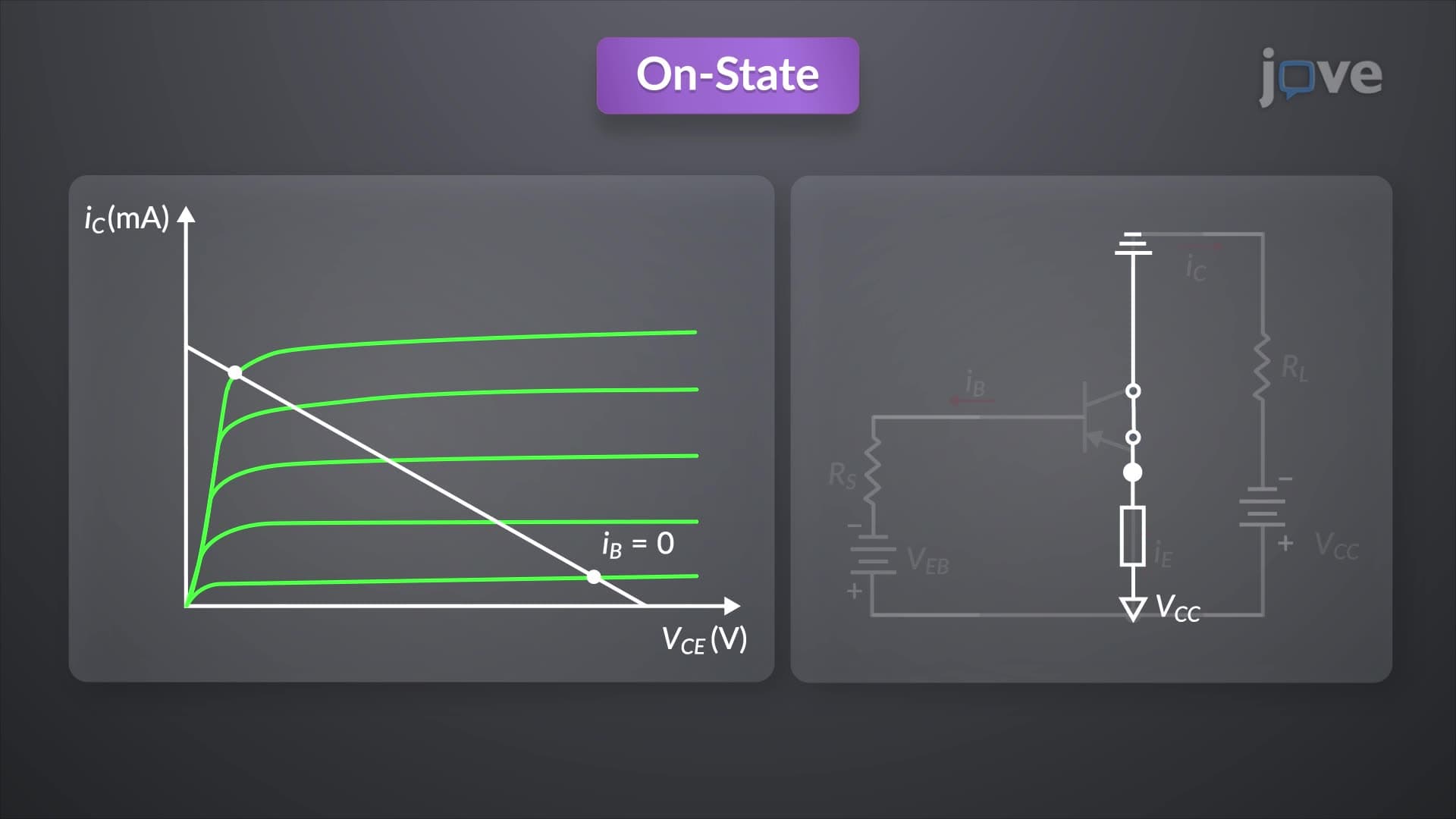
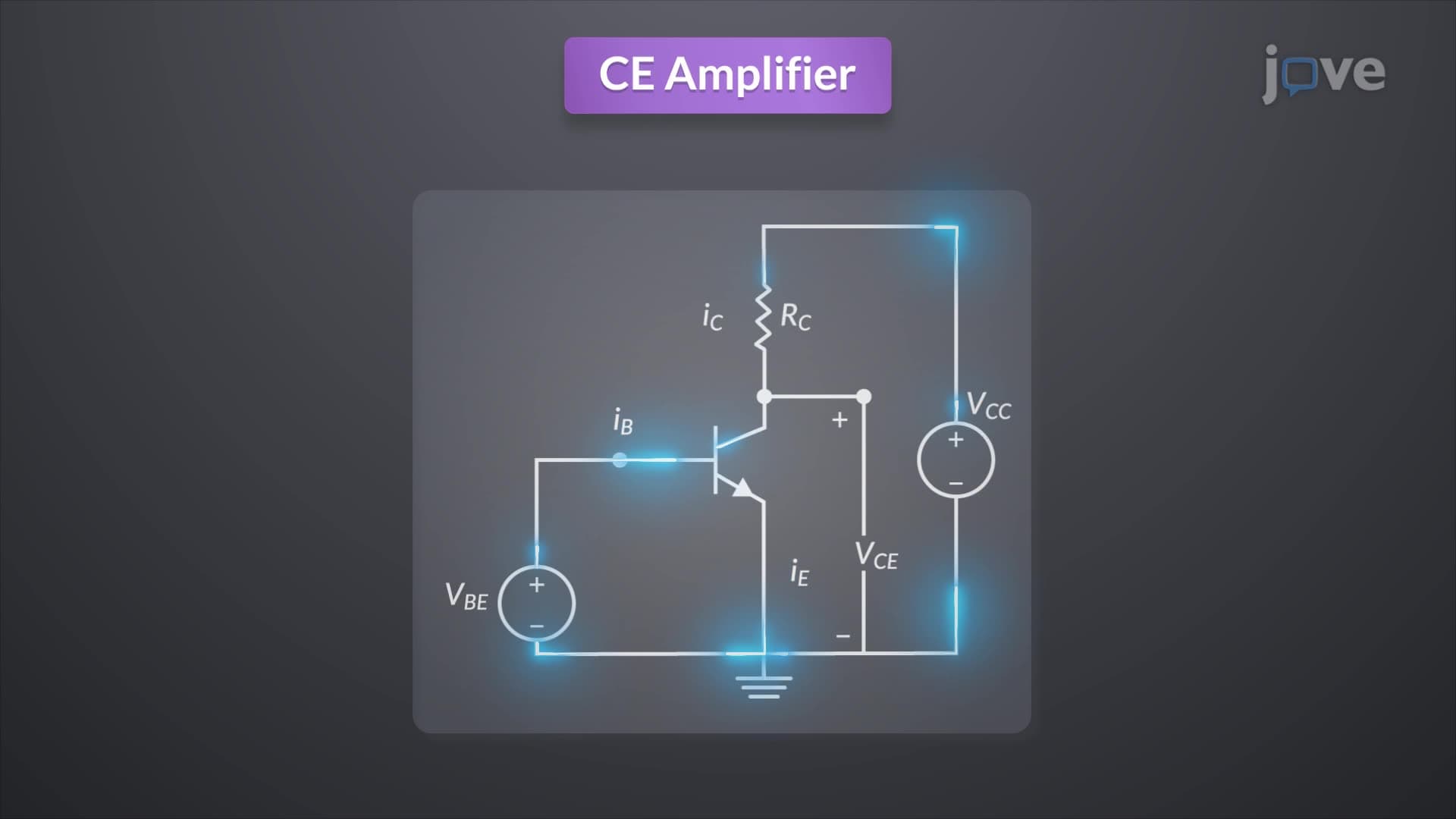
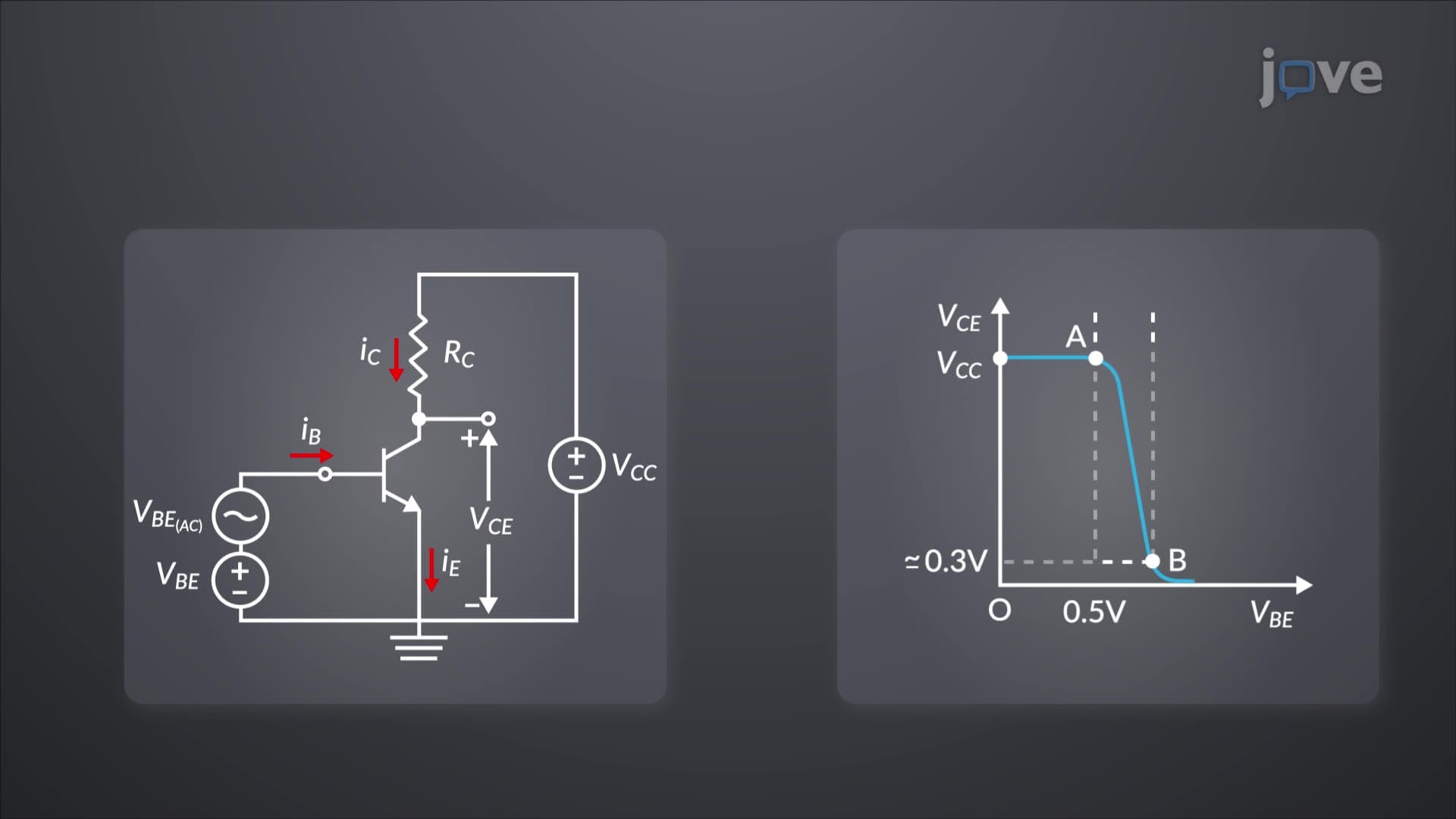
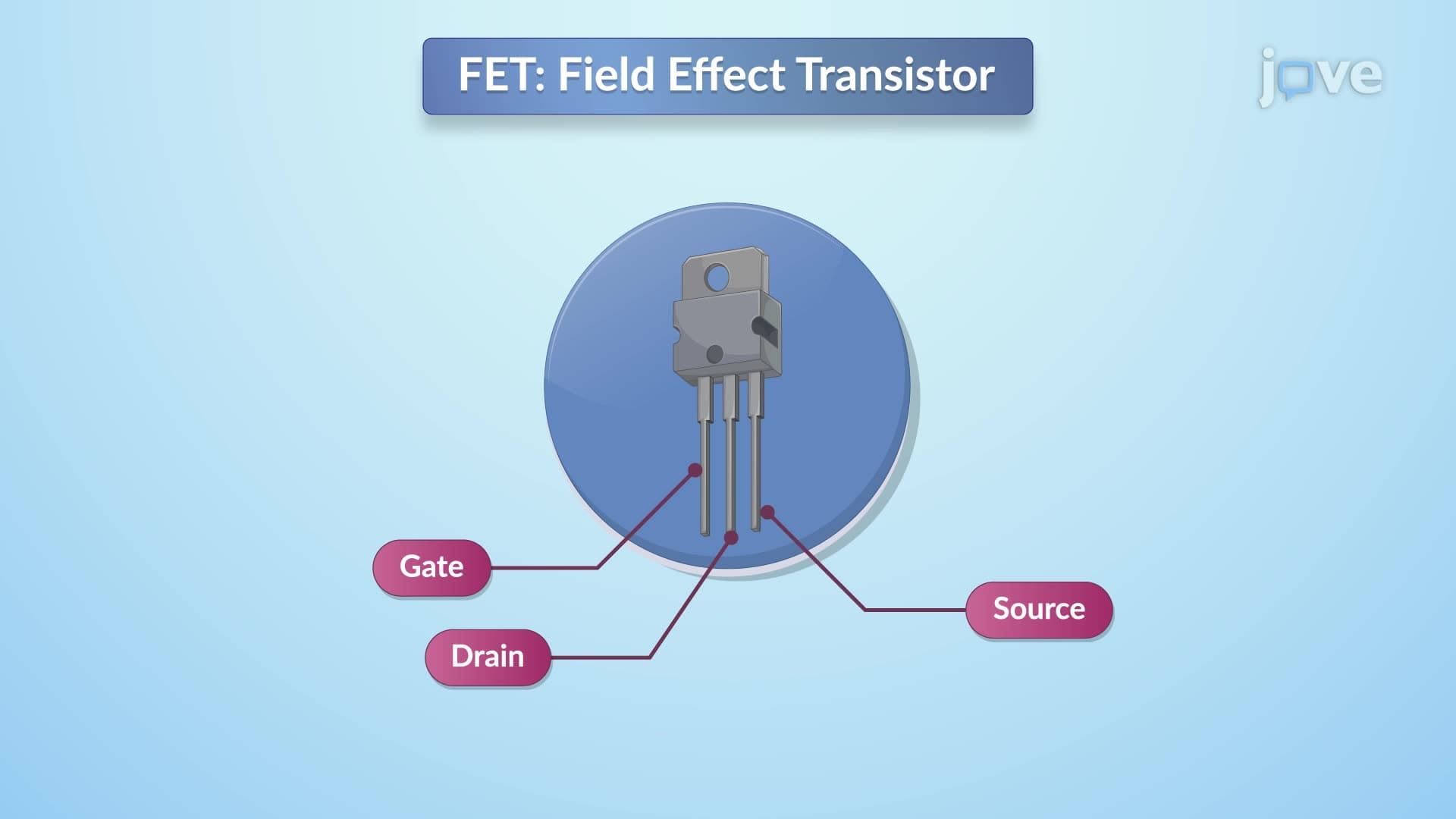
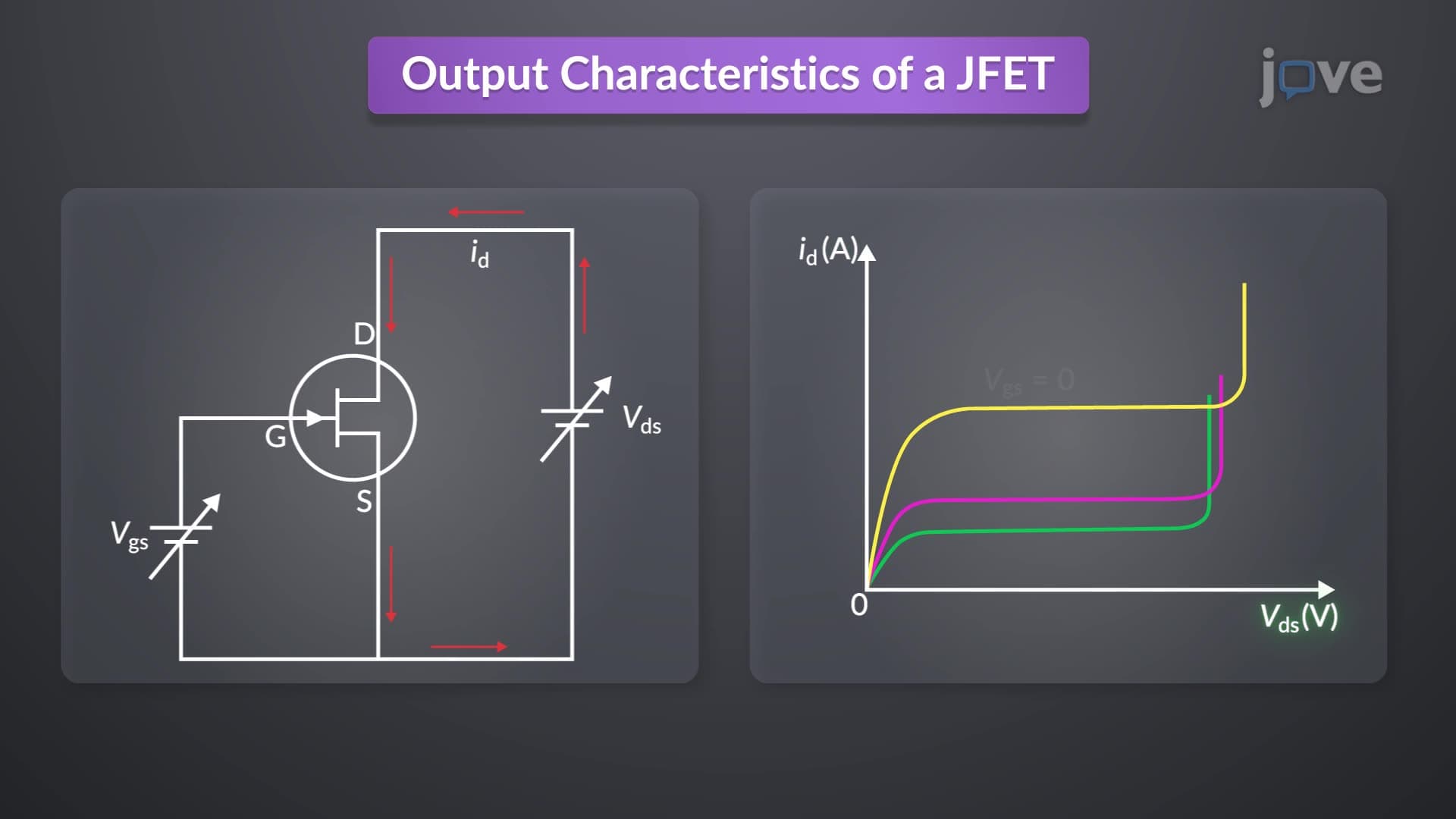
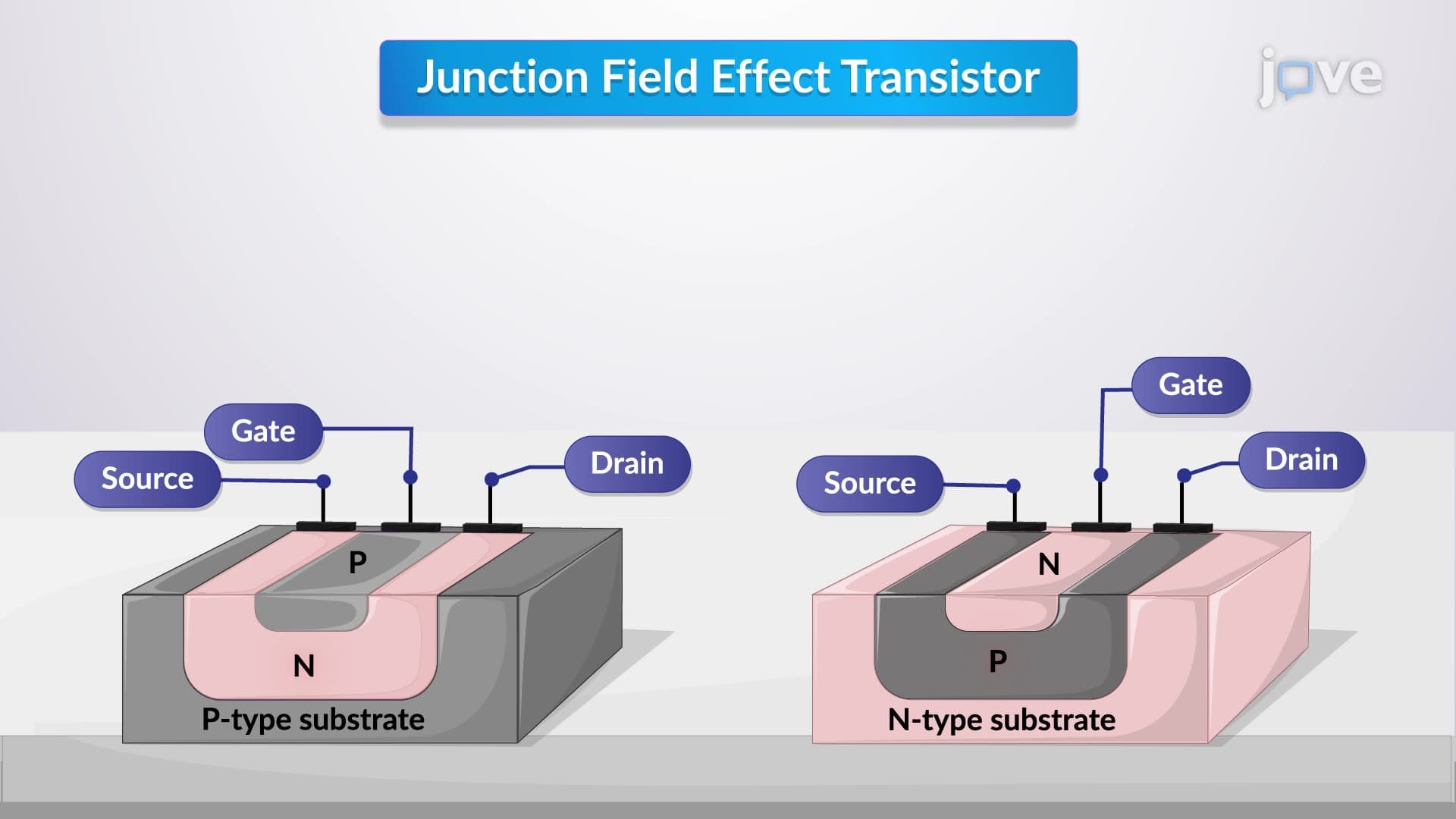
Working Principle of BJT

00:00
01:15
Video Summary: What Is Working Principle of Bjt
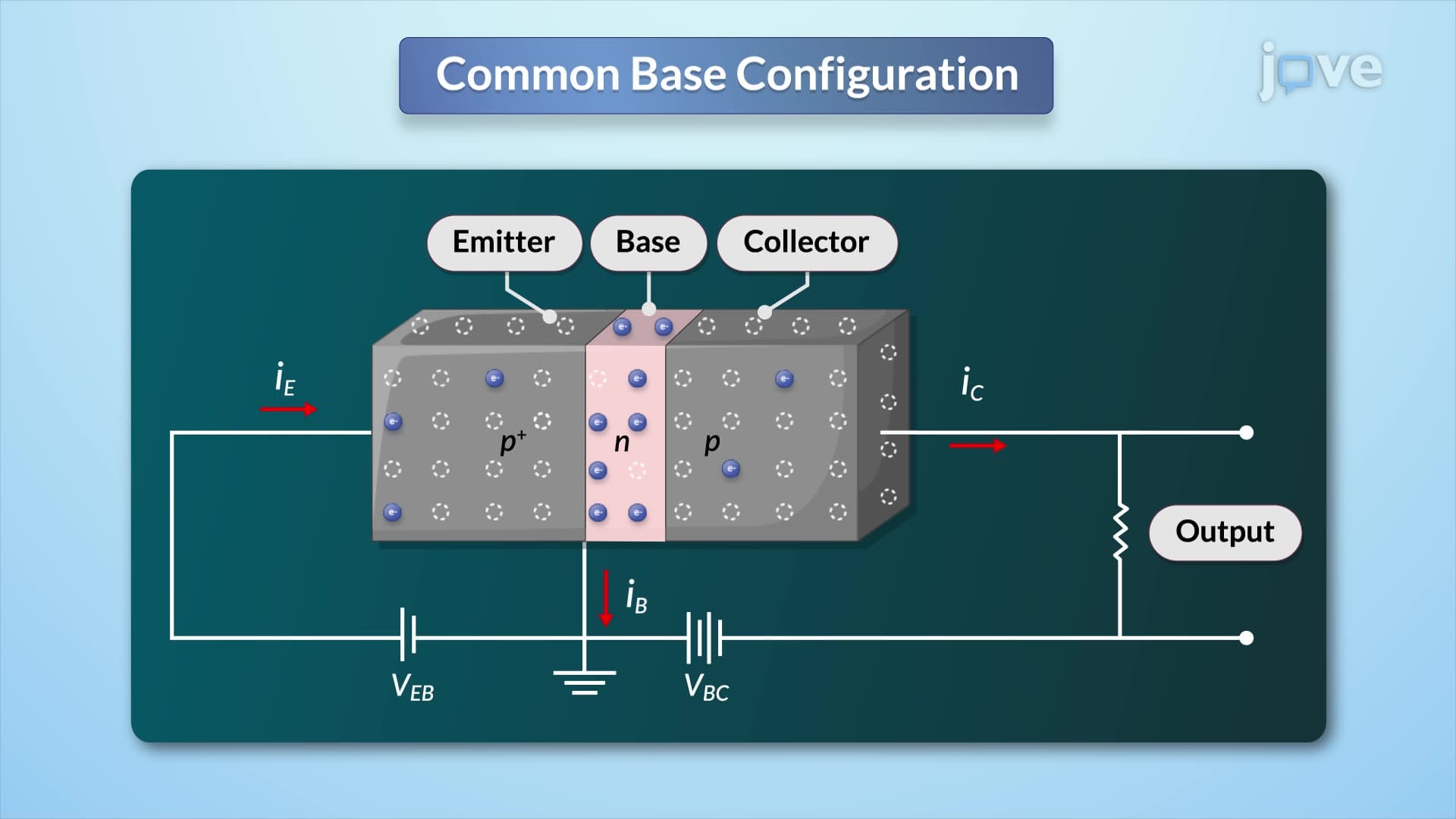
Ever wonder how your smartphone amplifies weak cellular signals into clear calls? The characteristics of BJT (Bipolar Junction Transistor) make this possible through precise current control mechanisms. In a PNP transistor's common-base configuration, forward biasing enables hole diffusion from emitter to base while electrons flow oppositely, creating the fundamental amplification process. Texas Instruments uses these principles in their power management chips found in millions of US electronics. Watch the full video on JoVE Coach to master this concept with expert-led visuals and step-by-step explanations.
- Understand the working principle of BJT operation in common-base configuration and how forward biasing controls current flow
- Identify the three distinct current components: emitter current, collector current, and base current in transistor operation
- Analyze how hole diffusion and electron recombination processes determine transistor performance characteristics
- Compare emitter efficiency and base transport factor contributions to overall current gain calculations
- Evaluate the relationship between leakage current and collector-base junction behavior in active mode
- Apply current gain formulas to solve practical transistor circuit problems in electronics applications
- Recognize how charge neutrality is maintained in the base region through current balance mechanisms
- Explore real-world applications of BJT principles in amplification and switching circuits
Understanding the Working Principle of BJT in Common-Base Configuration
The working principle of BJT centers on controlled current flow between three semiconductor regions. In a PNP transistor operating in active mode, the emitter-base junction operates under forward bias while the collector-base junction remains reverse biased. This configuration creates the ideal conditions for transistor amplification, making it fundamental to countless electronic devices from hearing aids to satellite communications.
Current Flow Mechanisms and Carrier Movement
The characteristics of BJT operation involve three primary current components working simultaneously. When forward bias reduces the emitter-base potential barrier, majority carriers (holes in PNP transistors) diffuse from the heavily doped emitter region into the lightly doped base. Simultaneously, minority carriers (electrons) flow from base to emitter, though this represents a much smaller current component. Understanding these dual carrier movements helps explain why BJTs achieve such effective current control in applications ranging from audio amplifiers used in concert venues across the US to precision instrumentation in NASA's space programs.
Current Gain and Transport Efficiency
The mathematical relationship governing BJT performance combines two critical factors: emitter efficiency and base transport factor. Emitter efficiency measures how effectively the emitter injects carriers into the base, while the base transport factor indicates what fraction of injected carriers successfully reach the collector without recombining. For high-performance transistors used in applications like the amplifiers in Fender guitar amplifiers or medical equipment manufactured by companies like Medtronic, both parameters must approach unity (1.0) for optimal performance.
Practical Applications in US Electronics Industry
These fundamental characteristics of BJT directly impact real-world performance in consumer electronics. Apple's iPhone charging circuits rely on BJT switching characteristics to regulate power delivery, while automotive manufacturers like Ford use BJT-based circuits in engine control modules. Students preparing for AP Physics exams or electrical engineering coursework at institutions like MIT or Stanford encounter these principles in both theoretical problems and hands-on laboratory exercises, making thorough understanding essential for academic and professional success.
Frequently Asked Questions
The working principle of BJT relies on controlled carrier injection between emitter and base regions under forward bias conditions. Current amplification occurs because small base current changes produce large collector current variations, typically achieving gains of 50-200 times in common configurations. This principle enables applications from smartphone audio amplifiers to industrial motor controllers.
AP Physics C: Electricity and Magnetism exams often include BJT problems focusing on current relationships and basic circuit analysis. Students analyze emitter, base, and collector current relationships using Kirchhoff's laws and calculate current gains in amplifier circuits. Practice problems frequently involve determining operating points and analyzing load line intersections.
MCAT physics sections emphasize fundamental current-voltage relationships and basic amplification concepts rather than detailed circuit analysis. Test-takers encounter BJT characteristics in contexts of biomedical devices, focusing on how transistors enable signal processing in equipment like EKG machines and glucose monitors. Understanding basic switching and amplification principles suffices for MCAT success.
US medical device manufacturers like Medtronic and Boston Scientific incorporate BJT characteristics in pacemakers, defibrillators, and patient monitoring systems. These devices rely on precise current control for heart rhythm regulation and signal amplification for detecting weak bioelectrical signals. Hospital equipment worth millions of dollars depends on reliable BJT performance for patient safety.
Basic algebra and understanding of exponential relationships suffices for fundamental BJT characteristics comprehension. While semiconductor physics involves complex mathematics, practical circuit analysis uses straightforward current and voltage relationships accessible to high school students. College-level courses gradually introduce more sophisticated mathematical models as students develop stronger foundations.
Focus on memorizing the three current relationships (emitter, base, collector) and practice solving current gain problems repeatedly. Create summary sheets showing PNP versus NPN carrier flow directions, and work through amplifier circuit examples from textbooks. Many students find success drawing current flow diagrams while solving problems to visualize carrier movement.
Advanced students should investigate frequency response characteristics, thermal effects on BJT performance, and multi-stage amplifier design principles. Topics like Miller effect, early voltage, and high-frequency models become relevant for students pursuing electrical engineering degrees at universities like UC Berkeley or Georgia Tech.
Related Micro-courses

11 Concepts

7 Concepts

5 Concepts