Loading subject page…

- Introduction to Psychology
- Learning
- Conditioned Taste Aversion
Micro-course: Learning
20,013 views
Learn key concepts and earn your certificate.


















Conditioned Taste Aversion


00:00
01:14
Video Summary: What Is Conditioned Taste Aversion
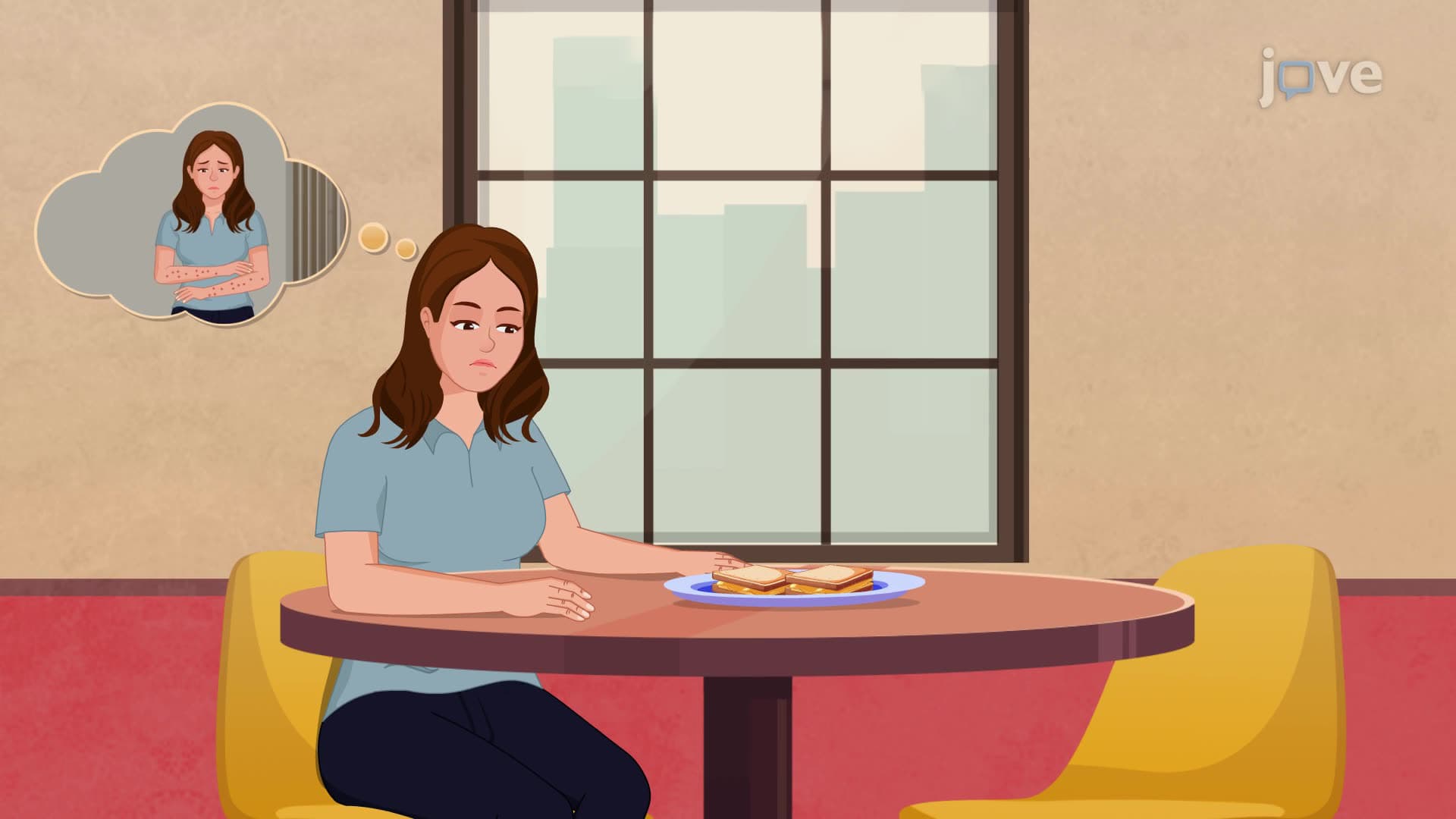
Ever wonder why preparedness and phobias might explain why you still can't eat that restaurant meal that made you sick years ago? Conditioned taste aversion demonstrates how our brains are biologically prepared to form certain associations rapidly for survival. Unlike typical conditioning that requires multiple trials, just one bad experience with contaminated seafood at a Boston restaurant can create a lasting aversion. This phenomenon, also known as sauce béarnaise syndrome, illustrates the preparedness and phobias concept through our evolved ability to quickly learn food-related dangers. Watch the full video on JoVE Coach to master this concept with expert-led visuals and step-by-step explanations.
- Understand what conditioned taste aversion is and how it differs from standard classical conditioning processes
- Identify the unique characteristics that make taste aversions form after just one trial, unlike other conditioned responses
- Analyze how preparedness and phobias theory explains why certain stimulus-response combinations are easier to learn than others
- Compare conditioned taste aversion to other forms of classical conditioning in terms of timing, trials needed, and biological significance
- Evaluate the adaptive advantage of developing food aversions with delayed consequences for human survival
- Apply knowledge of stimulus specificity to predict when taste aversions will and won't generalize to similar foods
- Recognize real-world examples of conditioned taste aversion in everyday life and clinical settings
- Explore how biological preparedness influences the strength and duration of different types of learned associations
Understanding Conditioned Taste Aversion Through Biological Preparedness
Conditioned taste aversion represents one of the most compelling examples of how preparedness and phobias theory explains rapid learning in humans. This phenomenon occurs when a single pairing between a food taste and subsequent illness creates a strong, lasting avoidance response. Unlike traditional classical conditioning studied by Pavlov, which typically requires multiple pairings, taste aversions can form after just one experience-demonstrating that our nervous system is biologically "prepared" to make certain associations quickly.
The Preparedness and Phobias Connection
The preparedness and phobias definition encompasses the idea that organisms are evolutionarily predisposed to learn certain fear responses more easily than others. Martin Seligman first proposed this theory after observing that people develop phobias of snakes, spiders, and heights more readily than of cars or electrical outlets, despite the latter being more dangerous in modern society. Similarly, taste aversions form rapidly because detecting and avoiding poisonous foods was crucial for ancestral survival.
Unique Characteristics That Distinguish Taste Aversion
What makes conditioned taste aversion remarkable is its violation of traditional conditioning principles. First, the delay between the conditioned stimulus (taste) and unconditioned stimulus (illness) can extend up to eight hours-far longer than the few seconds typical in other forms of conditioning. Second, the aversion shows remarkable specificity with minimal generalization. A student who becomes ill after eating sushi at a campus dining hall might avoid raw fish entirely while continuing to enjoy cooked salmon or other seafood.
Clinical and Educational Applications
Understanding preparedness and phobias in detail helps explain why certain therapeutic approaches work better for different conditions. In AP Psychology courses, students learn that taste aversions can complicate cancer treatment, as chemotherapy-induced nausea may create aversions to foods consumed before treatment. Mental health professionals at institutions like Johns Hopkins use this knowledge to help patients undergoing treatment maintain proper nutrition by strategically timing meals and introducing novel foods during recovery periods.
This concept frequently appears on college psychology exams, particularly in questions about biological constraints on learning. Students preparing for the MCAT should understand how taste aversion demonstrates that learning isn't simply about stimulus-response associations but involves complex interactions between biology, environment, and evolutionary history.
Frequently Asked Questions
Conditioned taste aversion is a rapid form of learning where one negative experience with a food creates lasting avoidance, demonstrating biological preparedness. Unlike typical conditioning requiring multiple trials, taste aversions form quickly because our brains evolved to rapidly detect food dangers. This supports preparedness theory, which explains why certain associations form more easily than others based on evolutionary significance.
Yes, conditioned taste aversion frequently appears on AP Psychology exams as an example of biological constraints on learning and preparedness theory. Students should understand how it differs from classical conditioning, particularly regarding trial requirements and time delays. The College Board often uses this concept to test understanding of evolutionary psychology and learning exceptions.
MCAT psychology sections often test understanding of learning principles, including biological preparedness and taste aversion. Medical students encounter this concept when studying patient nutrition during illness, chemotherapy side effects, and eating disorders. Understanding taste aversion helps future physicians anticipate and manage food-related complications in clinical practice.
Many Americans develop aversions to specific alcoholic beverages after overconsumption leads to severe hangovers or illness. A college student who becomes violently ill after drinking tequila at a party may develop a lasting aversion to the smell and taste, even years later. This demonstrates how taste aversion extends beyond food to beverages and can persist long-term.
Conditioned taste aversion is actually one of the more accessible psychology concepts because most students have personal experience with food aversions. The basic principle-getting sick from food creates avoidance-is intuitive and doesn't require complex mathematical understanding. Students can easily relate this to their own experiences with foods that once made them ill.
Focus on contrasting taste aversion with standard classical conditioning: one-trial learning versus multiple trials, long delays versus immediate timing, and high specificity versus generalization. Create comparison charts and use personal examples to reinforce the concepts. Practice explaining why evolutionary preparedness makes taste aversion different from other learned responses.
Understanding taste aversion provides foundation knowledge for advanced topics in behavioral neuroscience, evolutionary psychology, and clinical applications. Students who master preparedness theory and biological constraints on learning are better prepared for graduate-level courses in learning and memory, behavioral medicine, and neuropsychology.
Students should explore other examples of biological preparedness like phobia acquisition, instinctive drift in animal training, and Garcia and Koelling's famous taste aversion studies. Understanding prepared learning leads naturally to studying evolutionary psychology, behavioral ecology, and the biological basis of learning and memory.
Related Micro-courses