Loading subject page…
- Math Fundamentals
- Foundations of Mathematics
- Rational Expressions
Micro-course: Foundations of Mathematics
1,065 views
Learn key concepts and earn your certificate.






Rational Expressions

00:00
01:28
Video Summary: What are Rational Expressions
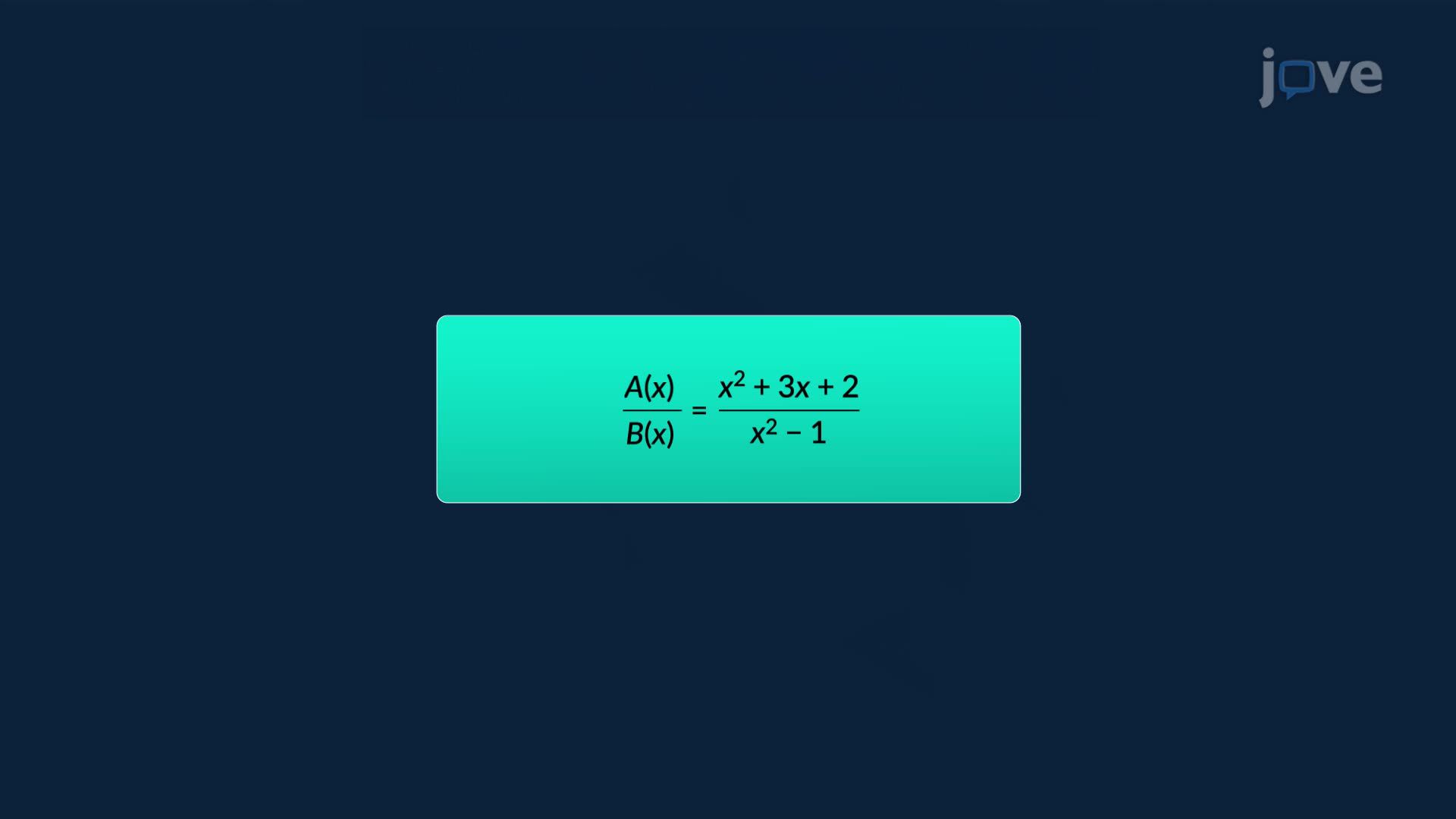
Ever wondered how urban planners calculate population density as cities expand? Rational expressions model real-world scenarios like this, where one quantity is divided by another. These mathematical fractions contain variables in both numerator and denominator, appearing everywhere from calculating medication dosages per body weight to determining fuel efficiency rates. Understanding what are rational expressions reveals powerful tools for solving complex problems across engineering, economics, and scientific applications. Watch the full video on JoVE Coach to master this concept with expert-led visuals and step-by-step explanations.
- Understand what are rational expressions and identify their key components including numerator, denominator, and domain restrictions
- Recognize when rational expressions become undefined by finding values that make the denominator equal to zero
- Apply factoring techniques to simplify rational expressions by canceling common factors appropriately
- Analyze the domain of rational expressions by excluding values that create division by zero
- Evaluate multiplication of rational expressions using cross-multiplication and simplification methods
- Compare addition and subtraction processes requiring common denominators and algebraic manipulation
- Explore real-world applications of rational expressions in population density, rate problems, and scientific calculations
- Identify connections between rational expressions and graphical representations showing discontinuities and asymptotes
Understanding What Are Rational Expressions
Rational expressions form the backbone of advanced algebra, representing fractions where both numerator and denominator contain polynomial expressions with variables. Unlike simple fractions with numbers, these expressions involve variables like x, t, or n, making them dynamic tools for modeling changing relationships. Students encounter rational expressions throughout high school algebra courses and college-level mathematics, particularly in AP Calculus and precalculus curricula.
Types of Rational Expressions and Their Classifications
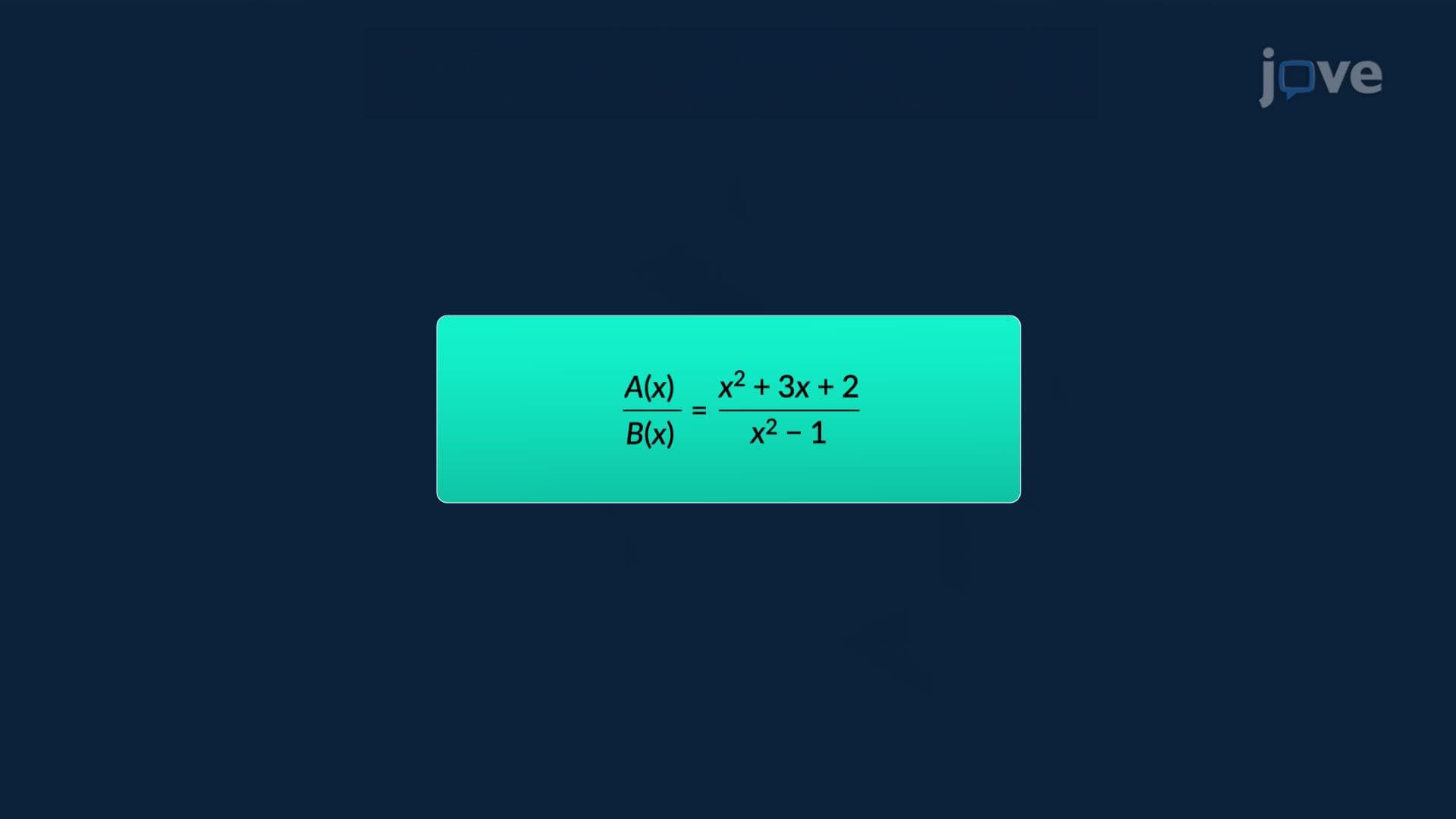
The types of rational expressions vary based on their polynomial degrees and complexity. Simple rational expressions might look like (x+3)/(x-2), while complex forms include (2x²+5x-1)/(x³-4x+7). Proper rational expressions have numerator degrees less than denominator degrees, while improper forms require polynomial long division. Understanding these classifications proves essential for SAT Subject Tests in Mathematics and college algebra assessments.
Domain Restrictions and Undefined Values
Every rational expression has domain limitations where the denominator equals zero, creating undefined points. For instance, in the expression (x+1)/(x-5), x cannot equal 5 because this creates division by zero. Students must factor denominators completely to identify all restrictions. These concepts appear frequently on AP Calculus AB exams and college placement tests, where identifying discontinuities and vertical asymptotes becomes crucial.
Operations with Rational Expressions in Practice
Multiplying rational expressions follows straightforward rules: factor everything, multiply numerators together, multiply denominators together, then simplify by canceling common factors. Addition and subtraction require finding least common denominators, similar to numerical fractions but with algebraic expressions. These operations appear in physics problems calculating combined resistances, chemistry concentration calculations, and engineering applications throughout American universities.
Real-world applications extend beyond textbook problems. Environmental scientists use rational expressions to model pollution concentration changes over time. Financial analysts apply them in calculating compound interest scenarios and investment growth rates. Medical dosage calculations often involve rational expressions when determining medication amounts based on patient weight and time intervals, making this knowledge valuable for pre-med students preparing for the MCAT.
Frequently Asked Questions
Rational expressions are algebraic fractions containing variables in the numerator, denominator, or both, unlike regular fractions with only numbers. They represent relationships between changing quantities, making them powerful tools for modeling real-world scenarios. The key difference lies in their variable components, which create domain restrictions and require special algebraic manipulation techniques.
The SAT typically features simple rational expressions requiring basic operations like addition, subtraction, and simplification through factoring. Students encounter problems involving rate calculations, proportion relationships, and algebraic manipulation of fractional expressions. Most SAT rational expression questions test fundamental skills rather than complex polynomial divisions or advanced domain analysis.
AP Calculus exams emphasize rational expressions in limit problems, derivative calculations using quotient rules, and integration techniques like partial fraction decomposition. Students must identify vertical and horizontal asymptotes, solve rational equations, and analyze continuity. These concepts form approximately 10-15% of typical AP Calculus AB and BC exam content across multiple-choice and free-response sections.
American industries extensively use rational expressions in engineering design calculations, medical dosage determinations, and economic modeling. NASA engineers apply them in spacecraft trajectory calculations, while pharmaceutical companies use them for drug concentration studies. Urban planners employ rational expressions for traffic flow analysis and population density projections in growing metropolitan areas like Austin and Denver.
Rational expressions build naturally on fraction arithmetic and basic factoring skills, making them accessible to students with solid Algebra I foundations. The key prerequisite involves comfortable manipulation of polynomials and understanding domain concepts. Most high school students successfully master rational expressions through consistent practice and step-by-step problem-solving approaches.
Focus on systematic factoring practice, domain identification drills, and operation procedures using consistent steps. Create reference cards showing common factoring patterns and operation rules. Practice mixed problem sets combining simplification, multiplication, and addition techniques. Work through past placement exam questions from universities like University of California system or Texas A&M to understand typical question formats and difficulty levels.
Students should progress to rational functions and their graphing techniques, including asymptote analysis and transformation studies. Advanced topics include partial fraction decomposition for calculus preparation, rational inequalities, and complex fraction simplification. These concepts prepare students for precalculus, AP Calculus, and college-level mathematics courses requiring sophisticated algebraic manipulation skills.
Related Micro-courses
8 Concepts

14 Concepts
10 Concepts