Loading…
Loading video…

25,808 views
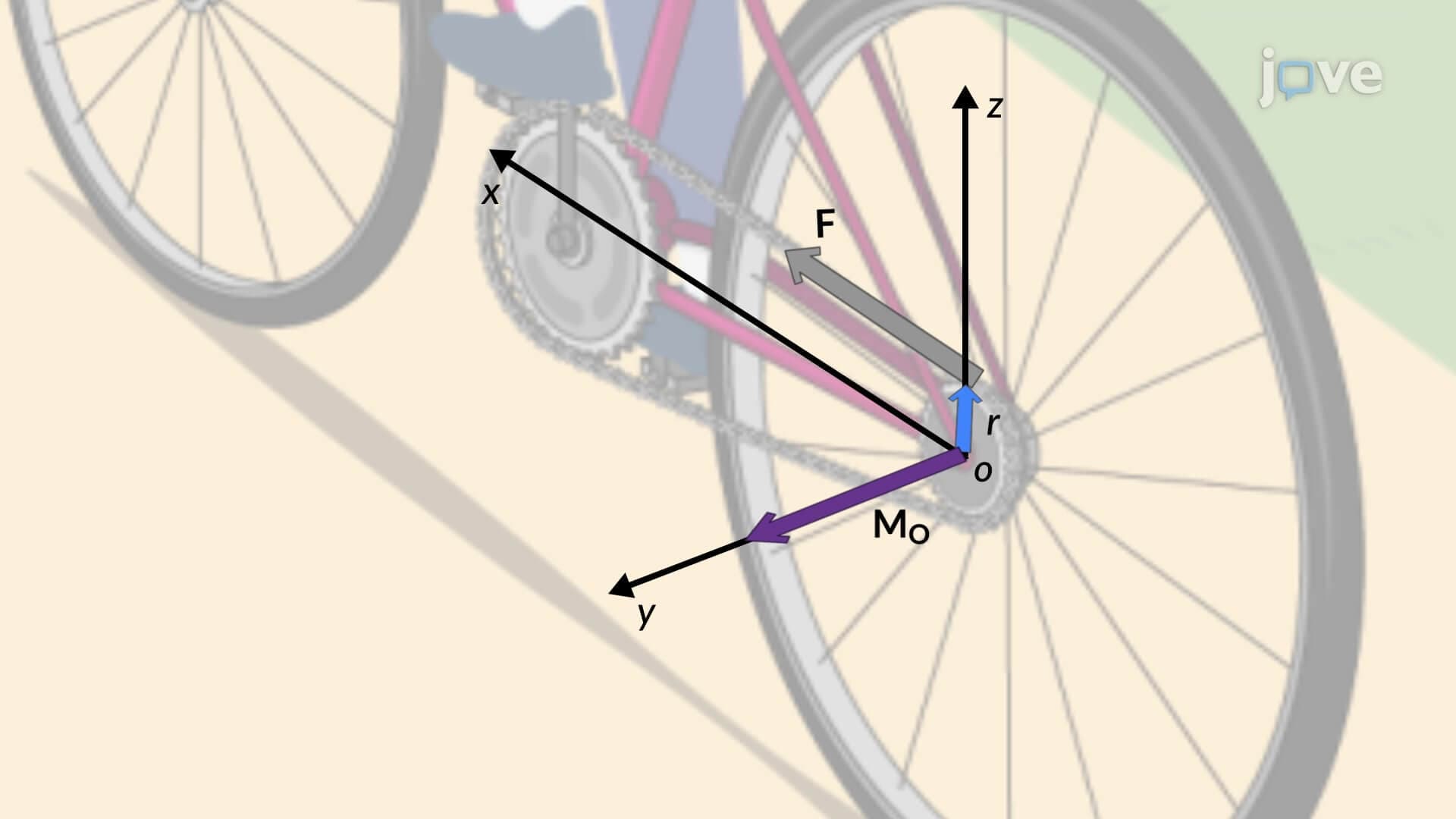
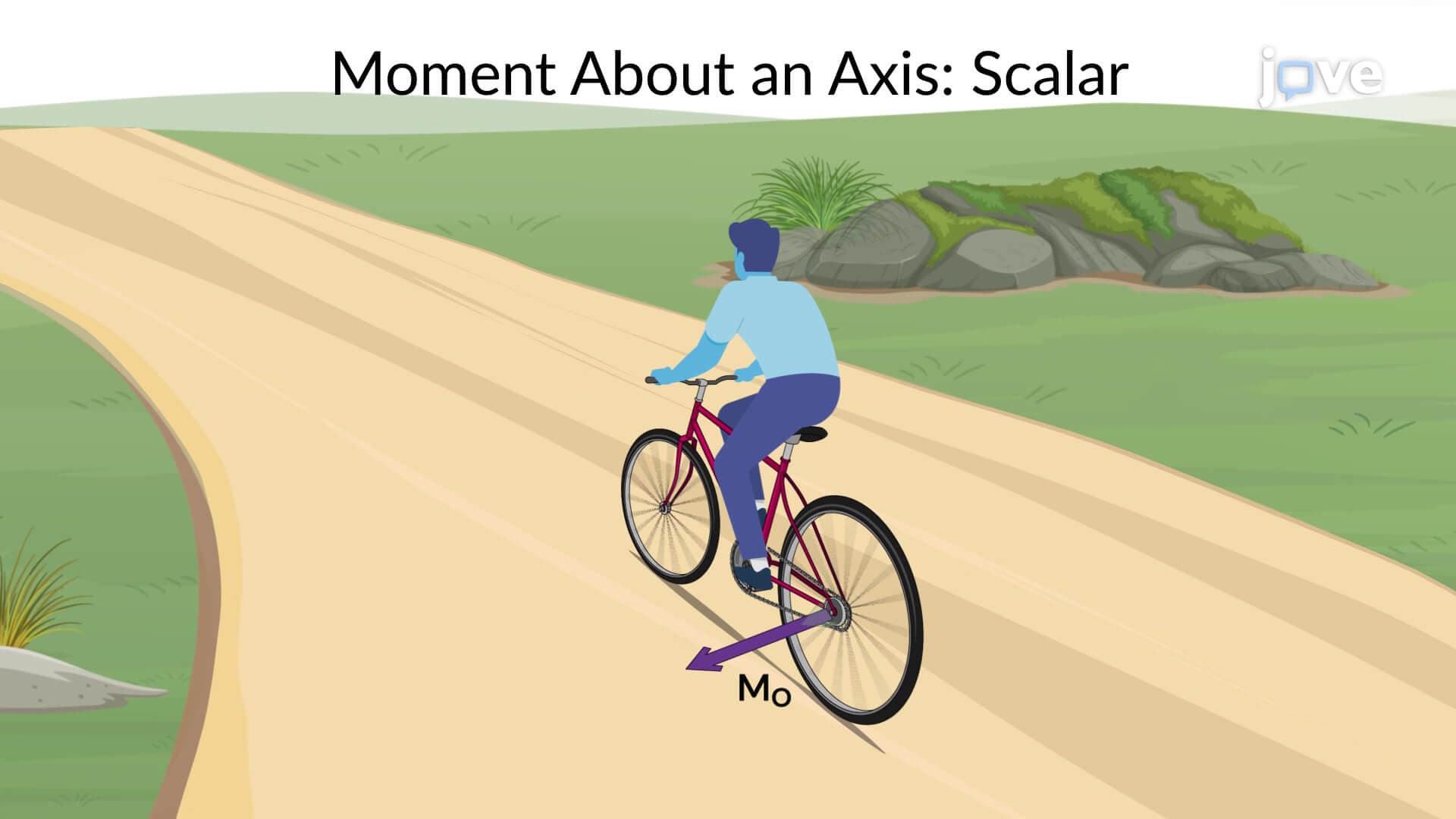
Ever wonder how a simple push on a bike pedal creates the rotational motion that propels you forward? The moment force about an axis vector explains this fascinating physics phenomenon through vector cross products. When cyclists in cities like Portland or San Francisco pedal uphill, they're applying tangential forces that create moment vectors perpendicular to both the applied force and position radius. Understanding moment force about an axis vector requires grasping how Cartesian vector components work together through determinant expansion to produce rotational effects. Watch the full video on JoVE Coach to master this concept with expert-led visuals and step-by-step explanations.
The moment force about an axis vector represents one of the most elegant concepts in mechanical physics, bridging the gap between linear forces and rotational motion. Unlike simple force applications, moments describe the tendency of forces to cause rotation about specific points or axes. When engineers at companies like Boeing design aircraft control surfaces or automotive engineers at Ford develop steering systems, they rely heavily on moment vector calculations to predict rotational behavior.
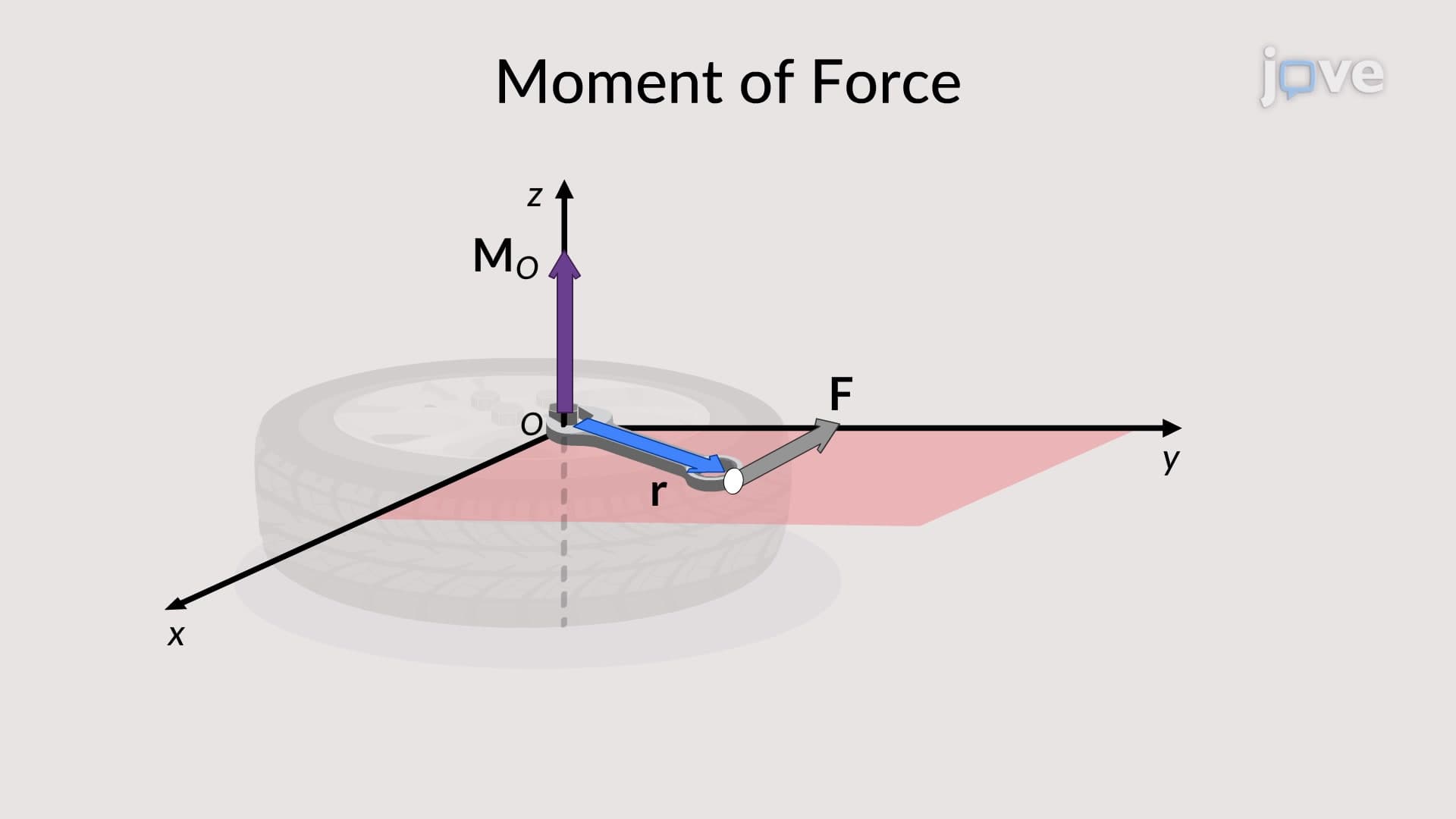
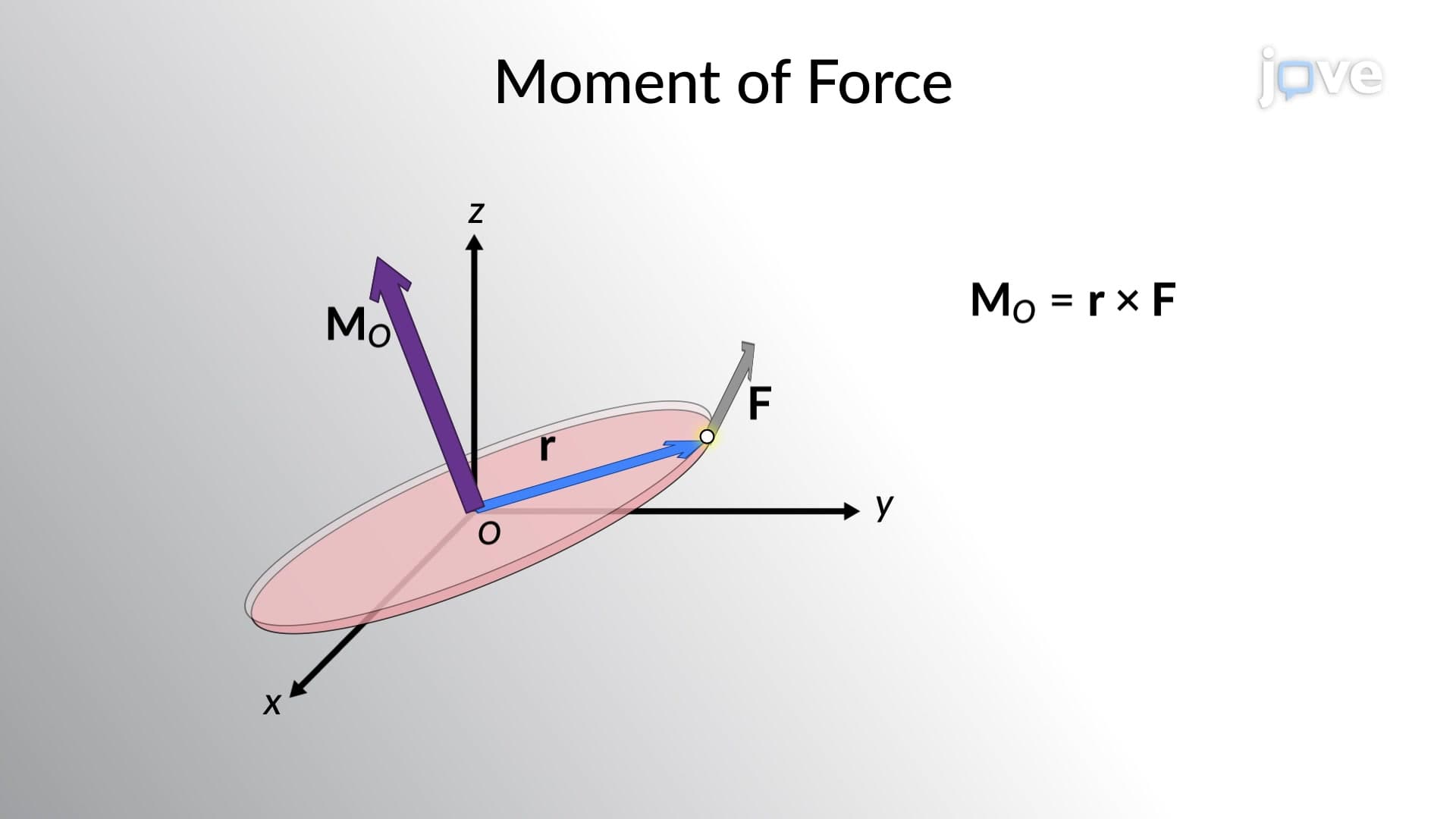
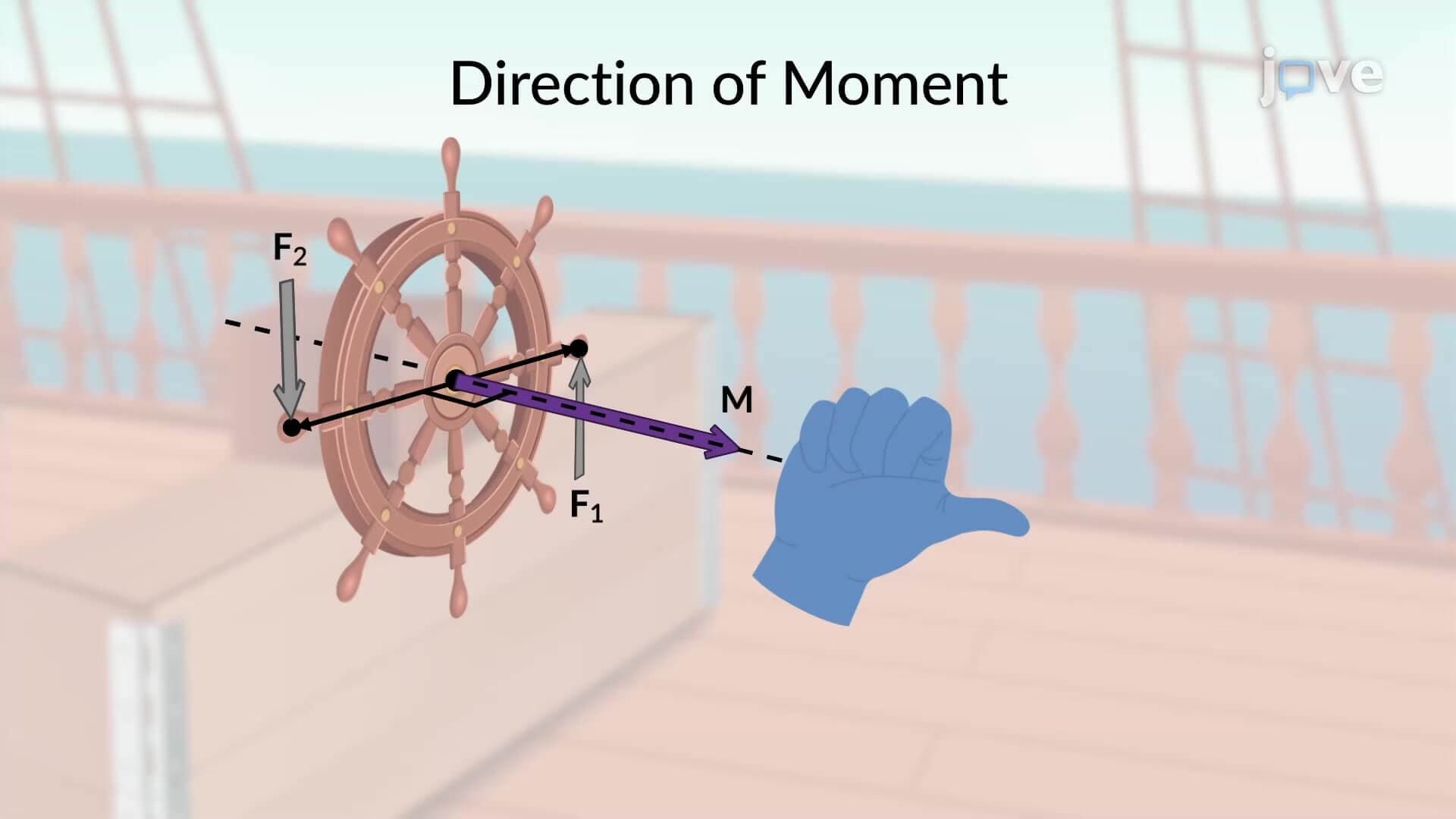
The mathematical foundation of moment calculations lies in vector cross products, expressed as M = r × F, where r represents the position vector and F represents the applied force. This cross product operation inherently produces a vector perpendicular to both input vectors, following the right-hand rule. Students preparing for AP Physics C or college-level statics courses must master determinant expansion techniques to solve these calculations systematically.
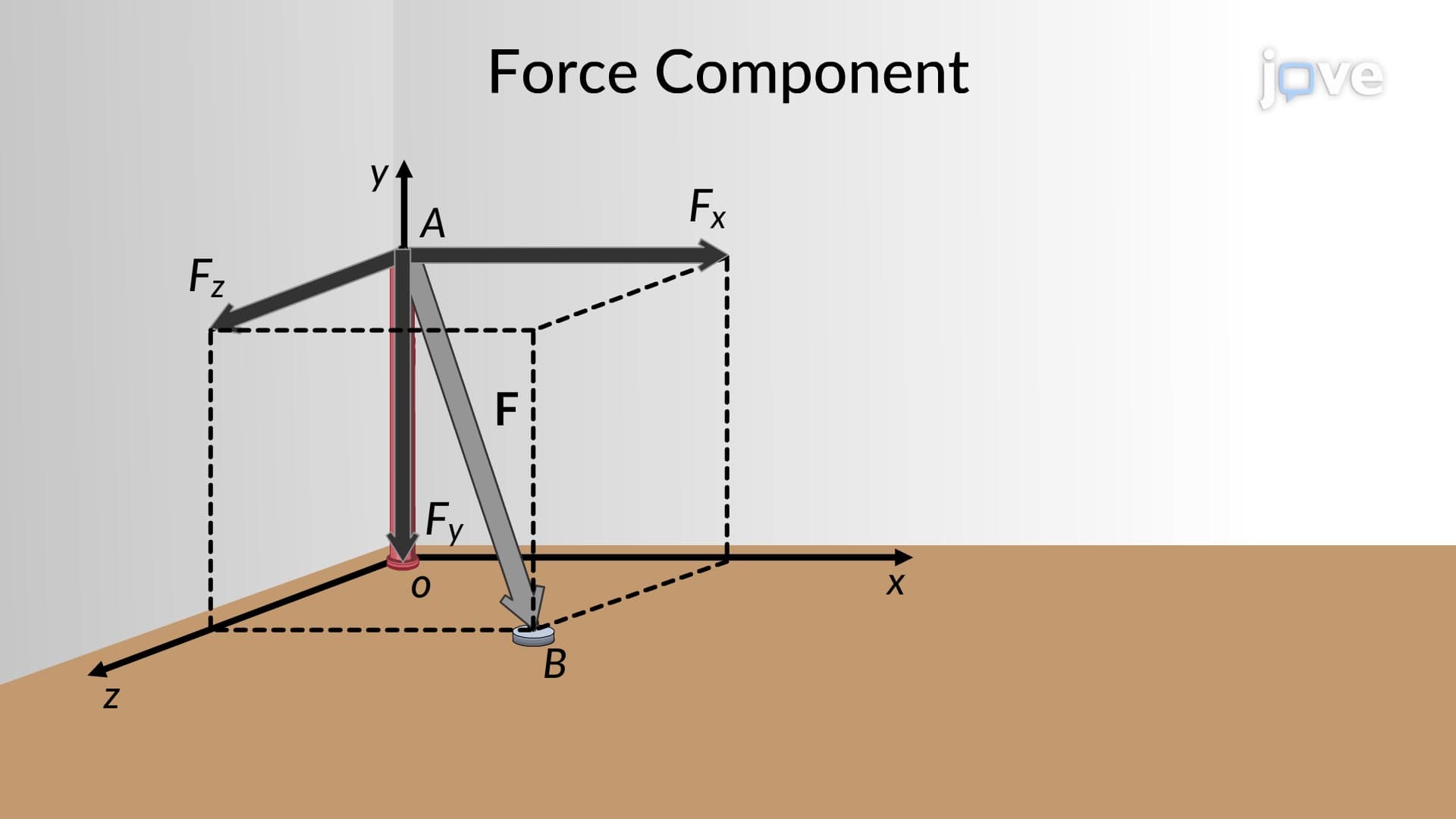
The determinant method involves arranging unit vectors (i, j, k) with position and force components in matrix form. Expanding this determinant yields moment components: Mx = (ry × Fz) - (rz × Fy), My = (rz × Fx) - (rx × Fz), and Mz = (rx × Fy) - (ry × Fx). This systematic approach eliminates calculation errors common in manual cross product computations.
Consider the practical applications found throughout American infrastructure. When structural engineers design the Statue of Liberty's internal framework or calculate wind loads on San Francisco's Golden Gate Bridge, they extensively use moment vector analysis. The perpendicular relationship between applied forces and resulting moments explains why revolving doors require specific pushing techniques for optimal efficiency, or how NASCAR drivers apply steering wheel forces to generate the precise turning moments needed for high-speed cornering.
Students encounter moment vector problems extensively in STEM curricula, particularly in engineering mechanics courses at institutions like MIT, Stanford, or state universities. The FE (Fundamentals of Engineering) exam, required for professional engineering licensure, frequently tests moment calculations in various contexts. Mastering this concept provides essential groundwork for advanced topics including gyroscopic motion, dynamic balancing, and robotic arm design—skills increasingly valuable in America's growing automation and aerospace industries.
Frequently Asked Questions
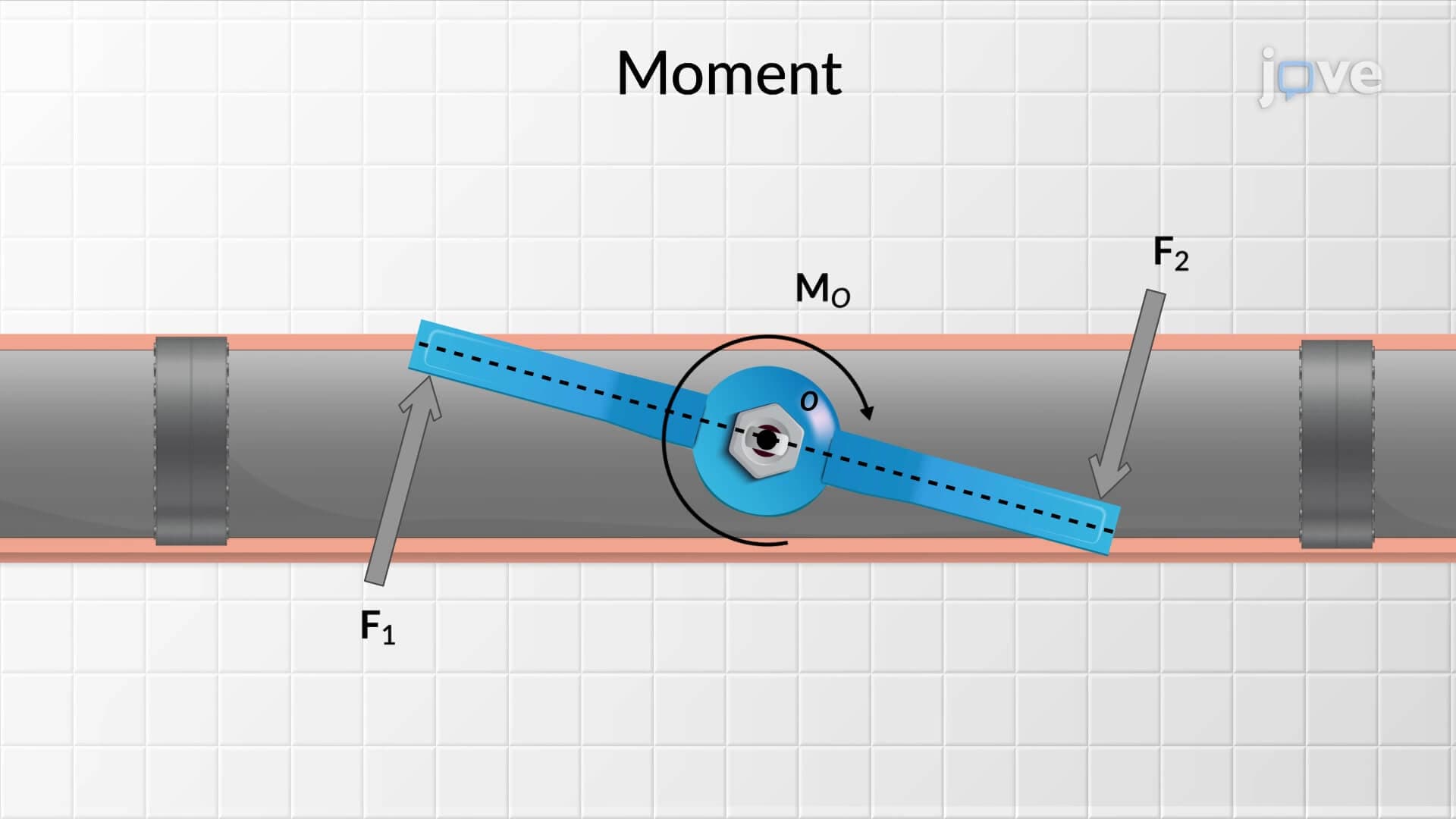
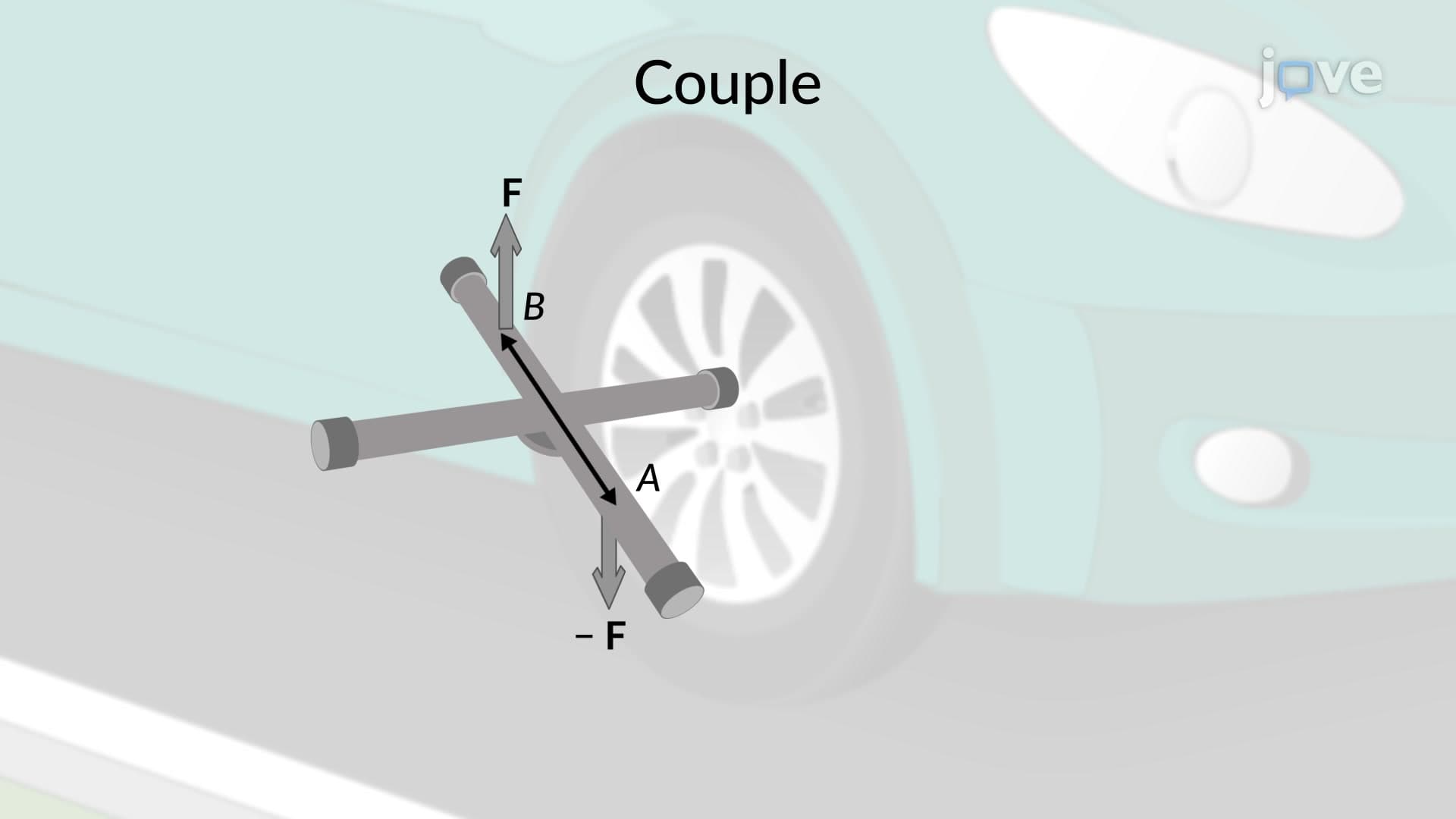
Moment force about an axis vector describes rotational effects created when forces act at distances from pivot points, unlike regular forces that cause linear motion. The moment vector is always perpendicular to both the applied force and position vector, calculated through cross product operations. This concept explains why longer wrenches provide greater turning power and how bicycle pedals convert leg force into wheel rotation.
Yes, moment calculations frequently appear on AP Physics C: Mechanics, particularly in rotational dynamics problems. The College Board expects students to solve cross product calculations and apply moment concepts to real-world scenarios. Students should practice determinant expansion methods and understand vector component relationships for exam success.
Focus on mastering cross product calculations using determinant expansion, practice identifying position and force vectors in 3D coordinate systems, and work through bicycle, wrench, and door rotation problems. Most universities test these concepts in engineering mechanics and introductory physics courses, emphasizing both calculation skills and conceptual understanding.
Mechanical engineers, aerospace engineers, and automotive designers regularly apply moment vector analysis in their work. Companies like Tesla use these calculations for electric motor design, while firms like Lockheed Martin apply them to aircraft control system development. Civil engineers also use moment calculations for structural analysis of buildings and bridges throughout the United States.
Not at all—while the mathematics involves cross products, the underlying concepts build naturally on basic force and vector knowledge from Algebra II and introductory physics. Students who understand basic trigonometry and vector components can successfully master moment calculations with proper practice and visualization techniques.
Create a systematic approach: always establish coordinate systems first, identify position and force vectors clearly, then apply determinant expansion methodically. Practice with diverse problems involving different rotation axes and force orientations. Drawing clear diagrams and checking answer units helps avoid common calculation errors during timed exams.
Moment vector mastery provides essential groundwork for advanced subjects including gyroscopic motion, dynamic balancing, robotics, and fluid mechanics. Engineering students at top universities like Caltech and Georgia Tech build upon these fundamentals throughout their curricula, making early mastery crucial for academic success.
Related Micro-courses
Related Subjects
 Civil Engineering 30 micro-courses›Electrical Engineering 33 micro-courses›