Loading…
Loading video…

25,808 views
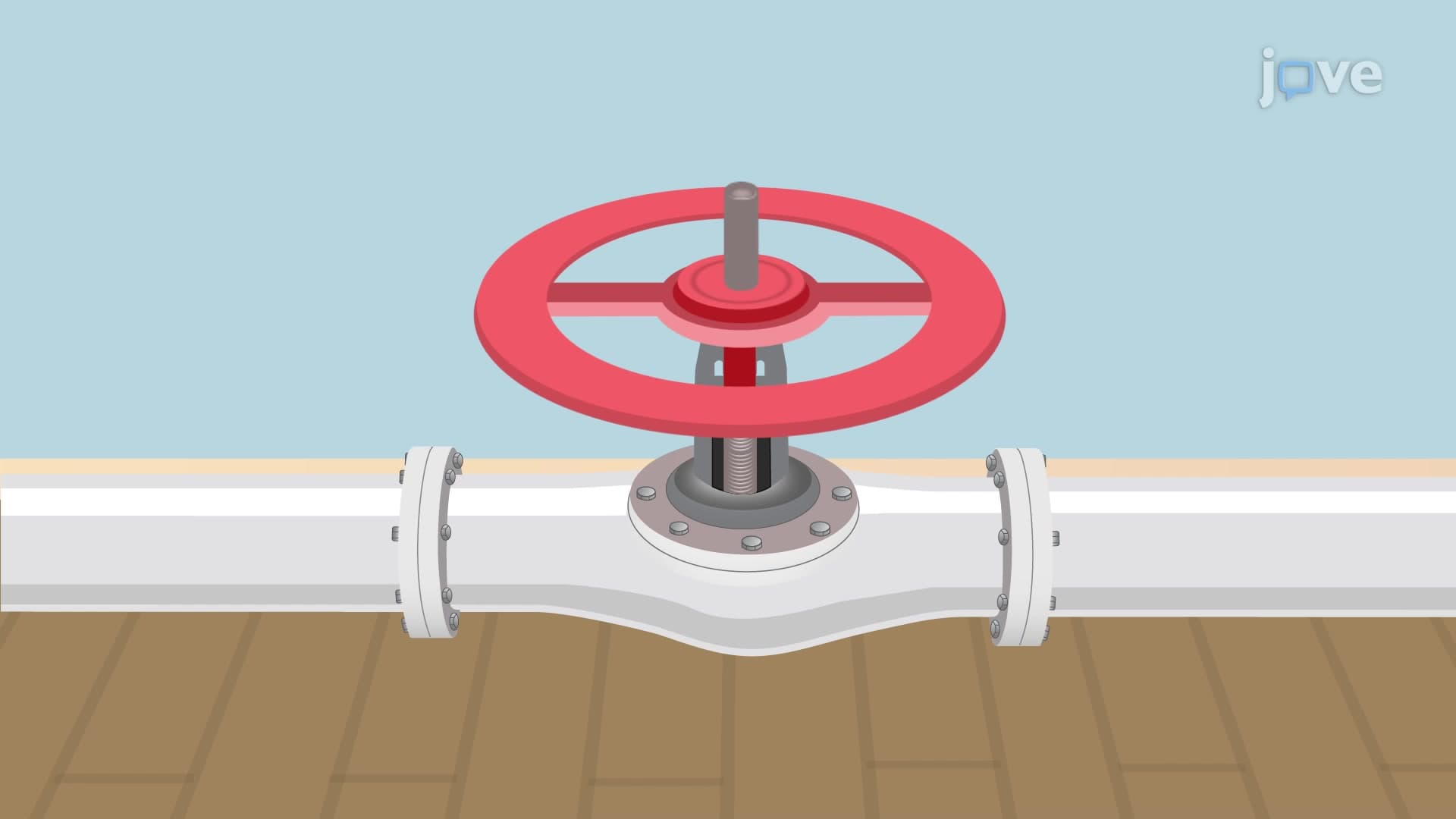
Ever wonder why a wrench works equally well when you grip it at different points along its handle? Equivalent couples explain this phenomenon in mechanics—forces that produce identical rotational effects regardless of their specific locations. Consider how aircraft control surfaces like rudders and elevators can generate the same turning moment through different force configurations during flight maneuvers. Understanding what are equivalent couples reveals why engineers can design multiple force systems that achieve identical rotational outcomes in everything from automotive steering systems to bridge construction. Watch the full video on JoVE Coach to master this concept with expert-led visuals and step-by-step explanations.
Equivalent couples represent one of the most elegant concepts in statics and mechanics. At its core, this principle states that two couples are equivalent when they produce identical rotational effects on a rigid body, regardless of where the forces are applied. This fundamental concept appears throughout engineering mechanics, from analyzing bridge loads to designing aircraft control systems.
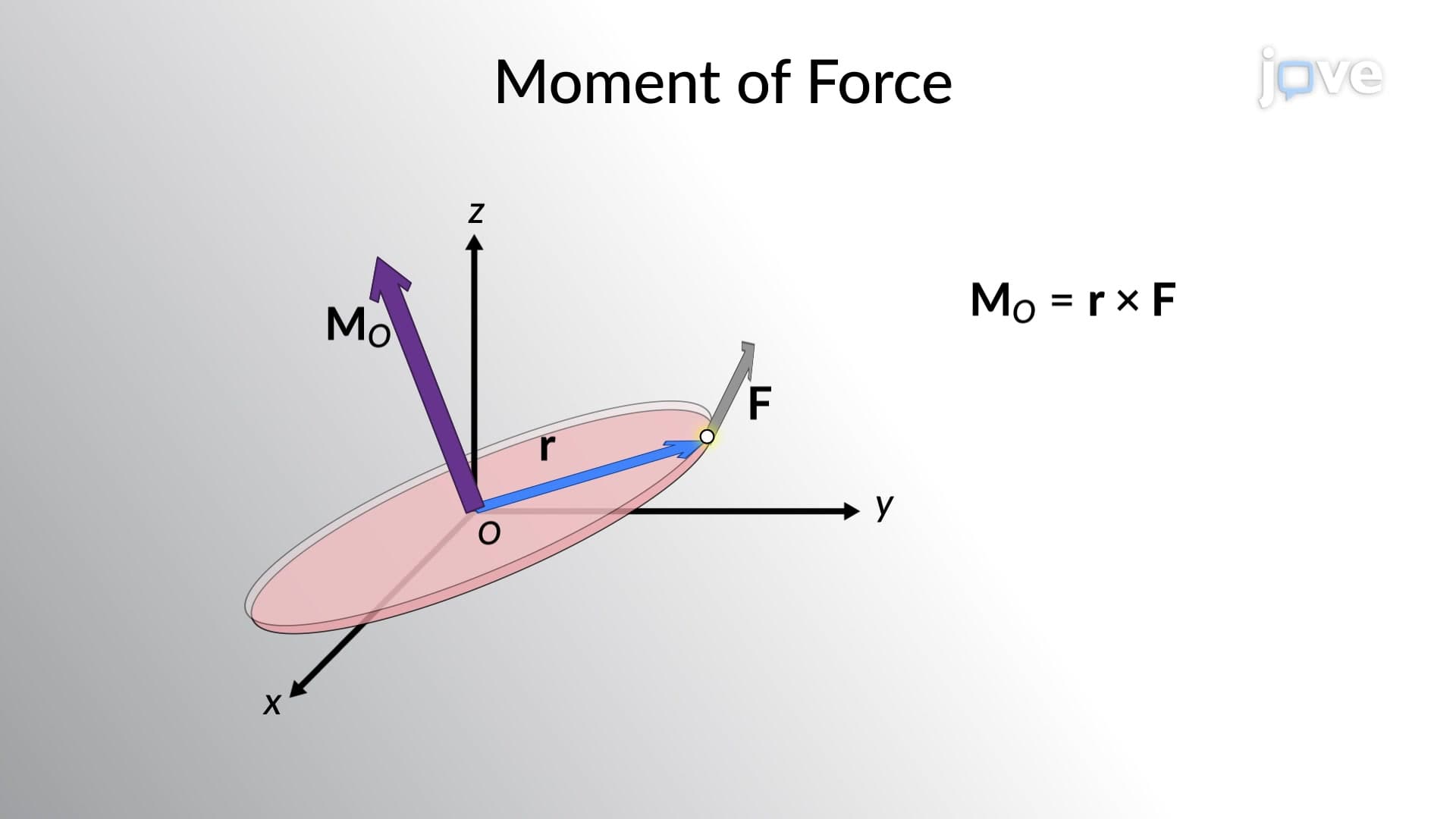
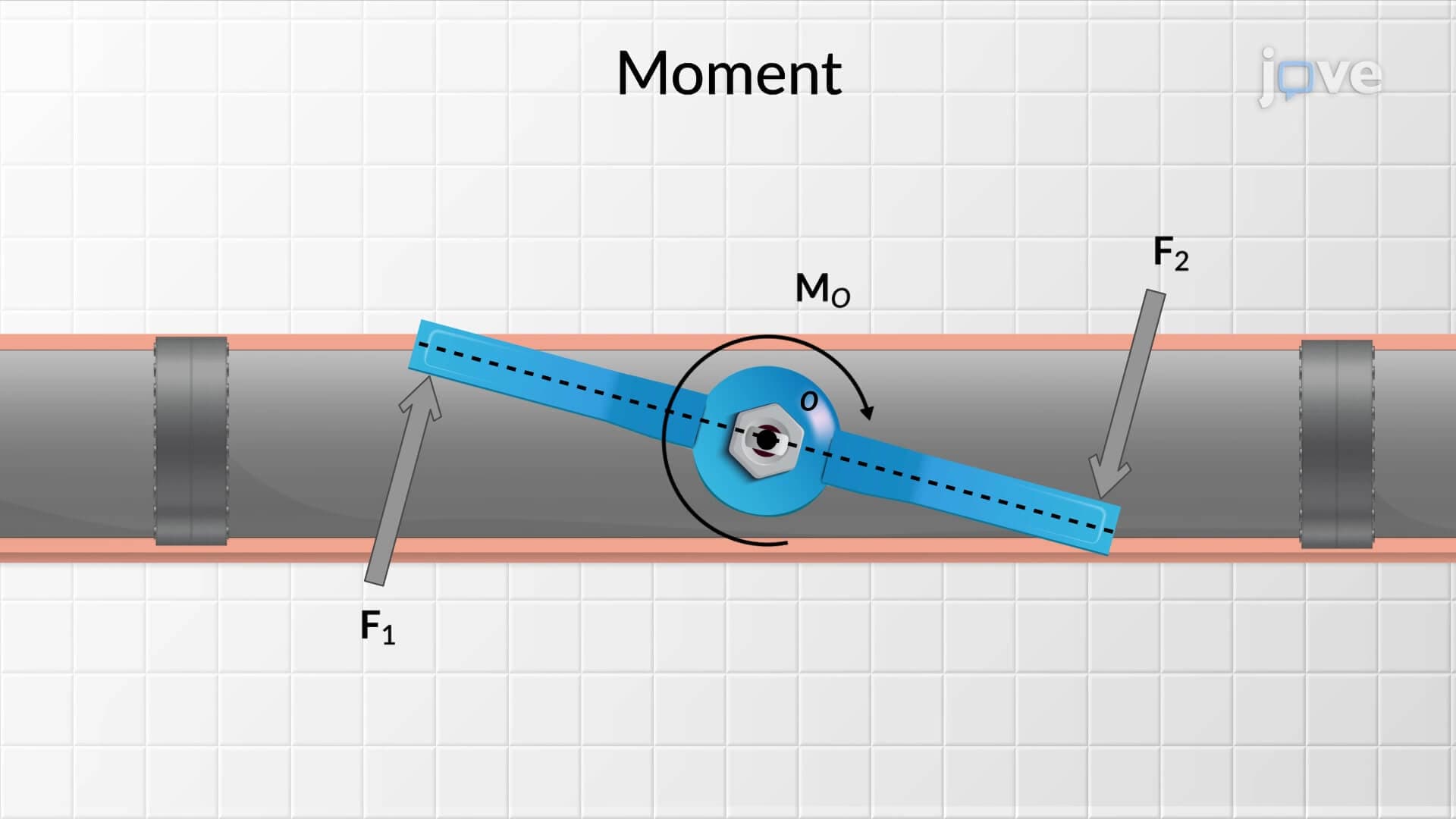
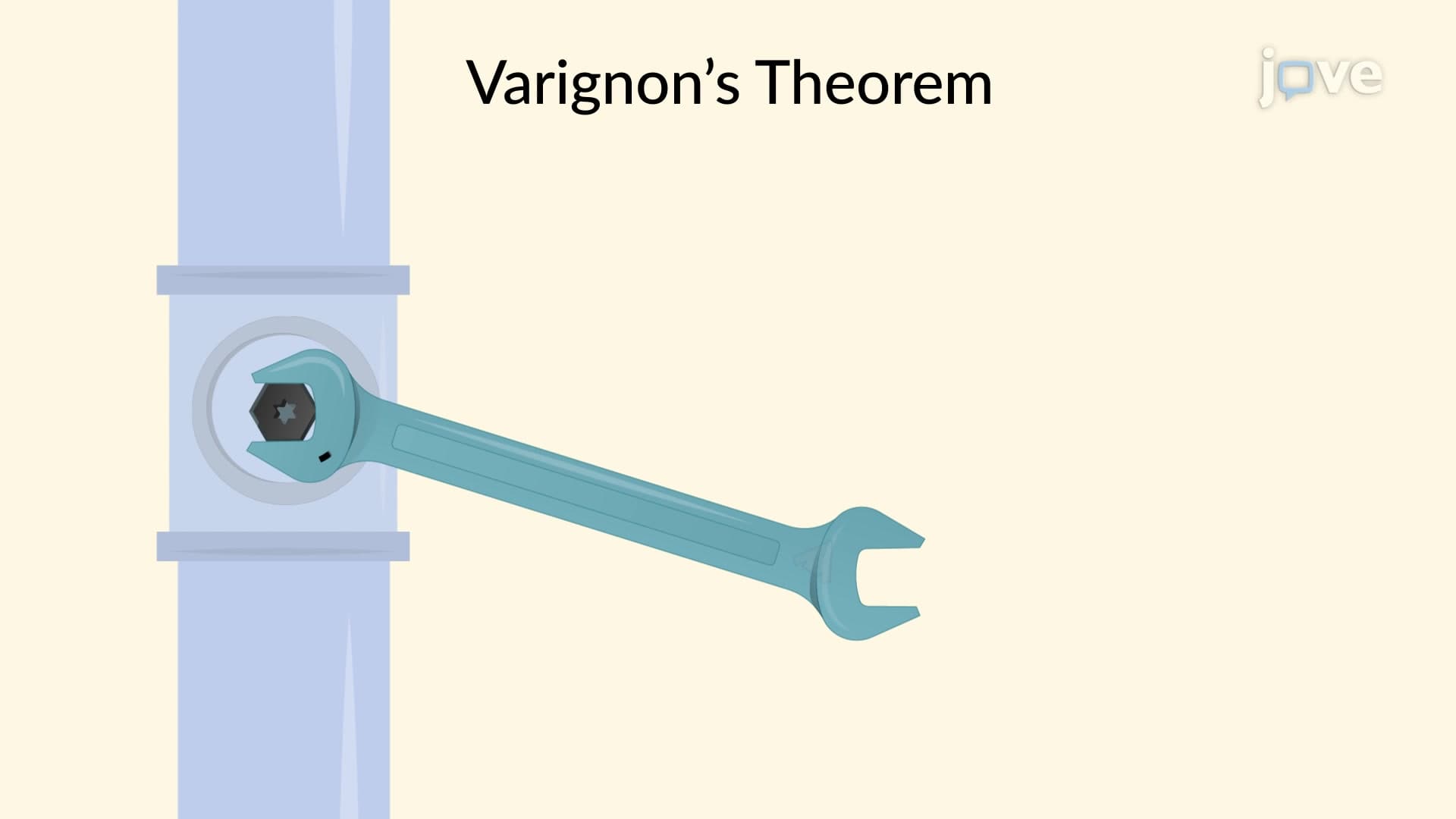
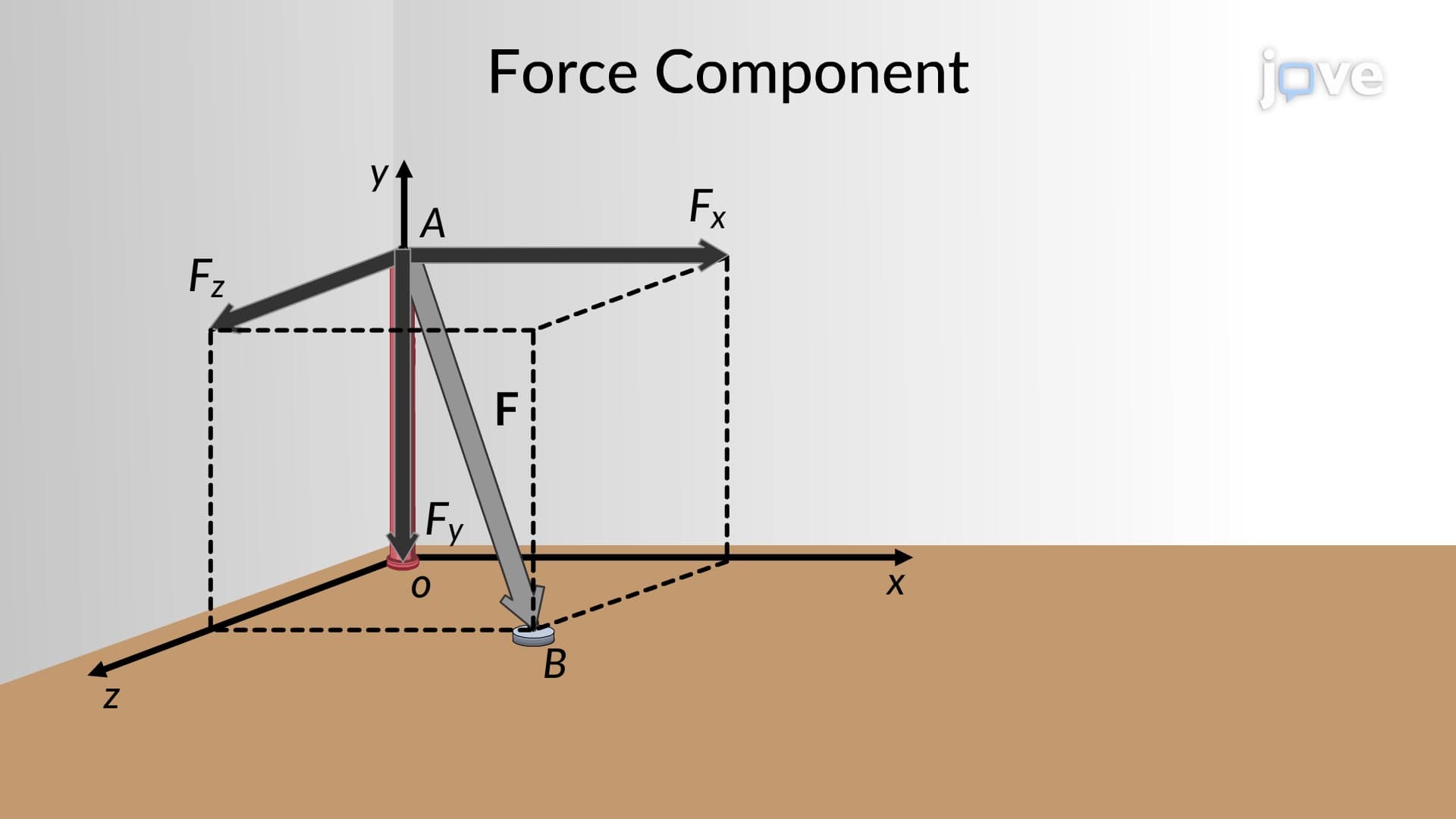
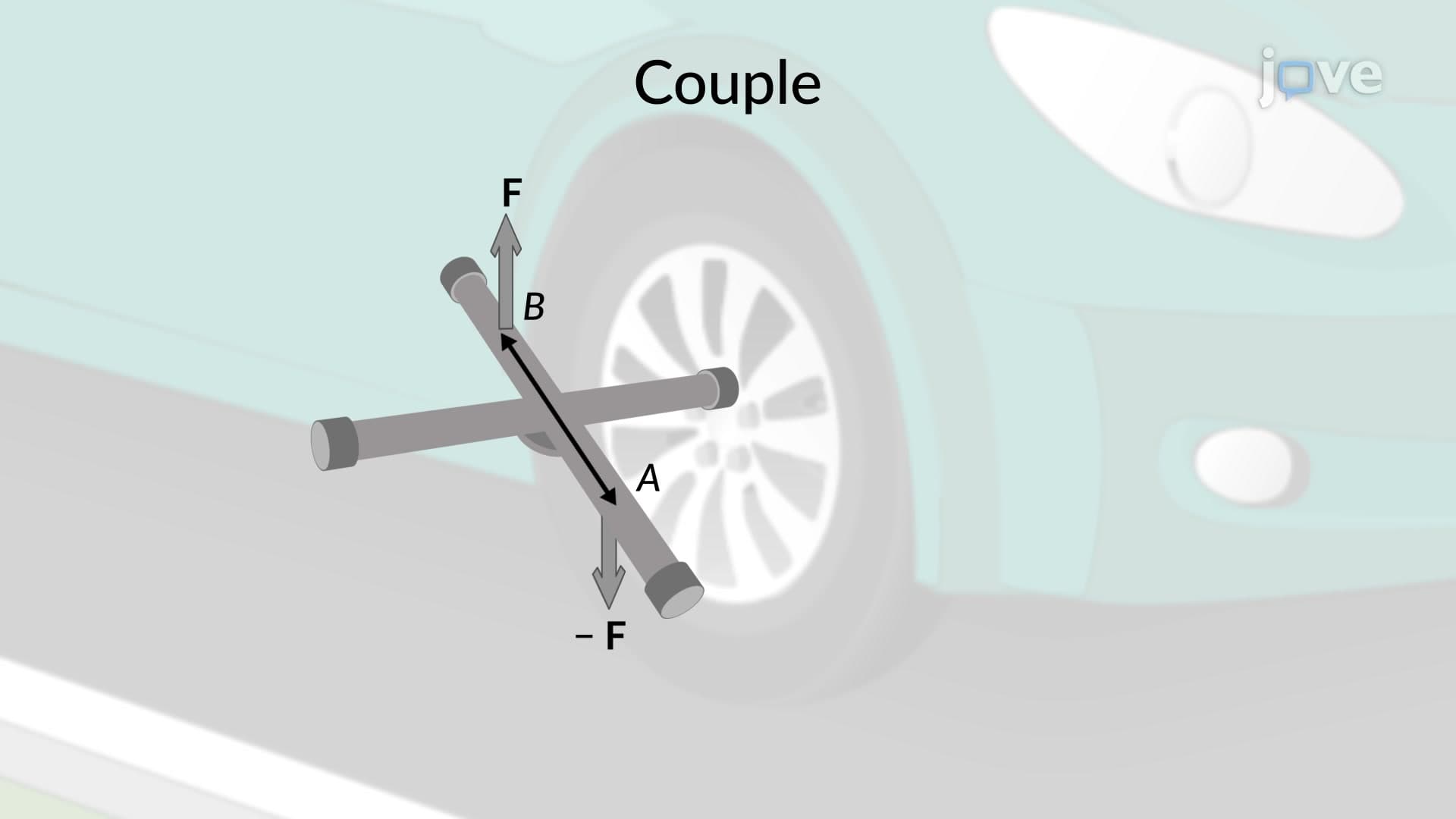
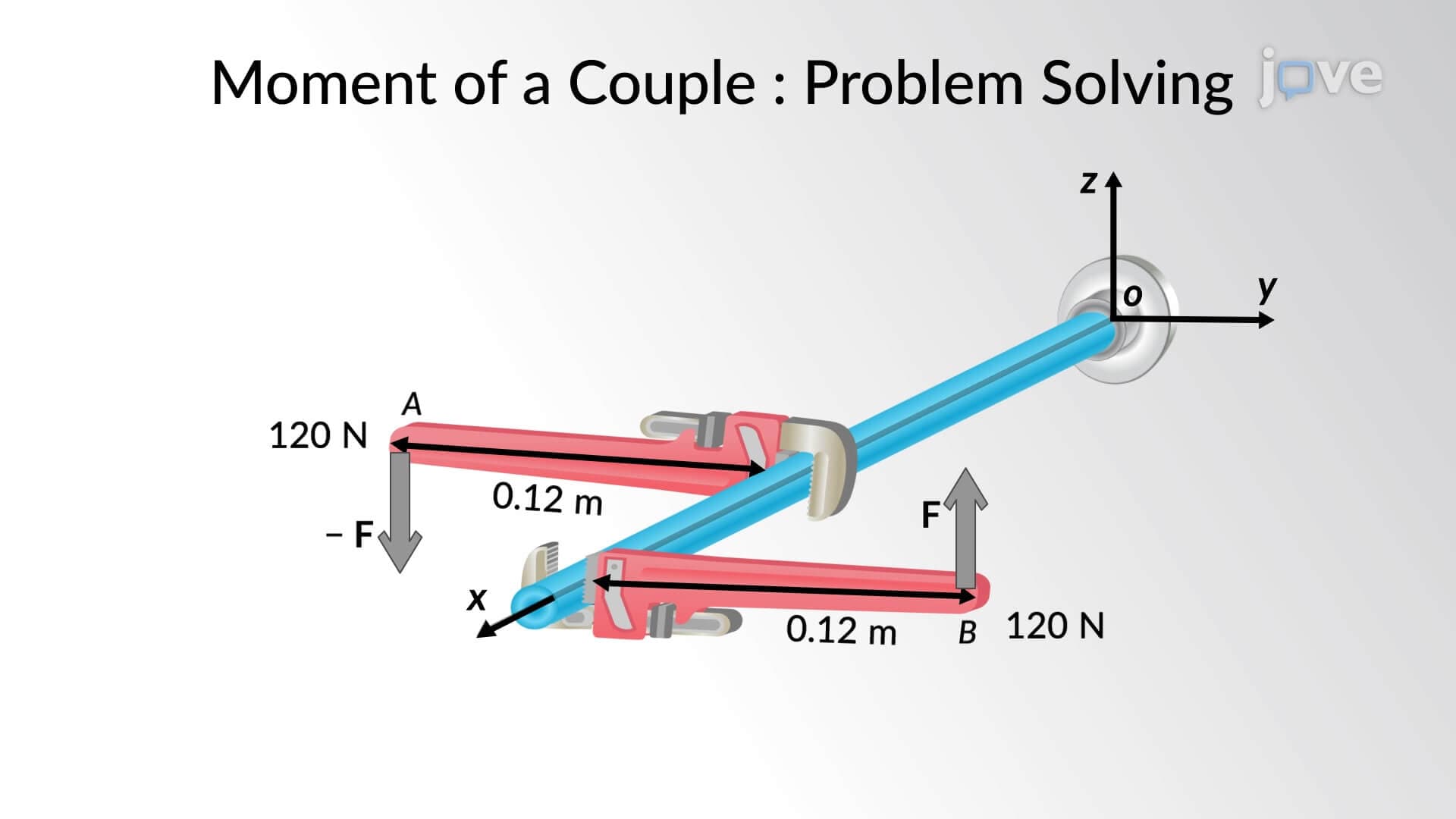
The equivalency of couples relies heavily on Varignon's theorem, which states that the moment of a force about any point equals the sum of moments of its components about the same point. When we have two couples with forces F₁, -F₁ and F₂, -F₂, they're equivalent if their moments are equal: M₁ = M₂ = F₁ × d₁ = F₂ × d₂, where d represents the perpendicular distance between force lines of action.
This mathematical relationship explains why a 10-pound force applied 2 feet from a pivot point produces the same rotational effect as a 5-pound force applied 4 feet away—both generate 20 pound-feet of moment. Students preparing for AP Physics exams frequently encounter these calculations, particularly in rotational equilibrium problems.
Types of equivalent couples fall into two primary categories. Coplanar equivalent couples exist within the same plane and can be directly transformed into one another through force resolution and component analysis. The transcript's example demonstrates this: when forces are moved to intersection points and resolved into components, opposing components cancel out, leaving only the essential couple forces.
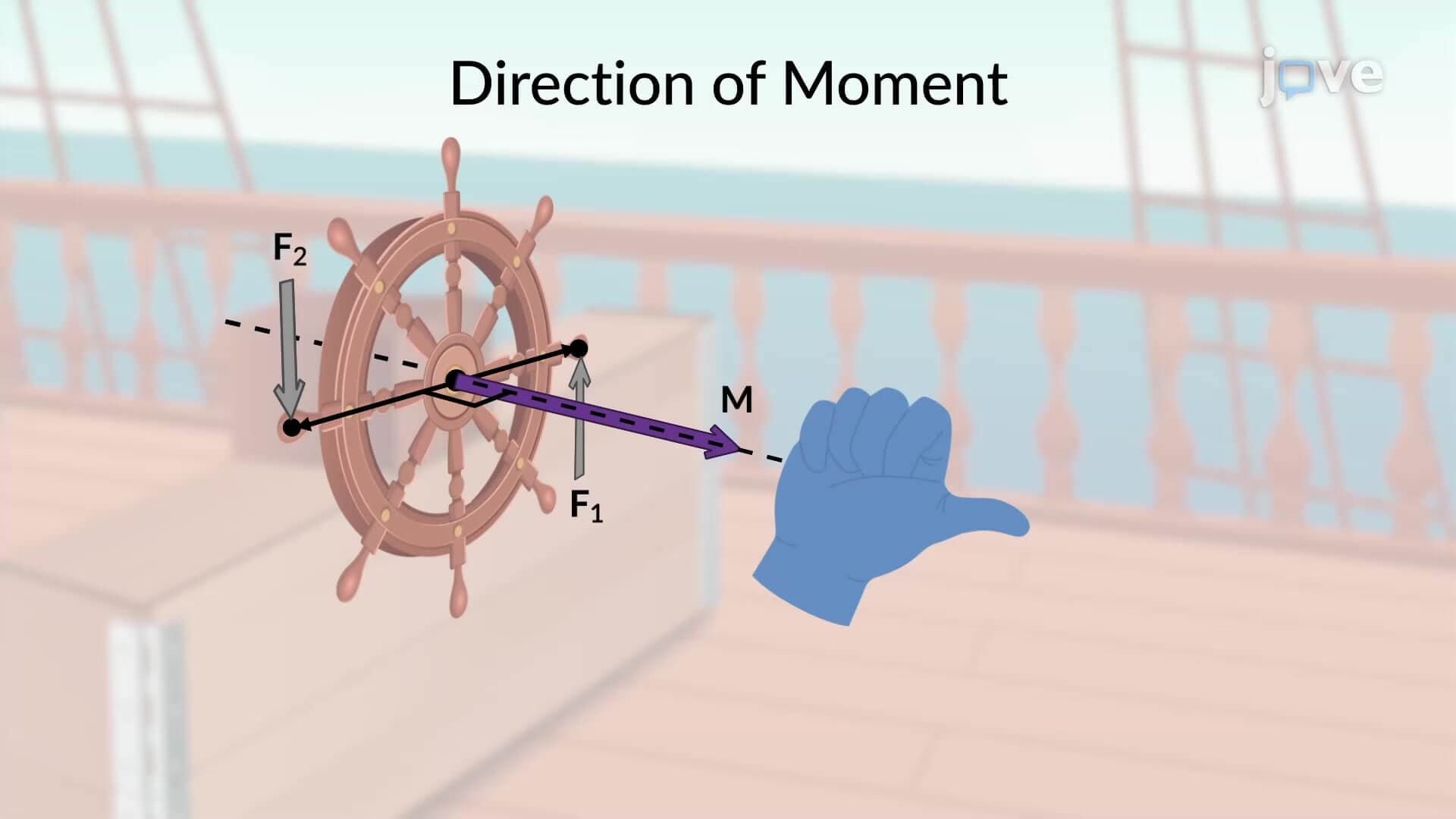
Parallel plane equivalent couples operate across different parallel planes but maintain the same moment vector direction. This concept proves crucial in structural engineering, where loads distributed across building floors must be analyzed collectively. For instance, wind loads on different floors of a skyscraper can be treated as equivalent couples when calculating overall building response.
The equivalent couples concept appears extensively in practical engineering applications. Automotive engineers use this principle when designing steering systems—the torque applied to the steering wheel creates an equivalent couple at the wheels, regardless of the specific gear ratios involved. Similarly, aerospace engineers apply equivalent couple analysis when designing control surfaces, ensuring that pilot inputs produce predictable aircraft responses.
In college-level statics courses and MCAT preparation, students must master equivalent couples to solve complex equilibrium problems. The concept frequently appears in SAT Subject Test Physics questions involving rotational motion and torque calculations.
Frequently Asked Questions
Equivalent couples are two force couples that produce identical rotational effects on a rigid body, having the same moment magnitude, direction, and sense of rotation. They can replace each other without changing the overall mechanical behavior of the system. This fundamental concept allows engineers to simplify complex force systems while maintaining rotational equilibrium.
For AP Physics success, focus on three key equivalent couples principles: moment calculation using M = F × d, Varignon's theorem for force resolution, and the conditions for couple equivalency. Practice problems involving torque equilibrium and rotational statics frequently test these concepts. Master both coplanar and parallel plane equivalent couple scenarios for comprehensive exam preparation.
MCAT Physics tests equivalent couples through rotational equilibrium problems, often in biological contexts like joint mechanics or muscle force analysis. Expect questions combining torque calculations with human anatomy, requiring you to identify equivalent force systems in limb movements. Focus on moment arm calculations and force vector analysis for optimal performance.
Aircraft control systems perfectly demonstrate equivalent couples—pilots apply forces to control yokes, creating equivalent couples at wing surfaces for turning. Additionally, automotive steering systems use equivalent couples to transfer wheel torque to directional changes. Bridge engineering also employs this concept when analyzing distributed wind and traffic loads across structural spans.
Equivalent couples require only basic algebra and trigonometry—no calculus needed for fundamental understanding. High school students can master this concept by focusing on force multiplication, distance relationships, and vector directions. Start with simple coplanar examples before advancing to parallel plane systems for optimal learning progression.
Practice identifying equivalent couples in various configurations, then calculate moments using M = F × d systematically. Create visual diagrams showing force directions and perpendicular distances for each problem. Work through progressively complex scenarios, from simple beam problems to multi-force systems, building confidence through repetitive application of core principles.
Equivalent couples form the foundation for understanding distributed loads, three-dimensional force systems, and dynamic analysis in advanced courses. They directly connect to topics like shear and moment diagrams in structural analysis, gyroscopic effects in machinery, and stability analysis in aerospace engineering applications.
Progress to resultant force systems, three-dimensional equilibrium, and distributed loading patterns in beams and structures. Advanced topics include virtual work principles, influence lines, and dynamic force analysis. These concepts build directly on equivalent couple fundamentals, expanding into more sophisticated engineering applications and analysis techniques.
Related Micro-courses
Related Subjects
 Civil Engineering 30 micro-courses›Electrical Engineering 33 micro-courses›