Loading…
Loading video…

25,808 views
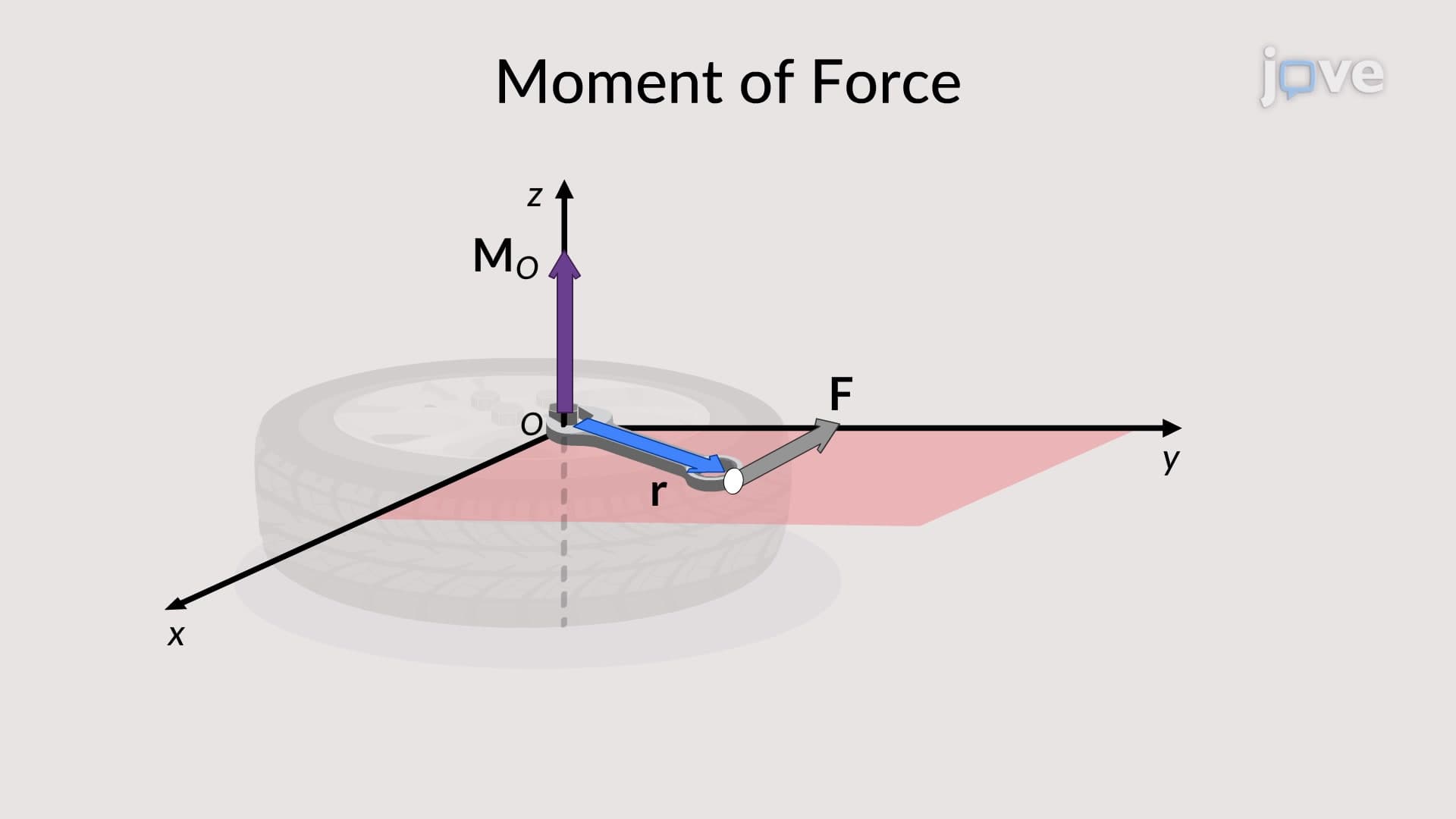
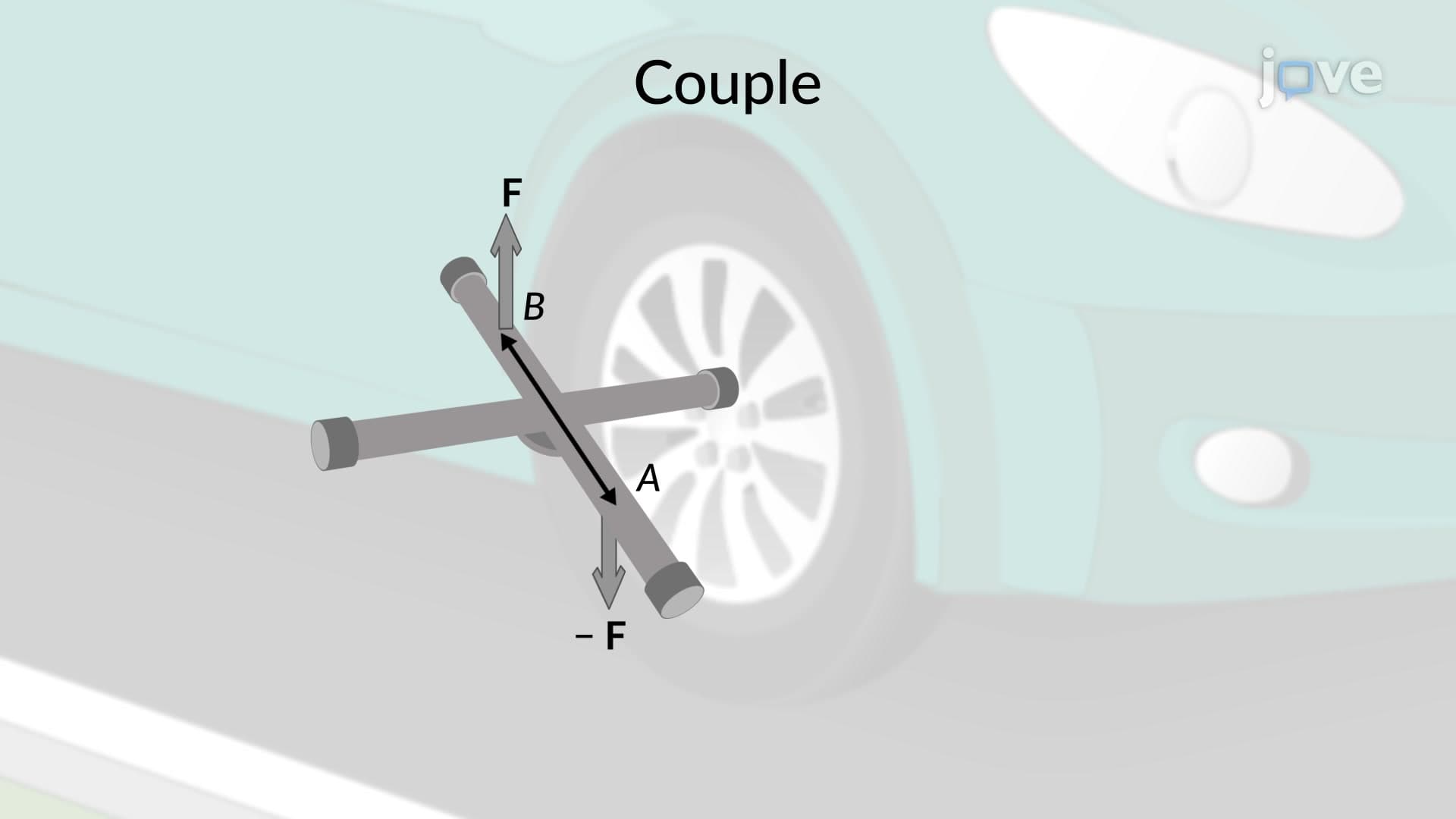
Ever wondered how a small wrench can generate enough torque to loosen a stubborn bolt on your car's engine? The moment force vector formulation explains this mechanical advantage through the cross-product relationship between position and force vectors. When mechanics at Ford's Dearborn plant use extended handles on their torque wrenches, they're applying this fundamental physics principle to maximize rotational force. This concept combines vector mathematics with real-world mechanics, showing how perpendicular force application creates maximum rotational effect. Watch the full video on JoVE Coach to master this concept with expert-led visuals and step-by-step explanations.
The moment force vector formulation represents one of the most practical applications of vector mathematics in engineering and physics. This concept bridges pure mathematics with real-world mechanical systems, from the simple act of opening a door to complex machinery operations in manufacturing plants across the United States.
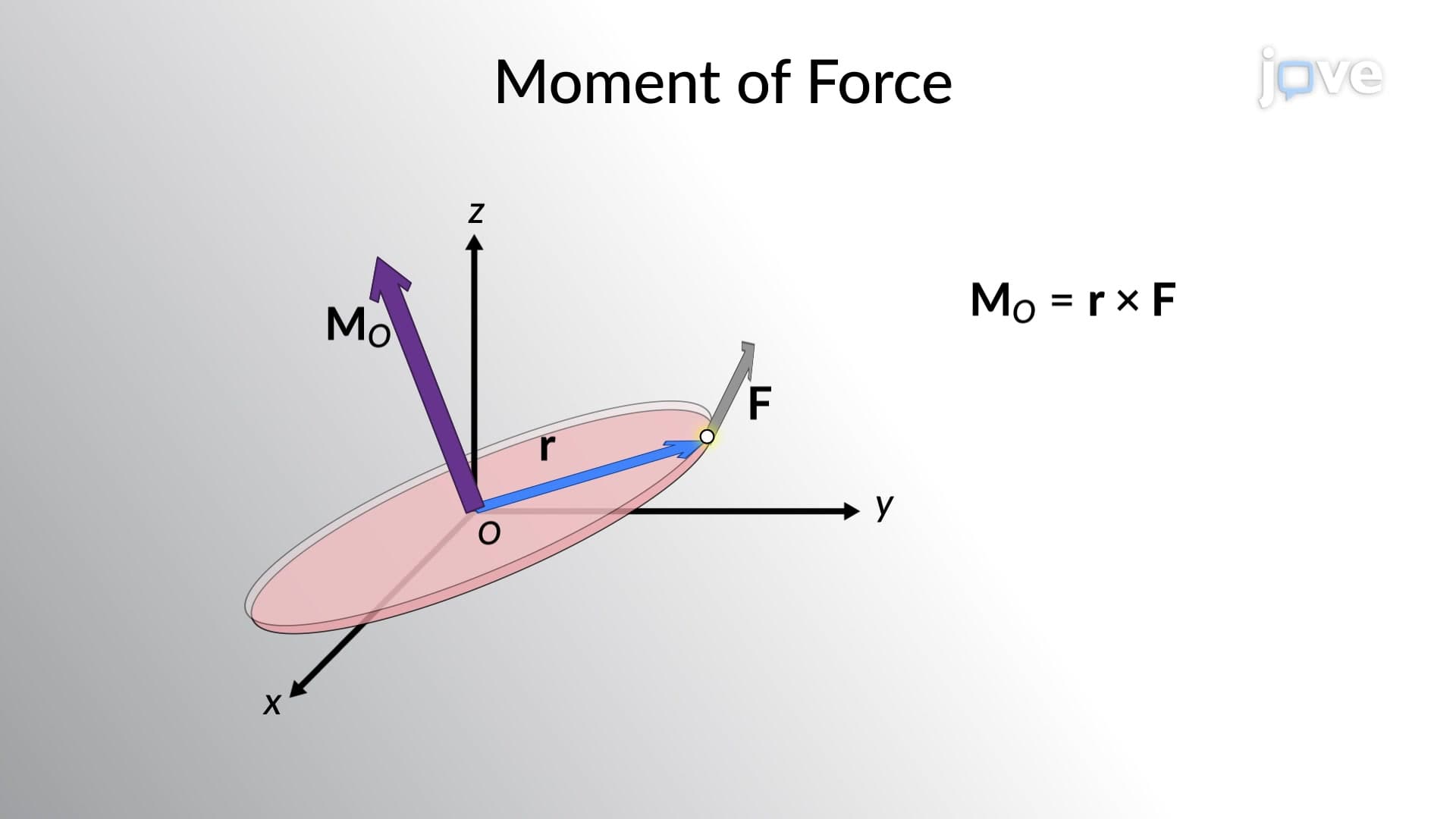
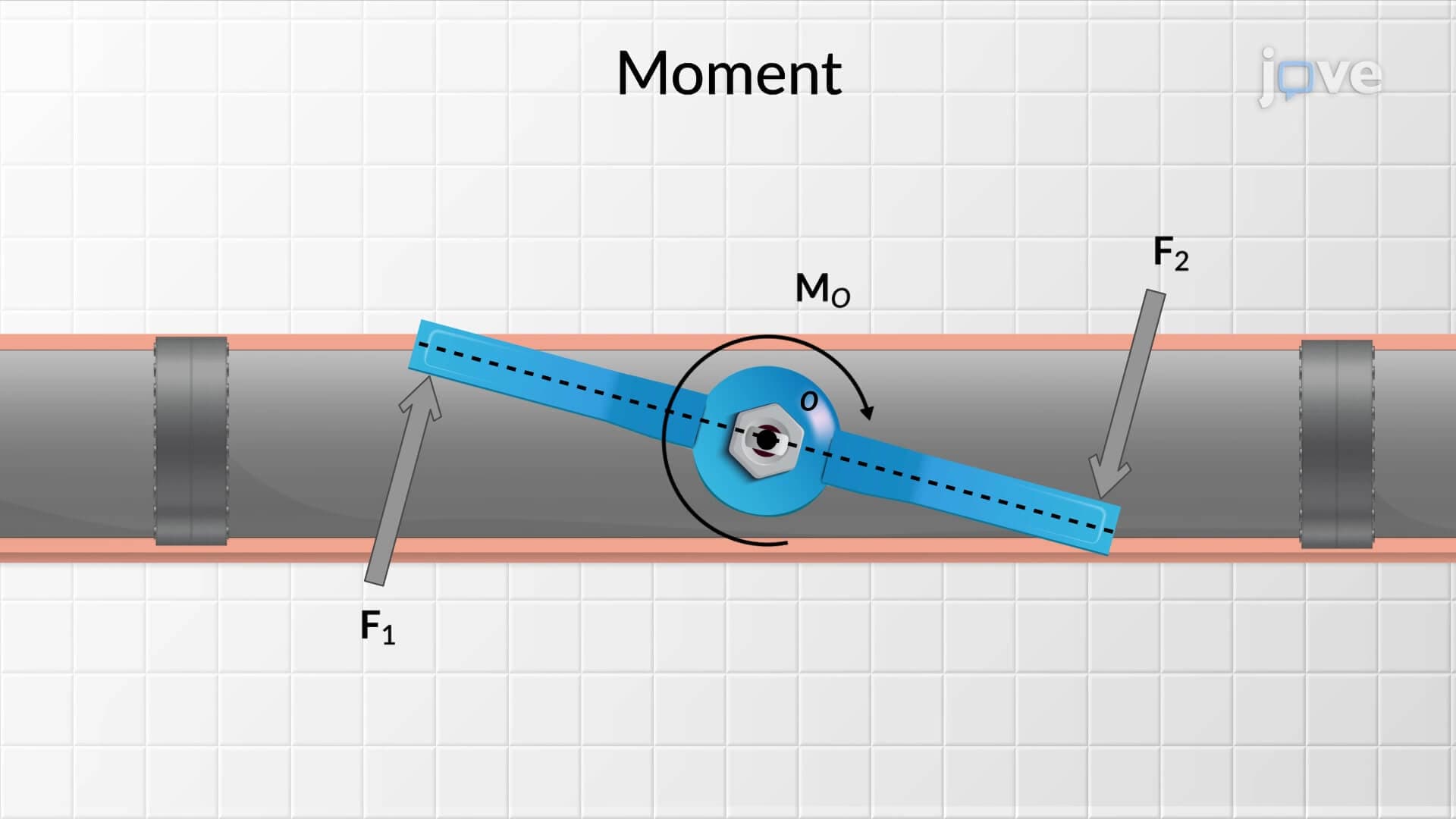
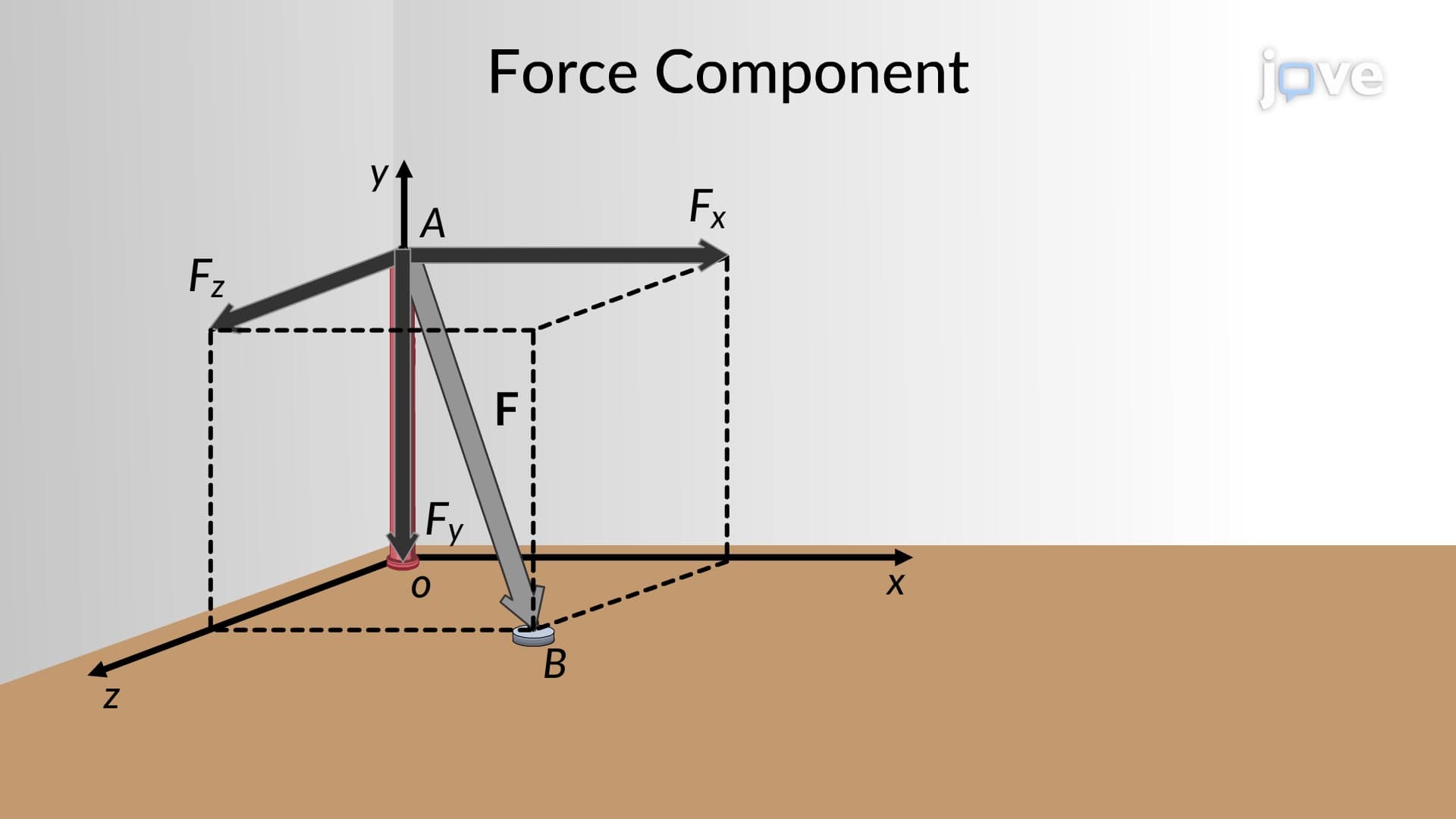
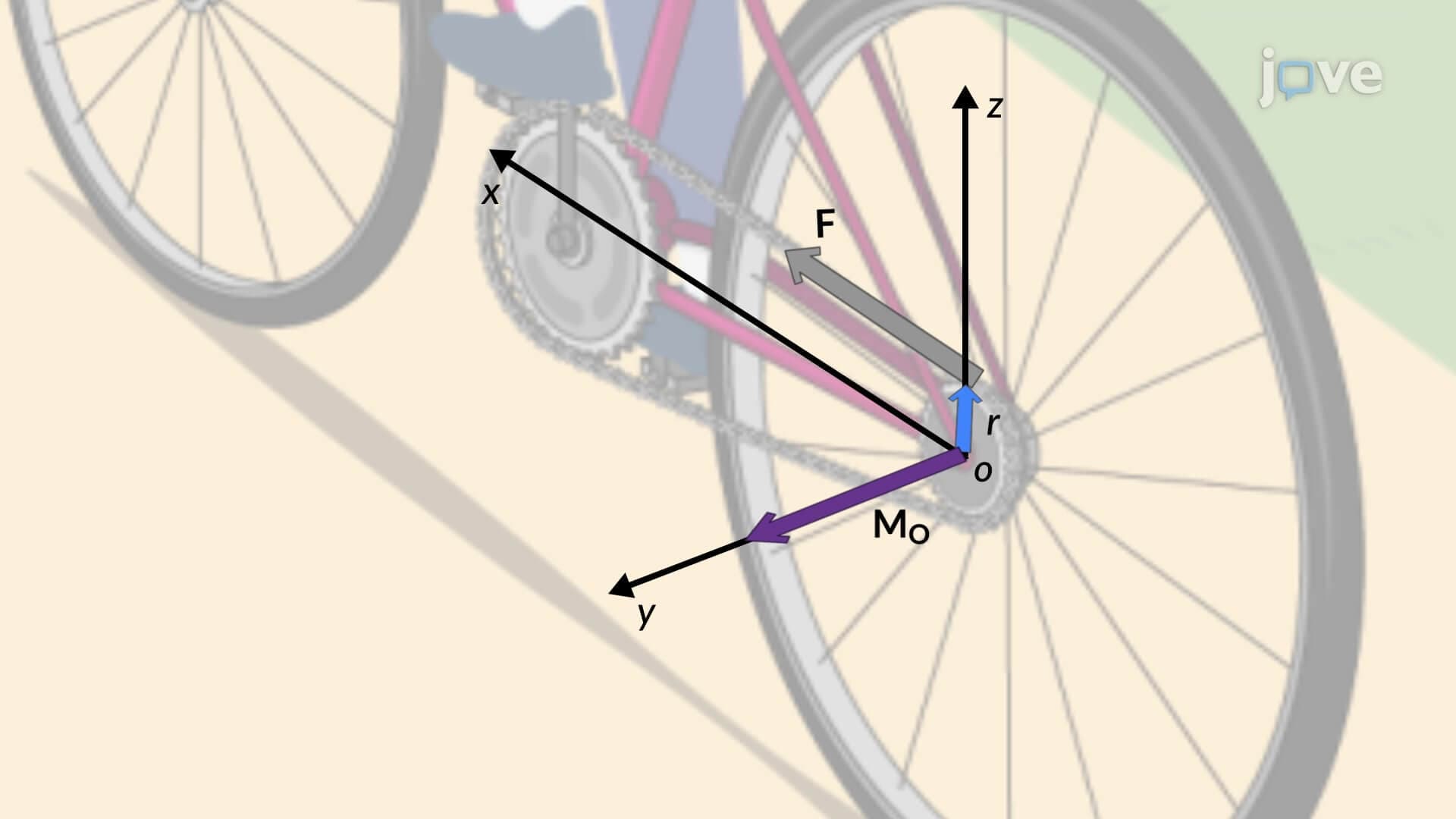
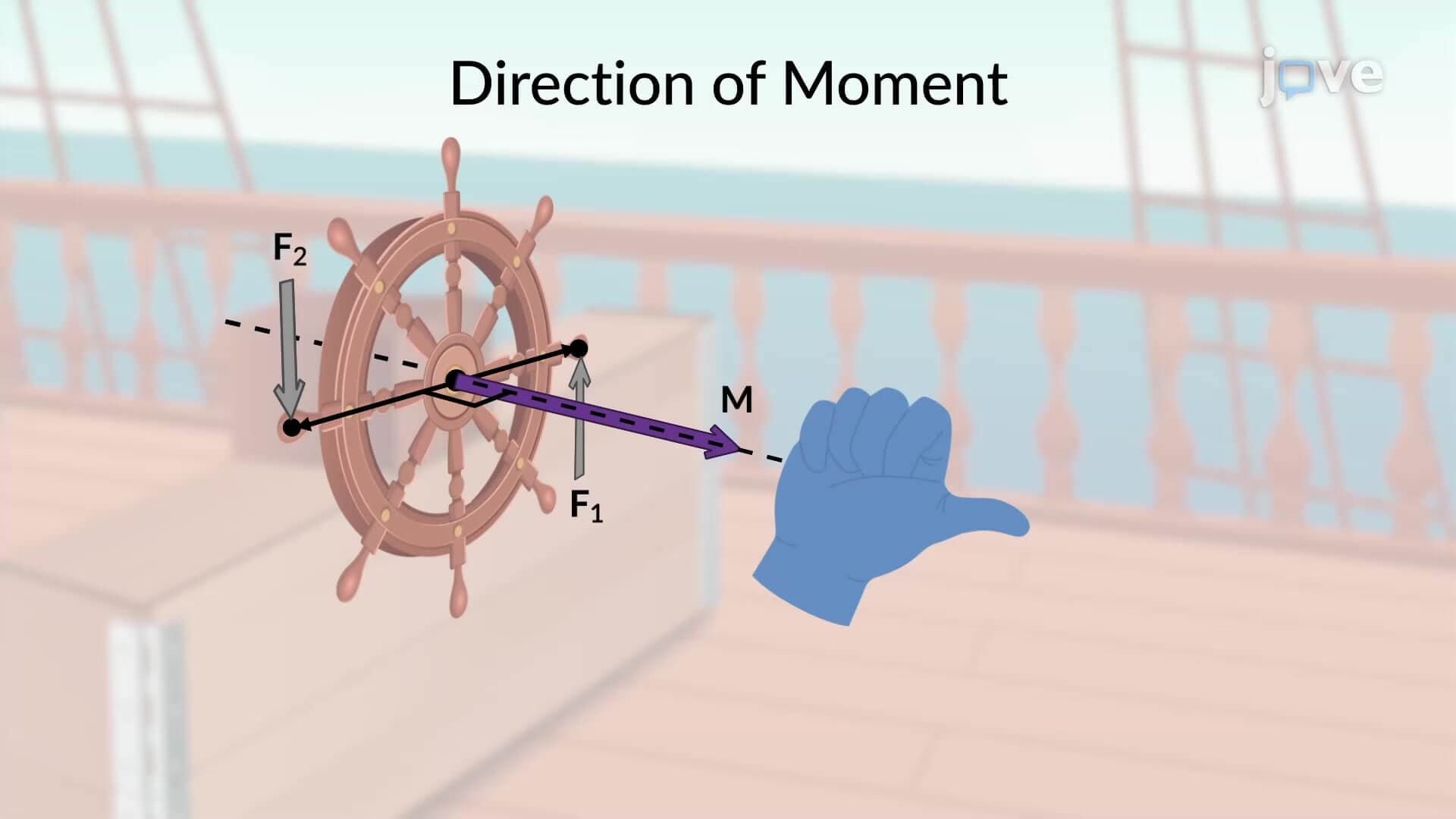
At its core, the moment force vector formulation describes how forces create rotational motion around a specific point or axis. The mathematical foundation rests on the cross-product operation: M = r × F, where M represents the moment vector, r is the position vector from the rotation axis to the force application point, and F is the applied force vector.
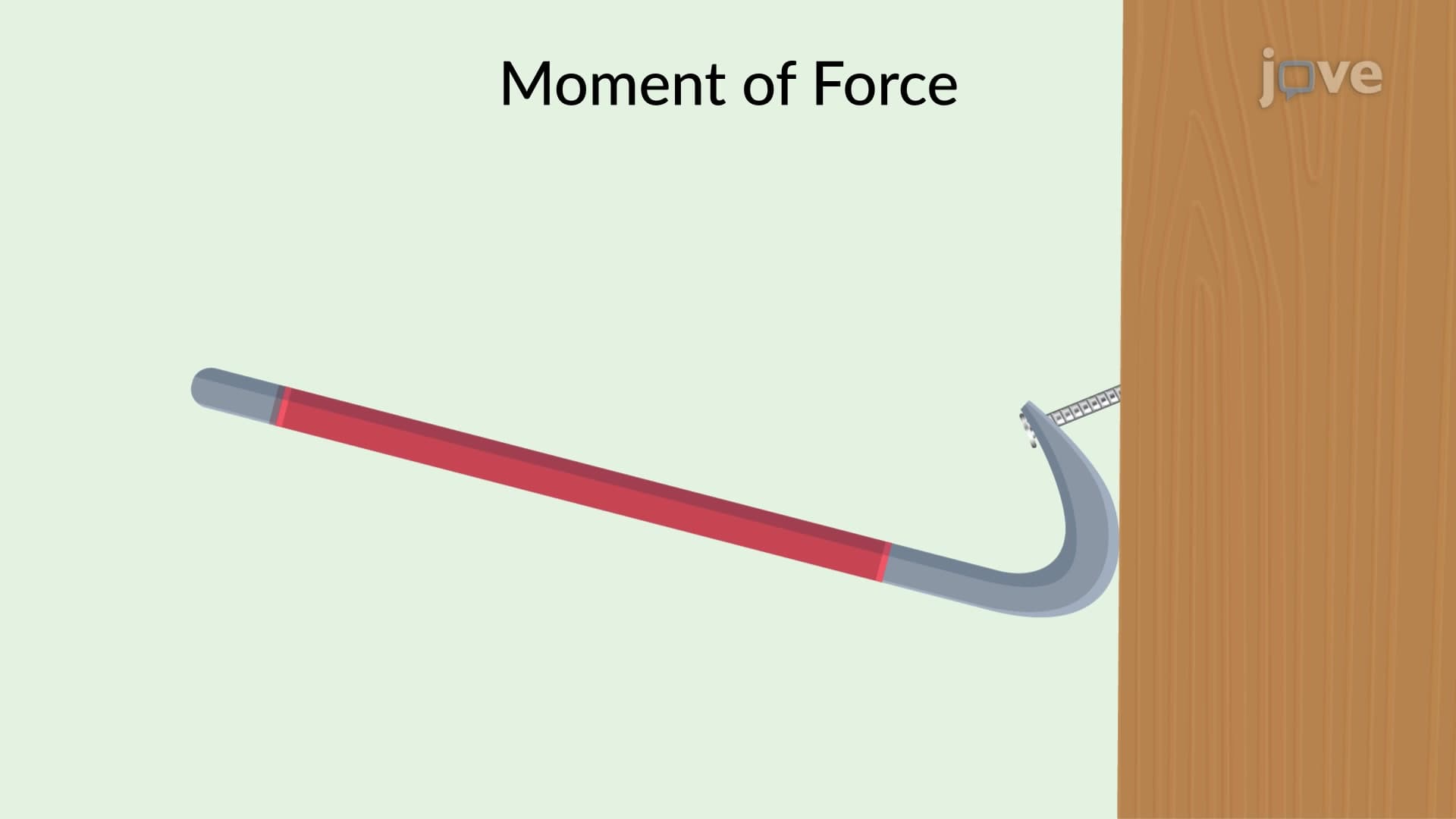
The magnitude of this moment follows the formula |M| = |r| × |F| × sin(θ), where θ represents the angle between the position and force vectors. This relationship reveals why automotive technicians use longer wrenches for stubborn bolts – increasing the position vector magnitude (r) directly increases the moment magnitude, assuming constant force application.
The moment arm concept, defined as r × sin(θ), represents the perpendicular distance from the rotation axis to the force's line of action. This geometric interpretation helps students visualize why pushing a door near its hinges requires significantly more force than pushing near the handle.
Vector direction follows the right-hand rule convention: curl your fingers in the rotation direction, and your thumb points along the moment vector. This three-dimensional aspect distinguishes moment force vector formulation from simpler scalar treatments, preparing students for advanced engineering coursework at institutions like MIT, Stanford, or Georgia Tech.
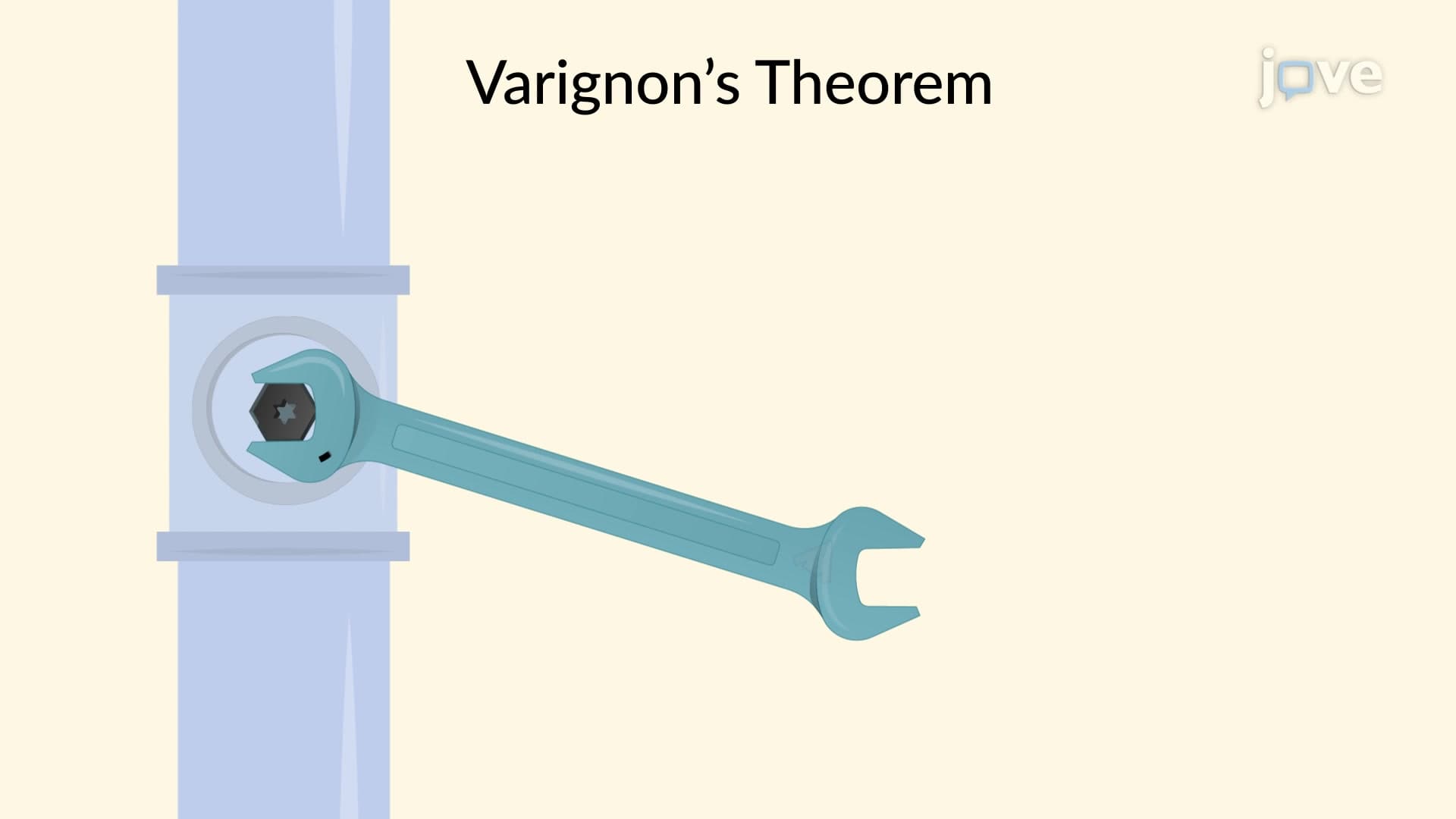
The principle of transmissibility states that forces applied anywhere along their line of action produce identical moments. Construction crews demonstrate this principle when using different grip positions on the same wrench – the rotational effect remains constant as long as the force direction and line of action stay unchanged.
This principle appears frequently on AP Physics exams and college mechanics courses, where students must analyze equivalent force systems. Understanding transmissibility helps solve complex problems involving multiple forces and moment calculations in structural analysis and machine design.
From NASA's spacecraft attitude control systems to everyday bicycle maintenance, moment force vector formulation governs rotational mechanics throughout American industry and technology. Students preparing for the MCAT encounter these concepts in biomechanics sections, while engineering majors apply them extensively in statics and dynamics coursework.
Frequently Asked Questions
Moment force vector formulation is the mathematical method using cross-products to calculate both the magnitude and direction of rotational forces in three-dimensional space. Unlike scalar torque calculations that only provide magnitude, this vector approach gives complete directional information essential for complex engineering problems. It's particularly important in aerospace and robotics applications where precise three-dimensional control is required.
AP Physics C and college mechanics exams frequently test cross-product calculations, right-hand rule applications, and moment magnitude problems. Expect questions asking you to find moment vectors for multiple forces, determine equilibrium conditions, or analyze rotating systems. The College Board typically includes 2-3 rotational mechanics problems per AP exam, often worth 15-20% of the total score.
The MCAT focuses on biological applications like joint mechanics, muscle force analysis, and biomechanical systems rather than pure engineering problems. You'll encounter questions about lever arms in human movement, rotational forces in medical devices, or analyzing forces during physical therapy exercises. The emphasis is on applying vector formulation to healthcare scenarios rather than abstract mathematical problems.
Automotive professionals apply this concept daily when using torque wrenches, impact drivers, and specialty tools at facilities like Ford's Rouge Factory or Tesla's Fremont plant. They calculate optimal wrench lengths, determine proper force application angles, and ensure correct bolt tightening sequences. Understanding vector formulation helps them work more efficiently and avoid over-torquing expensive components like engine blocks or suspension systems.
Not at all – the basic concepts use algebra and trigonometry that most students master by junior year. While advanced applications require calculus, fundamental understanding of cross-products, magnitude calculations, and the right-hand rule builds naturally from vector addition concepts. Many successful AP Physics students master these principles using geometric visualization rather than complex mathematical derivations.
Focus on systematic problem-solving: always draw clear diagrams showing position vectors, force vectors, and rotation axes before calculating. Practice the right-hand rule until it becomes automatic, and memorize the key relationships between perpendicular forces and maximum moments. Work through textbook problems from Hibbeler's "Engineering Mechanics" or similar texts used at major universities, spending extra time on three-dimensional examples.
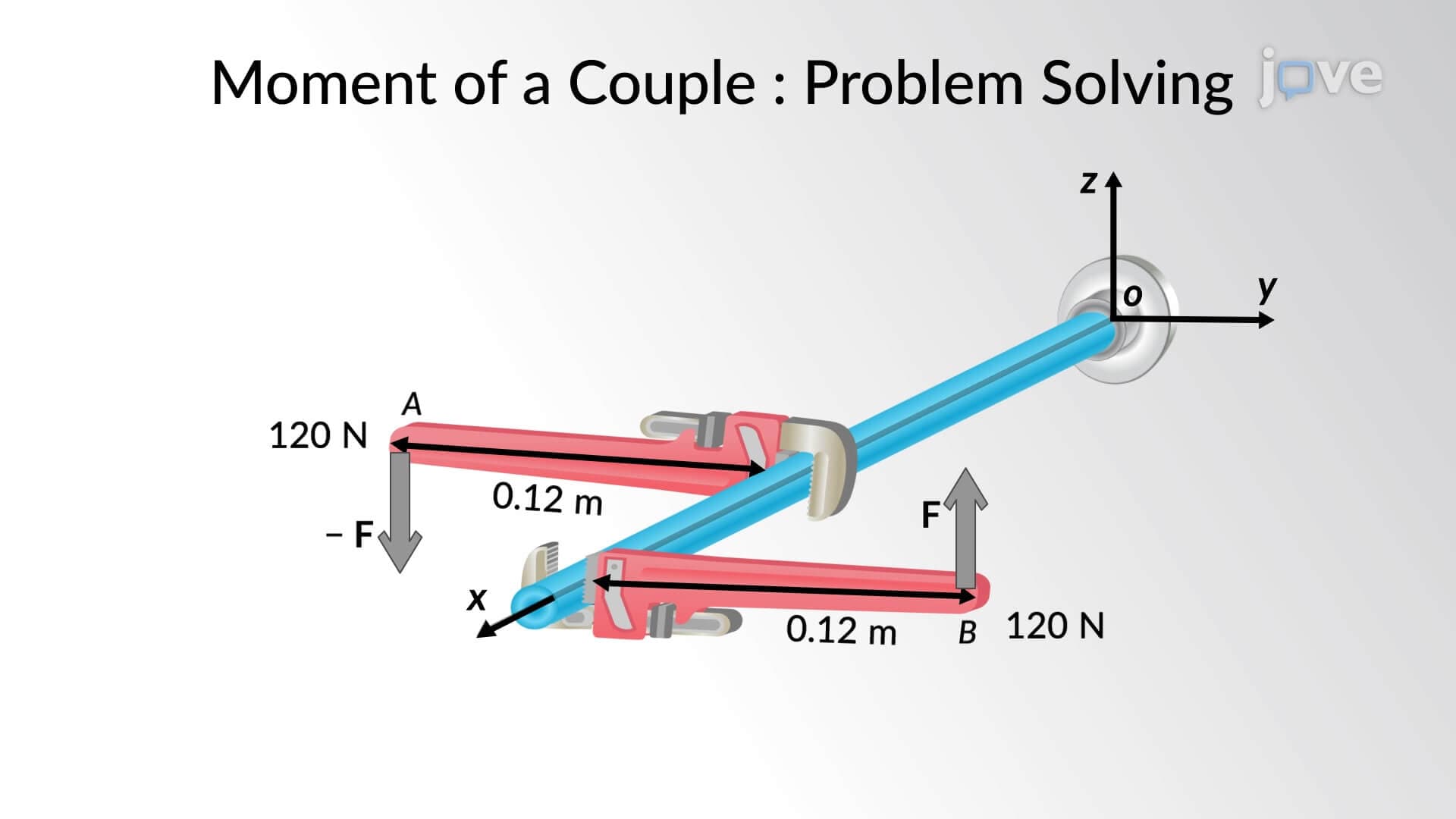
Progress to studying moment couples, three-dimensional equilibrium of rigid bodies, and angular momentum principles. These concepts form the foundation for advanced courses like dynamics, vibrations, and control systems offered at engineering schools like Caltech, CMU, or UT Austin. Understanding moment vectors also prepares students for graduate-level robotics and aerospace engineering coursework.
Physics labs at universities nationwide use moment vector concepts in rotational motion experiments, pendulum studies, and gyroscope demonstrations. Students measure actual forces and distances, then compare calculated moment predictions with experimental results. These hands-on experiences reinforce theoretical understanding while developing measurement skills essential for engineering careers or graduate research programs.
Related Micro-courses
Related Subjects
 Civil Engineering 30 micro-courses›Electrical Engineering 33 micro-courses›