Loading…
Loading video…

17,768 views
Ever wondered why conveyor belts at Amazon warehouses don't slip under heavy loads? Frictional forces on flat belts create the precise tension differences that keep industrial systems running smoothly. When a belt wraps around pulleys, friction generates unequal tensions—with the tight side experiencing greater force than the slack side. This phenomenon powers everything from car engines to manufacturing equipment across American factories. Watch the full video on JoVE Coach to master this concept with expert-led visuals and step-by-step explanations.
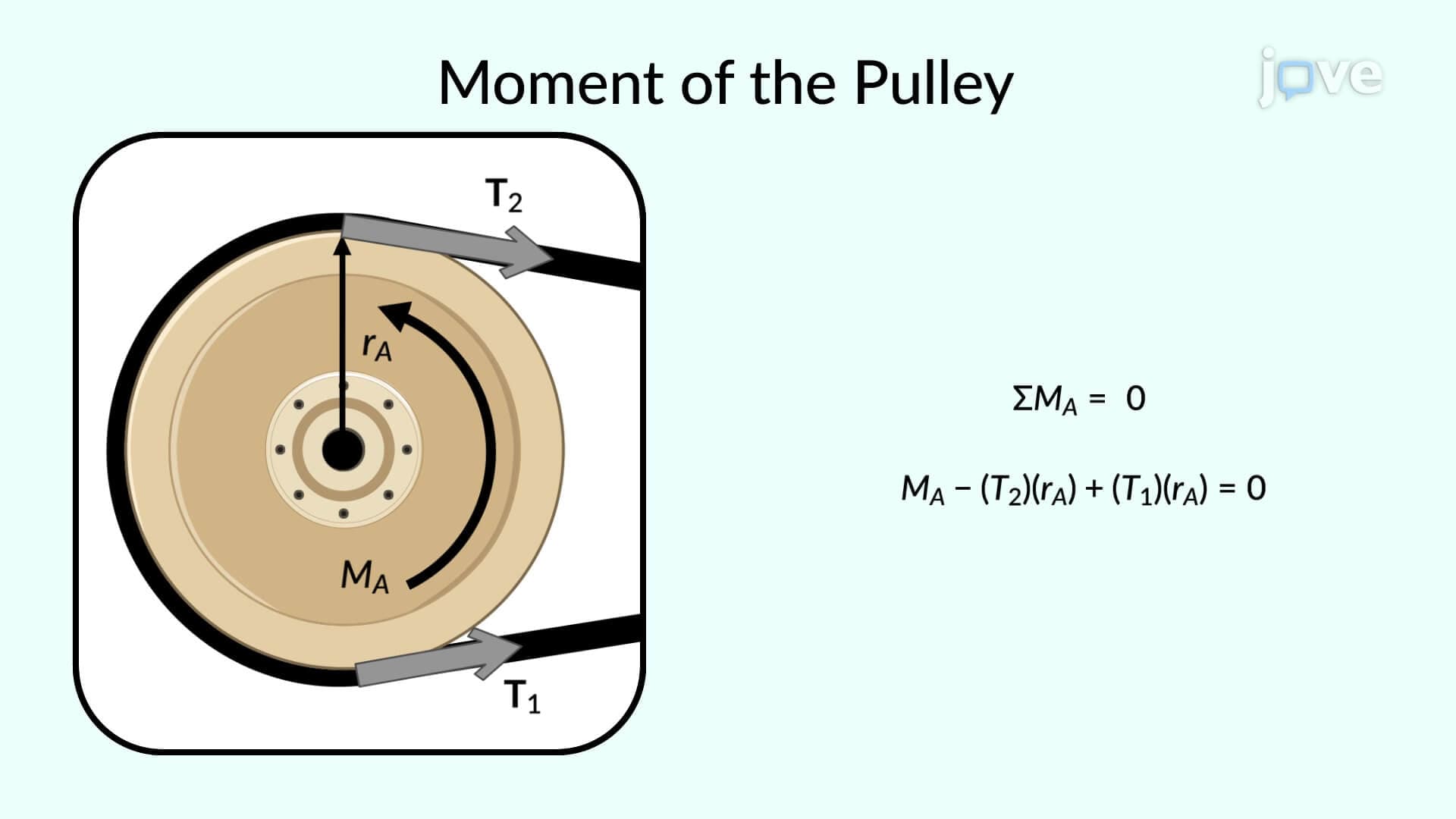
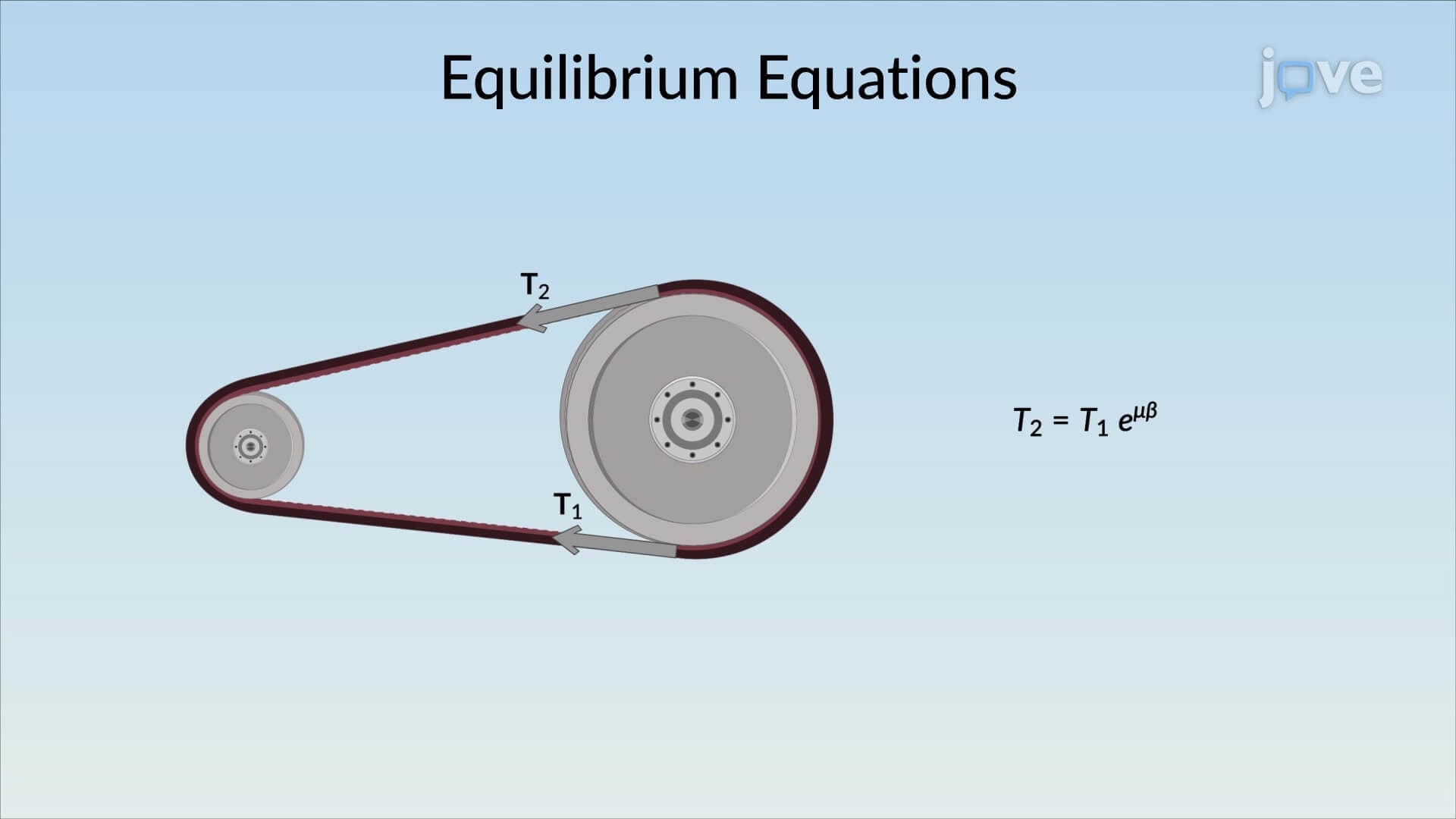
Frictional forces on flat belts represent a critical mechanical engineering principle that governs power transmission in countless applications. When a flexible belt wraps around a rotating pulley, the interaction between belt material and pulley surface creates friction that enables torque transfer. This friction generates different tension levels on opposite sides of the pulley—the "tight side" experiences higher tension (T2) while the "slack side" maintains lower tension (T1).
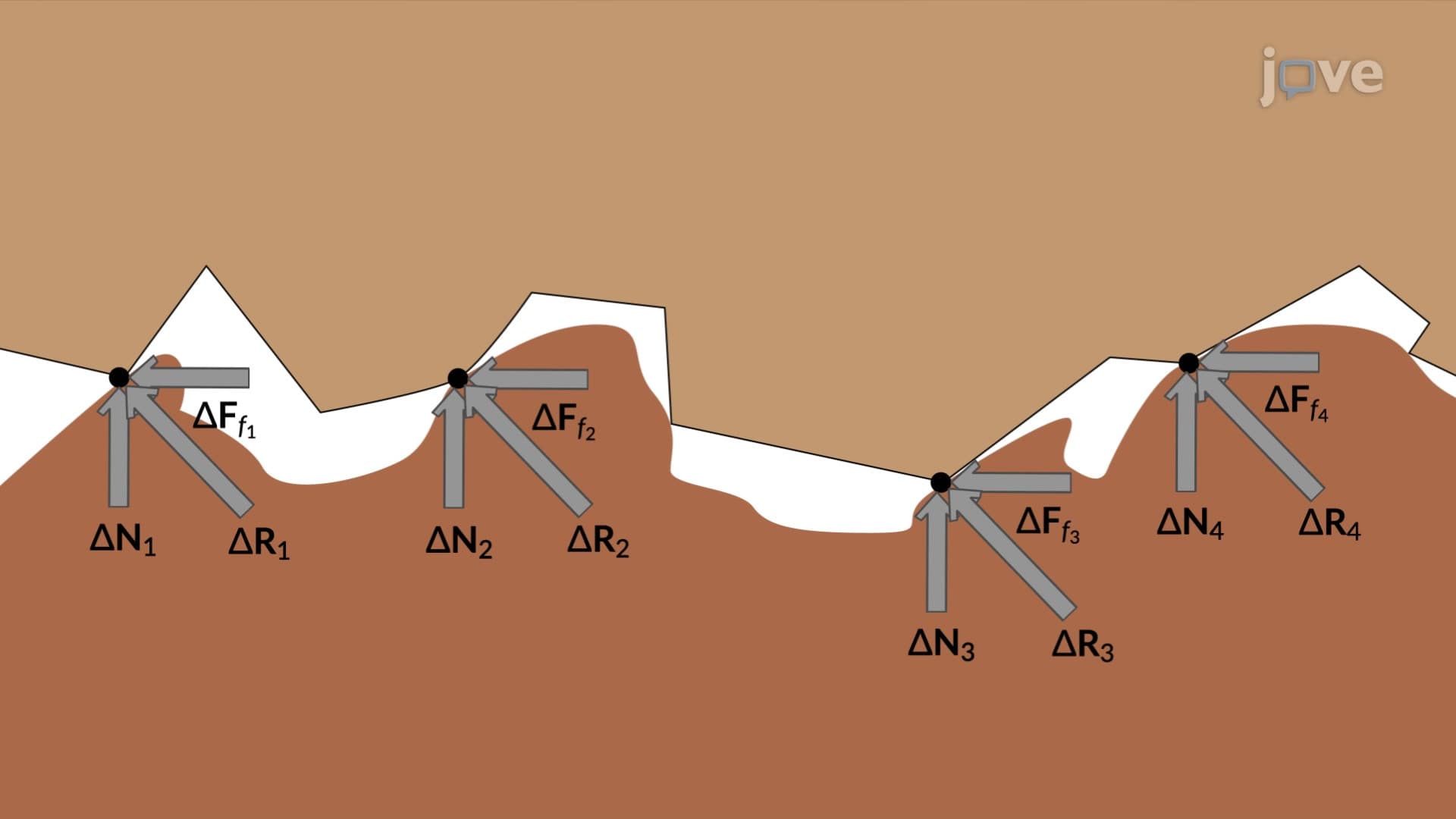
The fundamental physics involves the belt's tendency to slip relative to the pulley surface. Friction opposes this potential sliding motion, creating the tension differential necessary for power transmission. In automotive serpentine belt systems, for example, this principle allows the crankshaft pulley to drive alternators, power steering pumps, and air conditioning compressors simultaneously.
The mathematical relationship governing belt tensions emerges from analyzing a small belt element in contact with the pulley surface. Engineers use differential analysis to examine forces acting on an infinitesimal belt segment, considering both normal and tangential force components. The resulting equilibrium equations, when integrated over the total wrap angle, yield the famous Eytelwein equation:
T2/T1 = e^(μβ)
Where μ represents the coefficient of friction between belt and pulley materials, and β equals the total wrap angle in radians. This exponential relationship reveals why increasing wrap angle dramatically improves power transmission capacity—a principle utilized in multi-pulley systems throughout American manufacturing.
Belt friction analysis directly impacts numerous engineering applications across US industries. Conveyor belt systems in airports, mining operations, and food processing facilities rely on these calculations to prevent slippage under varying load conditions. Automotive timing belts require precise tension calculations to maintain synchronization between crankshaft and camshaft operations, preventing catastrophic engine damage.
Students preparing for AP Physics C: Mechanics or college-level statics courses encounter belt friction problems that test their understanding of force equilibrium, differential analysis, and exponential functions. The College Board frequently includes belt-pulley systems in free-response questions, emphasizing both conceptual understanding and mathematical problem-solving skills.
Professional engineers must consider factors beyond basic friction theory when designing belt systems. Environmental conditions, belt material degradation, and dynamic loading effects all influence actual performance. For instance, rubber belts in hot climates experience reduced friction coefficients, requiring larger wrap angles or alternative materials to maintain adequate power transmission.
Modern belt drive systems in US manufacturing facilities incorporate tension monitoring systems and automatic adjustment mechanisms to compensate for belt stretch and wear. These practical considerations demonstrate how theoretical friction analysis translates into reliable, maintainable industrial equipment that powers American productivity.
Frequently Asked Questions
Frictional forces on flat belts are the contact forces that develop between a belt and pulley surface, creating tension differences that enable power transmission. These forces prevent belt slippage and allow rotating pulleys to drive connected machinery. Understanding belt friction is essential for designing reliable conveyor systems, automotive drives, and industrial equipment that operates efficiently under varying load conditions.
AP Physics C frequently tests belt friction through problems involving force equilibrium, differential analysis, and exponential relationships. Students must analyze tension ratios using the capstan equation, apply calculus concepts to derive belt equations, and solve multi-step problems involving power transmission efficiency. These questions typically combine mechanics principles with mathematical modeling skills that demonstrate college-level physics understanding.
College statics exams often present belt friction as complex, multi-part problems requiring integration of differential equations and application of small-angle approximations. Students must master free-body diagram construction, understand the relationship between normal and friction forces, and correctly apply boundary conditions when integrating tension equations. The exponential nature of the tension-angle relationship frequently trips up students who expect linear relationships.
Belt friction powers numerous systems Americans encounter daily, including car serpentine belts that drive alternators and power steering, airport baggage conveyor systems, grocery store checkout belts, and escalators in shopping malls. Industrial applications include assembly line conveyors at automotive plants in Detroit, grain handling systems in Midwest farming operations, and packaging equipment at Amazon fulfillment centers throughout the country.
Belt friction concepts build naturally from basic trigonometry and introductory calculus, making them accessible to most high school students in AP courses. While the complete mathematical derivation involves differential equations and exponential functions, the core principles can be understood through force balance concepts and simple geometric relationships. Students with strong algebra and trigonometry foundations can successfully tackle most belt friction problems.
Focus on mastering free-body diagram construction, understanding force equilibrium principles, and practicing problems that combine multiple physics concepts. Review exponential function properties and their relationship to continuous processes. Work through past exam problems that involve belt-pulley systems, emphasizing both conceptual understanding and systematic problem-solving approaches that demonstrate clear reasoning and mathematical accuracy.
Belt friction analysis provides foundation knowledge for advanced topics including machine design, tribology (friction and wear science), and dynamic systems analysis. Engineering students encounter related concepts in courses covering gear trains, clutch systems, brake design, and vibration analysis. The mathematical techniques used in belt problems also apply to heat transfer, fluid mechanics, and control systems throughout mechanical engineering curricula.
Related Micro-courses
Related Subjects
 Civil Engineering 30 micro-courses›Electrical Engineering 33 micro-courses›