Loading subject page…

- Mechanical Engineering
- Friction
- Characteristics of Dry Friction
Micro-course: Friction
17,776 views
Learn key concepts and earn your certificate.


Characteristics of Dry Friction

00:00
01:21
Video Summary: What are Characteristics of Dry Friction
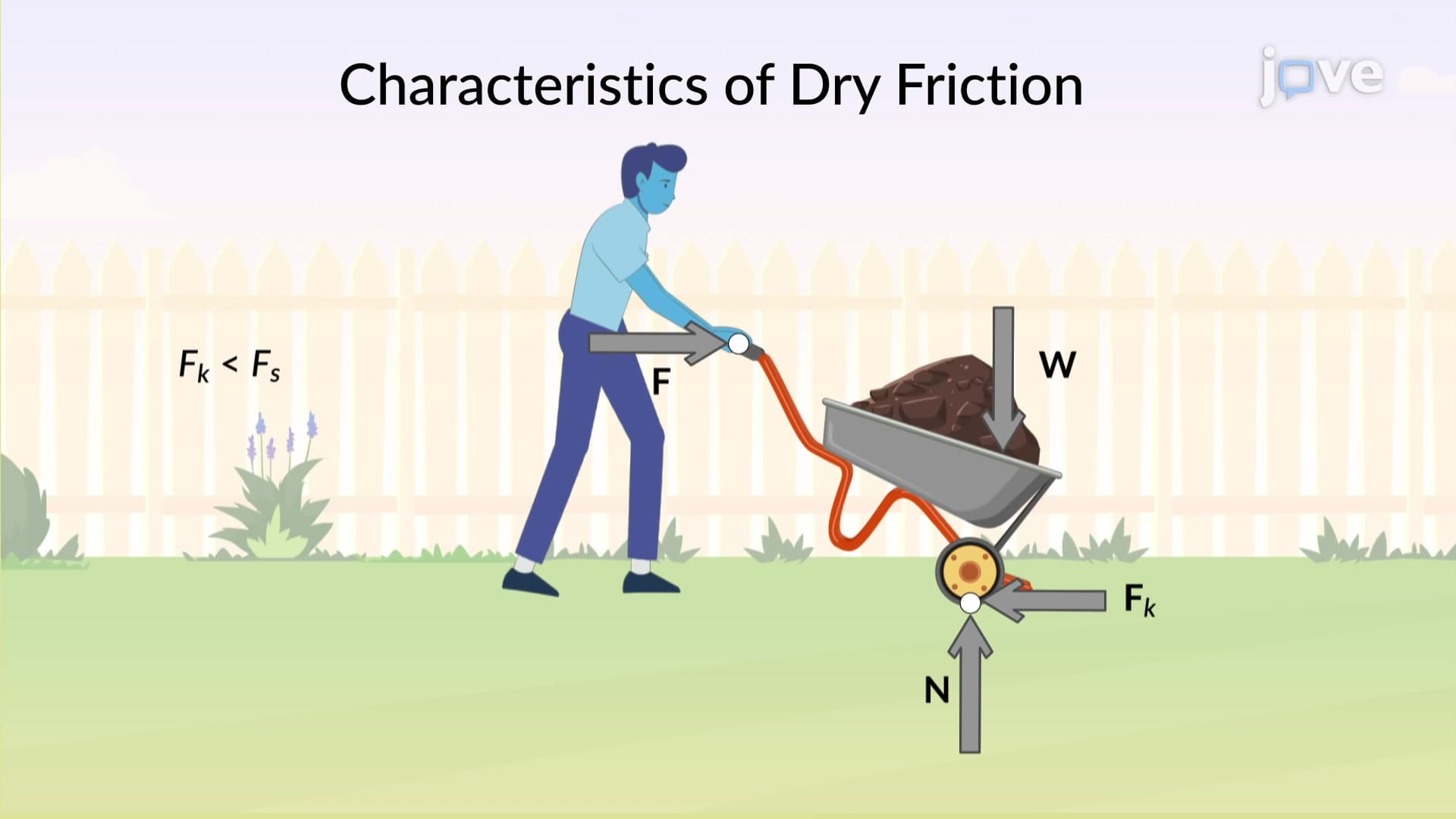
Ever wonder why a NASCAR tire grips the track differently when accelerating versus sliding sideways? The characteristics of dry friction explain this fascinating phenomenon that affects everything from walking to driving. When a gardener pushes a wheelbarrow across their yard, static friction initially resists motion until it overcomes the maximum threshold, then kinetic friction takes over as the wheel rolls forward. Watch the full video on JoVE Coach to master this concept with expert-led visuals and step-by-step explanations.
- Understand what are characteristics of dry friction and how they govern contact interactions between solid surfaces
- Identify the fundamental differences between static and kinetic friction in real-world scenarios
- Analyze how normal force directly influences the magnitude of frictional forces at contact interfaces
- Compare the coefficients of static and kinetic friction for various material combinations
- Evaluate the relationship between surface roughness, material properties, and friction coefficients
- Apply friction principles to solve mechanics problems involving motion and equilibrium
- Recognize when contact area affects frictional force and when it remains independent
- Explore how environmental factors influence kinetic friction behavior in practical applications
Understanding What are Characteristics of Dry Friction
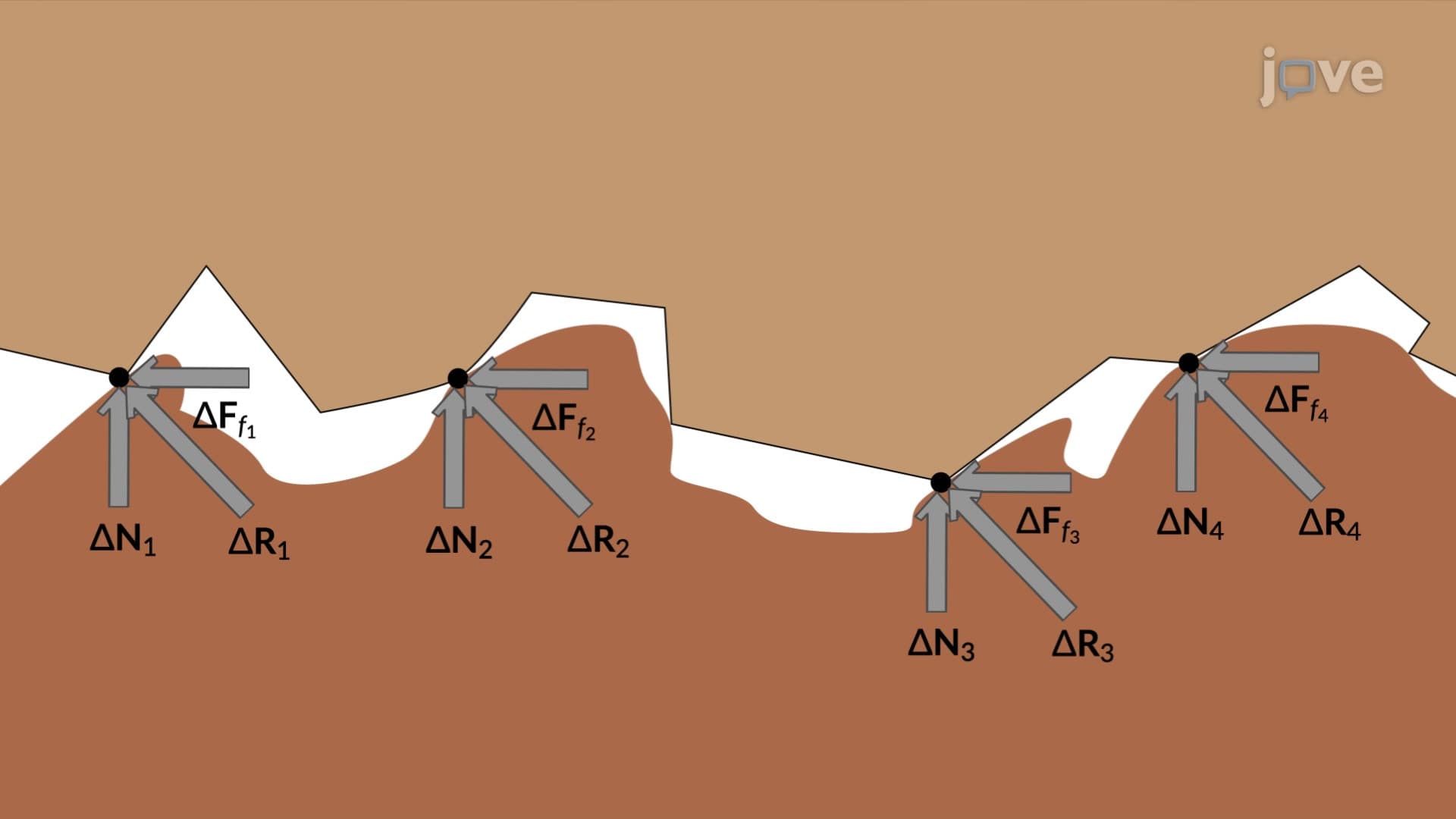
Dry friction represents one of physics' most practical concepts, governing every interaction between solid surfaces in contact. Unlike fluid friction, dry friction occurs when two solid objects touch without any lubricating layer between them. This phenomenon affects everything from a student's pencil sliding across paper during the SAT to a football player's cleats gripping the turf during a touchdown run.
Static Friction: The Resistance Before Motion
Static friction acts as nature's "parking brake," preventing motion until an applied force exceeds a critical threshold. This characteristic exhibits several key behaviors that students encounter in AP Physics problems. The static frictional force always opposes the direction of potential motion and can vary from zero up to its maximum value. For example, when a student places their textbook on an inclined desk, static friction prevents sliding until the angle becomes too steep.
The maximum static friction follows the relationship: F(static max) = μ(static) × N, where μ(static) represents the coefficient of static friction and N represents the normal force. This coefficient depends entirely on the materials in contact-rubber on concrete yields a different value than steel on ice, explaining why winter driving in Michigan requires different techniques than summer cruising.
Kinetic Friction: Motion in Progress
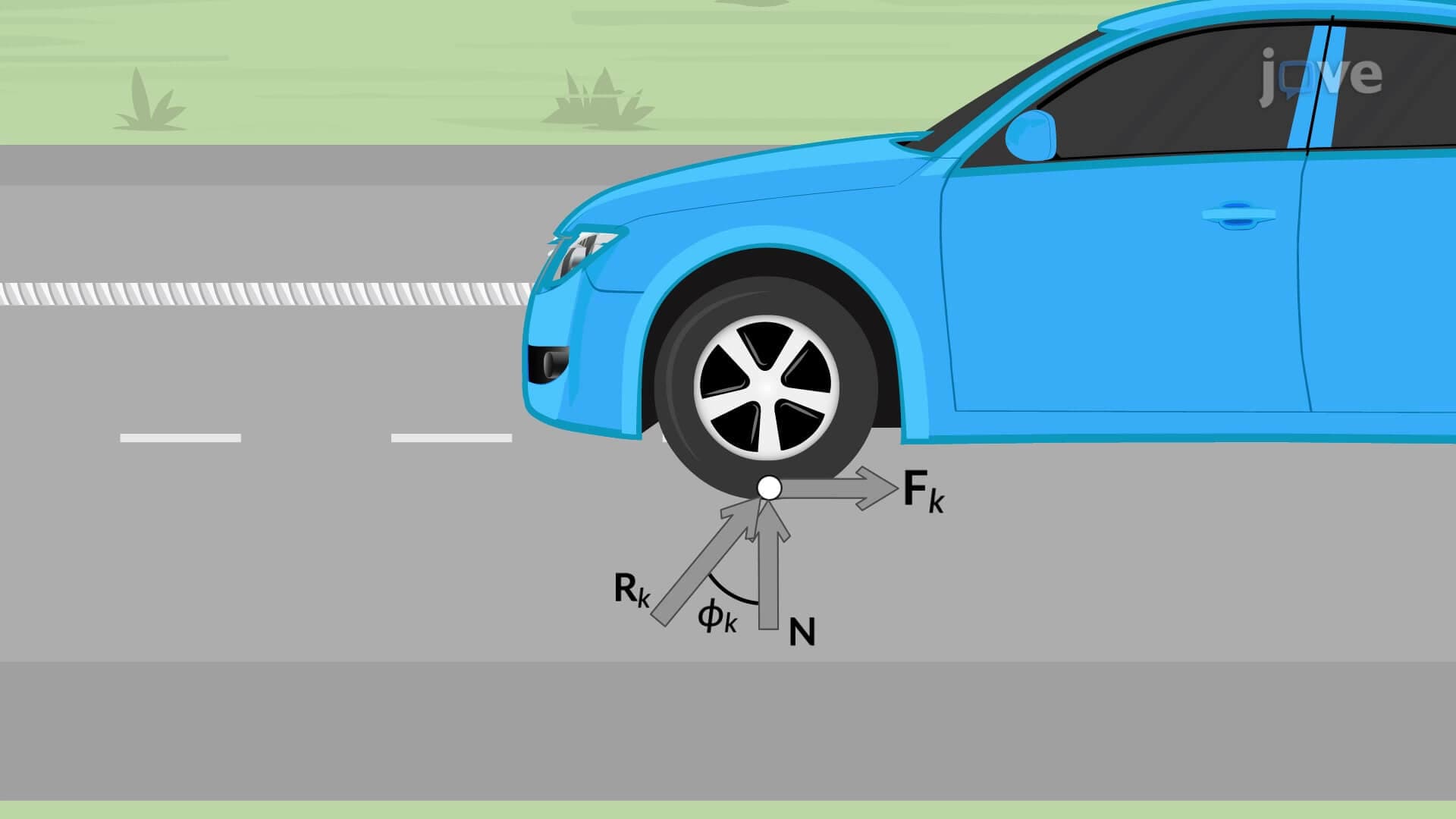
Once motion begins, kinetic friction takes over with distinctly different characteristics. Kinetic friction typically remains constant during motion and generally measures lower than maximum static friction-explaining why it's easier to keep a heavy box sliding across a warehouse floor than to start it moving initially. This principle appears frequently in MCAT physics sections and college mechanics courses.
The kinetic friction relationship mirrors static friction: F(kinetic) = μ(kinetic) × N. However, kinetic friction coefficients depend on additional factors including sliding velocity, surface temperature, and environmental conditions. A NASCAR driver experiences this when tire compounds heat up during races, altering grip characteristics throughout the event.
Surface Independence and Material Dependence
One counterintuitive characteristic involves contact area independence. Under normal conditions, doubling the contact area doesn't double the friction force-the pressure decreases proportionally, keeping total friction constant. This principle breaks down only under extreme pressures that cause surface deformation, a concept important in engineering applications and advanced physics coursework.
Material combinations determine friction coefficients through surface interactions at the molecular level. Engineering students learn these values for common combinations: rubber-on-dry-concrete (μ ≈ 0.7), steel-on-steel (μ ≈ 0.4), and ice-on-ice (μ ≈ 0.1), explaining why hockey pucks glide effortlessly while car tires grip effectively.
Frequently Asked Questions
Characteristics of dry friction include its dependence on normal force, independence from contact area (under normal conditions), and material-specific coefficients. Unlike fluid friction, dry friction doesn't depend on velocity for static cases and shows distinct static versus kinetic behaviors. These characteristics make dry friction predictable and calculable in engineering and physics applications.
AP Physics exams frequently test friction through inclined plane problems, pulley systems, and force analysis questions. College mechanics courses expand this to include coefficient calculations, energy considerations, and real-world applications. Students typically encounter both multiple-choice concept questions and free-response problem-solving scenarios requiring friction force calculations.
The MCAT tests friction concepts through passage-based questions involving biomechanics, medical devices, and physical therapy scenarios. Students must apply friction principles to analyze joint movements, prosthetic designs, and rehabilitation equipment. Understanding coefficient relationships and force analysis proves essential for high-scoring performance.
NASCAR and Formula 1 drivers manipulate tire compounds, temperatures, and surface conditions to optimize friction coefficients throughout races. They understand that static friction provides maximum cornering grip while managing kinetic friction during controlled slides. Track surface preparation and tire strategy directly apply friction principles for competitive advantage.
Basic algebra and trigonometry suffice for most friction applications in high school and introductory college courses. Students comfortable with force vectors, right triangles, and simple equations can master friction concepts. Advanced applications in engineering require calculus, but fundamental understanding relies on straightforward mathematical relationships.
Practice drawing free-body diagrams for every friction problem, memorize common coefficient values, and work through systematic problem-solving steps. Focus on identifying whether situations involve static or kinetic friction, then apply appropriate equations. Create formula sheets linking friction concepts to inclined planes, pulleys, and circular motion.
Friction concepts lead naturally to rotational dynamics, energy conservation, oscillations, and advanced mechanics. Engineering students encounter friction in machine design, materials science, and tribology courses. Understanding basic friction characteristics provides the foundation for studying wear mechanisms, lubrication theory, and surface engineering applications.
Related Micro-courses