Loading video…


 19 Concepts
 17.8K views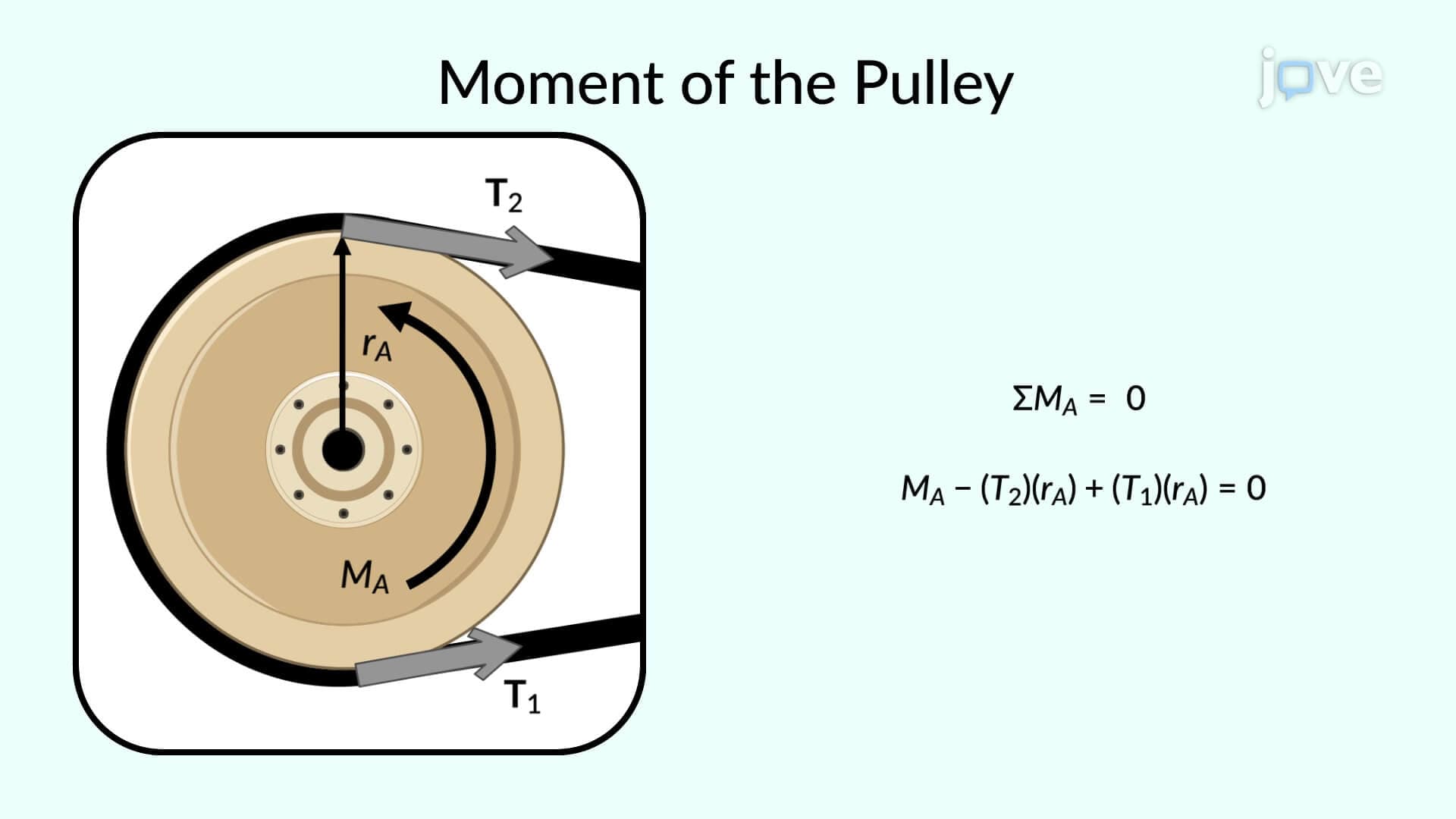

Video Summary: What Is Flat Belts Problem Solving
Ever wondered how conveyor belts at Amazon warehouses or car engines transfer power efficiently? Flat belts problem solving involves analyzing tension forces, friction coefficients, and torque calculations in mechanical systems where flat belts connect rotating pulleys. Consider a typical automotive serpentine belt system where precise tension calculations prevent slipping and ensure optimal power transmission. This fundamental engineering concept appears frequently in AP Physics and college-level mechanical engineering courses. Watch the full video on JoVE Coach to master this concept with expert-led visuals and step-by-step explanations.
Flat belts problem solving represents a critical area of mechanical engineering that focuses on analyzing power transmission systems using flexible belts and rotating pulleys. This concept combines principles from statics, dynamics, and materials science to solve practical engineering challenges found in everything from car engines to industrial conveyor systems.
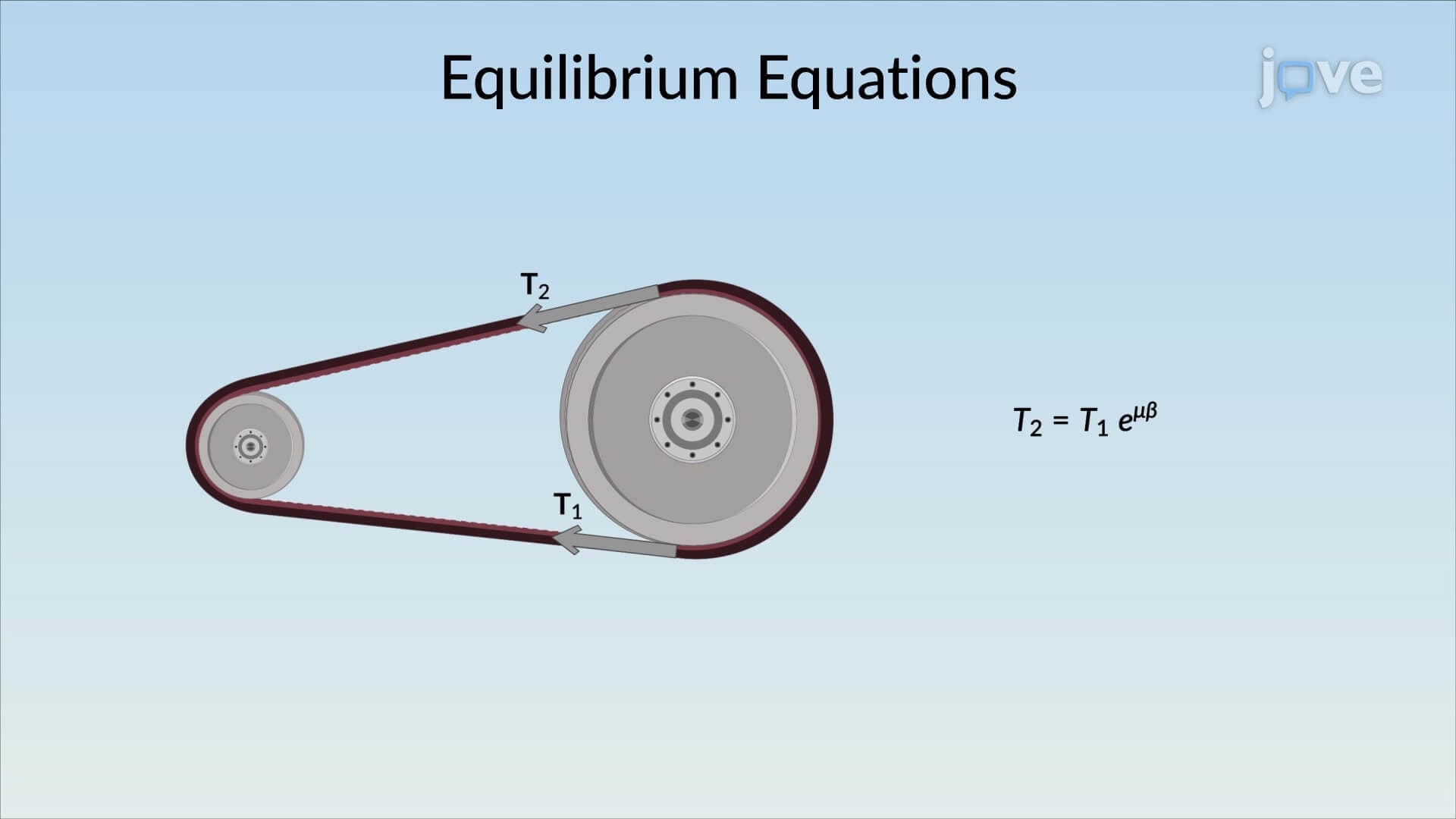
The foundation of flat belts problem solving lies in understanding how friction between the belt and pulley surfaces creates tension differences that enable power transmission. The fundamental relationship governing belt tensions is expressed through the Capstan equation: T2/T1 = e^(μθ), where T2 represents the tight side tension, T1 the slack side tension, μ the coefficient of static friction, and θ the wrap angle in radians.
This exponential relationship demonstrates why increasing the wrap angle dramatically improves power transmission capacity. For instance, in automotive serpentine belt systems used in Ford F-150 trucks, engineers carefully design pulley layouts to maximize wrap angles around the crankshaft pulley, ensuring reliable power delivery to alternators, air conditioning compressors, and power steering pumps.
Solving flat belt problems requires applying equilibrium principles to determine moments and torques. When analyzing pulley A with radius r, the maximum moment equals the product of the tension difference (T2 - T1) and the pulley radius: M = (T2 - T1) × r. This relationship appears frequently in AP Physics C: Mechanics exams and college-level statics courses.
Real-world flat belt systems, such as those found in General Motors assembly lines or Caterpillar heavy machinery, often involve multiple pulleys with varying radii and geometric constraints. Engineers must consider factors like belt material properties, operating temperatures, and dynamic loading conditions when designing these systems.
Students preparing for the FE (Fundamentals of Engineering) exam should focus on systematically identifying given parameters, drawing clear free-body diagrams, and applying appropriate friction and equilibrium equations. Practice problems often involve determining maximum power transmission, calculating required belt tensions, or analyzing failure conditions under varying load scenarios.
Related Micro-courses