Loading video…


 19 Concepts
 17.8K views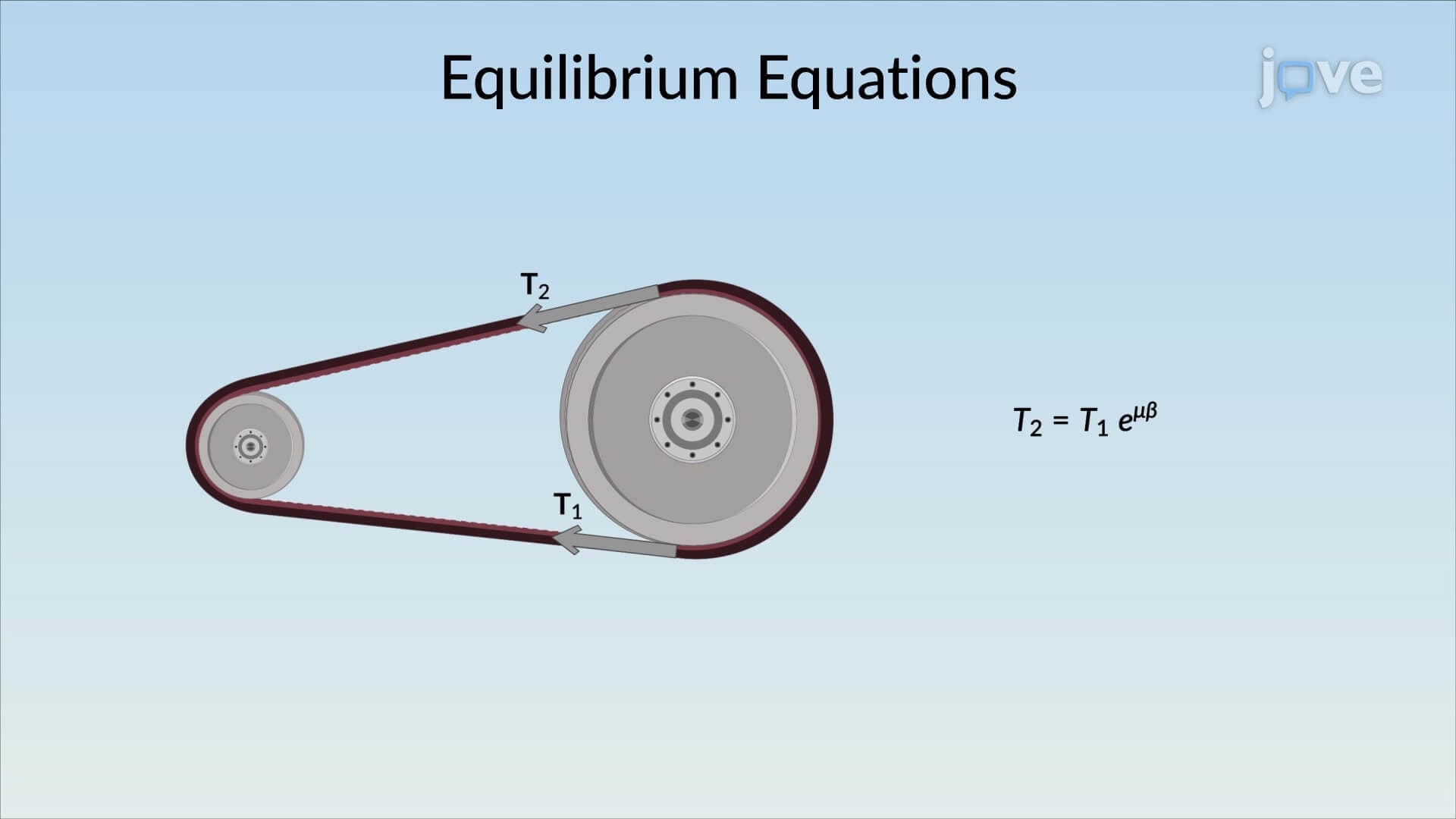

Video Summary: Frictional Forces on Flat Belts Explained
Ever wondered why conveyor belts at Amazon warehouses don't slip under heavy loads? Frictional forces on flat belts create the precise tension differences that keep industrial systems running smoothly. When a belt wraps around pulleys, friction generates unequal tensions-with the tight side experiencing greater force than the slack side. This phenomenon powers everything from car engines to manufacturing equipment across American factories. Watch the full video on JoVE Coach to master this concept with expert-led visuals and step-by-step explanations.
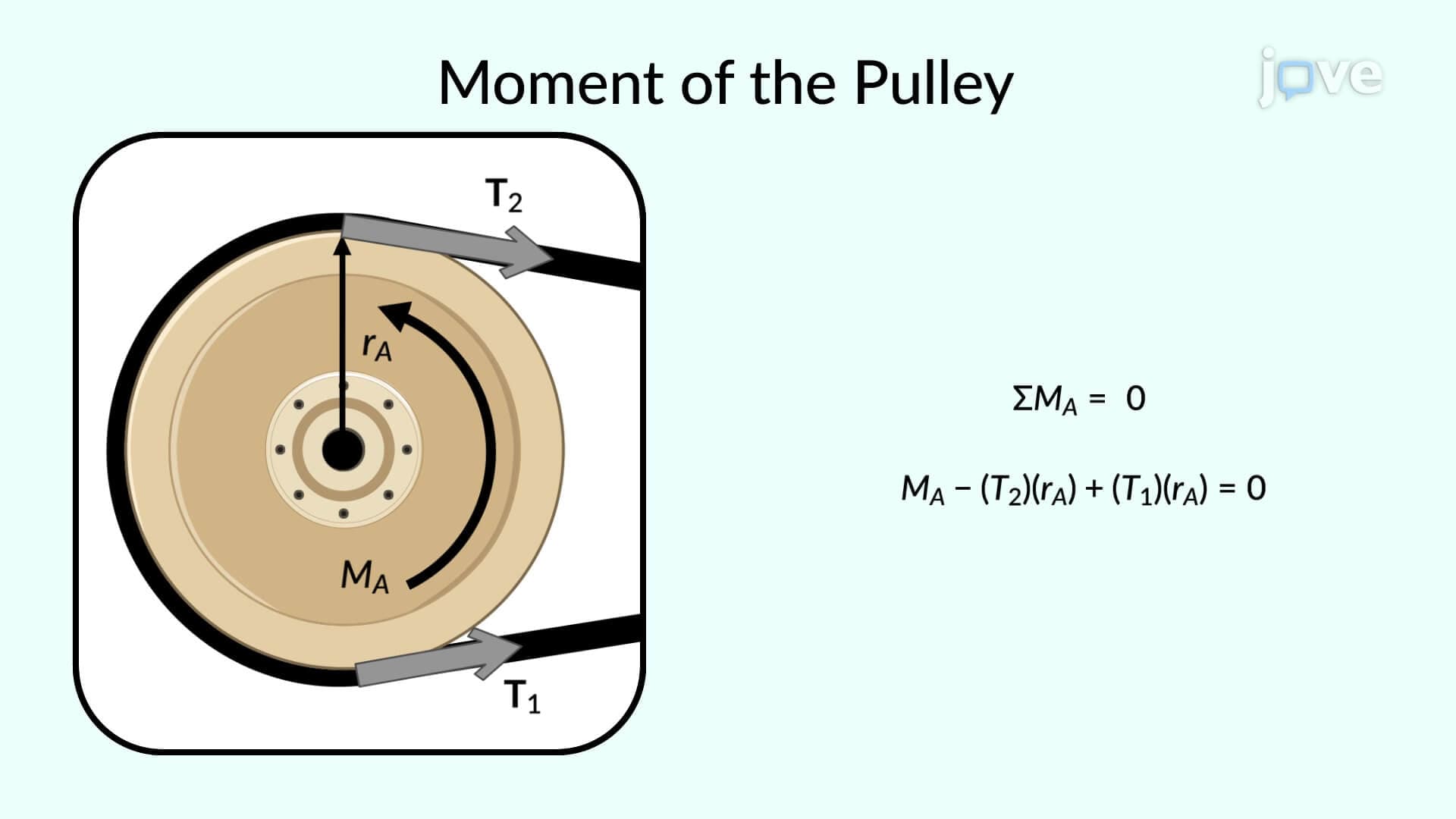
Frictional forces on flat belts represent a critical mechanical engineering principle that governs power transmission in countless applications. When a flexible belt wraps around a rotating pulley, the interaction between belt material and pulley surface creates friction that enables torque transfer. This friction generates different tension levels on opposite sides of the pulley-the "tight side" experiences higher tension (T2) while the "slack side" maintains lower tension (T1).
The fundamental physics involves the belt's tendency to slip relative to the pulley surface. Friction opposes this potential sliding motion, creating the tension differential necessary for power transmission. In automotive serpentine belt systems, for example, this principle allows the crankshaft pulley to drive alternators, power steering pumps, and air conditioning compressors simultaneously.
The mathematical relationship governing belt tensions emerges from analyzing a small belt element in contact with the pulley surface. Engineers use differential analysis to examine forces acting on an infinitesimal belt segment, considering both normal and tangential force components. The resulting equilibrium equations, when integrated over the total wrap angle, yield the famous Eytelwein equation:
T2/T1 = e^(μβ)
Where μ represents the coefficient of friction between belt and pulley materials, and β equals the total wrap angle in radians. This exponential relationship reveals why increasing wrap angle dramatically improves power transmission capacity-a principle utilized in multi-pulley systems throughout American manufacturing.
Belt friction analysis directly impacts numerous engineering applications across US industries. Conveyor belt systems in airports, mining operations, and food processing facilities rely on these calculations to prevent slippage under varying load conditions. Automotive timing belts require precise tension calculations to maintain synchronization between crankshaft and camshaft operations, preventing catastrophic engine damage.
Students preparing for AP Physics C: Mechanics or college-level statics courses encounter belt friction problems that test their understanding of force equilibrium, differential analysis, and exponential functions. The College Board frequently includes belt-pulley systems in free-response questions, emphasizing both conceptual understanding and mathematical problem-solving skills.
Professional engineers must consider factors beyond basic friction theory when designing belt systems. Environmental conditions, belt material degradation, and dynamic loading effects all influence actual performance. For instance, rubber belts in hot climates experience reduced friction coefficients, requiring larger wrap angles or alternative materials to maintain adequate power transmission.
Modern belt drive systems in US manufacturing facilities incorporate tension monitoring systems and automatic adjustment mechanisms to compensate for belt stretch and wear. These practical considerations demonstrate how theoretical friction analysis translates into reliable, maintainable industrial equipment that powers American productivity.
Related Micro-courses