Loading…
Loading video…

17,768 views
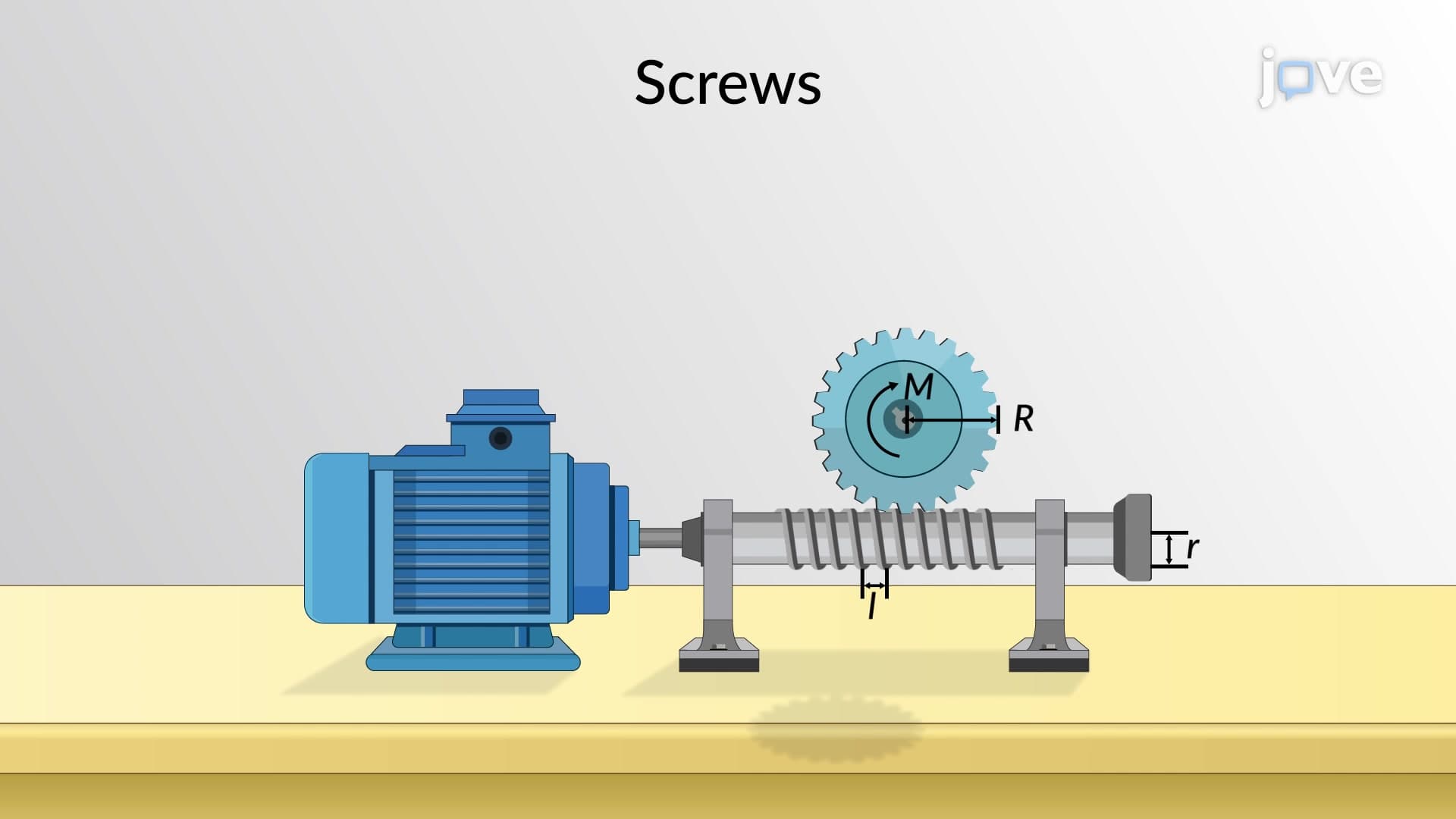
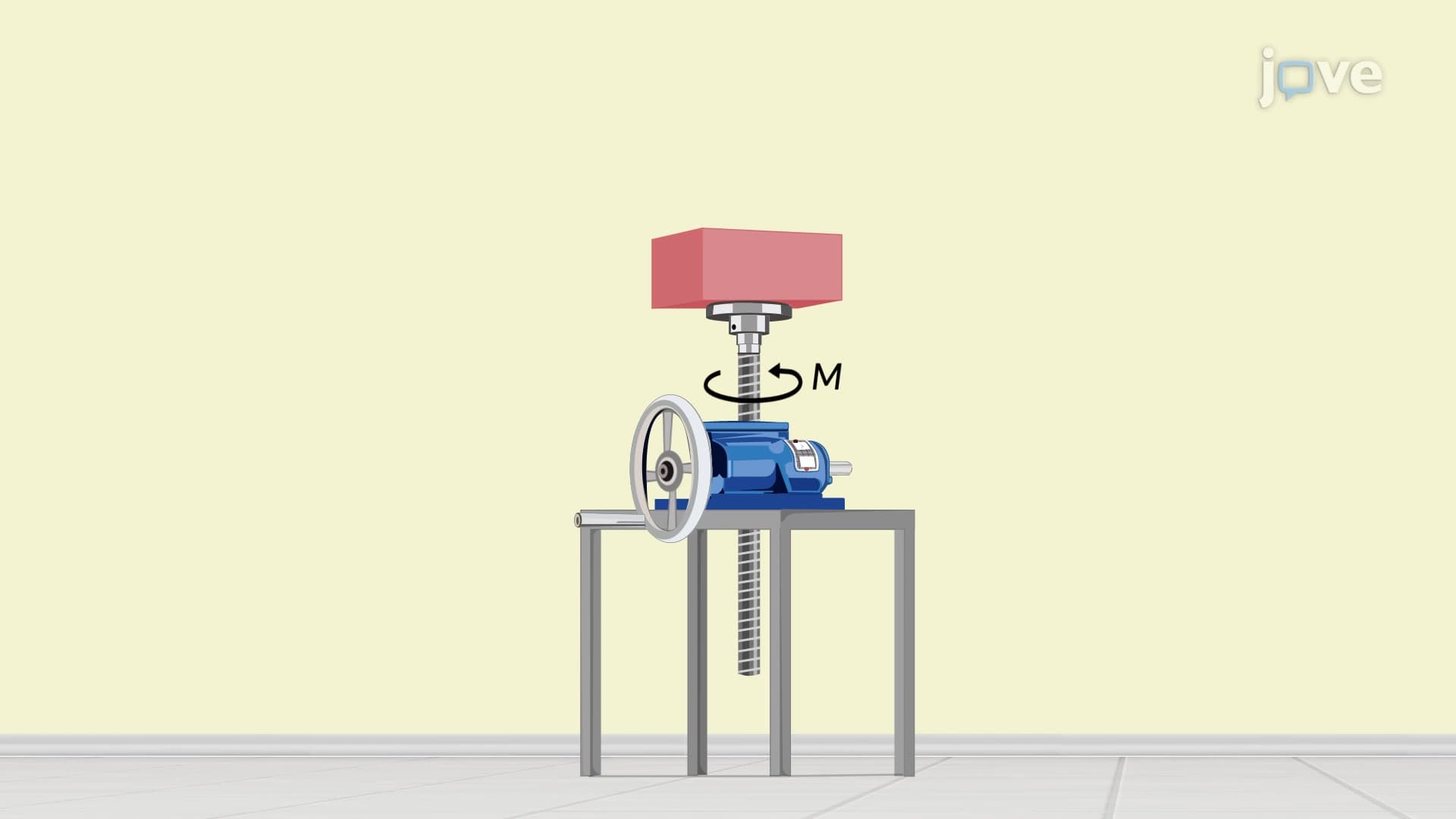
Ever wondered how engineers design car jacks that can lift 2-ton vehicles with just hand power? Screw problem solving analyzes the mechanical advantage and friction forces in threaded systems to determine lifting capacity and self-locking properties. From automotive jacks used by AAA roadside assistance to the massive lead screws in Boeing aircraft manufacturing, understanding What is Screw Problem Solving helps engineers design safer, more efficient mechanical systems. Watch the full video on JoVE Coach to master this concept with expert-led visuals and step-by-step explanations.
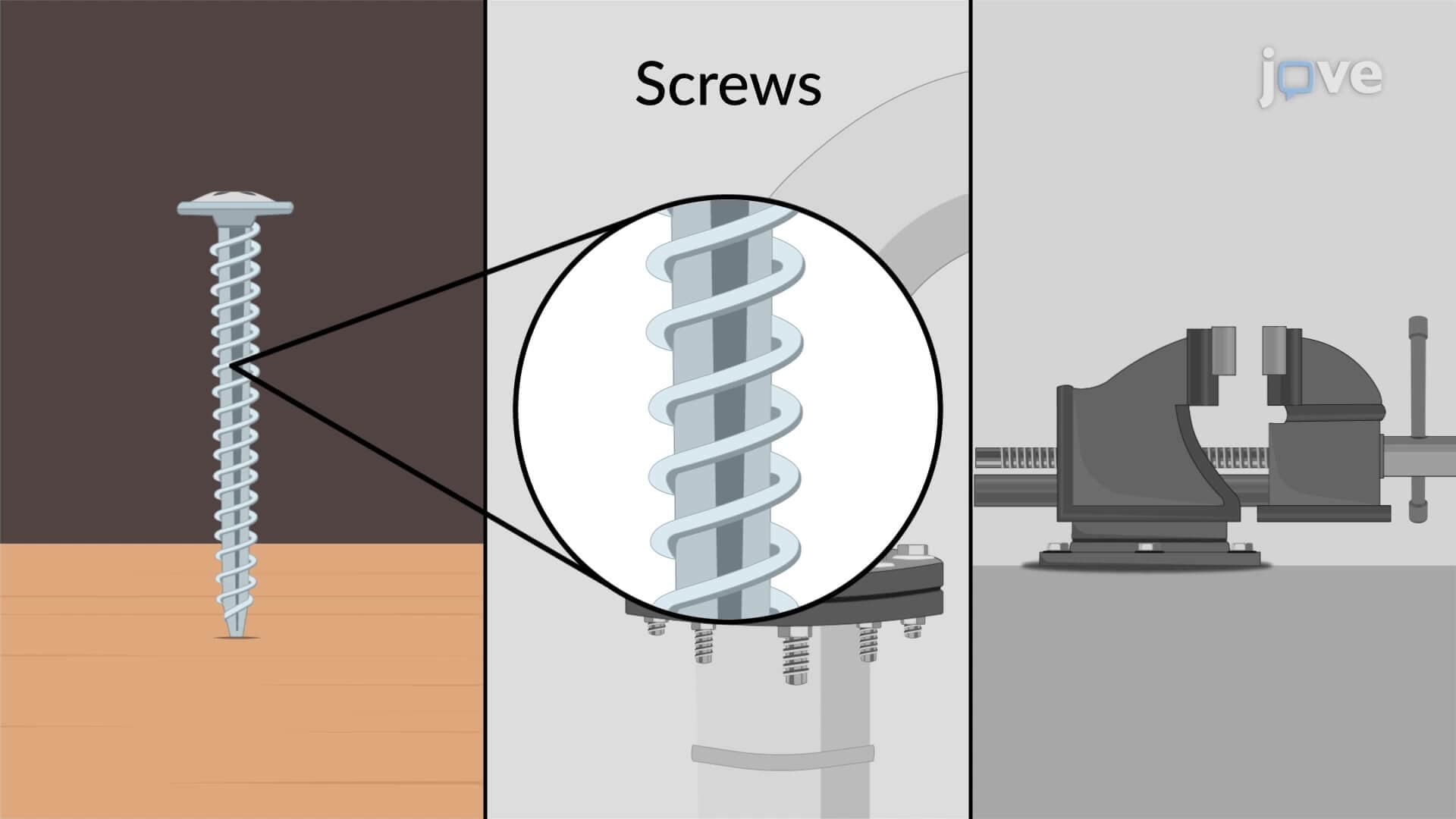
What is Screw Problem Solving represents a critical area of mechanical engineering that analyzes how threaded systems convert rotational motion into linear motion while accounting for friction forces. This concept combines principles from statics, dynamics, and materials science to predict the behavior of screw mechanisms under various loading conditions.
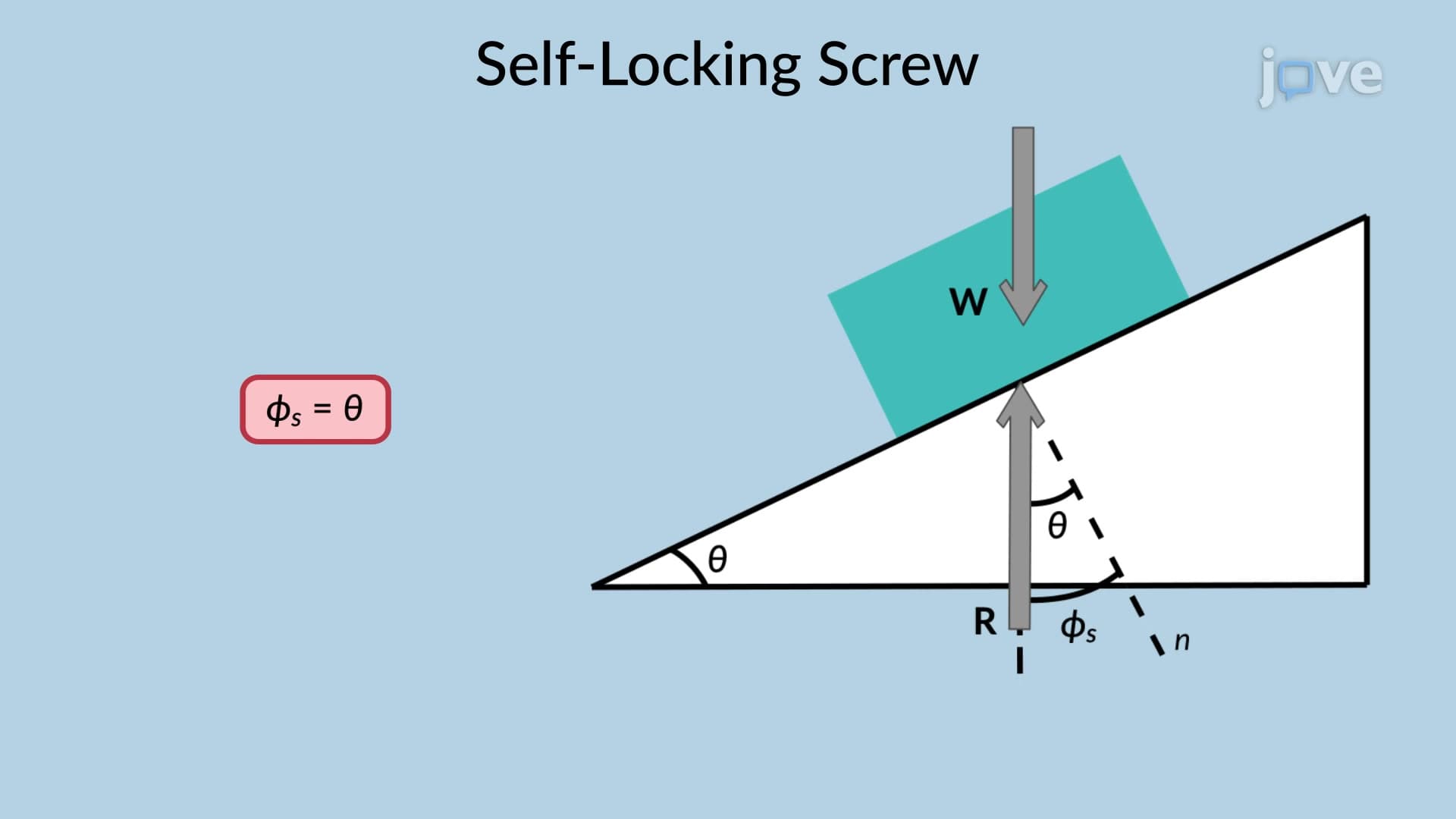
The foundation of screw problem solving rests on understanding the geometric relationship between thread pitch, lead, and mean radius. The lead angle, calculated as the arctangent of lead divided by the circumference at mean radius, determines how efficiently the screw converts torque to axial force. Meanwhile, the friction angle, derived from the arctangent of the coefficient of static friction, governs whether the system will self-lock or back-drive under load.
Engineers solving screw problems typically follow a systematic approach. First, they calculate the lead angle using the relationship: lead angle = arctan(lead / (2π × mean radius)). Next, they determine the friction angle from the coefficient of static friction. The critical comparison between these angles determines system behavior.
For force analysis, the relationship between applied torque (T), axial force (F), mean radius (r), lead angle (α), and friction angle (φ) follows well-established mechanics principles. When the friction angle exceeds the lead angle, the system exhibits self-locking properties - a crucial safety feature in applications like car jacks and aircraft control surfaces.
Screw problem solving appears extensively in American manufacturing and automotive industries. Ford's assembly lines use precision lead screws in robotic positioning systems, while Caterpillar incorporates massive screw jacks in heavy construction equipment. The aerospace sector relies on these principles for landing gear systems and control surface actuators in aircraft manufactured by Boeing and Lockheed Martin.
Students encounter screw problem solving in AP Physics C: Mechanics, college-level statics courses, and the Fundamentals of Engineering (FE) exam. The MCAT occasionally includes related mechanics problems, while engineering students at institutions like MIT and Stanford tackle complex screw analysis in machine design courses. Understanding these concepts proves essential for mechanical engineering licensure and professional practice.
The self-locking characteristic becomes particularly important in safety-critical applications, where system failure could result in catastrophic consequences. This principle ensures that hospital bed adjustment mechanisms, wheelchair lifts, and automotive jacks maintain their position even when power is removed or mechanical input ceases.
Frequently Asked Questions
Screw problem solving is the systematic analysis of threaded mechanical systems to determine forces, torques, and motion characteristics. It's crucial for designing safe, efficient lifting equipment, positioning systems, and mechanical actuators used throughout American manufacturing and transportation industries.
Screw problem solving definition encompasses the mathematical analysis of helical thread mechanics, including lead angle calculations, friction force determination, and self-locking condition evaluation. It combines geometry, statics, and friction principles to predict system behavior under various loading conditions.
AP Physics C: Mechanics often includes screw problems in rotational motion and statics sections, typically worth 10-15 points. Students must analyze torque-force relationships, calculate mechanical advantage, and determine equilibrium conditions. Practice with past exam problems from College Board helps master these concepts.
The Fundamentals of Engineering exam includes screw mechanics in the statics and mechanics of materials sections. Test-takers encounter problems involving thread efficiency, self-locking calculations, and force analysis. NCEES practice exams provide excellent preparation for these standardized engineering problems.
Engineering statics, machine design, and mechanical systems courses at universities like UC Berkeley, Georgia Tech, and Purdue extensively cover screw problem solving. Students typically encounter these concepts in sophomore-level statics and junior-level machine design coursework.
Automotive companies apply screw problem solving principles in designing car jacks, seat adjustment mechanisms, sunroof systems, and manufacturing equipment. Engineers must ensure proper mechanical advantage, safety factors, and self-locking properties to meet federal safety standards and consumer expectations.
Basic screw problem solving requires only algebra and trigonometry, making it accessible to high school physics students. Advanced applications may use calculus for optimization problems, but fundamental force and torque calculations rely on geometric relationships and static equilibrium principles.
Focus on memorizing key formulas for lead angle and friction angle calculations, then practice systematic problem-solving approaches. Create flowcharts for self-locking determination, work through multiple examples, and time yourself on practice problems to build exam confidence and speed.
Progress to power screw efficiency analysis, multi-start thread systems, and dynamic screw loading conditions. Explore related topics like gear trains, belt drives, and cam mechanisms to build comprehensive machine design knowledge for advanced engineering coursework.
Related Micro-courses
Related Subjects
 Civil Engineering 30 micro-courses›Electrical Engineering 33 micro-courses›