Loading…
Loading video…

17,768 views
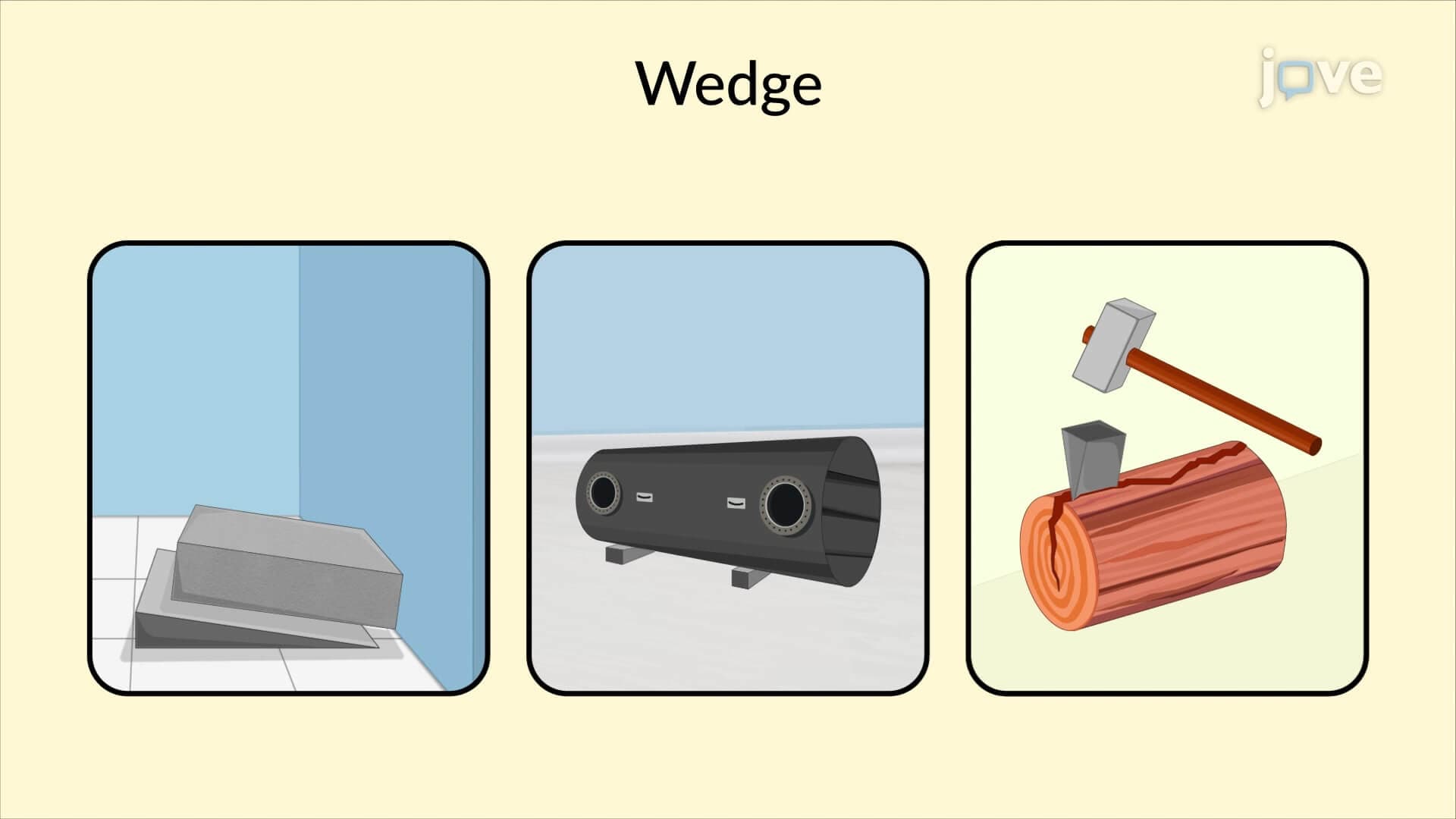
Ever wonder how construction crews lift massive concrete slabs with seemingly minimal effort? Wedges are simple machines that transform small applied forces into dramatically larger perpendicular forces, making them essential tools in engineering and construction across the United States. From splitting logs to adjusting heavy structural components in skyscrapers, what is wedges becomes clear when you see how they amplify force through their angled surfaces. These mechanical devices also demonstrate fascinating self-locking properties under specific conditions. Watch the full video on JoVE Coach to master this concept with expert-led visuals and step-by-step explanations.
Wedges represent one of the six classical simple machines, designed to convert applied forces into much larger perpendicular forces through their inclined surfaces. In mechanical engineering and physics courses across US colleges, wedges serve as excellent examples of force multiplication and equilibrium analysis. Unlike other simple machines, wedges typically remain stationary while the load moves, making them particularly useful for precision adjustments and heavy lifting applications.
The fundamental principle behind wedge operation lies in force transformation. When you apply a horizontal force to a wedge, the angled surface redirects this force both vertically and horizontally, with the vertical component often significantly exceeding the original applied force. This mechanical advantage makes wedges invaluable in construction projects throughout the United States, from foundation work to structural adjustments.
Analyzing wedge systems requires understanding seven distinct forces: the applied driving force and six contact forces (three normal forces and three friction forces) at various contact surfaces. Students preparing for AP Physics or college-level statics courses must master the application of four equilibrium equations—two for the wedge itself and two for the load being moved.
The mathematical analysis involves summing forces in both horizontal and vertical directions for each body in the system. For the wedge: ΣF(x) = 0 and ΣF(y) = 0. Similarly, for the load: ΣF(x) = 0 and ΣF(y) = 0. These equations, combined with friction relationships at each contact surface, provide a complete solution for all unknown forces in the system.
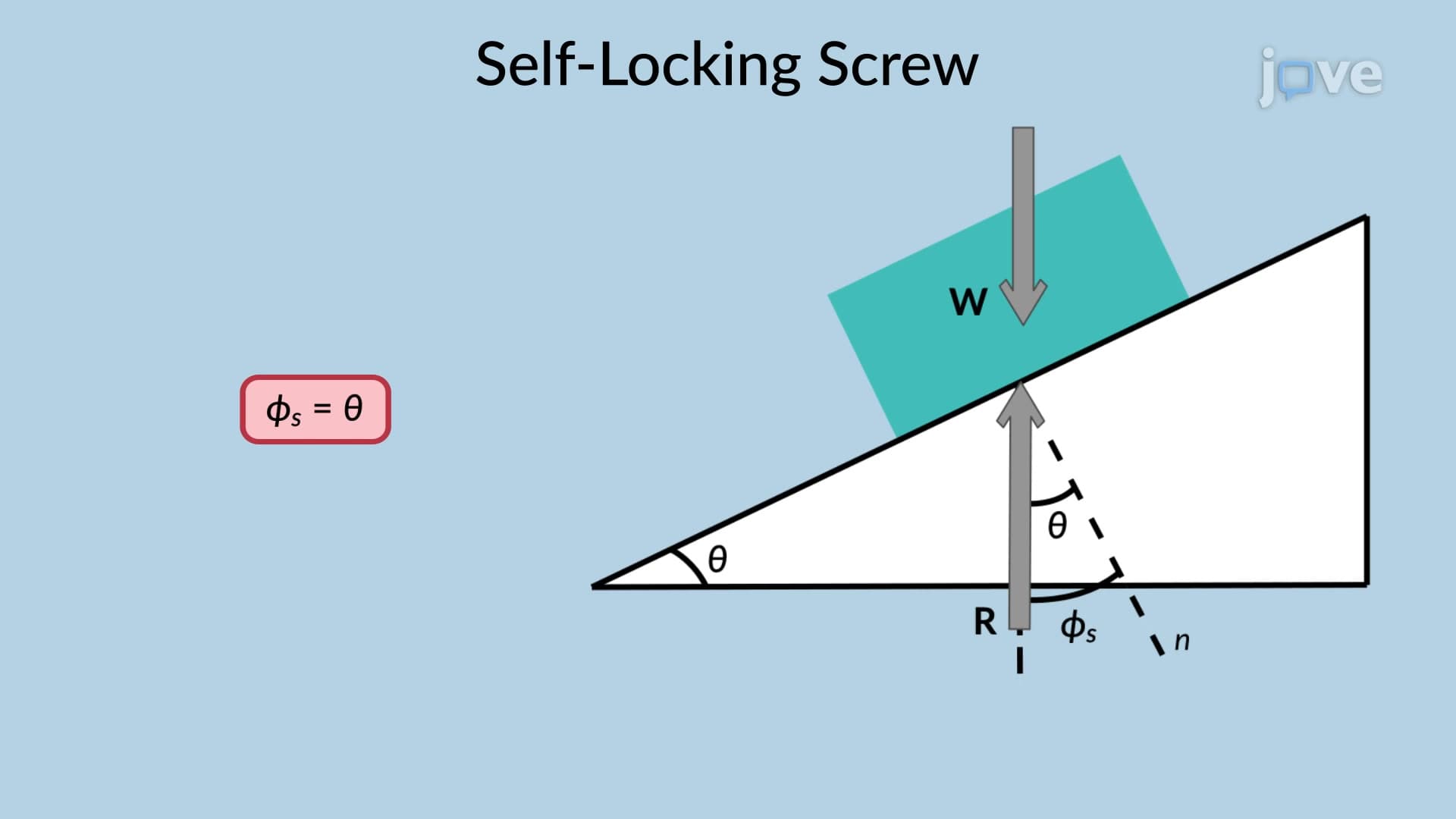
One of the most fascinating aspects of wedge mechanics is the self-locking phenomenon. When friction forces are sufficient to maintain equilibrium without applied external forces, the wedge becomes self-locking. This occurs when the wedge angle is less than twice the angle formed by the resultant reaction forces at the contact surfaces.
Self-locking wedges find extensive application in US manufacturing and construction. Door stops, adjustable machine bases, and structural shims all rely on this principle. The coefficient of friction between contact surfaces and the wedge angle determines whether self-locking occurs, making material selection crucial in design applications.
American construction and manufacturing industries extensively utilize wedge principles. Hydraulic wedge systems help position precast concrete sections in bridge construction projects. Machine shops use adjustable wedges for workpiece positioning and alignment. Even everyday items like axes (for splitting wood) and chisels (for metalwork) demonstrate wedge force multiplication principles that engineering students encounter in their coursework and future careers.
Frequently Asked Questions
Wedges are inclined plane machines that convert applied forces into much larger perpendicular forces through their angled surfaces. They work by redirecting horizontal input forces into vertical lifting forces, often with significant mechanical advantage. This force multiplication makes them essential tools in construction, manufacturing, and mechanical systems where heavy loads must be moved or positioned with precision.
For AP Physics, wedges involve force equilibrium analysis with multiple contact surfaces and friction considerations. Students must apply Newton's laws to solve systems with seven unknown forces using four equilibrium equations. Key concepts include force decomposition, friction relationships (f = μN), and understanding when self-locking occurs based on wedge angles and friction coefficients.
College statics and dynamics exams often feature wedge problems requiring free-body diagrams for multiple objects, equilibrium equations in two dimensions, and friction analysis. Students must determine applied forces needed for motion, calculate normal and friction forces at contact surfaces, and analyze self-locking conditions. MCAT physics sections may include simpler wedge force multiplication concepts.
US industries extensively use wedges in construction (building foundations, structural adjustments), manufacturing (machine positioning, workpiece alignment), and everyday tools (axes, chisels, door stops). Highway construction crews use wedge systems for concrete slab positioning, while aerospace manufacturers employ precision wedges for aircraft component alignment and assembly processes.
Basic wedge concepts require only algebra and trigonometry skills typically covered in high school. Force analysis involves vector addition, sine/cosine relationships, and solving simultaneous linear equations. Students with solid geometry and algebra foundations can successfully master wedge mechanics without needing calculus or advanced mathematics.
Start by drawing clear free-body diagrams for each object in the system, identifying all forces including normal and friction forces at contact surfaces. Apply equilibrium equations systematically (ΣF(x) = 0, ΣF(y) = 0) for each body. Remember that friction direction depends on impending motion direction, and always check if your solution makes physical sense.
Wedges share force multiplication principles with levers and pulleys but differ in their stationary operation and perpendicular force redirection. Understanding wedges provides foundation knowledge for studying inclined planes, screw mechanisms, and compound machine systems. This knowledge proves valuable in advanced engineering mechanics and machine design courses.
Progress to compound wedge systems, dynamic wedge analysis with acceleration, and wedge applications in cam mechanisms. Advanced coursework covers wedge optimization for maximum mechanical advantage, material selection for specific friction requirements, and computer-aided analysis of complex multi-wedge systems used in modern manufacturing equipment.
Related Micro-courses
Related Subjects
 Civil Engineering 30 micro-courses›Electrical Engineering 33 micro-courses›