Loading subject page…


152,901 views

Video Summary: What Is Chromatin Immunoprecipitation Chip
Ever wonder how scientists at Stanford University discovered which genes control memory formation? Chromatin immunoprecipitation chip (ChIP) is the molecular detective technique that reveals exactly where proteins bind to DNA inside living cells. This powerful method has revolutionized our understanding of gene regulation by allowing researchers to map protein-DNA interactions with pinpoint accuracy. From cancer research at Johns Hopkins to neurological studies at Harvard Medical School, ChIP has become an essential tool for decoding the molecular mechanisms that control life itself. Watch the full video on JoVE Coach to master this concept with expert-led visuals and step-by-step explanations.
Chromatin immunoprecipitation chip represents one of the most significant breakthroughs in molecular biology, allowing scientists to answer a fundamental question: where exactly do regulatory proteins bind to DNA in living cells? This technique has transformed our understanding of gene expression by providing a molecular snapshot of protein-DNA interactions as they occur naturally within the cell nucleus.
The technique exploits the natural organization of eukaryotic DNA. Unlike bacterial DNA, which exists freely in the cytoplasm, eukaryotic DNA wraps around histone proteins to form nucleosomes-structures that resemble beads on a string. These nucleosomes further condense into chromatin, efficiently packaging the cell's entire genome into the nucleus. Gene expression depends on how tightly or loosely this chromatin is packed, controlled by histone modifications and regulatory proteins that bind to specific DNA sequences.
ChIP works by preserving these protein-DNA interactions through chemical crosslinking, then using antibodies to "fish out" specific proteins along with their attached DNA sequences. This approach has proven invaluable in cancer research, where understanding which genes are turned on or off can reveal therapeutic targets. For example, researchers at Memorial Sloan Kettering Cancer Center use ChIP to study how tumor suppressor proteins like p53 regulate DNA repair genes.
The process begins with crosslinking, typically using formaldehyde to create covalent bonds between proteins and DNA. This chemical "snapshot" preserves the exact moment of protein-DNA interaction. The chromatin is then fragmented into manageable pieces-either mechanically (X-ChIP) or enzymatically using nucleases (N-ChIP). Each approach offers distinct advantages: X-ChIP provides broader applicability but requires crosslink reversal, while N-ChIP maintains native chromatin structure but works only with accessible DNA regions.
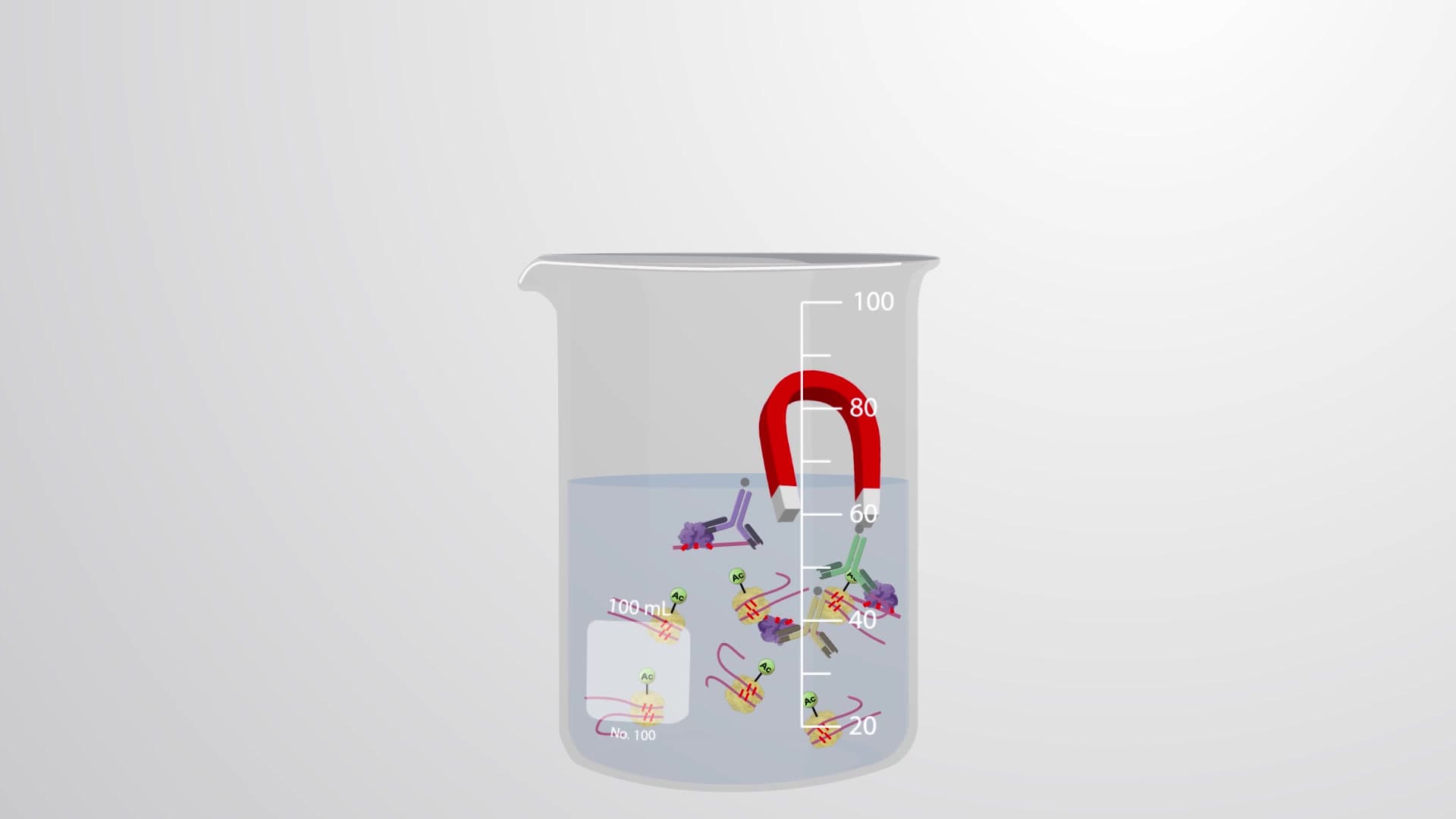
Immunoprecipitation follows, where specific antibodies recognize target proteins. These antibodies are often linked to magnetic beads, allowing researchers to use magnets to isolate the desired protein-DNA complexes. After washing away unbound material, the crosslinks are reversed, proteins are digested away, and the remaining DNA is sequenced to identify binding sites.
ChIP appears frequently on AP Biology exams and MCAT questions, particularly in contexts involving gene regulation and epigenetics. Students should understand that ChIP bridges molecular techniques with broader biological concepts like development, disease, and evolution. For instance, ChIP studies have revealed how developmental transcription factors create cell-type-specific gene expression patterns, explaining how a single genome can produce over 200 different cell types in the human body.
In clinical applications, ChIP helps researchers understand diseases like Alzheimer's, where abnormal protein-DNA interactions contribute to neurodegeneration. The National Institutes of Health funds numerous ChIP-based studies investigating everything from autoimmune disorders to metabolic diseases, making this technique central to modern biomedical research.
Related Micro-courses