Loading subject page…


152,902 views
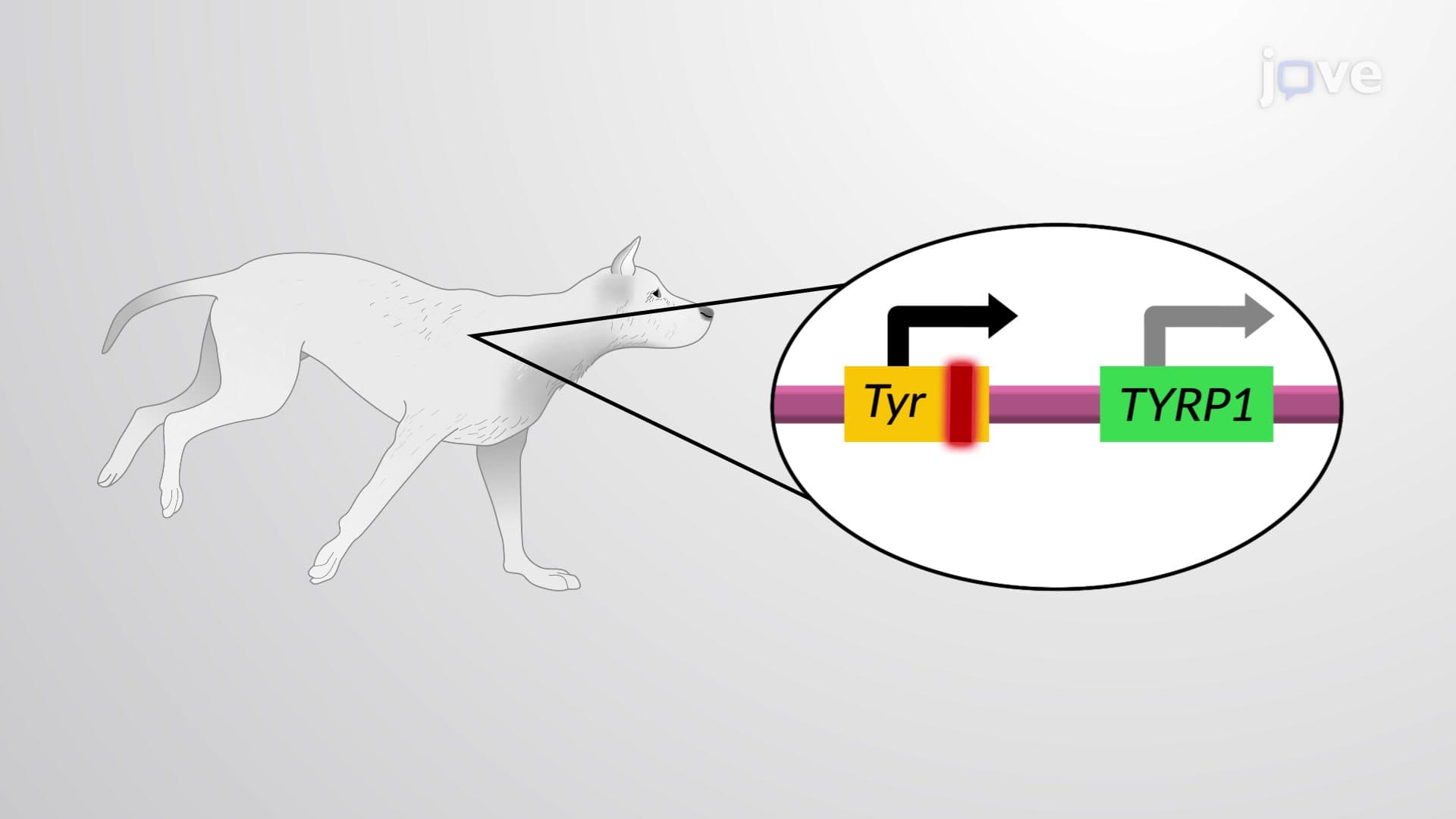

Video Summary: What Is Epistasis Analysis
Ever wonder why some genetic traits seem to "disappear" even when the DNA is present? Epistasis analysis reveals how one gene can mask another's expression, creating unexpected inheritance patterns that challenge simple dominant-recessive rules. In Labrador retrievers, for instance, a single gene can override coat color genes entirely, producing yellow labs regardless of underlying black or brown genetics. Understanding what is epistasis analysis helps decode these complex genetic interactions that affect everything from dog breeding programs to human disease research. Watch the full video on JoVE Coach to master this concept with expert-led visuals and step-by-step explanations.
Epistasis analysis is the systematic study of gene interactions where one gene masks, modifies, or suppresses the expression of another gene at a different locus. Unlike simple dominant-recessive inheritance, epistasis reveals how genes work together in complex networks to produce observable traits. This analysis becomes crucial when Mendelian ratios don't match experimental results, indicating that multiple genes influence a single characteristic.
The term "epistasis" comes from Greek meaning "standing upon," perfectly describing how one gene stands over another to control expression. In epistasis analysis definition, we distinguish between the epistatic gene (the masking gene) and the hypostatic gene (the masked gene). This relationship fundamentally differs from dominance, which occurs between alleles at the same locus.
Epistasis analysis overview encompasses several distinct patterns. Recessive epistasis occurs when a homozygous recessive genotype at one locus masks expression at another locus, producing modified 9:3:4 ratios instead of the expected 9:3:3:1. Dominant epistasis happens when a dominant allele at one locus masks expression at another, creating 12:3:1 ratios.
Complementary epistasis represents another crucial pattern where both genes must have dominant alleles to produce the wild-type phenotype, resulting in 9:7 ratios. These patterns appear frequently in AP Biology exams and college genetics courses, making epistasis analysis study guide materials essential for academic success.
Understanding epistasis analysis extends far beyond academic exercises into practical applications. In human genetics, epistatic interactions explain why some individuals with disease-associated mutations never develop symptoms-modifier genes provide epistatic protection. The pharmaceutical industry uses epistasis analysis to understand drug responses, as genetic background affects medication effectiveness.
Agricultural applications prove equally important. Plant breeders use epistasis analysis basics to predict crop characteristics, understanding how pest resistance genes interact with yield genes. The University of California's agricultural extension programs rely heavily on epistatic analysis for developing climate-resistant varieties.
Contemporary epistasis analysis concept incorporates genome-wide association studies (GWAS) and computational modeling. Researchers at institutions like Harvard Medical School and Stanford University use advanced statistical methods to detect epistatic interactions across entire genomes. These techniques help explain "missing heritability"-the gap between predicted and observed trait inheritance patterns.
For students preparing for the MCAT or advanced placement exams, mastering epistasis analysis provides essential foundation knowledge for understanding complex genetic phenomena, population genetics, and evolutionary biology concepts that appear regularly on standardized tests.
Related Micro-courses