Loading subject page…


119,803 views

Video Summary: Aryldiazonium Salts to Azo Dyes Explained
Ever wonder how Kraft mac and cheese gets its signature orange color? Aryldiazonium salts azo dyes make this possible through a fascinating coupling reaction that creates vibrant synthetic colorants. When aryldiazonium salts react with aromatic rings containing activating groups, they form azo compounds with characteristic N=N bonds-the same chemistry behind food dyes, pH indicators like methyl orange used in chemistry labs, and textile colorants. Watch the full video on JoVE Coach to master this concept with expert-led visuals and step-by-step explanations.
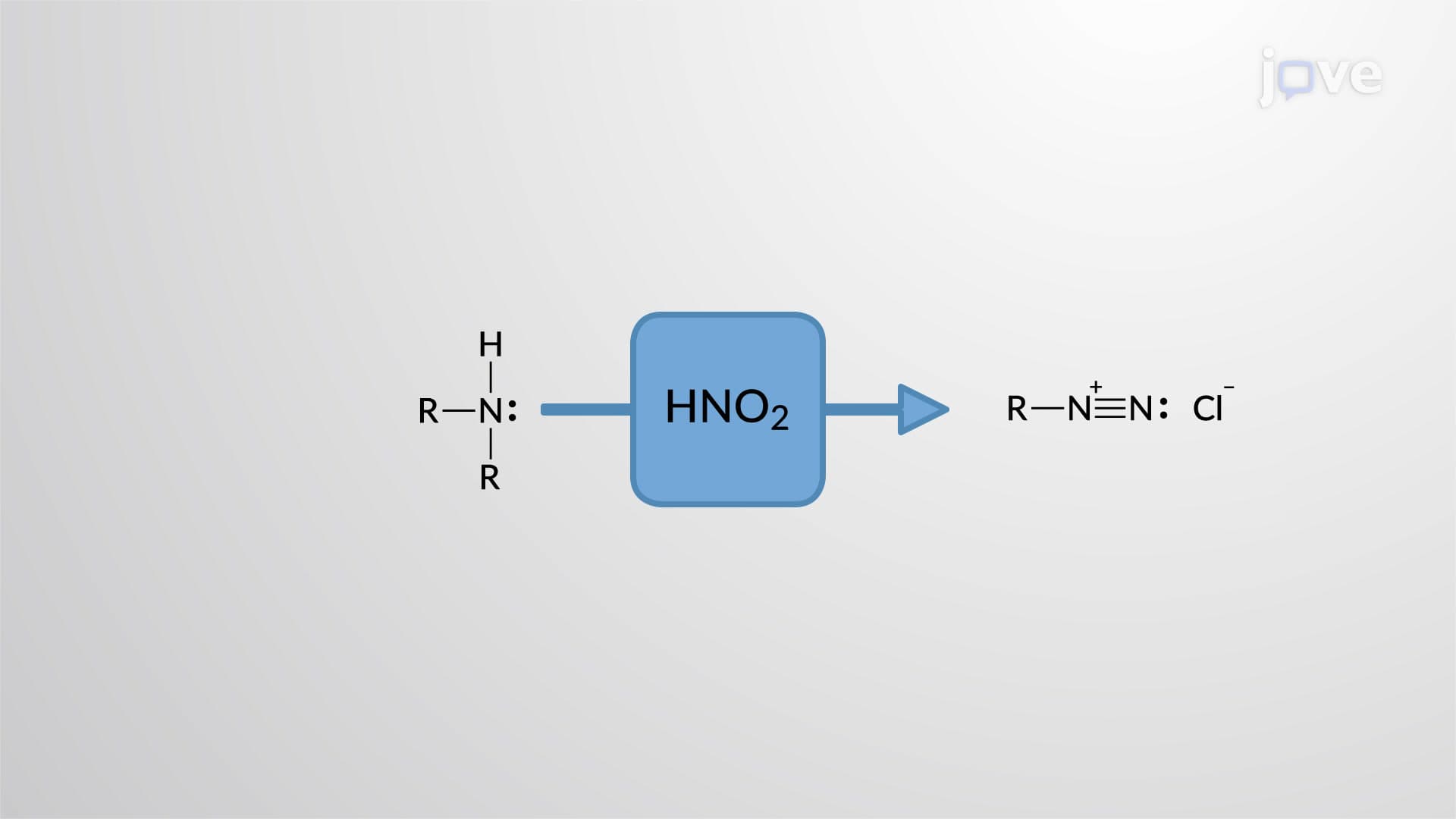
The transformation of aryldiazonium salts into azo dyes represents one of organic chemistry's most commercially important reactions. This electrophilic aromatic substitution process creates compounds containing the characteristic azo group (N=N), which serves as the chromophore responsible for intense colors in synthetic dyes. The reaction requires an activated aromatic ring-typically containing electron-donating groups like hydroxyl, amino, or alkoxy substituents-that can act as a nucleophile.
The coupling mechanism proceeds through electrophilic attack by the positively charged diazonium ion on the electron-rich aromatic ring. Initially, the electrophile attacks at the para position relative to the activating group, forming a resonance-stabilized carbocation intermediate. This intermediate benefits from delocalization of positive charge throughout the aromatic system. Subsequent deprotonation restores aromaticity and yields the final azo product. When the para position is blocked by existing substituents, the reaction proceeds at the ortho position instead, following the same mechanistic pathway.
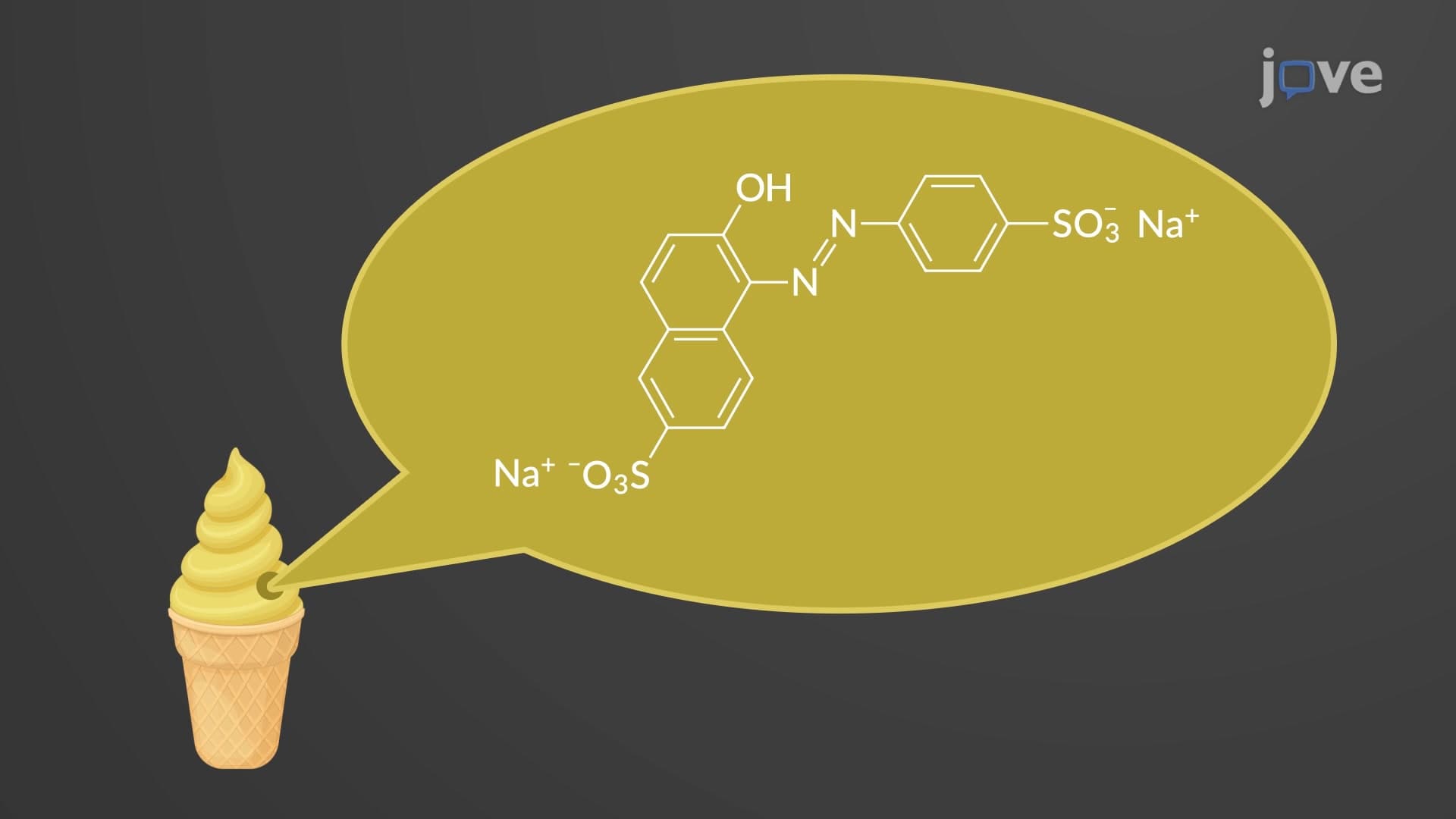
Azo dyes dominate the synthetic dye market, accounting for approximately 70% of all commercial colorants produced in the United States. Sunset Yellow FCF, approved by the FDA as Food Yellow No. 6, illustrates this chemistry's practical importance-it's the compound responsible for the yellow color in popular snack foods, beverages, and ice cream brands. The extended conjugation system created by the azo linkage allows these molecules to absorb visible light efficiently, producing vibrant colors that remain stable under normal storage conditions.
Beyond coloring applications, azo compounds serve crucial roles in analytical chemistry as pH indicators. Methyl orange, synthesized through aryldiazonium coupling, demonstrates this principle beautifully. In alkaline solutions (pH > 4.4), the compound exists in its deprotonated form, appearing yellow to the human eye. Under acidic conditions (pH < 3.1), protonation occurs at the azo nitrogen, shifting the electronic structure and changing the color to red. This property makes methyl orange invaluable for titrations and qualitative pH assessment in undergraduate chemistry laboratories across American universities.
Students preparing for AP Chemistry, MCAT, or college organic chemistry courses should focus on understanding both the mechanistic details and practical applications, as this topic frequently appears in exam questions involving electrophilic aromatic substitution and synthetic methodology.
Related Micro-courses