Loading video…


 29 Concepts
 119.8K views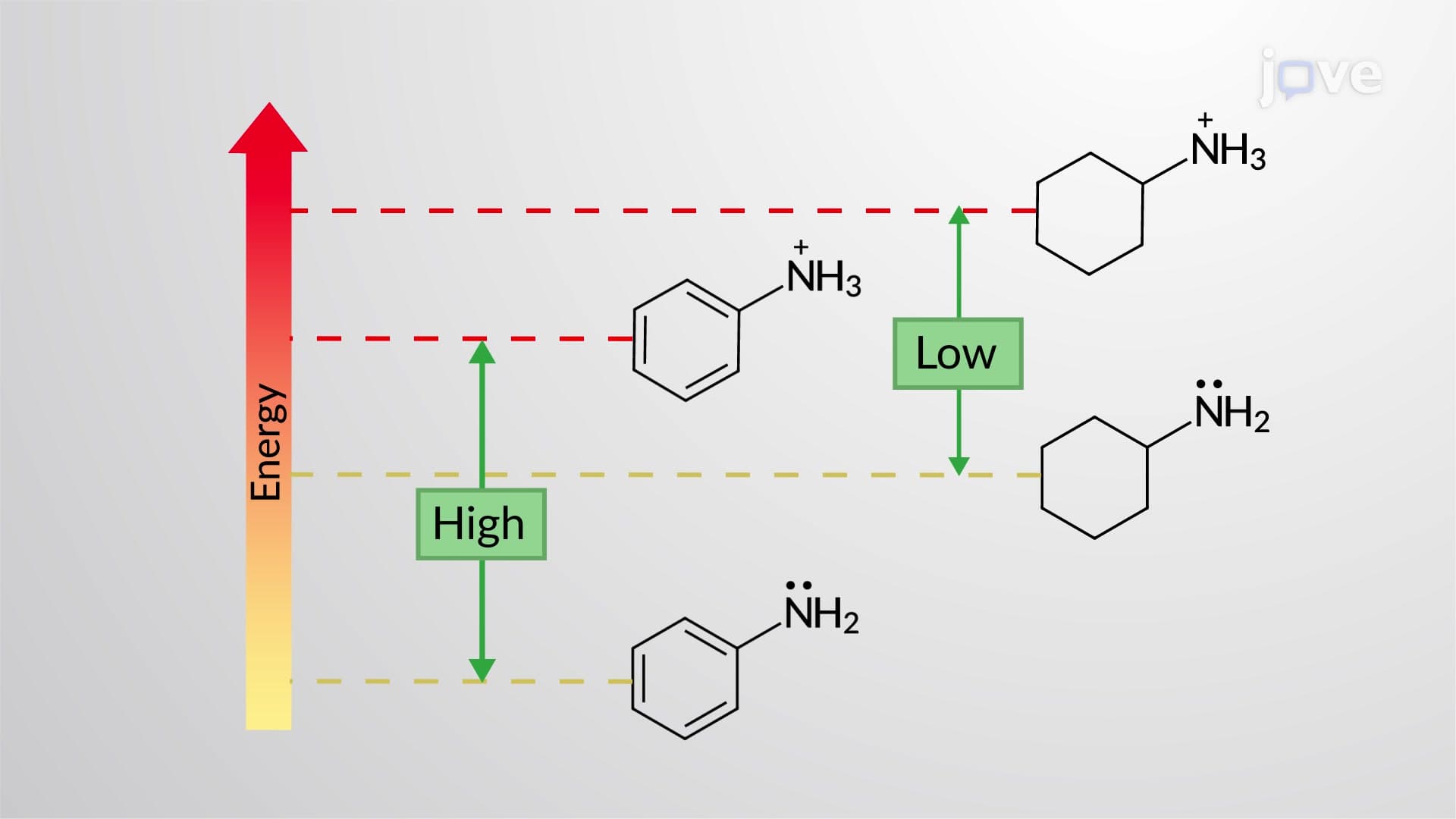

Video Summary: What are Basicity of Aromatic Amines
Ever wonder why pharmaceutical companies carefully design drug molecules with specific nitrogen-containing groups? The basicity of aromatic amines determines how these compounds interact with biological systems, making this concept crucial for drug development at companies like Pfizer and Merck. What are basicity of aromatic amines reveals how electron delocalization and substituent effects dramatically alter chemical behavior compared to simple aliphatic amines. Understanding these principles helps explain why aniline-based compounds behave differently than methylamine in laboratory reactions. Watch the full video on JoVE Coach to master this concept with expert-led visuals and step-by-step explanations.
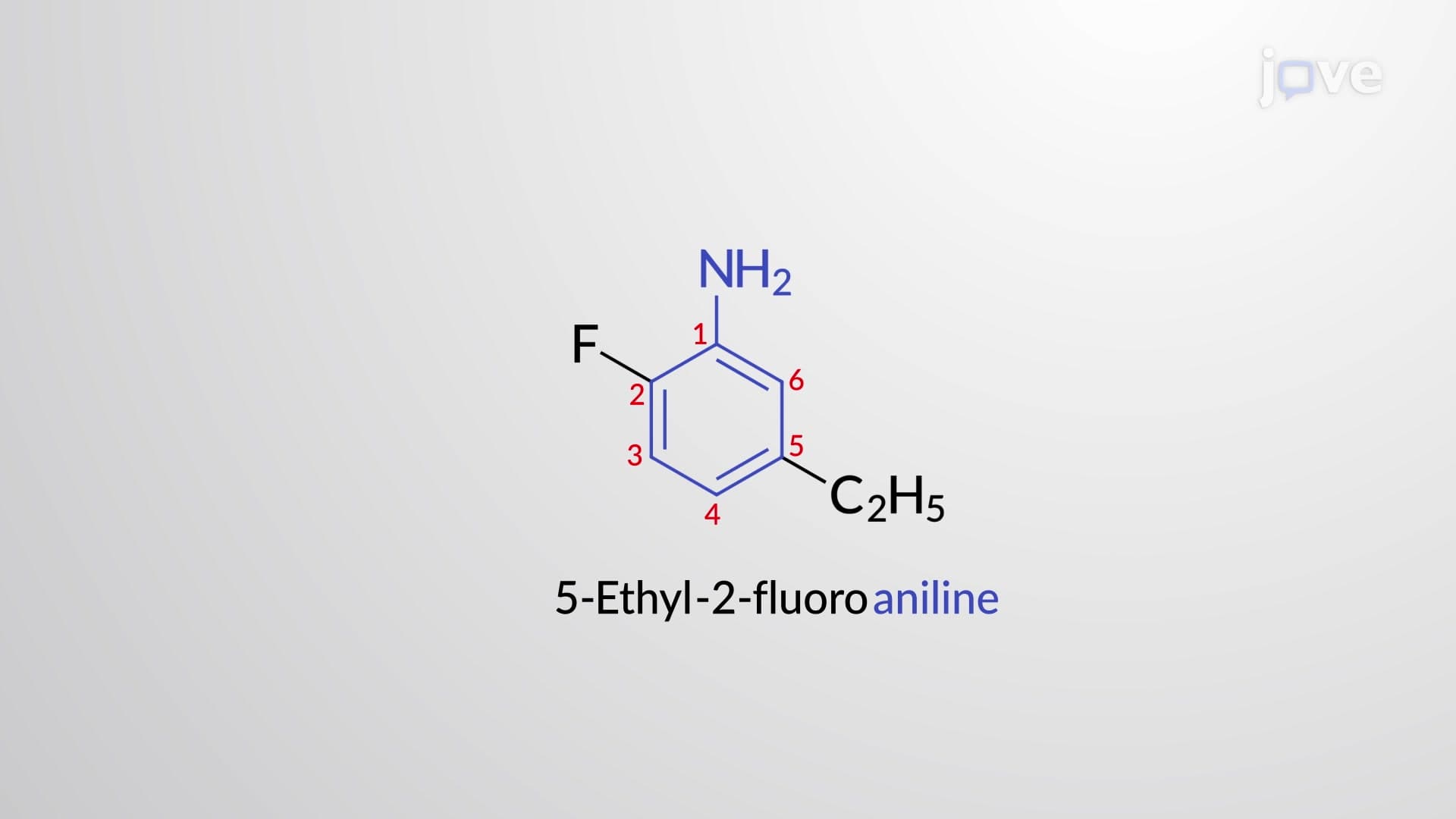
The basicity of aromatic amines represents a fundamental concept in organic chemistry that explains why compounds like aniline (C6H5NH2) are significantly weaker bases than their aliphatic counterparts such as methylamine (CH3NH2). This difference stems from the unique electronic structure of aromatic systems, where the nitrogen's lone pair electrons participate in resonance with the benzene ring.
In aromatic amines, the nitrogen lone pair delocalizes into the π-electron system of the benzene ring through resonance. This delocalization creates multiple resonance structures where the lone pair is spread across the aromatic system rather than localized on nitrogen. Consequently, these electrons become less available for protonation, resulting in decreased basicity. When students encounter this concept on AP Chemistry exams or college organic chemistry courses, they must understand that this resonance stabilization makes the neutral amine more stable relative to its protonated conjugate acid.
The energy difference between aniline and the anilinium ion (C6H5NH3+) is significantly larger than the corresponding difference in aliphatic systems. This occurs because the conjugate acid cannot benefit from the same resonance stabilization-protonation eliminates the lone pair needed for aromatic resonance.
Substituents on the benzene ring dramatically influence basicity through electronic effects. Electron-donating groups (EDGs) like methyl (-CH3) or methoxy (-OCH3) increase electron density in the aromatic system, making the nitrogen lone pair more available for protonation and increasing basicity. Pharmaceutical researchers at companies like Bristol Myers Squibb utilize these principles when designing drug molecules with specific basicity requirements.
Conversely, electron-withdrawing groups (EWGs) such as nitro (-NO2) or cyano (-CN) groups decrease basicity by pulling electron density away from the system. These effects are particularly important in MCAT preparation, where students must predict relative basicity orders for complex aromatic amine structures.
Understanding aromatic amine basicity proves crucial for predicting reaction outcomes, designing synthetic pathways, and explaining biological activity. On standardized exams like the AP Chemistry test or college organic chemistry midterms, students frequently encounter questions asking them to rank aromatic amines by basicity or explain why certain substitution patterns affect base strength. This knowledge also applies to understanding how local anesthetics like procaine function-their aromatic amine groups must have appropriate basicity levels to interact effectively with biological targets while maintaining stability.
Related Micro-courses