Loading subject page…

- Organic Chemistry
- Amines
- Amines to Sulfonamides: The Hinsberg Test
Micro-course: Amines
119,803 views
Learn key concepts and earn your certificate.

Amines to Sulfonamides: The Hinsberg Test

00:00
01:23
Video Summary: Hinsberg Test Converting Amines to Sulfonamides
Ever wonder how pharmaceutical chemists at companies like Pfizer distinguish between different types of amines when developing new medications? The amines sulfonamides hinsberg test provides a brilliant solution by converting amines to sulfonamides through a selective chemical reaction. This classic organic chemistry technique, known as the Hinsberg Test: Converting Amines to Sulfonamides, uses benzenesulfonyl chloride to differentiate primary, secondary, and tertiary amines based on their unique solubility patterns in basic solutions. Watch the full video on JoVE Coach to master this concept with expert-led visuals and step-by-step explanations.
- Understand how the Hinsberg Test: Converting Amines to Sulfonamides distinguishes between primary, secondary, and tertiary amines using benzenesulfonyl chloride
- Identify the structural differences that cause primary amines to form base-soluble N-substituted sulfonamides while secondary amines produce base-insoluble N,N-disubstituted products
- Analyze why tertiary amines fail to react with the Hinsberg reagent due to the absence of N-H protons
- Compare the solubility behaviors of different sulfonamide products in basic and acidic conditions
- Evaluate the role of the electron-withdrawing sulfonyl group in creating acidic N-H protons
- Apply knowledge of acid-base chemistry to predict precipitation and dissolution patterns during the test
- Recognize the practical importance of this test in pharmaceutical and industrial amine identification
- Explore how sulfonamide formation connects to broader concepts in medicinal chemistry and drug development
Understanding the Hinsberg Test: Converting Amines to Sulfonamides
The Hinsberg Test: Converting Amines to Sulfonamides represents one of organic chemistry's most elegant analytical methods, developed by German chemist Oscar Hinsberg in 1890. This test exploits fundamental differences in amine structure to create distinct chemical signatures, making it invaluable for students preparing for the AP Chemistry exam or college organic chemistry courses.
Mechanism and Chemical Principles
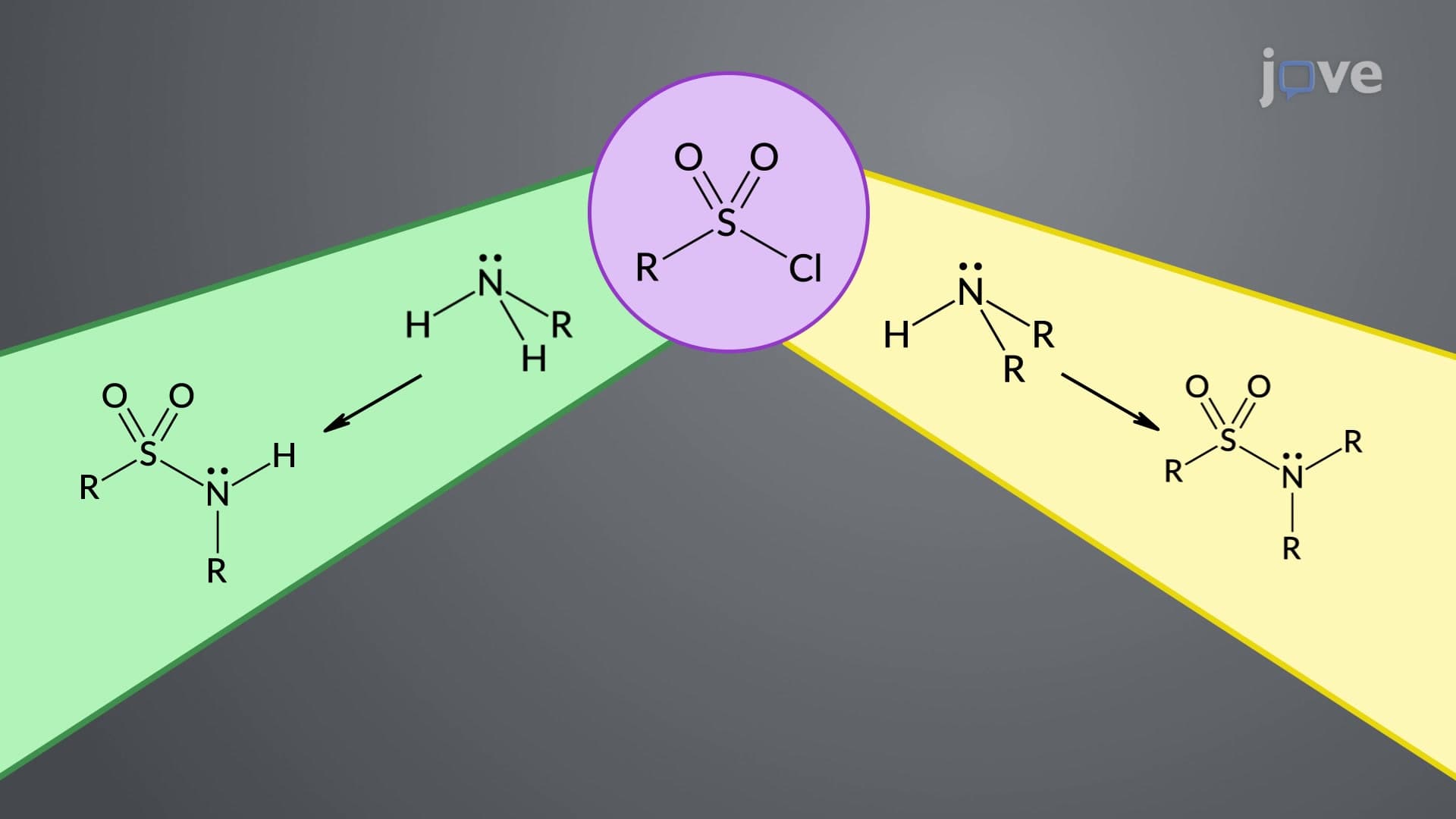
The test centers on benzenesulfonyl chloride (C6H5SO2Cl), commonly called the Hinsberg reagent. This powerful electrophile selectively attacks amines with available N-H bonds, forming sulfonamide products through nucleophilic substitution. The electron-withdrawing nature of the sulfonyl group (SO2) dramatically increases the acidity of any remaining N-H protons, with pKa values dropping from around 35 in simple amines to approximately 10 in sulfonamides.
Primary amines yield N-monosubstituted sulfonamides that retain one acidic proton, enabling deprotonation by aqueous base to form water-soluble sodium salts. This solubility switch-from precipitate to clear solution-provides the test's diagnostic power. Secondary amines produce N,N-disubstituted sulfonamides lacking acidic protons, resulting in persistent precipitates regardless of base addition.
Real-World Applications and Exam Relevance
Pharmaceutical companies like Johnson & Johnson routinely employ Hinsberg-type reactions during drug discovery, particularly when synthesizing sulfa antibiotics or analyzing amine-containing compounds. Medical students encounter this concept on the MCAT when studying drug metabolism pathways, while chemistry majors at institutions like UC Berkeley use it extensively in organic synthesis labs.
For standardized test preparation, focus on predicting solubility patterns and drawing accurate structural formulas. The College Board frequently includes amine classification questions on AP Chemistry exams, testing students' ability to connect molecular structure with observed chemical behavior.
Advanced Considerations and Study Tips
Understanding why tertiary amines remain unreactive requires visualizing steric hindrance and electronic effects. The absence of N-H protons eliminates nucleophilic attack pathways, while bulky substituents create additional barriers. This selectivity makes the Hinsberg test particularly valuable for mixture analysis-a concept that appears regularly on college midterm examinations and graduate school entrance exams.
Frequently Asked Questions
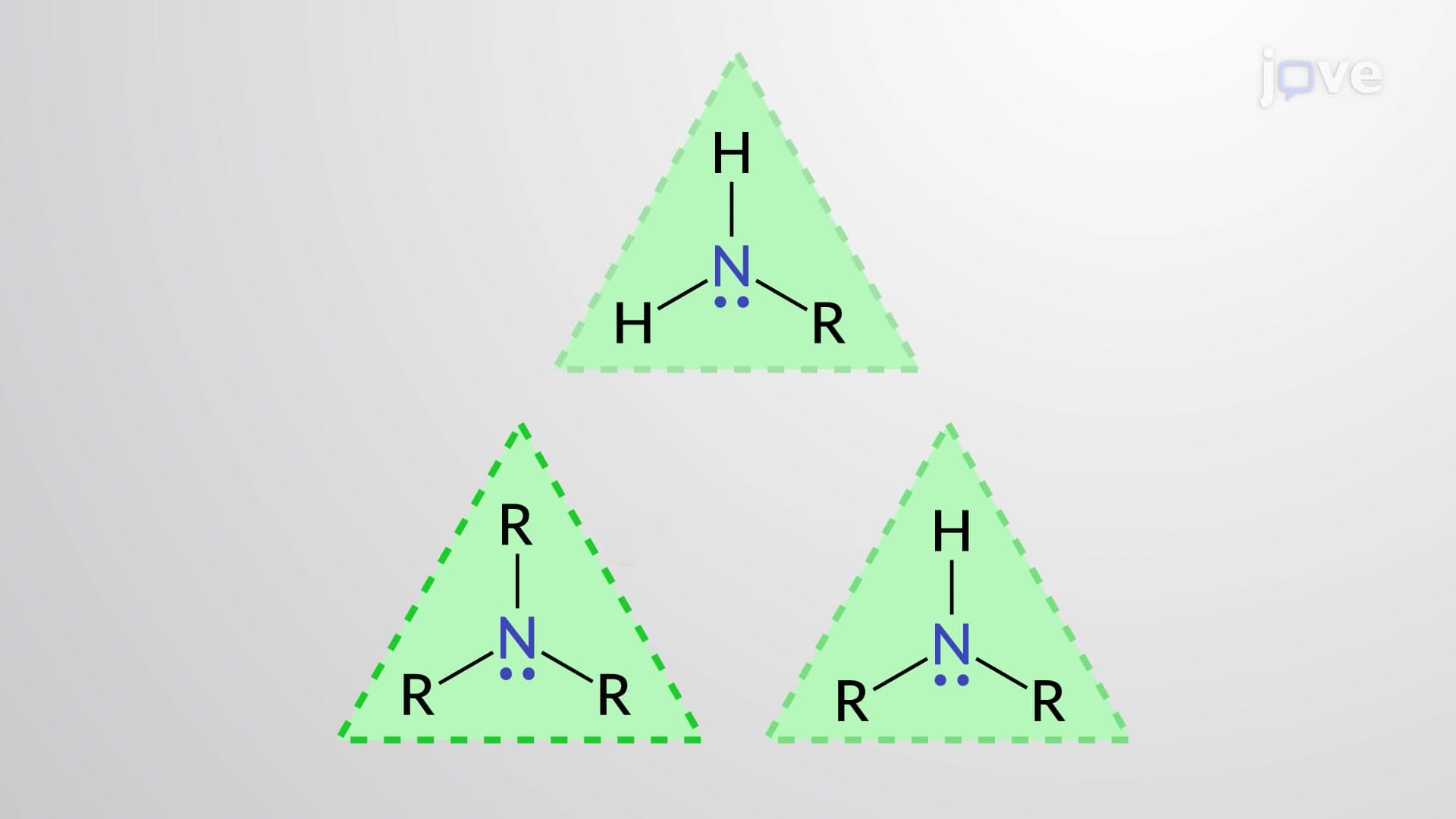
The Hinsberg Test is a classic organic chemistry method that distinguishes between primary, secondary, and tertiary amines by treating them with benzenesulfonyl chloride in basic solution. Primary amines form base-soluble precipitates, secondary amines create base-insoluble precipitates, and tertiary amines show no reaction. This differential behavior allows chemists to identify unknown amine types through simple observation.
MCAT questions typically focus on predicting reaction outcomes and explaining solubility differences based on molecular structure. You might encounter passage-based questions about pharmaceutical synthesis or laboratory scenarios requiring amine identification. Practice drawing sulfonamide products and explaining why the sulfonyl group increases N-H acidity through electron withdrawal.
The Hinsberg test demonstrates key AP Chemistry concepts including acid-base behavior, solubility rules, and structure-function relationships. College Board examiners favor questions that connect molecular structure to observable properties. Understanding why primary amine products dissolve in base while secondary amine products don't requires mastering both organic reaction mechanisms and aqueous equilibrium principles.
Major pharmaceutical companies like Merck and Bristol Myers Squibb employ sulfonamide chemistry when developing antibiotics, diuretics, and other medications. The sulfa drug family, including sulfamethoxazole used in Bactrim, relies on sulfonamide functional groups for biological activity. Industrial chemists use Hinsberg-type reactions to verify amine purity and identify impurities during drug manufacturing.
Not at all-this test actually reinforces fundamental chemistry principles you already know. If you understand acid-base reactions, precipitation, and basic organic functional groups, you have the foundation needed. Many high school AP Chemistry students successfully master this concept by focusing on the visual aspects: what precipitates form and when they dissolve.
Create flowcharts showing each amine type's pathway through the test, including intermediate structures and final products. Practice predicting solubility based on molecular structure, and memorize that primary amines give base-soluble products while secondary amines don't. Use molecular models or drawings to visualize why tertiary amines cannot react due to missing N-H bonds.
Sulfonamide chemistry bridges multiple organic concepts including nucleophilic substitution, acid-base chemistry, and pharmaceutical applications. This knowledge prepares you for advanced topics like peptide synthesis, where similar amide-forming reactions occur. Medical students will encounter sulfonamide drugs throughout pharmacology courses, making this foundational chemistry knowledge essential for healthcare careers.
Explore other amine reactions like Gabriel synthesis for primary amine preparation, or investigate how sulfonamide antibiotics function as competitive inhibitors in bacterial metabolism. Advanced students might examine NMR spectroscopy techniques for amine identification or delve into medicinal chemistry to understand structure-activity relationships in sulfa drugs.
Related Micro-courses