Loading subject page…


119,803 views

Video Summary: Hofmann and Curtius Rearrangement Mechanisms for Primary Amines
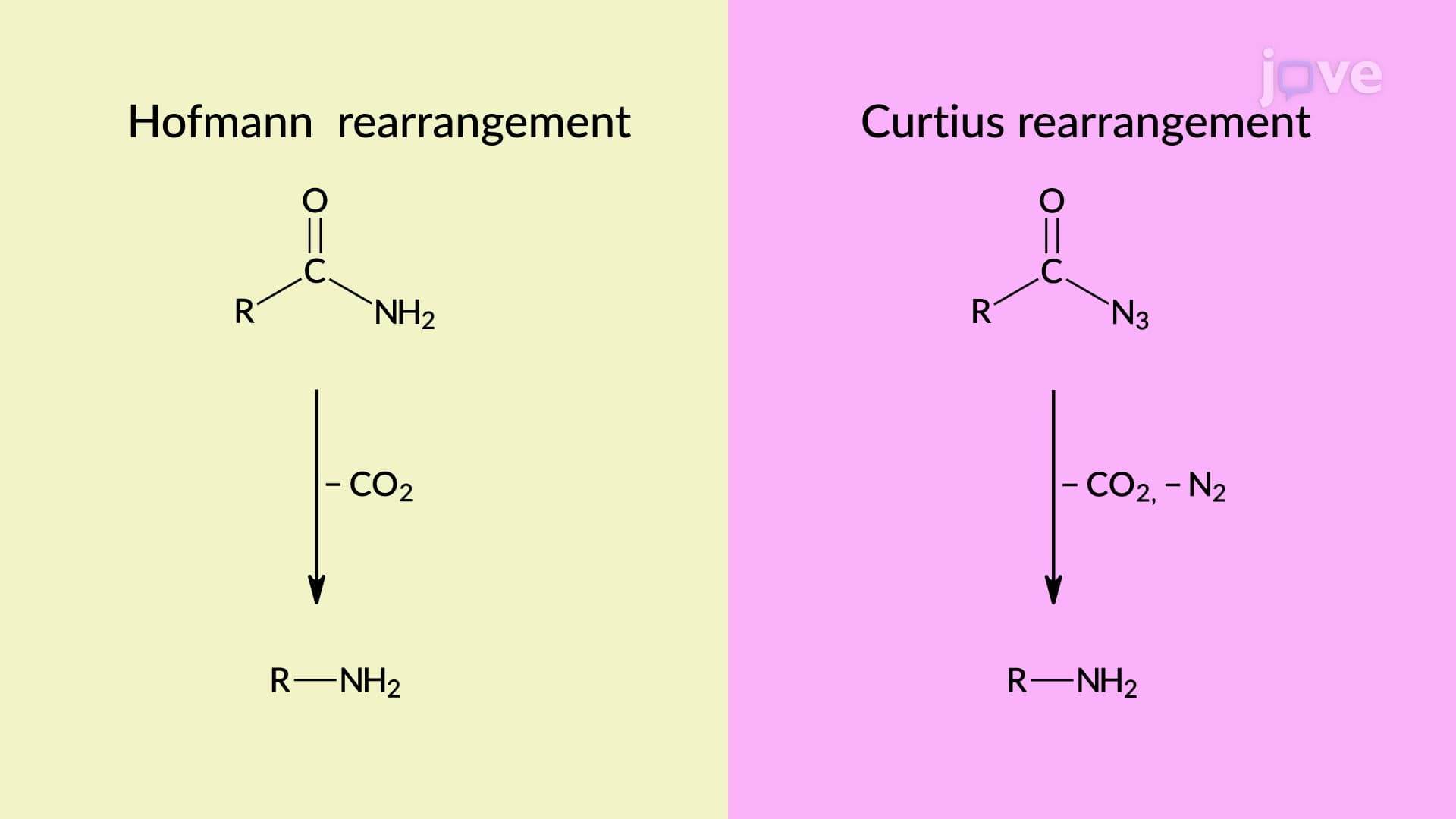
Ever wondered how pharmaceutical companies convert simple carboxylic acid derivatives into life-saving amine-based drugs? The hofmann curtius rearrangement mechanisms are fundamental organic chemistry reactions that transform carboxylic acid derivatives into primary amines through fascinating molecular rearrangements. These mechanisms are crucial in synthesizing medications like amphetamines and neurotransmitters in US pharmaceutical laboratories. Watch the full video on JoVE Coach to master this concept with expert-led visuals and step-by-step explanations.
The Hofmann and Curtius rearrangement mechanisms represent two of organic chemistry's most elegant pathways for synthesizing primary amines from carboxylic acid derivatives. These named reactions, discovered in the late 19th century, remain cornerstone transformations in modern synthetic chemistry and frequently appear on AP Chemistry exams and college organic chemistry midterms.
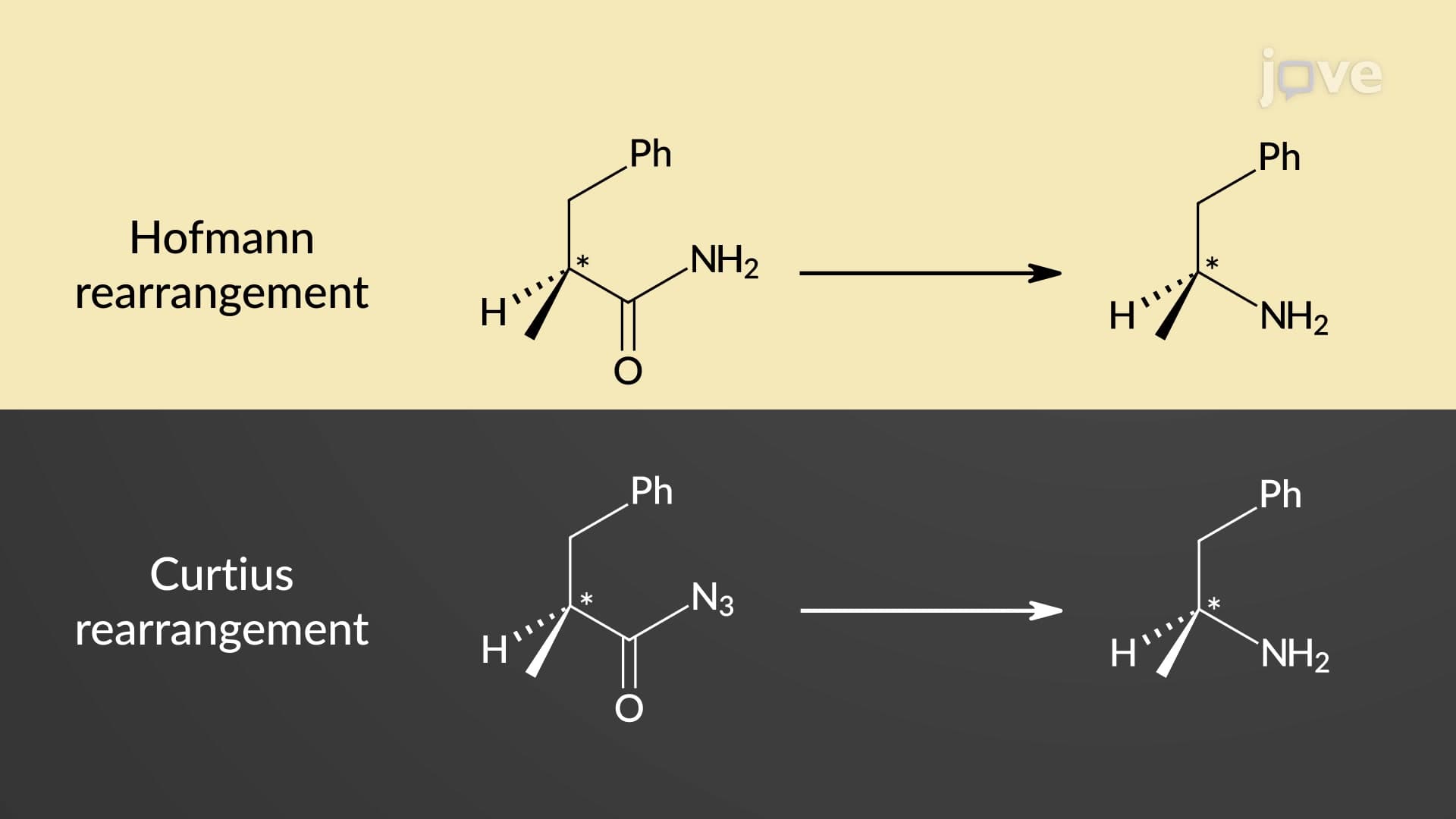
The Hofmann rearrangement begins with primary amides and involves a fascinating sequence of base-promoted transformations. The mechanism initiates when a strong base abstracts the N-H proton, creating a nucleophilic nitrogen that undergoes substitution with halogens (typically bromine or chlorine) to form N-haloamides. This intermediate represents a critical juncture where a second deprotonation creates a resonance-stabilized anion.
The defining moment occurs during the rearrangement step: the alkyl group migrates from the carbonyl carbon to the adjacent nitrogen atom while simultaneously expelling the halide ion. This concerted process generates an isocyanate intermediate-a highly electrophilic species that readily undergoes nucleophilic attack by water. The resulting carbamic acid spontaneously loses CO2, ultimately yielding the desired primary amine with one fewer carbon atom than the starting amide.
The Curtius rearrangement offers an alternative route starting from acyl azides, compounds derived from carboxylic acids. Under thermal conditions, the azide undergoes a concerted rearrangement where the alkyl group migrates to nitrogen while nitrogen gas (N2) is expelled as the leaving group. This thermally-driven process also generates the same isocyanate intermediate seen in the Hofmann rearrangement.
The subsequent hydration occurs under acidic conditions, where water adds across the C=N bond of the isocyanate. Following the same decarboxylation pattern, the carbamic acid intermediate loses CO2, and neutralization provides the free primary amine product.
These rearrangements find extensive application in pharmaceutical synthesis across US drug companies. For example, the production of certain antidepressants and stimulant medications relies on Hofmann-type rearrangements to install primary amine functionality. Students preparing for the MCAT will encounter these mechanisms in organic chemistry sections, while AP Chemistry students should understand the electron movement and intermediate stability concepts underlying these transformations.
Related Micro-courses