Loading subject page…


119,803 views

Video Summary: Preparation of 1 Amines Gabriel Synthesis Explained
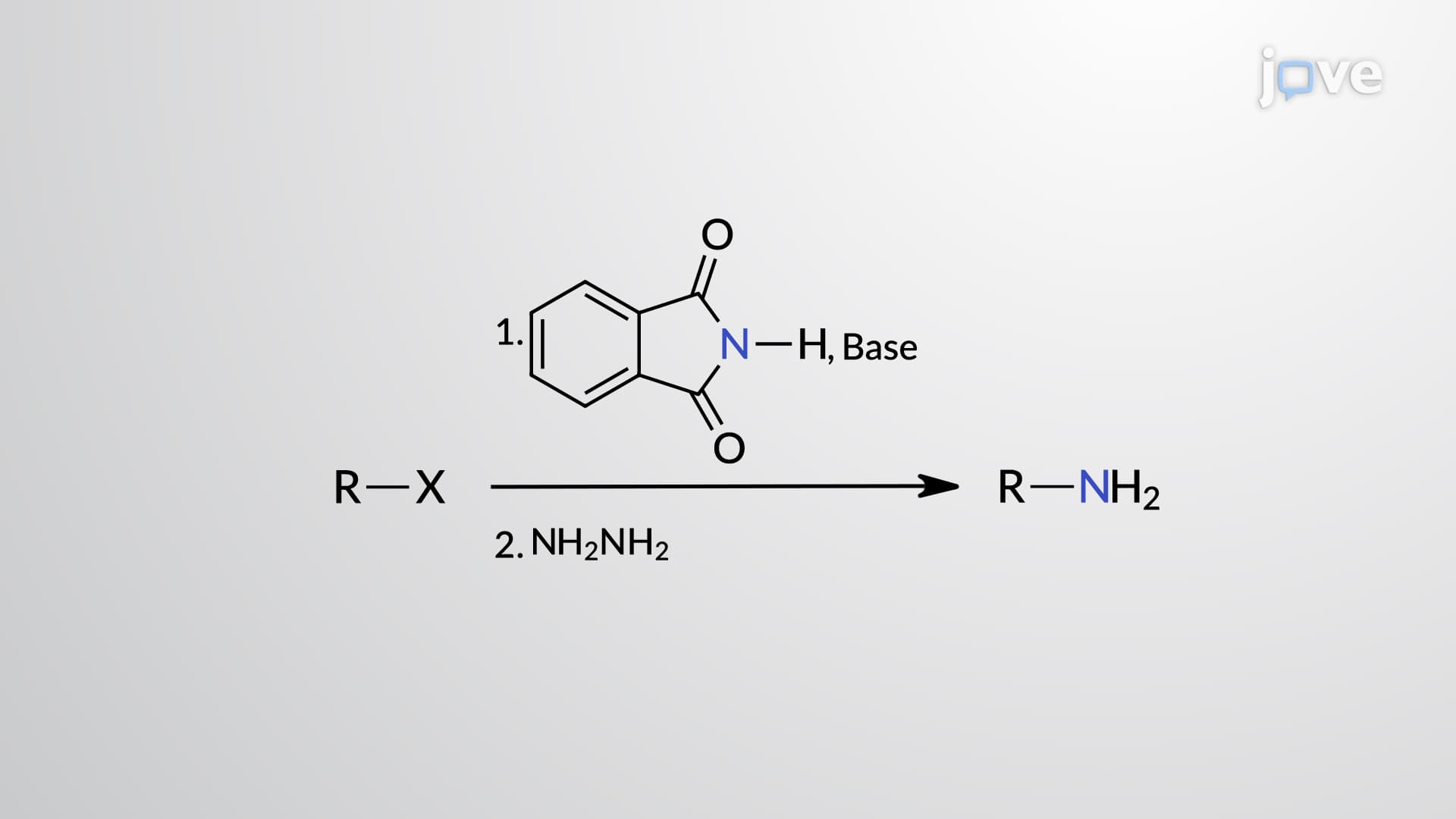
Why can't chemists simply add ammonia to alkyl halides to make pure primary amines? The preparation 1 amines gabriel synthesis solves this challenge by using phthalimide as a "protected" form of ammonia, preventing unwanted secondary and tertiary amine formation. This elegant method is crucial in pharmaceutical manufacturing-companies like Pfizer use Gabriel synthesis to produce primary amine building blocks for medications. The Preparation of 1 Amines Gabriel Synthesis Explained demonstrates how phthalimide's unique structure allows selective alkylation followed by hydrazine-mediated cleavage to yield pure primary amines. Watch the full video on JoVE Coach to master this concept with expert-led visuals and step-by-step explanations.
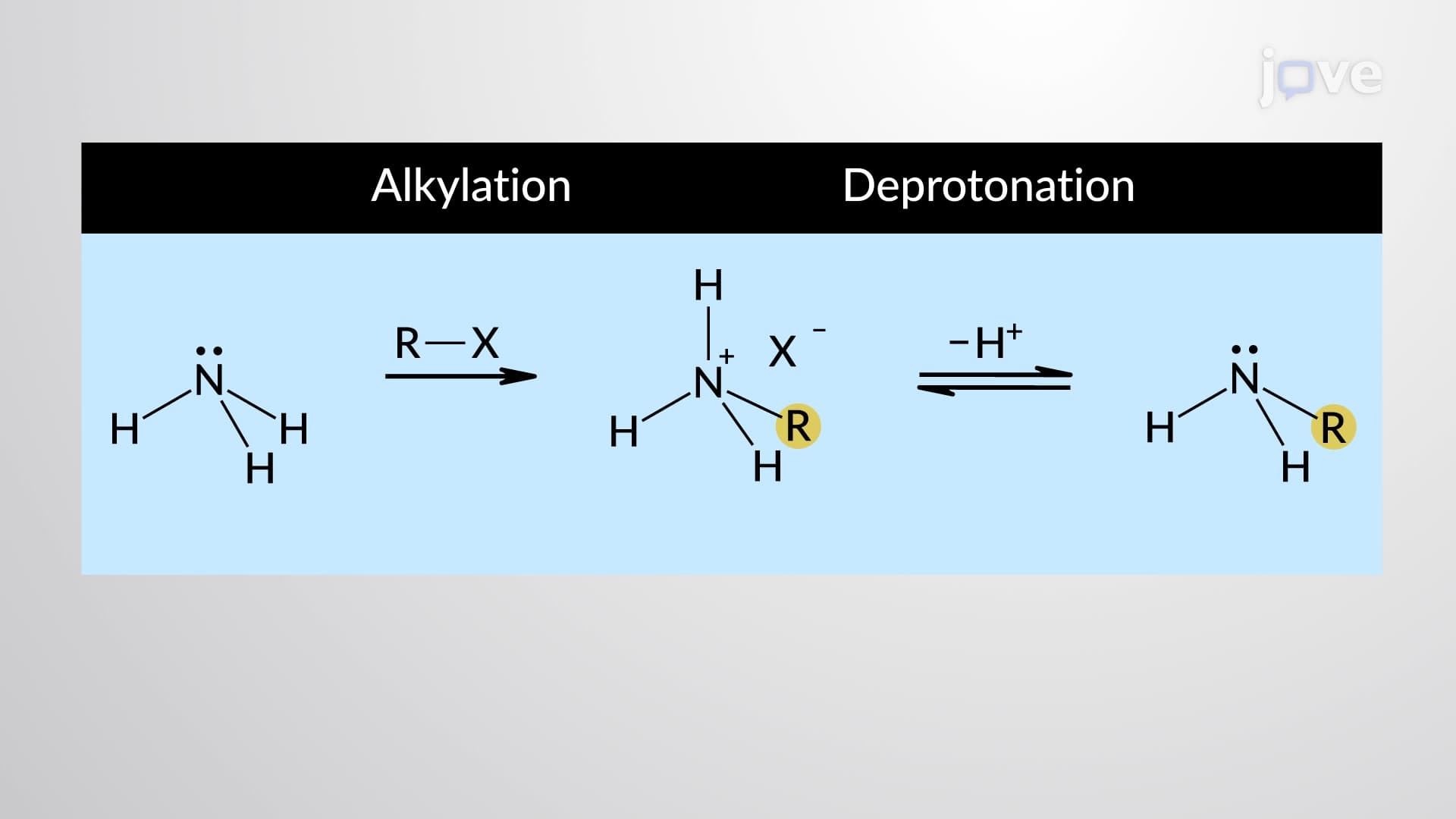
The Gabriel synthesis represents a cornerstone method in organic chemistry for preparing pure primary amines. Unlike direct alkylation of ammonia-which produces frustrating mixtures of primary, secondary, and tertiary amines-this approach uses phthalimide as a protected ammonia equivalent. Students encounter this reaction extensively in AP Chemistry, college organic chemistry courses, and MCAT preparation.
Phthalimide's genius lies in its structure: two carbonyl groups flanking a nitrogen atom with only one acidic proton. When treated with bases like potassium hydroxide or sodium ethoxide, deprotonation occurs to form a resonance-stabilized anion. This anion is nucleophilic enough to attack alkyl halides via SN2 mechanism but becomes significantly less nucleophilic after alkylation, preventing over-reaction that plagues direct ammonia alkylation.
The reaction proceeds through well-defined steps. First, base abstraction of phthalimide's NH proton creates a stabilized anion distributed across the aromatic system. This anion attacks primary or secondary alkyl halides through SN2 displacement, forming N-alkyl phthalimide. The key insight: the resulting nitrogen's lone pair is delocalized into the carbonyl systems, dramatically reducing its nucleophilicity and preventing further alkylation.
The final liberation step employs hydrazine (NH2-NH2) in a fascinating double nucleophilic acyl substitution. Hydrazine first attacks one carbonyl, cleaving the C-N bond through nucleophilic acyl substitution. An intramolecular proton transfer positions the molecule for a second nucleophilic attack, ultimately releasing the primary amine while forming stable phthalimide hydrazide as a byproduct.
This method finds extensive application in pharmaceutical synthesis. For example, Gabriel synthesis produces important primary amine intermediates used in manufacturing antidepressants and cardiovascular medications at major US pharmaceutical companies.
Related Micro-courses