Loading subject page…


119,803 views

Video Summary: Preparation of Amines Alkylation of Explained
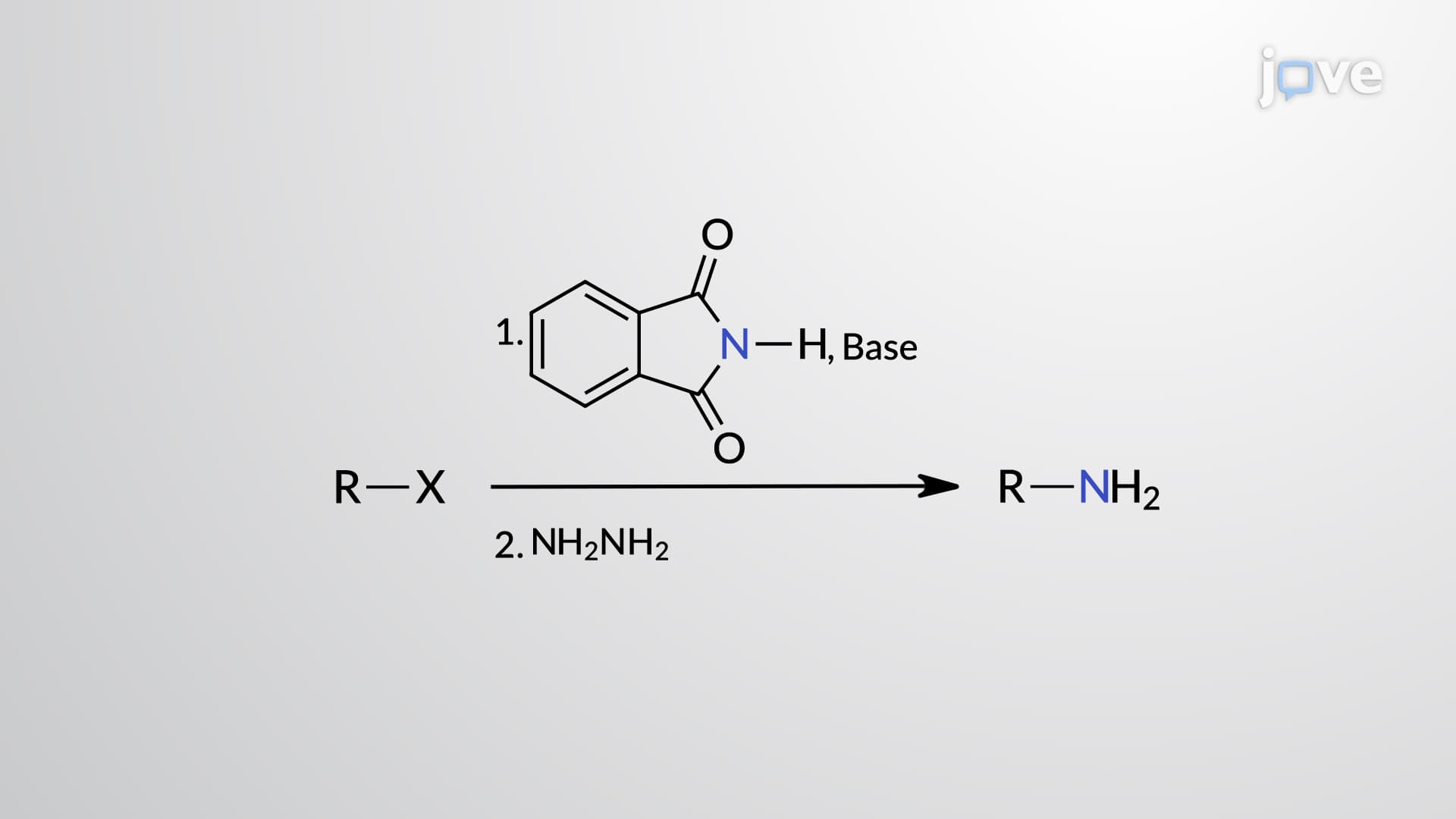
Ever wondered how pharmaceutical companies create the amine compounds found in antidepressants like Prozac? The preparation of amines alkylation involves a fascinating chain reaction where ammonia molecules systematically bond with alkyl groups through SN2 mechanisms. This process, used extensively in drug manufacturing facilities across states like New Jersey and California, creates everything from simple methylamines to complex quaternary ammonium salts through successive nucleophilic attacks. Watch the full video on JoVE Coach to master this concept with expert-led visuals and step-by-step explanations.
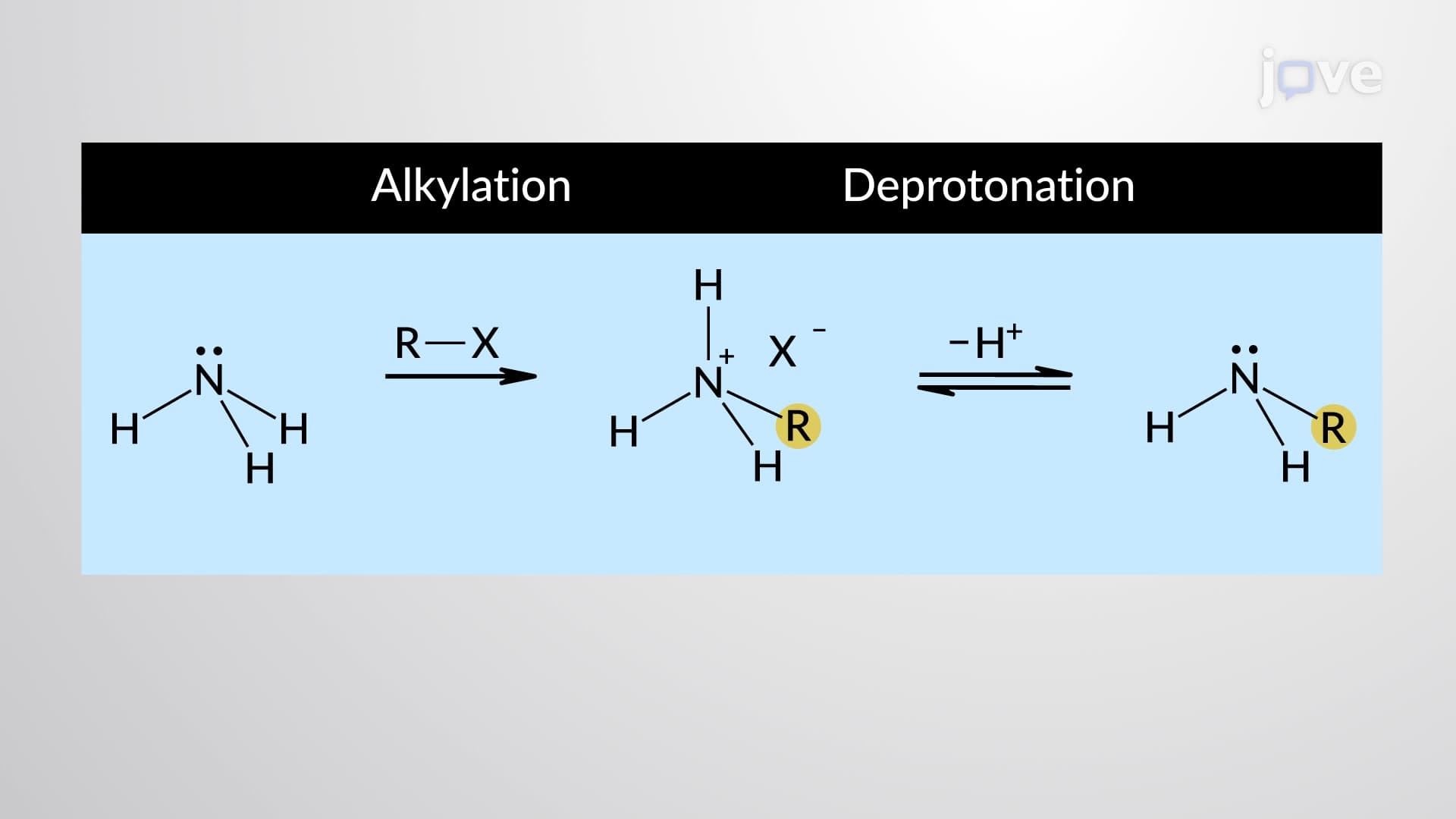
The preparation of amines alkylation of explained represents one of organic chemistry's most elegant cascade reactions. When ammonia encounters an alkyl halide, the lone pair electrons on nitrogen attack the electrophilic carbon in a classic SN2 mechanism. This initial nucleophilic substitution forms a monoalkylammonium salt, which upon deprotonation yields a primary amine. However, the story doesn't end there-this newly formed amine possesses enhanced nucleophilicity compared to ammonia, setting the stage for subsequent alkylation cycles.
Each successful alkylation increases the electron density around nitrogen, paradoxically making it an even stronger nucleophile. This phenomenon drives the sequential formation of secondary amines, tertiary amines, and finally quaternary ammonium salts. Consider methylamine production: when ammonia attacks methyl iodide, the resulting methylammonium salt converts to methylamine through base treatment. This methylamine then attacks another methyl iodide molecule more readily than the original ammonia, producing dimethylamine, which continues the cycle to trimethylamine and tetramethylammonium iodide.
Pharmaceutical companies like Pfizer and Johnson & Johnson utilize these principles in manufacturing facilities across the United States. The challenge lies in controlling selectivity-direct alkylation typically produces complex mixtures unsuitable for drug applications. Successful primary amine synthesis requires large ammonia excesses (often 10:1 ratios) to suppress overalkylation, while quaternary ammonium salt production benefits from exhaustive alkylation conditions.
Students encounter this mechanism in AP Chemistry courses when studying nucleophilic substitutions, and it frequently appears in MCAT organic chemistry sections. College organic chemistry courses at institutions like UC Berkeley and MIT emphasize mechanistic understanding over memorization. The concept connects to broader themes including nucleophilicity trends, leaving group abilities, and reaction kinetics-making it a cornerstone topic for understanding nitrogen chemistry in biological systems.
Related Micro-courses