Loading subject page…


119,803 views

Video Summary: Reduction of Oximes and Nitro Compounds to Amines
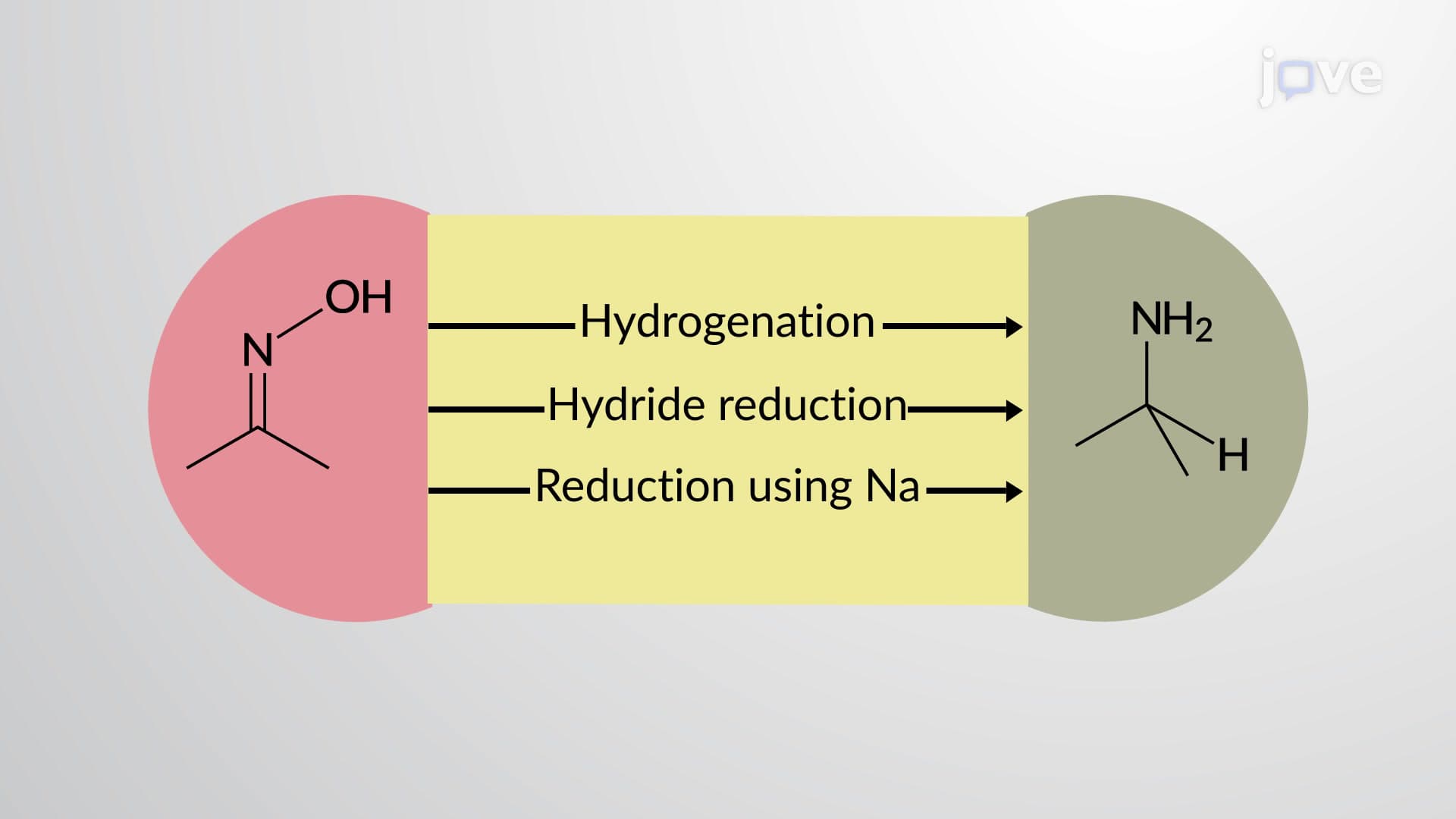
Ever wondered how pharmaceutical companies convert simple chemicals into life-saving medicines? The reduction of oximes and nitro compounds to amines is a fundamental transformation that creates building blocks for drugs like acetaminophen and antibiotics produced in facilities across New Jersey and California. This essential organic chemistry process involves converting oximes (formed from carbonyl compounds and hydroxylamines) and nitro compounds into primary amines through various reduction methods including hydrogenation, hydride reduction, and metal-based approaches. Watch the full video on JoVE Coach to master this concept with expert-led visuals and step-by-step explanations.
The reduction of oximes and nitro compounds to amines represents one of the most important synthetic transformations in organic chemistry. This process converts nitrogen-containing compounds with higher oxidation states into primary amines, which serve as crucial intermediates in pharmaceutical manufacturing and chemical synthesis. Major pharmaceutical companies like Pfizer and Merck regularly employ these reactions in their New Jersey and Massachusetts facilities to produce essential medications.
Oximes, formed when carbonyl compounds react with hydroxylamines, can be reduced through several effective methods. Catalytic hydrogenation using palladium or platinum catalysts provides a clean, efficient route to primary amines under mild conditions. This method works particularly well in industrial settings where hydrogen gas is readily available. Alternatively, hydride reduction using lithium aluminum hydride (LiAlH4) offers excellent yields in laboratory synthesis, making it a favorite choice for organic chemistry students preparing for AP Chemistry or college-level exams.
The sodium metal reduction pathway, while less common, provides another viable option particularly useful when other reducing agents fail. Students studying for the MCAT often encounter these various reduction pathways in organic chemistry practice problems, where understanding the subtle differences between methods becomes crucial for success.
Reducing nitro compounds presents unique challenges that highlight the importance of reagent selection. Catalytic hydrogenation, while effective, lacks selectivity and reduces all easily reducible functional groups simultaneously. This nonselective nature creates problems when synthesizing complex molecules containing multiple functional groups.
The solution lies in acidic reduction using tin(II) chloride (SnCl2) followed by basic workup. This method selectively targets the nitro group while leaving other functional groups intact. The acidic conditions facilitate nitro group reduction, but require subsequent base treatment to deprotonate the resulting ammonium salt and liberate the free amine. This two-step process exemplifies the strategic thinking required in synthetic chemistry.
Understanding the limitations of hydride reducing agents proves essential for exam success and practical synthesis. While LiAlH4 effectively reduces oximes to amines, it converts nitroaromatics to azobenzenes rather than the desired amines. This unexpected reactivity often appears in college organic chemistry exams and MCAT practice questions, testing students' ability to predict reaction outcomes.
Sodium borohydride (NaBH4) shows complete inertness toward nitro groups, making it useful when selective reduction of other functional groups is desired. These selectivity patterns help chemists design multi-step syntheses and frequently appear in advanced placement chemistry coursework.
Related Micro-courses