Loading subject page…


119,803 views

Video Summary: What are Nmr Spectroscopy of Amines
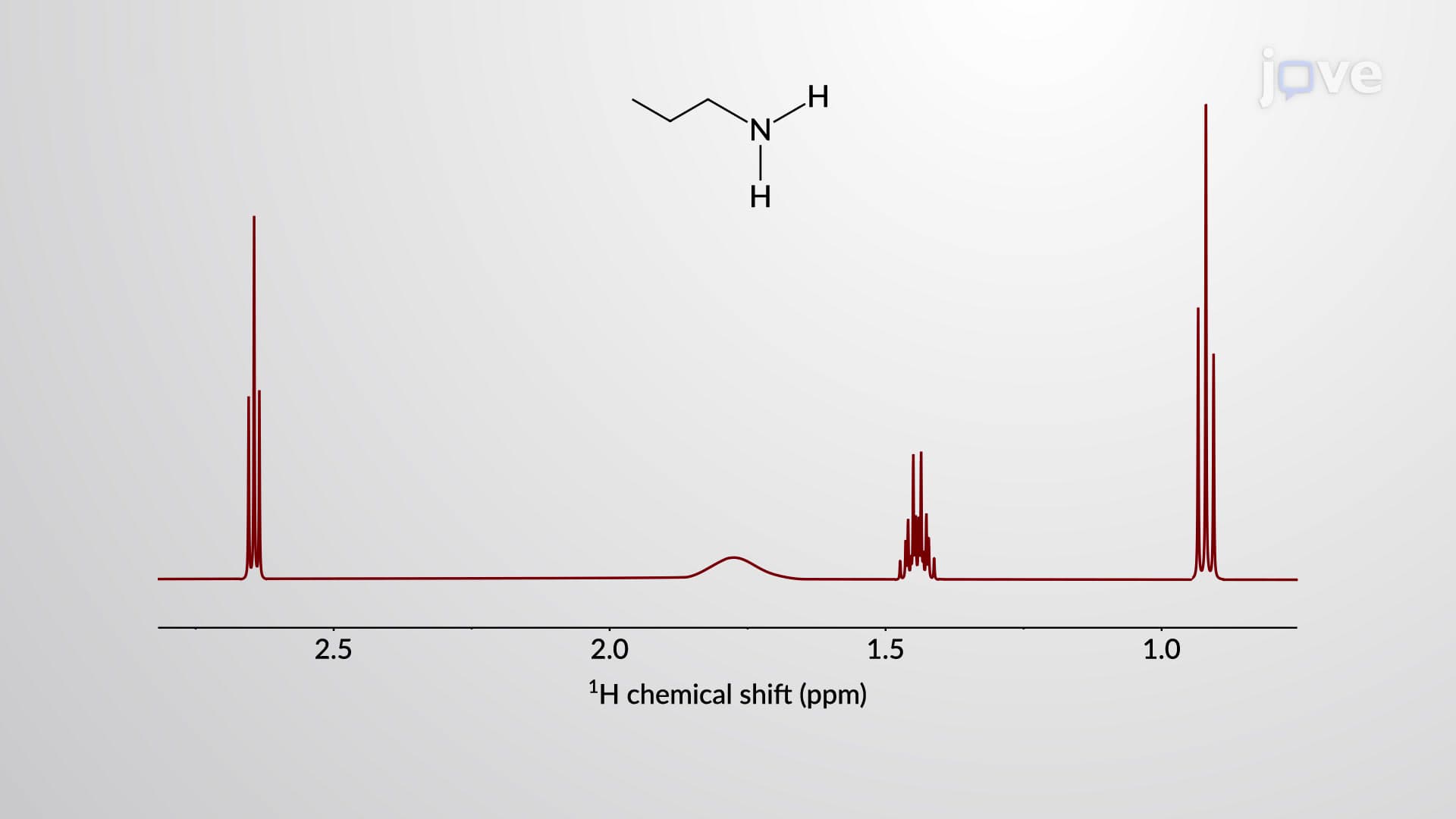
Did you know that forensic chemists at the FBI use NMR spectroscopy to identify unknown drugs containing amine groups? NMR spectroscopy of amines reveals unique patterns through broad N-H signals appearing between 0.5-4 ppm, which disappear when treated with D2O. This powerful analytical technique helps pharmaceutical companies at Johnson & Johnson verify the purity of medications containing amine functional groups. What are NMR spectroscopy of amines becomes crucial for understanding molecular structure identification in both academic and professional settings. Watch the full video on JoVE Coach to master this concept with expert-led visuals and step-by-step explanations.
NMR spectroscopy of amines provides essential structural information through distinctive spectral features that set these nitrogen-containing compounds apart from other organic molecules. The most characteristic feature involves the N-H proton signals, which appear as broad, unsplit peaks in the 0.5-4 ppm region of proton NMR spectra. This broadening occurs because N-H protons undergo rapid exchange with trace water or other protic substances, preventing the typical coupling patterns seen with other protons.
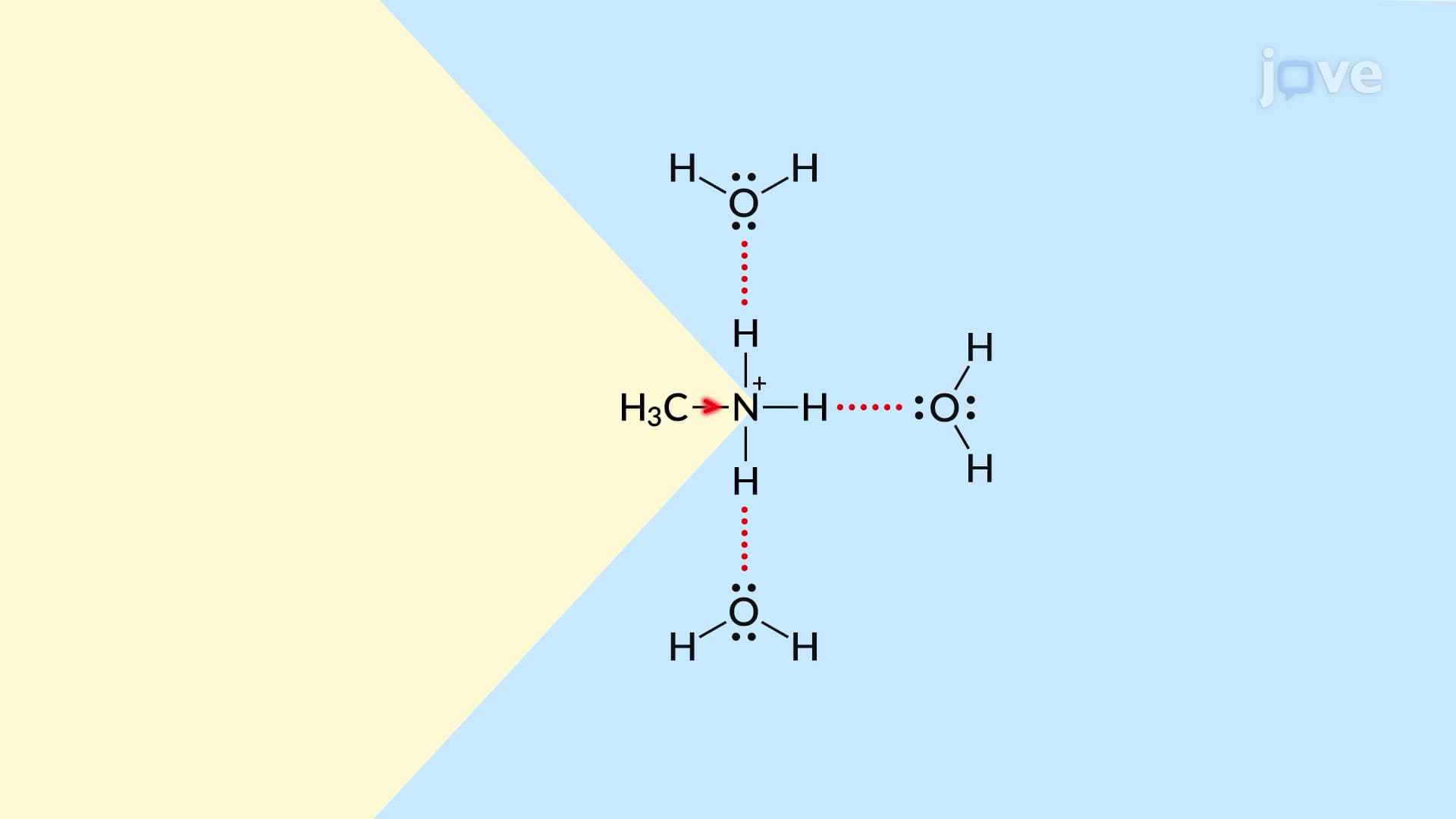
Several critical factors influence where amine signals appear in NMR spectra. Hydrogen bonding plays a major role-stronger hydrogen bonds shift N-H signals downfield (higher ppm values), while weaker interactions keep them upfield. Temperature changes can dramatically affect signal position; cooling samples often sharpens peaks by slowing exchange rates. Solvent choice proves equally important-polar protic solvents like methanol promote hydrogen bonding and broaden signals, while nonpolar solvents like CDCl3 typically produce sharper, more upfield signals. Concentration effects become apparent when comparing dilute versus concentrated solutions, with higher concentrations promoting intermolecular hydrogen bonding.
The D2O shake test represents a powerful diagnostic tool for identifying exchangeable protons in amine samples. When deuterium oxide (D2O) is added to an NMR sample containing amines, the N-H protons rapidly exchange with deuterons (N-D), causing the original N-H signal to disappear from the spectrum. This technique helps pharmaceutical chemists at companies like Pfizer and Merck verify the presence of amine functional groups in drug candidates. The test proves particularly valuable when analyzing complex mixtures where amine signals might overlap with other peaks.
In carbon-13 NMR spectroscopy, nitrogen's electron-withdrawing nature creates significant deshielding effects on nearby carbon atoms. Carbons directly attached to nitrogen (alpha carbons) appear furthest downfield, typically in the 30-60 ppm range for alkyl amines. Beta carbons show moderate deshielding, while gamma carbons and beyond display progressively less effect from the nitrogen atom. This distance-dependent deshielding pattern helps structural chemists determine molecular frameworks and assign carbon signals accurately. Students preparing for the MCAT or AP Chemistry exams should master these patterns, as they frequently appear in spectroscopy-based questions requiring structure determination from NMR data.
Related Micro-courses