Loading subject page…


119,803 views

Video Summary: What Is Structure of Amines
Ever wonder why certain pharmaceutical drugs can exist in mirror-image forms that affect your body differently? The structure of amines holds the key to this fascinating phenomenon. Nitrogen's unique sp³ hybridization creates a pyramidal shape that makes some amines chiral, like the active ingredients in medications such as amphetamines used to treat ADHD in millions of American students. Watch the full video on JoVE Coach to master this concept with expert-led visuals and step-by-step explanations.
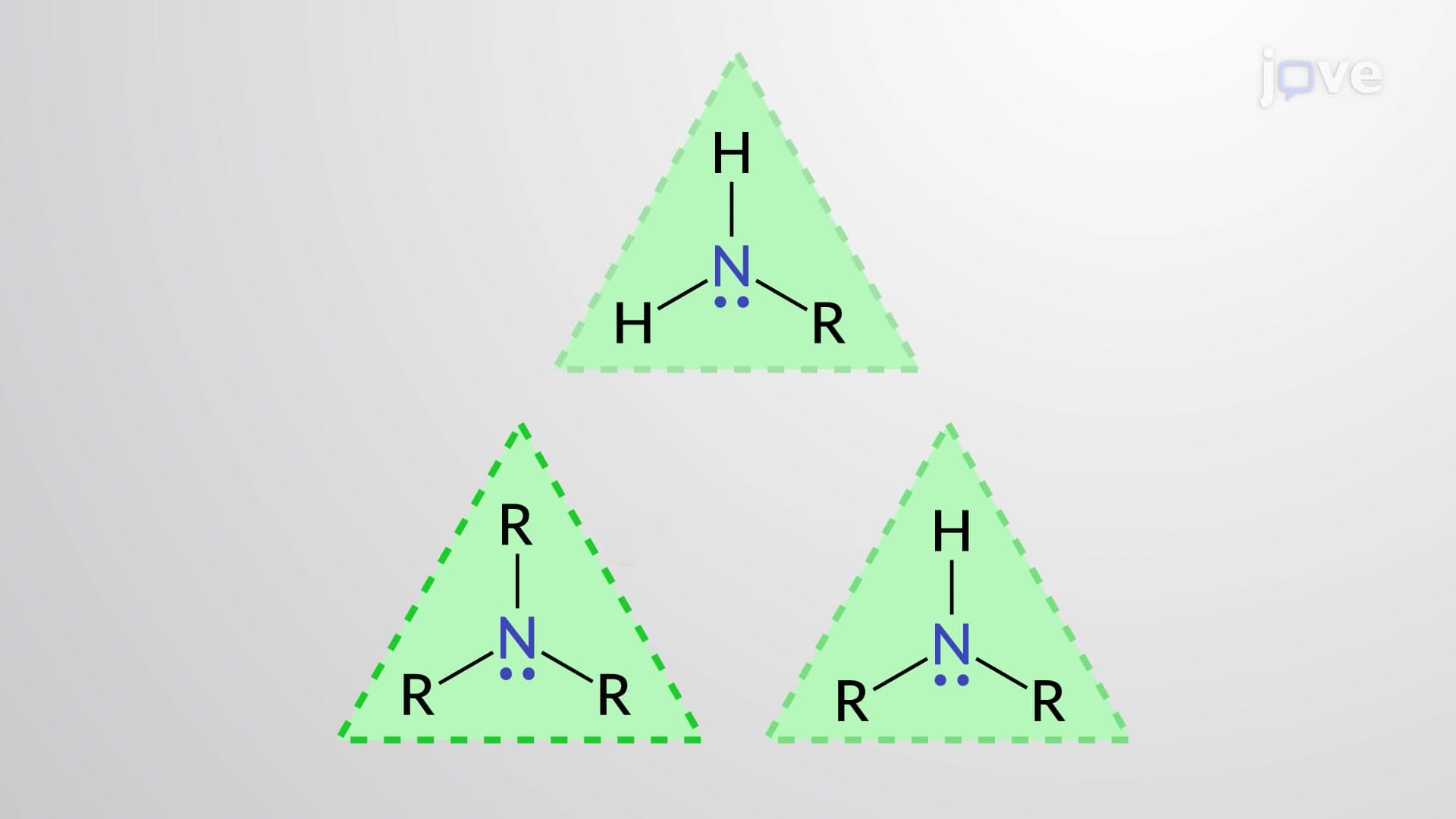
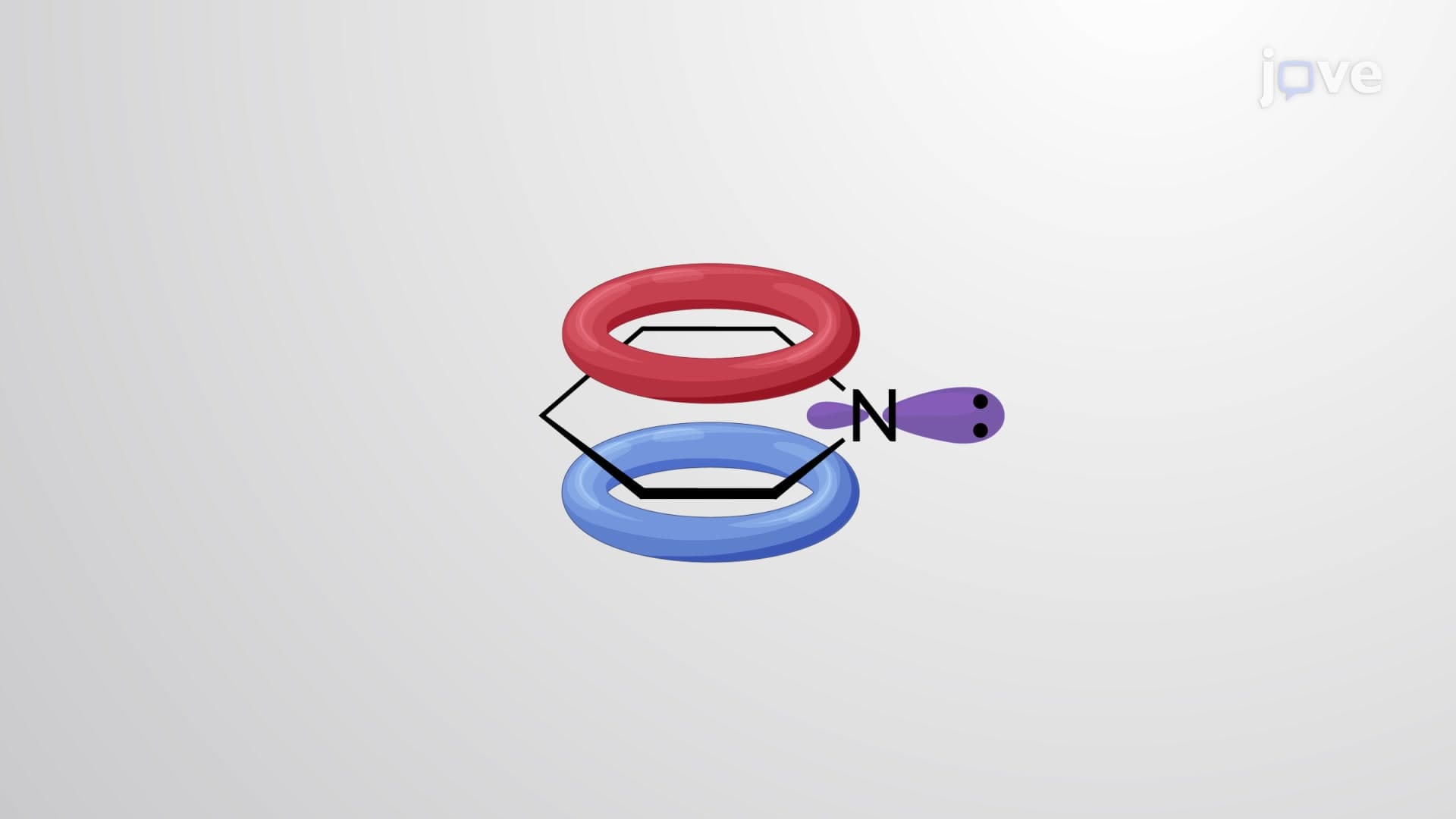
The structure of amines centers on nitrogen's unique bonding arrangement that creates distinctive three-dimensional shapes. Unlike carbon's typical tetrahedral geometry, nitrogen in amines adopts an sp³ hybridization that results in a trigonal pyramidal molecular geometry. This pyramidal shape occurs because nitrogen has one lone pair of electrons that occupies space but doesn't participate in bonding, pushing the three bonded groups closer together.
When we consider the complete electron arrangement around nitrogen, including the lone pair, the electronic geometry becomes approximately tetrahedral. This creates bond angles of about 108°-slightly compressed from the ideal tetrahedral angle of 109.5° due to lone pair repulsion. The carbon-nitrogen bond length measures 147 picometers, shorter than typical carbon-carbon single bonds due to nitrogen's higher electronegativity.
These structural parameters are crucial for students preparing for the AP Chemistry exam or college organic chemistry courses, where understanding molecular geometry directly impacts predicting chemical behavior and reactivity patterns.
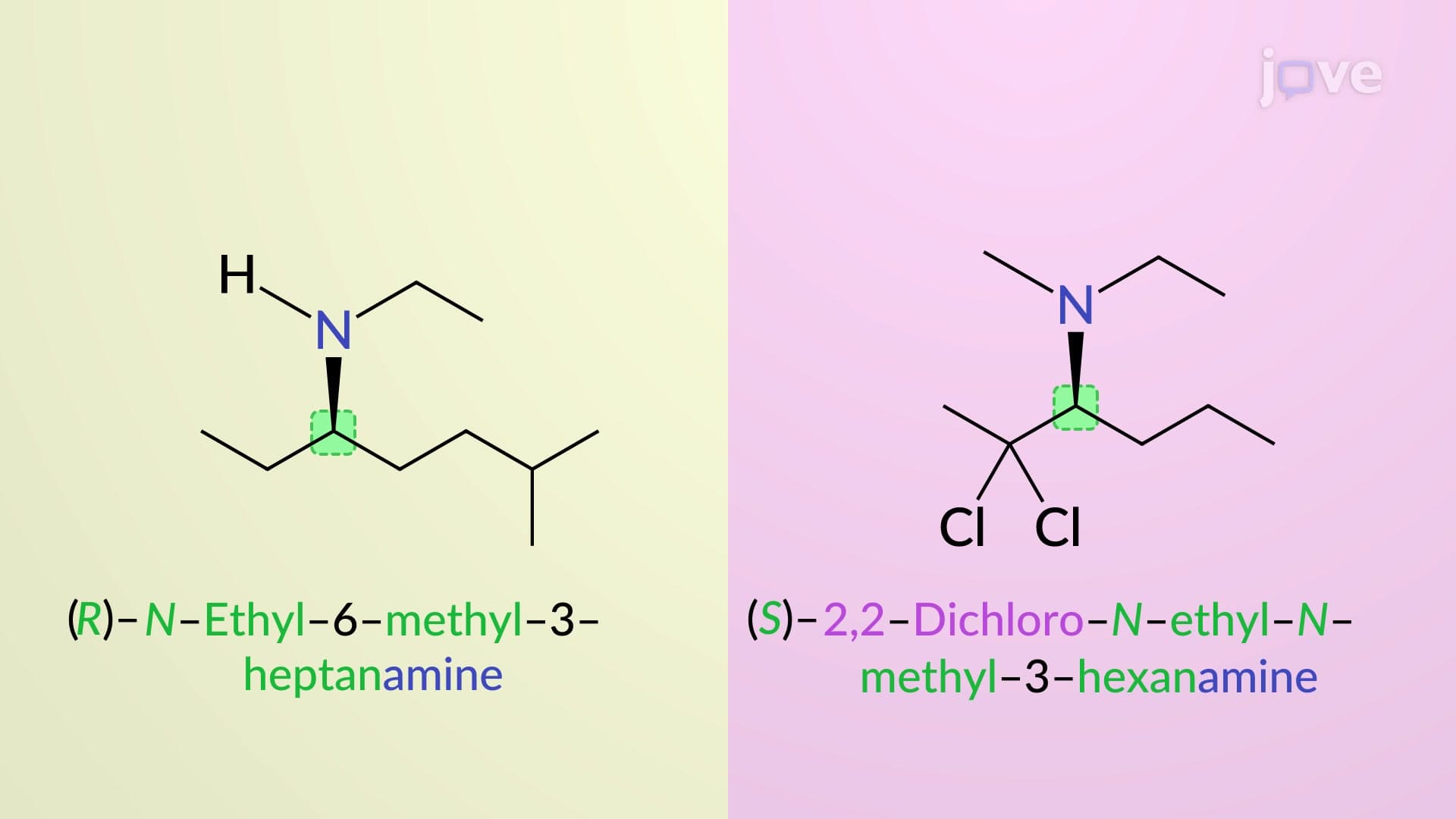
One of the most fascinating aspects of amine structure emerges when nitrogen bears three different substituents. In these cases, nitrogen becomes a stereogenic center, creating chiral molecules that exist as non-superimposable mirror images called enantiomers. This concept frequently appears on the MCAT and advanced placement chemistry examinations.
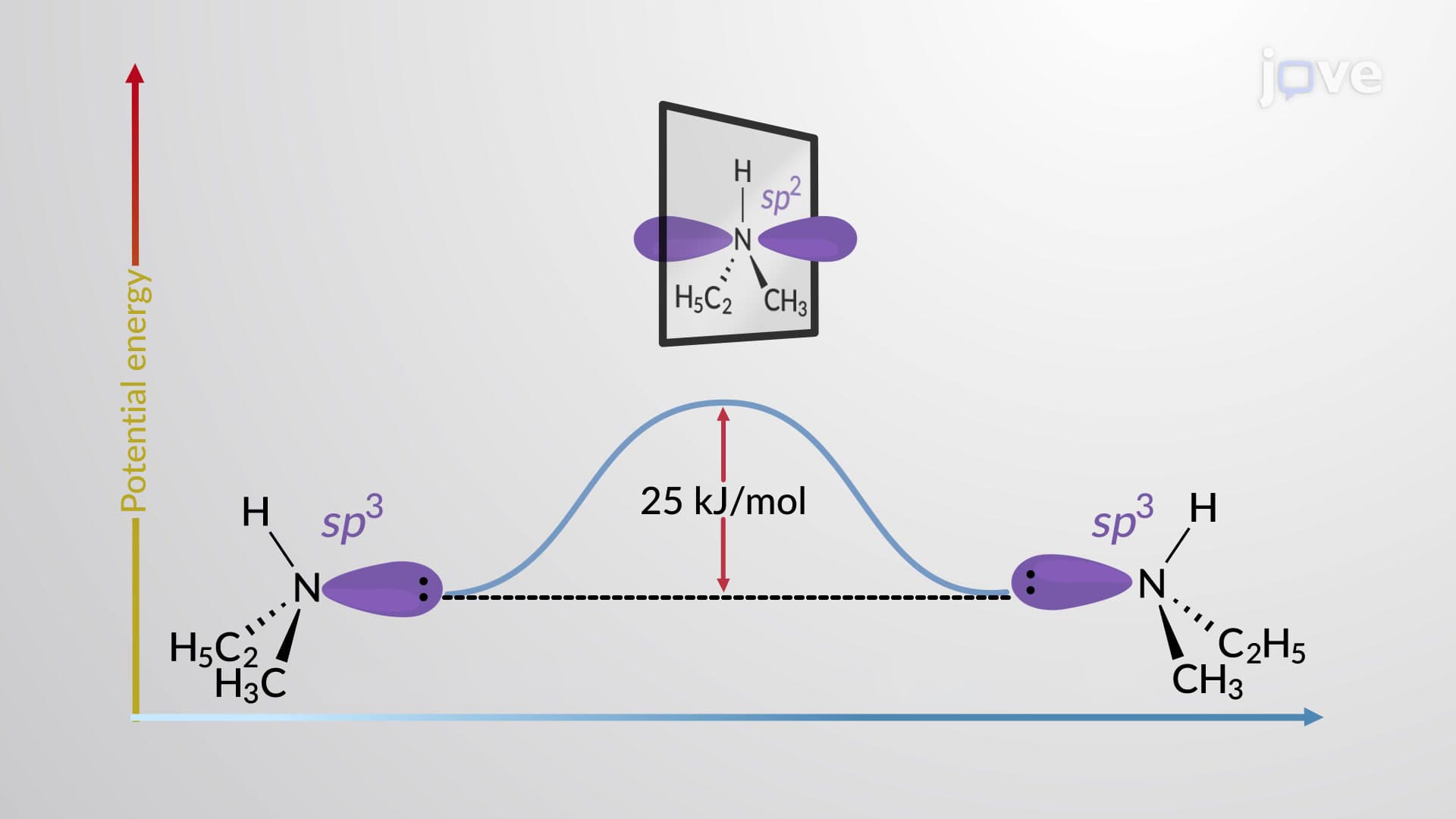
However, unlike carbon-based chiral centers, amine chirality presents unique challenges. The two enantiomers undergo rapid interconversion through a process called pyramidal inversion, where the molecule "flips" through a planar, sp² hybridized transition state before reforming in the inverted configuration.
Pyramidal inversion occurs readily at room temperature due to its low energy barrier, typically around 5-6 kcal/mol. During this process, the nitrogen atom temporarily adopts sp² hybridization, becoming planar before returning to its pyramidal shape with inverted stereochemistry. This rapid equilibration means that most chiral amines exist as racemic mixtures that cannot be easily separated into individual enantiomers.
This contrasts sharply with quaternary ammonium ions, which lack lone pairs and therefore cannot undergo inversion. These permanently chiral species can be successfully resolved into separate enantiomers, making them valuable in pharmaceutical applications where specific stereoisomers are required.
Understanding these structural nuances proves essential for students pursuing careers in medicinal chemistry, where companies like Pfizer and Merck regularly work with chiral amine-containing drugs that require precise stereochemical control.
Related Micro-courses