Loading subject page…
- Statistics
- Measure of Central Tendency
- Weighted Mean
Micro-course: Measure of Central Tendency
154,401 views
Learn key concepts and earn your certificate.







Weighted Mean

00:00
00:57
Video Summary: What Is Weighted Mean
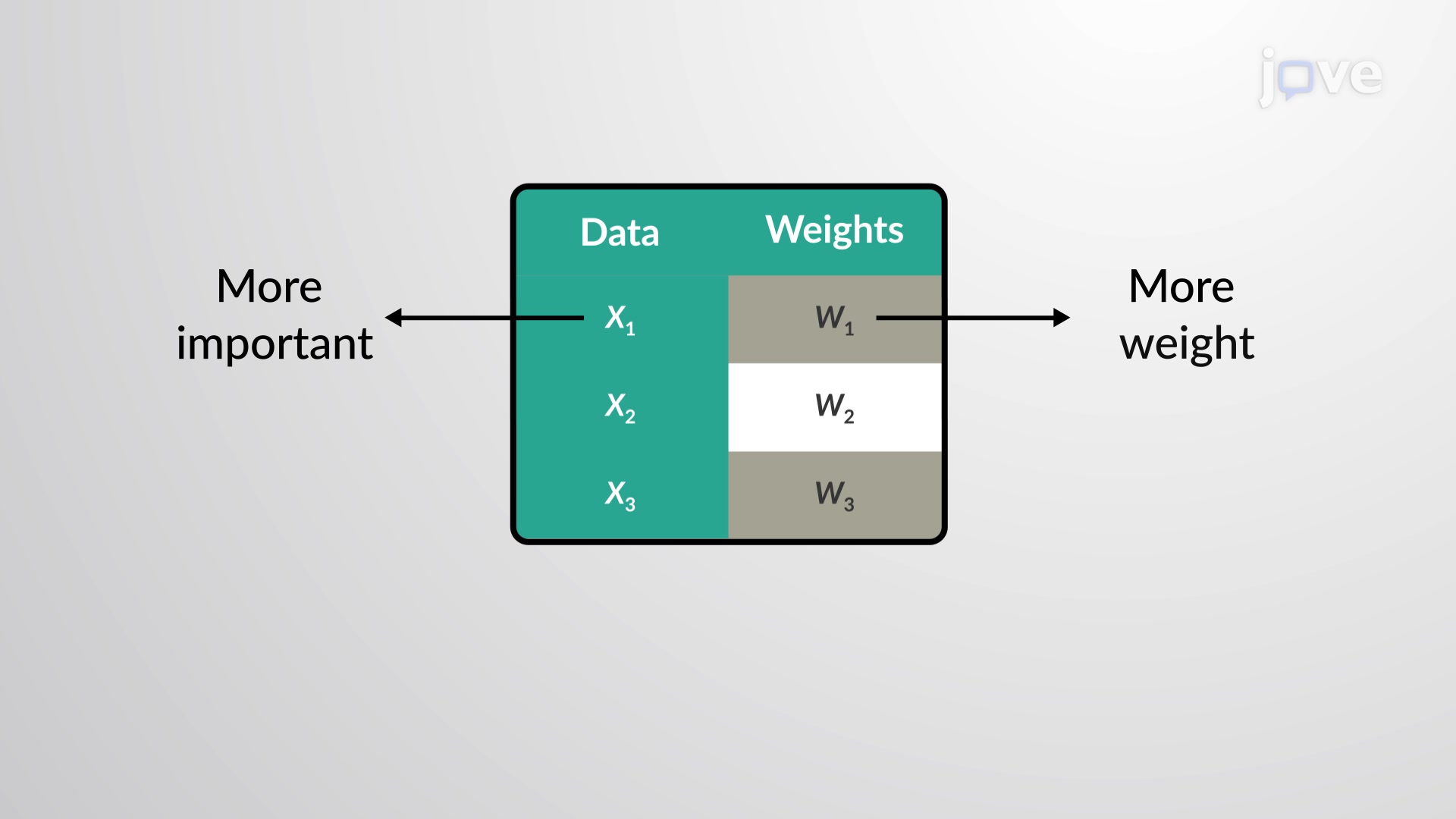
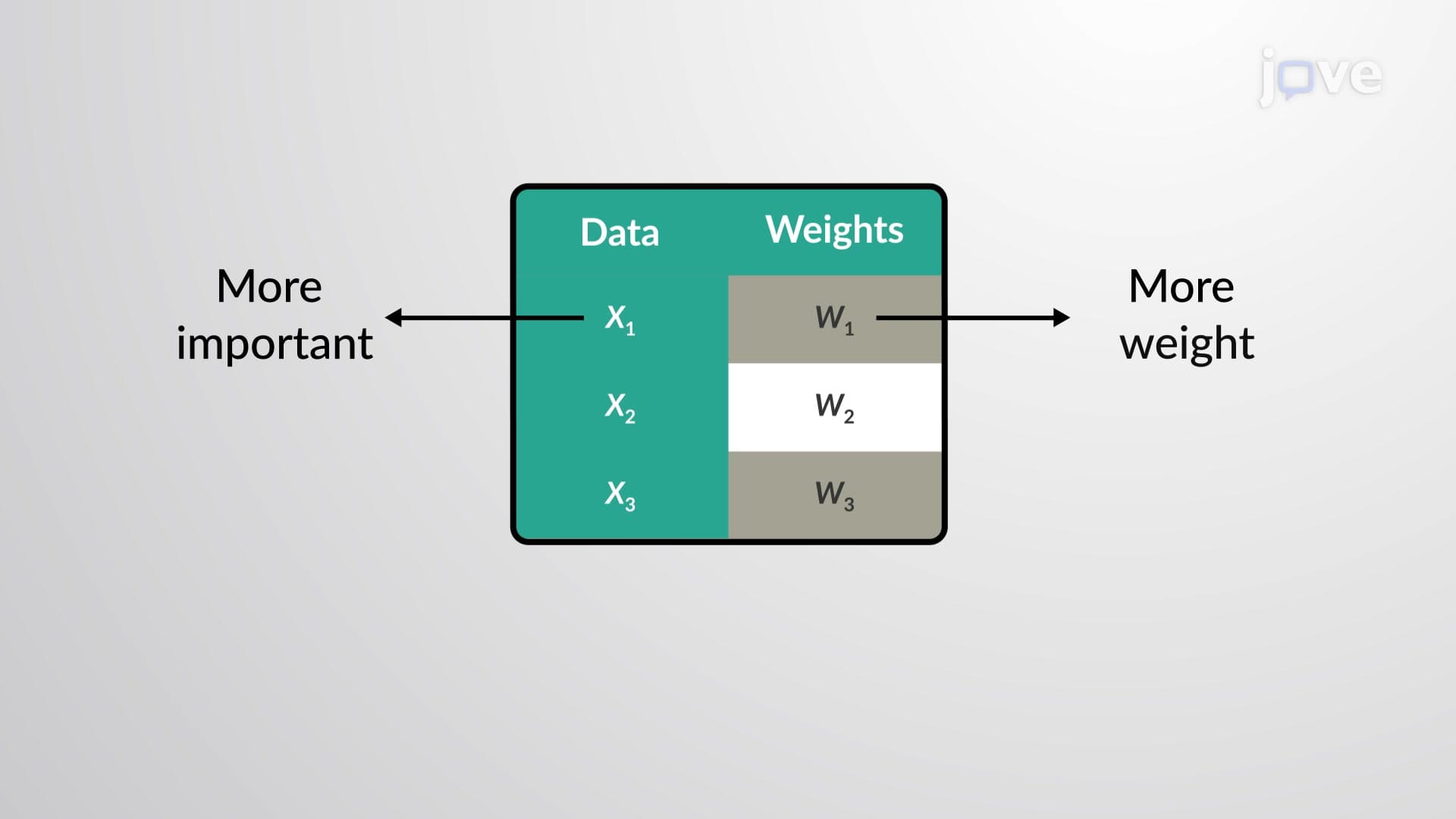
Did you know that your GPA isn't just a simple average of your grades? The weighted mean accounts for the fact that some data points matter more than others by assigning different importance levels to each value. Unlike regular averages, this method multiplies each value by its specific weight before calculating the final result. For instance, when calculating a student's final grade, a comprehensive exam might count for 40% while homework assignments only count for 10%. Watch the full video on JoVE Coach to master this concept with expert-led visuals and step-by-step explanations.
- Understand what is weighted mean and how it differs from arithmetic mean in statistical calculations
- Identify situations where weighted mean provides more accurate representations than simple averages
- Apply the weighted mean formula by multiplying values by their corresponding weights and dividing by the sum of weights
- Analyze how different weight assignments affect the final calculated mean in academic and professional contexts
- Compare weighted mean calculations to regular averaging methods to determine appropriate usage scenarios
- Evaluate the impact of higher-weighted data points on the overall statistical outcome
- Recognize real-world applications of weighted mean in GPA calculations, investment portfolios, and quality control systems
- Explore mathematical relationships between weights and their influence on final statistical measures
Understanding What is Weighted Mean in Statistical Context
The weighted mean represents a fundamental statistical concept that extends beyond simple arithmetic averaging by incorporating the relative importance of different data points. This method proves essential when dealing with datasets where certain values carry more significance than others, making it a cornerstone concept in statistics courses from high school through college level.
Mathematical Foundation and Formula Application
The weighted mean formula follows a straightforward pattern: multiply each data value by its corresponding weight, sum these products, then divide by the total of all weights. Mathematically expressed as: Weighted Mean = (w1×x1 + w2×x2 + ... + wn×xn) / (w1 + w2 + ... + wn), where 'w' represents weights and 'x' represents data values. This calculation method ensures that higher-weighted items contribute proportionally more to the final result.
Students preparing for AP Statistics or college-level statistics courses frequently encounter this concept in probability distributions and descriptive statistics units. The SAT Math section occasionally features weighted mean problems, particularly in data analysis contexts.
Real-World Applications in American Educational Systems
American high schools commonly use weighted mean calculations for GPA determination, where Advanced Placement (AP) courses receive higher weight factors than regular classes. For example, if regular courses count as 4.0 for an A grade, AP courses might count as 5.0, reflecting their increased difficulty and college-preparation value.
Financial applications include investment portfolio analysis, where different securities receive weights based on their dollar amounts or strategic importance. Quality control in manufacturing uses weighted means to evaluate product specifications, with critical measurements receiving higher weights than secondary characteristics.
Comparison with Arithmetic Mean and Practical Implications
When all weights equal the same value, the weighted mean becomes identical to the arithmetic mean, demonstrating the relationship between these statistical measures. However, when weights differ significantly, the weighted mean can vary substantially from the simple average, providing more accurate representations of the dataset's true central tendency given the relative importance of different values.
Frequently Asked Questions
Weighted mean calculates the average by giving different importance levels to data points, while regular average treats all values equally. This method multiplies each value by its assigned weight before computing the final average, making it more accurate when some data points are more significant than others.
AP Statistics exams typically include weighted mean in descriptive statistics free-response questions and multiple-choice problems. Students must demonstrate understanding of when to use weighted versus arithmetic means and correctly apply the formula in context. Practice problems often involve GPA calculations, survey data analysis, or business scenarios.
College statistics midterms commonly test weighted mean applications in probability distributions, sampling methods, and data analysis projects. Students encounter problems involving weighted averages in quality control, market research, and experimental design contexts, requiring both computational skills and conceptual understanding.
Most US colleges calculate GPA using weighted means where credit hours serve as weights for each course grade. A 4-credit course impacts GPA more than a 1-credit course, ensuring that substantial courses appropriately influence academic standing. This system provides fairer academic evaluation than simple grade averaging.
No advanced mathematics is required for basic weighted mean understanding. Students need only multiplication, addition, and division skills along with fraction concepts. The challenging aspect involves identifying appropriate weights and interpreting results rather than computational complexity.
Focus on identifying what serves as weights versus data values in word problems, practice the step-by-step calculation process, and understand when weighted mean provides better analysis than arithmetic mean. Create formula cards and work through diverse problem types from textbooks and past exams.
After understanding weighted mean, explore weighted variance and standard deviation, which use similar weighting principles for measuring data spread. Then progress to probability distributions, particularly discrete probability distributions where weighted means appear as expected values.
SAT Math sections include weighted mean in data analysis and problem-solving contexts, often disguised within real-world scenarios like grade calculations or survey analysis. These problems test conceptual understanding rather than memorized formulas, requiring students to identify weighting situations and apply appropriate calculations.
Related Micro-courses
11 Concepts

9 Concepts

14 Concepts