Loading video…

 13 Concepts
 154.4K views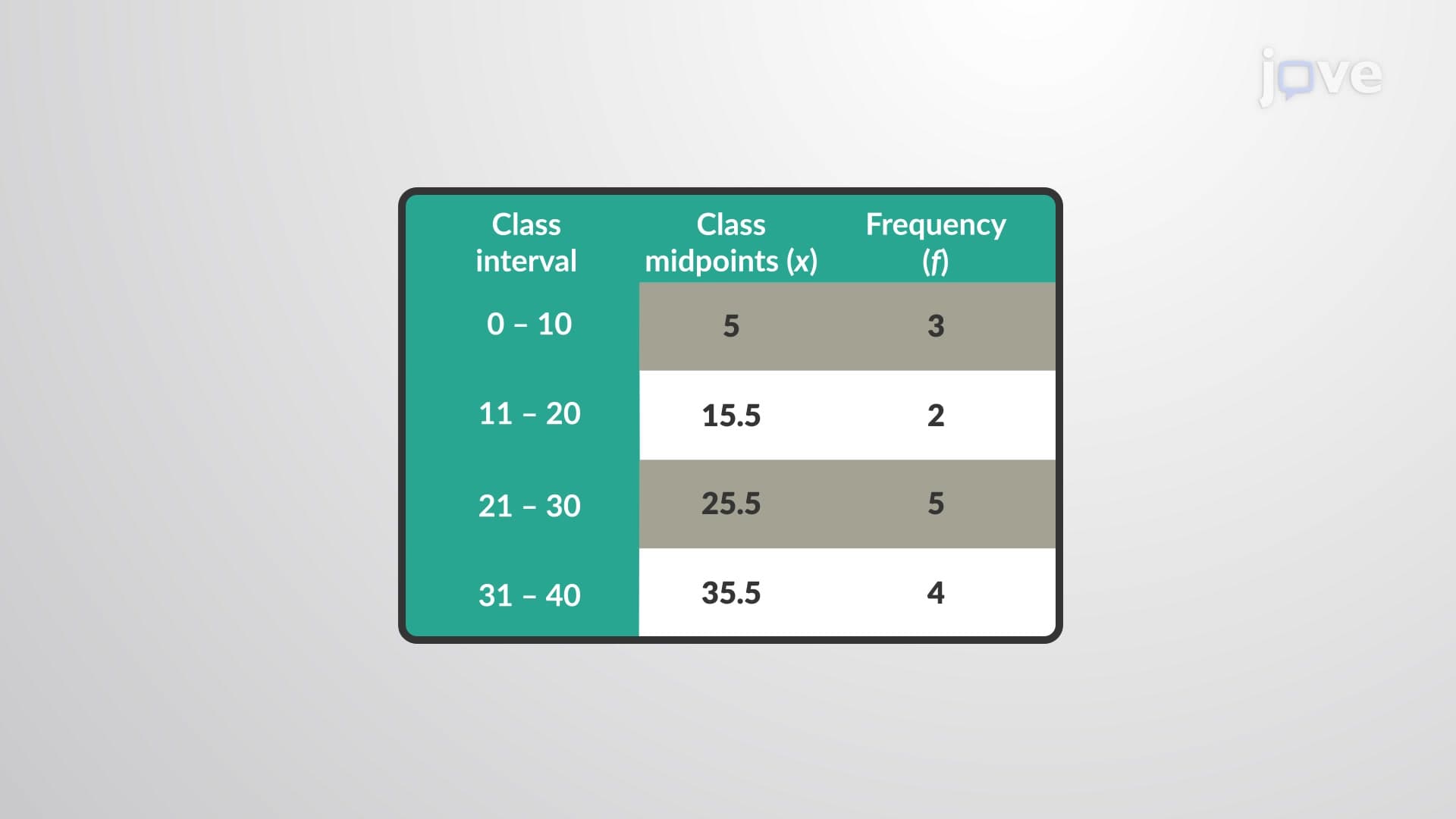

Video Summary: Mean From a Frequency Distribution Explained
Ever wondered how Netflix calculates the average viewing time when millions of users watch different shows for varying durations? The mean from a frequency distribution solves this exact problem by finding averages when data values repeat multiple times. Unlike simple arithmetic means, this method accounts for how often each value occurs-whether it's test scores appearing multiple times in a grade book or customer ages grouped in marketing surveys. This statistical technique multiplies each data value by its frequency, then divides by the total frequency count. Watch the full video on JoVE Coach to master this concept with expert-led visuals and step-by-step explanations.
When dealing with large datasets where values repeat frequently, calculating a simple arithmetic mean becomes inefficient and potentially inaccurate. The mean from a frequency distribution addresses this challenge by incorporating how often each data value appears. This method proves essential in statistics courses, AP Statistics exams, and college-level data analysis where students encounter real-world datasets with repeated observations.
For discrete data values with known frequencies, multiply each data value (x) by its corresponding frequency (f), sum these products, then divide by the total frequency. The formula becomes: Mean = (Σfx) / (Σf). Consider a high school where 15 students scored 85 on a math test, 20 students scored 90, and 10 students scored 95. Rather than listing all 45 individual scores, we calculate: [(15×85) + (20×90) + (10×95)] ÷ (15+20+10) = 4075 ÷ 45 = 90.6.
This method appears frequently on SAT Math sections and AP Statistics free-response questions, where students must demonstrate understanding of weighted averages in practical contexts.
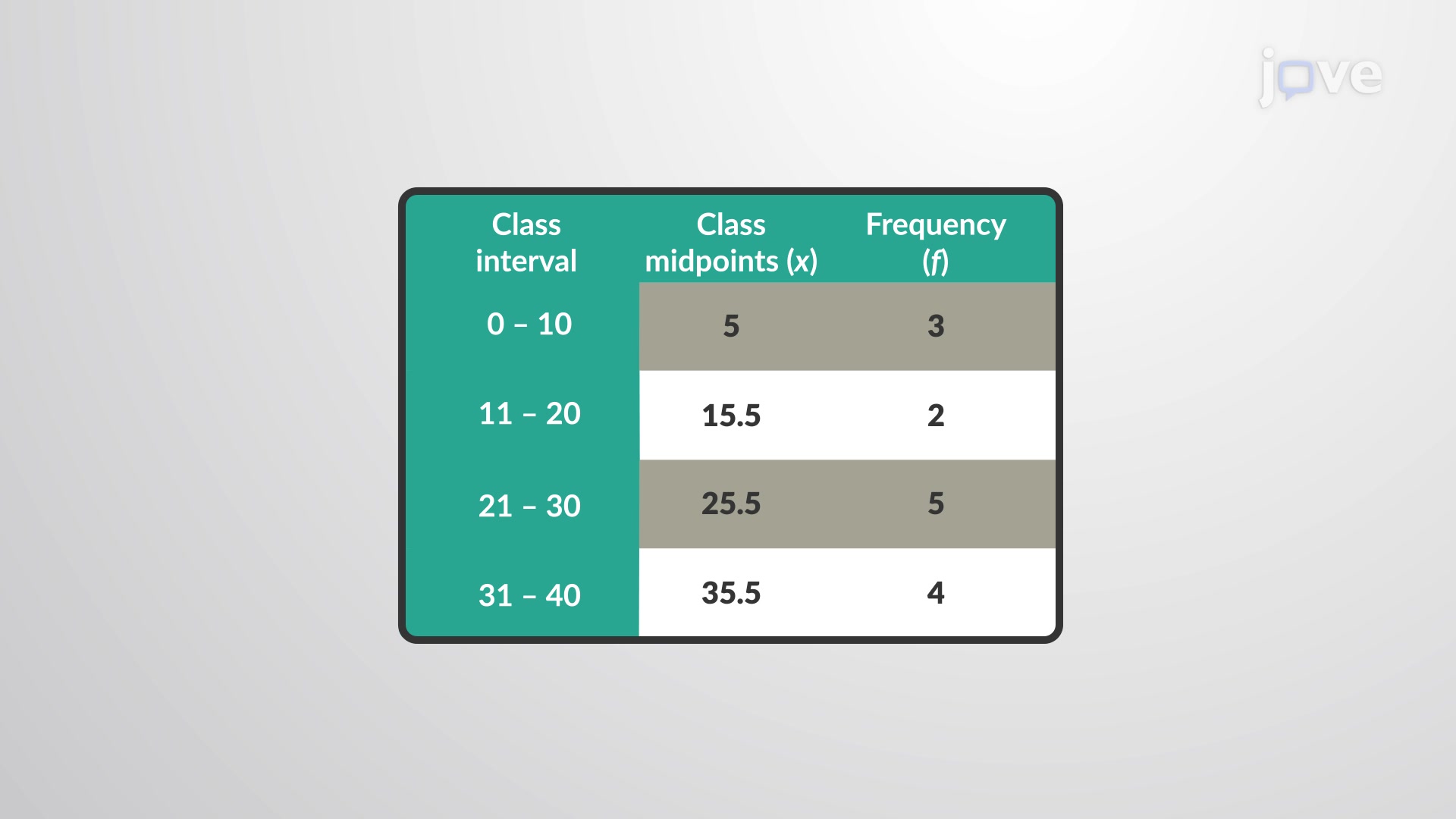
When data appears in class intervals (like age ranges 20-30, 30-40, etc.), we first calculate the midpoint of each class by adding the lower and upper boundaries and dividing by two. For the class 20-30, the midpoint equals (20+30) ÷ 2 = 25. We then treat these midpoints as our x-values and proceed with the standard frequency formula.
This concept frequently appears in college statistics courses and standardized tests. The Bureau of Labor Statistics uses frequency distributions to calculate average wages across different income brackets. Similarly, the CDC employs this method when analyzing age-grouped health data. Students preparing for the MCAT encounter these calculations in research methodology questions, while business majors apply them in market research and consumer behavior analysis.
Understanding frequency distributions provides the foundation for more advanced statistical concepts including variance, standard deviation, and probability distributions-all crucial for success in AP Statistics, college statistics courses, and graduate school entrance exams.
Related Micro-courses