Loading video…


 13 Concepts
 154.4K views

Video Summary: What Is Arithmetic Mean
Did you know that the average SAT score of 1050 represents the arithmetic mean of over 2 million test-takers nationwide? The arithmetic mean serves as the foundation for understanding data analysis in statistics and everyday decision-making. This fundamental concept helps students analyze everything from GPA calculations to sports statistics by adding all values and dividing by the total count. Watch the full video on JoVE Coach to master this concept with expert-led visuals and step-by-step explanations.
The arithmetic mean represents the most commonly used measure of central tendency in statistics, serving as a cornerstone concept for high school and college mathematics courses. Unlike simple averaging, the arithmetic mean provides a mathematically precise method for determining the typical value within a data set, making it essential for AP Statistics, college algebra, and data science coursework.
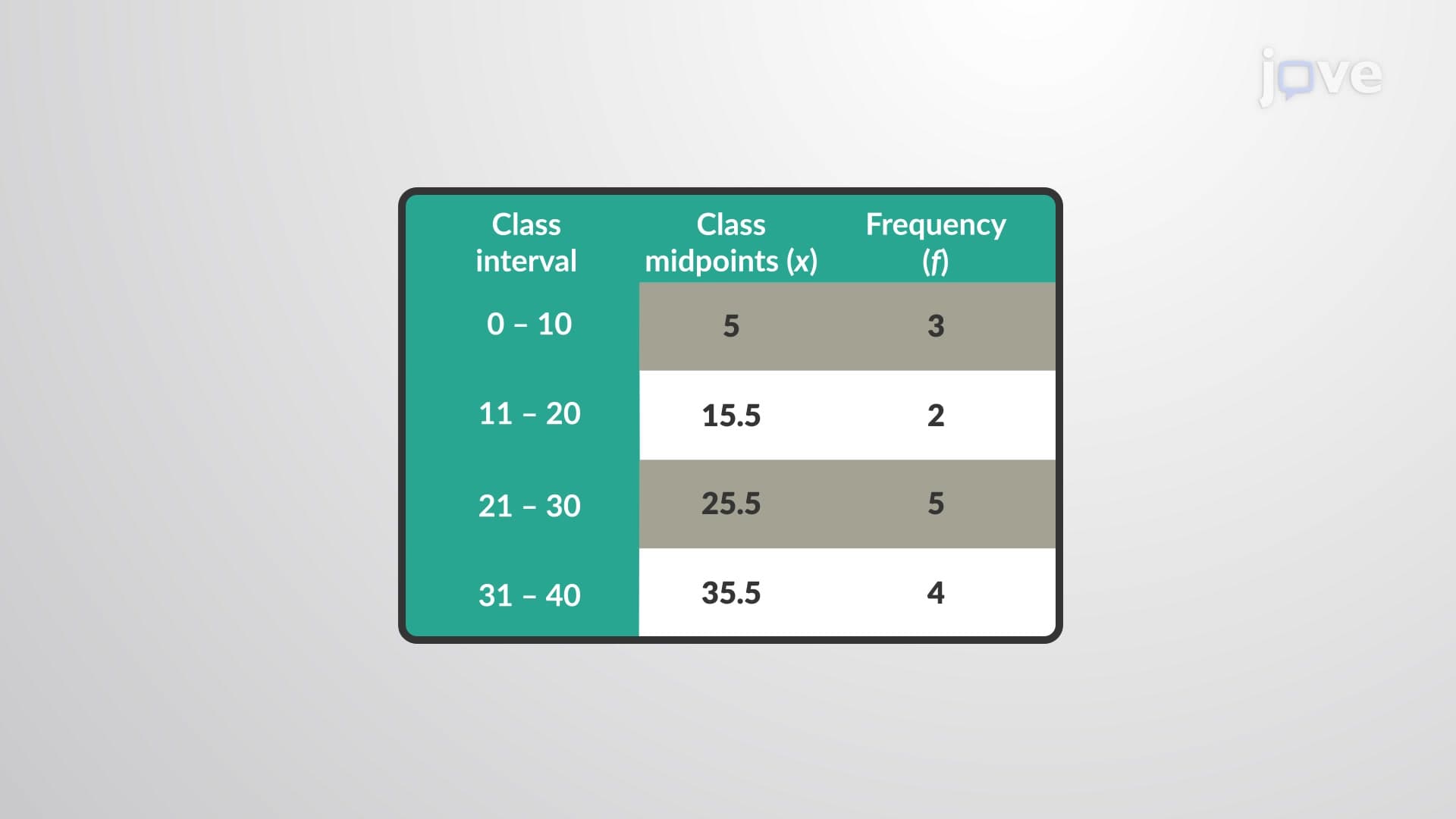
The arithmetic mean formula follows a straightforward two-step process: sum all values in the data set, then divide by the total number of values (n). Mathematically, this appears as: Mean = (Sum of all values) / n, where the Greek letter sigma (Σ) represents the summation of all data points. This calculation method ensures that every data point contributes equally to the final result, providing a balanced representation of the entire data set.
Students preparing for standardized tests like the SAT Math section or AP Statistics exam frequently encounter arithmetic mean problems involving real-world scenarios. For example, calculating the average test scores across multiple classes, determining mean household income in census data, or finding average daily temperatures for weather analysis.
Understanding the difference between sample mean (x̄) and population mean (μ) proves crucial for advanced statistics courses and research applications. Sample mean represents the arithmetic mean of a subset selected from a larger population, commonly used in surveys and research studies due to practical limitations. For instance, polling 1,000 registered voters to estimate national political preferences uses sample mean calculations.
Population mean, denoted by the Greek letter mu (μ), represents the arithmetic mean of every single member in the entire population. While theoretically ideal, population means are often impractical to calculate due to cost and time constraints. The US Census Bureau conducts population-wide data collection every decade, but most statistical analyses rely on sample means to make inferences about population parameters.
The arithmetic mean's primary strength lies in its consideration of every data value, making it highly representative of the overall data set. This characteristic proves valuable in academic settings, where GPA calculations must account for every course grade, or in business contexts, where average sales figures inform strategic decisions.
However, the arithmetic mean's sensitivity to extreme values presents significant limitations. A single outlier can dramatically skew results, potentially misrepresenting the typical experience. For example, if nine students score 85% on an exam and one student scores 25%, the arithmetic mean of 79% doesn't accurately reflect that most students performed well. This sensitivity makes understanding when to use arithmetic mean versus alternative measures like median particularly important for statistical literacy.
Related Micro-courses