Loading video…

 6 Concepts
 1.3K views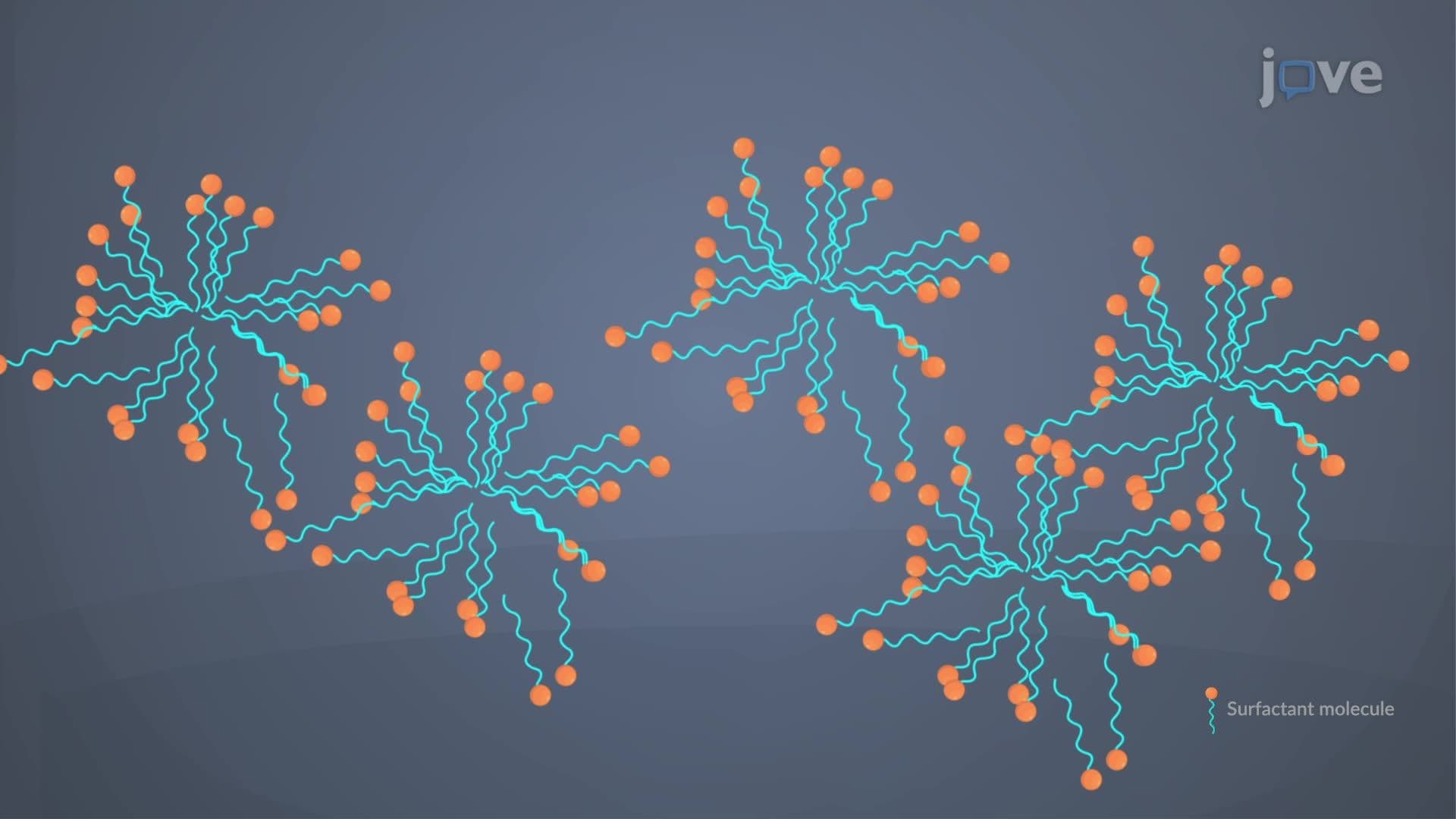

Video Summary: What are Micelles
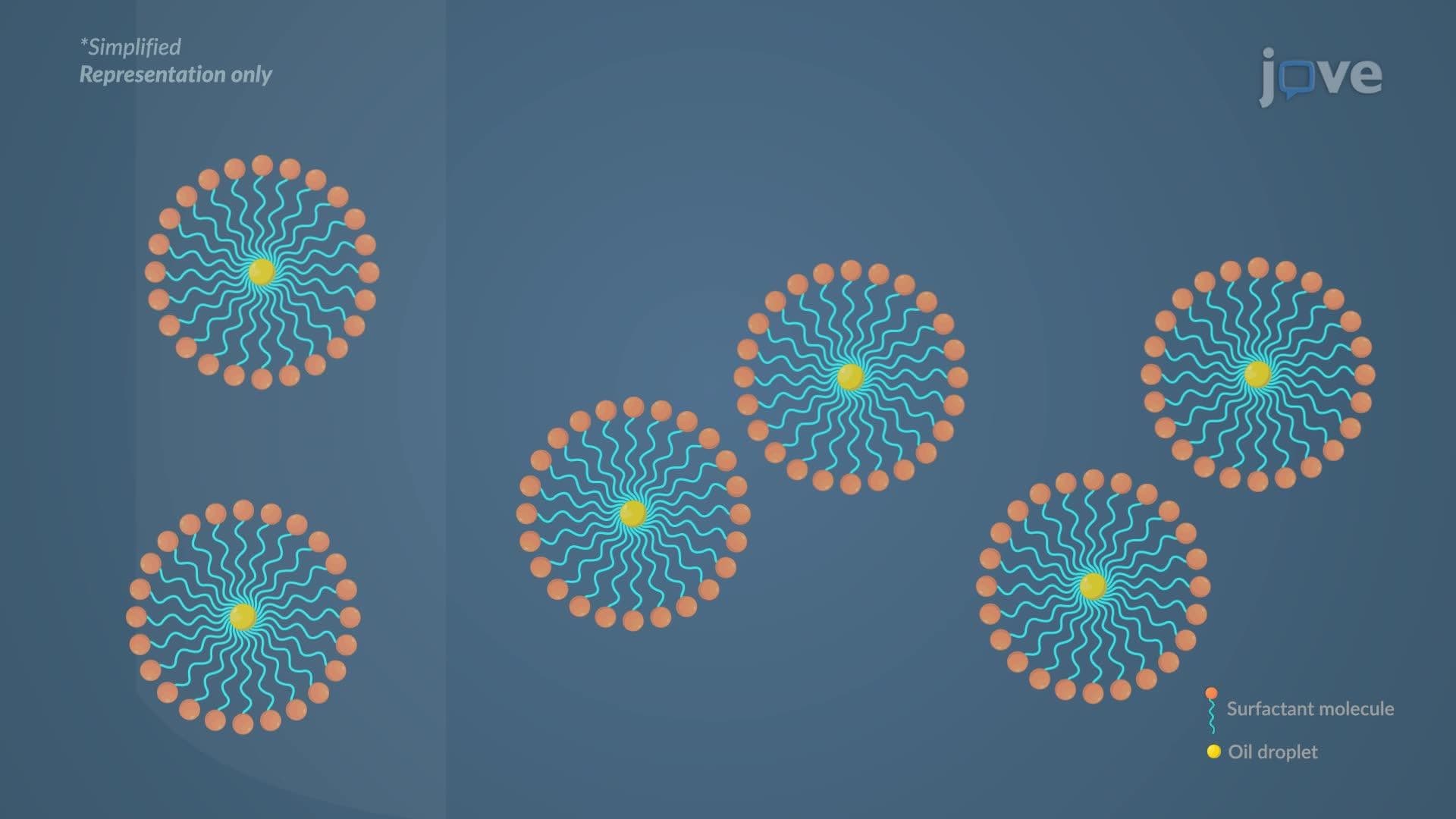
Why does soap actually clean grease off your hands? The answer lies in micelles, tiny molecular structures that are foundational to understanding micelles basics in chemistry. When surfactant molecules in everyday products like Dawn dish soap reach a critical concentration in water, they spontaneously self-assemble into spherical clusters. Watch the full video on JoVE Coach to master this concept with expert-led visuals and step-by-step explanations.
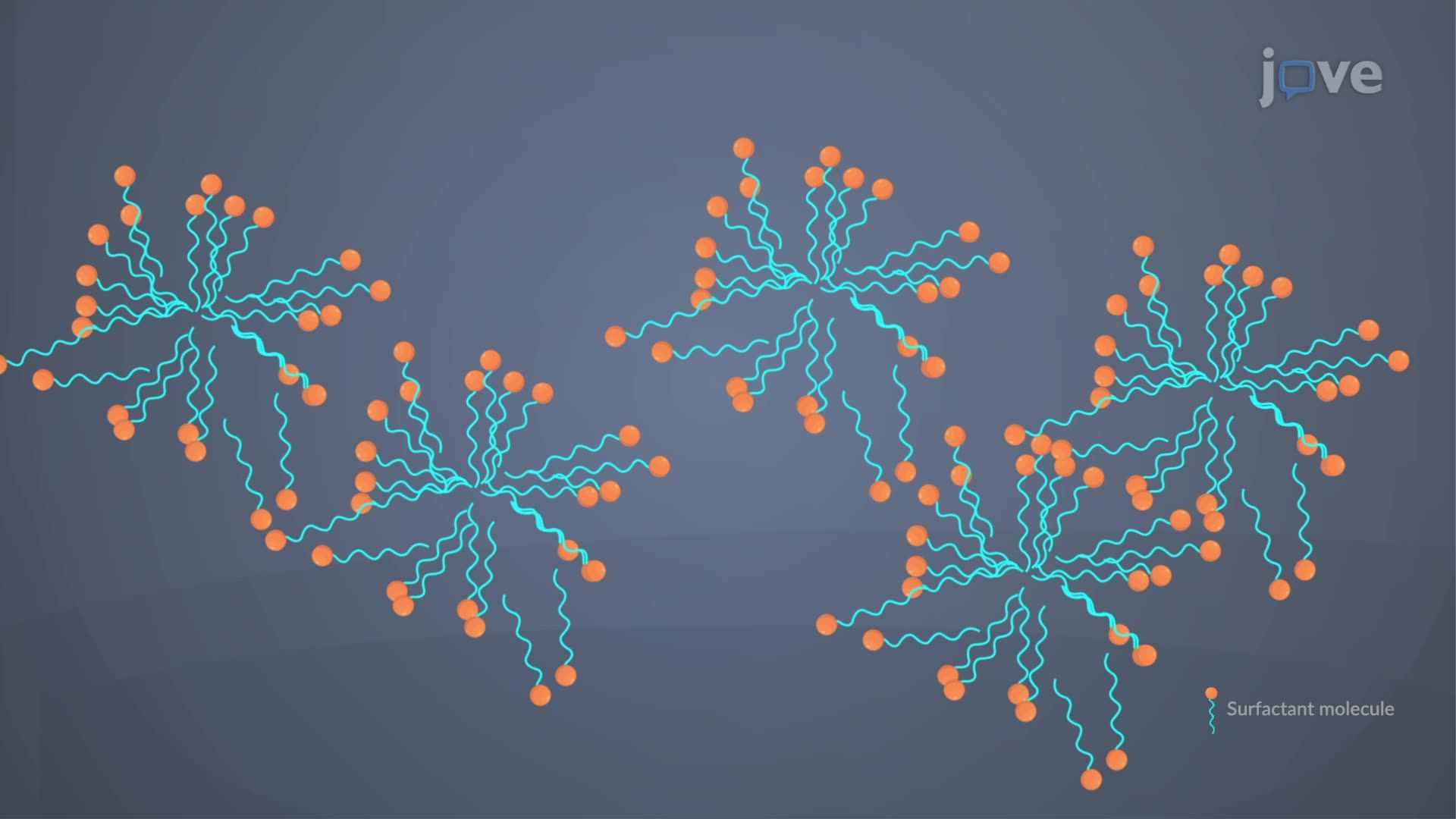
Micelles are nanoscale, spherical structures formed when amphiphilic molecules, molecules that contain both a water-loving (hydrophilic) head and a water-avoiding (hydrophobic) tail, spontaneously organize themselves in an aqueous environment. This self-assembly process is not random. It is driven by thermodynamics: the system minimizes its free energy by shielding hydrophobic tails from water while exposing hydrophilic heads to the surrounding solvent. The result is a stable, hollow-core aggregate that can trap oils, fats, and nonpolar substances inside, which is precisely why soap removes grease so effectively.
Not just any amount of surfactant will form micelles. Below a specific concentration threshold called the critical micelle concentration (CMC), surfactant molecules simply disperse individually throughout the solution. Once the CMC is exceeded, molecules begin assembling into micelles almost immediately, and the physical properties of the solution shift measurably. Osmotic pressure levels off because many individual molecules combine into fewer, larger aggregates, reducing the total number of dissolved particles. Molar conductivity drops sharply for ionic surfactants, since charged molecules become locked inside large micelles rather than moving freely through the solution to conduct electricity. Understanding CMC is critical for AP Chemistry students and college-level physical chemistry courses, where solution behavior and colligative properties are tested extensively.
Ionic surfactants, such as sodium lauryl sulfate (SLS), commonly found in US shampoo and toothpaste products, carry a net charge on their head groups. This charge creates electrostatic repulsion between adjacent molecules at the micelle surface, which means a higher concentration is needed before molecules are forced close enough together to self-assemble. Non-ionic surfactants, which have polar but uncharged heads, experience no such repulsion, allowing them to form micelles at much lower concentrations. This comparison is a classic exam topic in college general chemistry and physical chemistry midterms, as well as appearing in MCAT content related to biochemistry and membrane structure.
Micelles are not locked into a single shape. As surfactant concentration increases beyond the CMC, the geometry of the aggregate can shift. Spherical micelles, the most commonly depicted form, are the initial structure. With continued concentration increases, the reduced electrostatic repulsion between head groups in ionic surfactants allows micelles to elongate into cylindrical shapes. These cylindrical micelles can further organize into hexagonal arrays, and ultimately into lamellar (flat, sheet-like) structures. This progression mirrors concepts seen in liquid crystals and block copolymer phase behavior, making micelles a foundational bridge to understanding supramolecular chemistry and polymer characterization. For students exploring questions like *"How do macromolecules self-assemble?"* or *"What are the applications of self-assembling macromolecules?"*, micelle phase transitions are an essential starting point. In biomedical research at US institutions, these structural transitions are actively studied for applications in targeted drug delivery, where micelle shape directly affects how nanoparticles interact with cell membranes.
Related Micro-courses