Loading subject page…

1,255 views

Video Summary: What are Surface Active Agents
Why does dish soap cut through grease so effortlessly? The answer lies in surface active agents, molecules with a split personality. Surface active agents basics reveal how these amphiphilic compounds, used in everything from Tide detergents to pharmaceutical drug delivery systems across the US, bridge oil and water. Watch the full video on JoVE Coach to master this concept with expert-led visuals and step-by-step explanations.
Surface active agents, commonly called surfactants, are among the most versatile and widely used chemical compounds in science and industry. At their core, surfactants are amphiphilic molecules: each molecule contains a water-loving (hydrophilic) head group and a water-repelling (hydrophobic) tail. This structural duality allows surfactants to position themselves at the interface between two immiscible phases, like oil and water, and dramatically reduce the energy required to maintain that interface, known as interfacial tension. Understanding surface active agents is foundational in chemistry courses from AP Chemistry through upper-division college coursework in physical and pharmaceutical chemistry.
The hydrophilic head group is typically a polar or ionic region that interacts favorably with water molecules through hydrogen bonding or electrostatic forces. The hydrophobic tail is usually a long hydrocarbon chain that is repelled by water and attracted to nonpolar environments like oils and fats. This architectural contrast is not just interesting in theory, it directly governs how surfactants behave in solution. When surfactant molecules are added to water, they spontaneously migrate to surfaces and interfaces, orienting their tails away from water and their heads toward it.
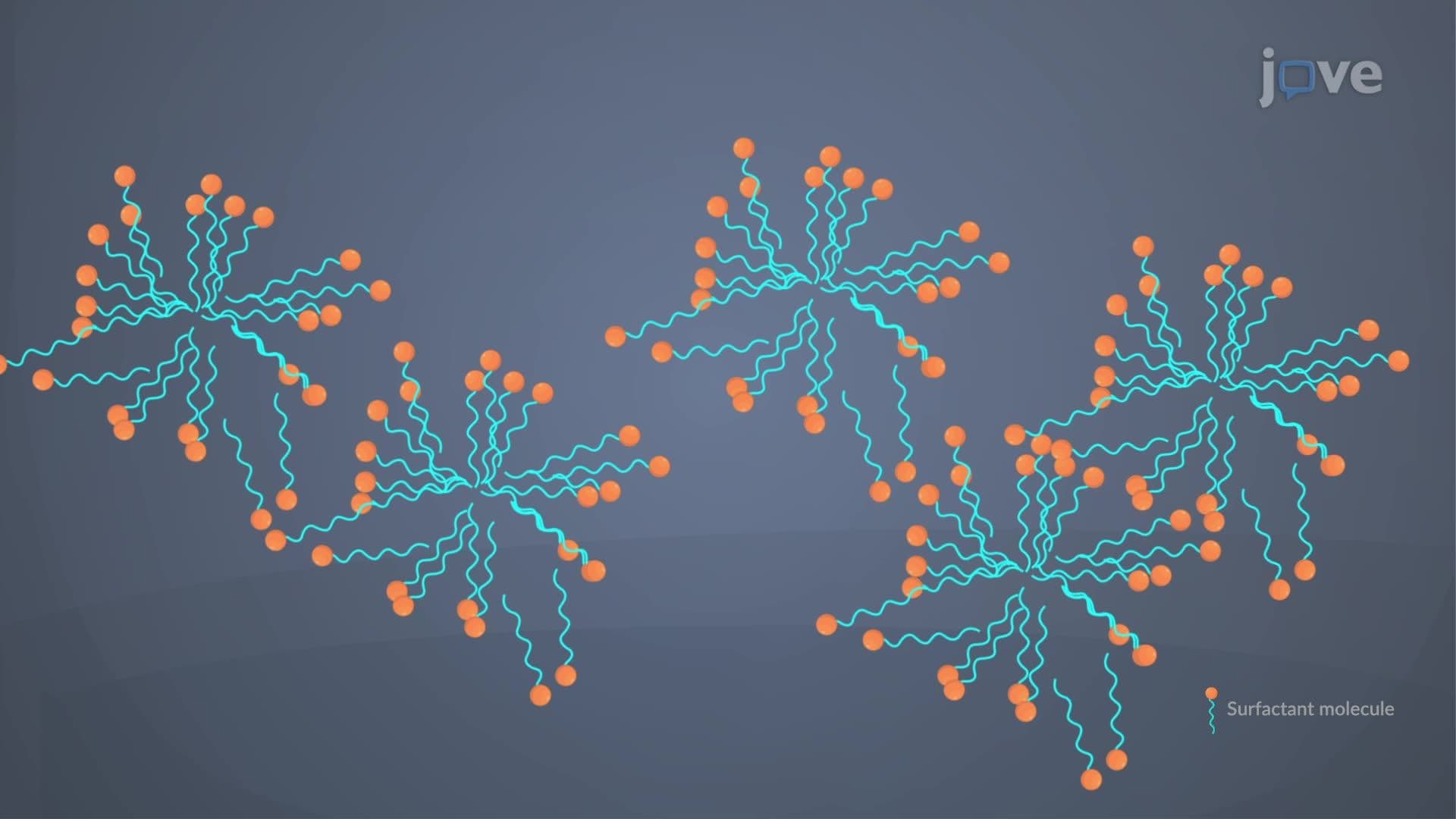
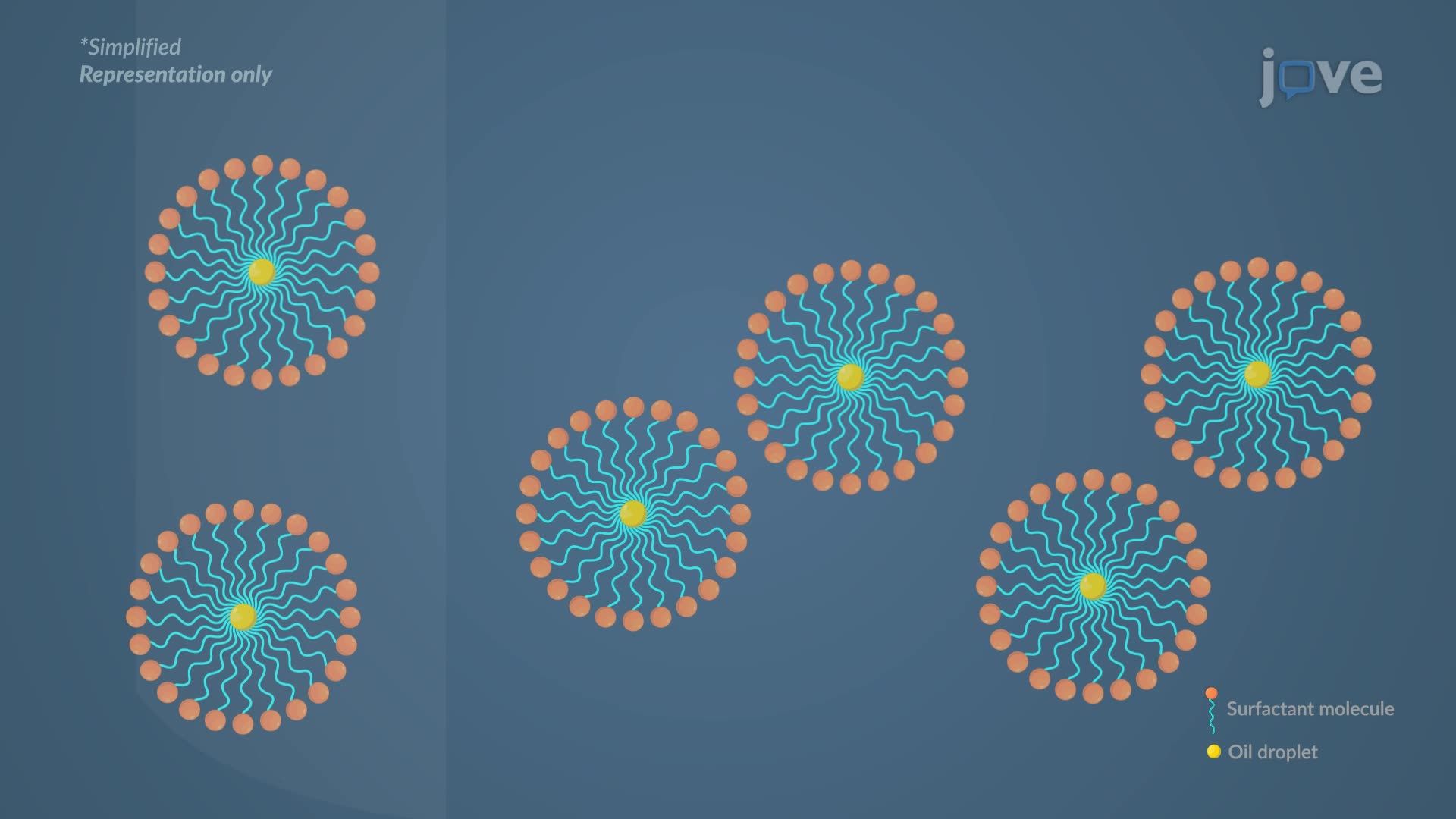
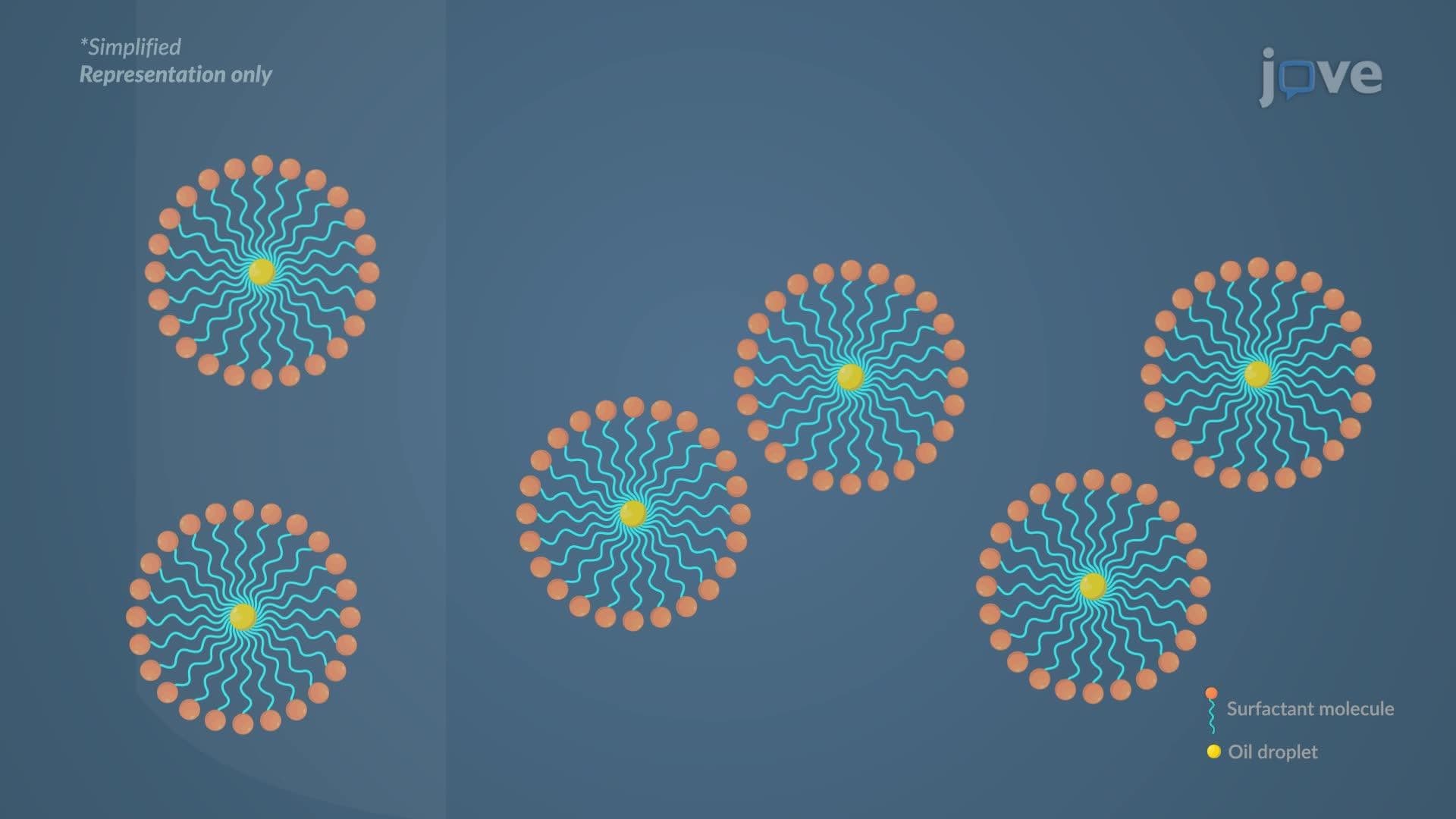
One of the most important phenomena in surfactant chemistry is micelle formation. As surfactant concentration increases in solution, individual molecules eventually reach a threshold called the critical micelle concentration (CMC). Beyond this point, surfactants self-assemble into micelles, spherical or cylindrical aggregates in which the hydrophobic tails cluster inward, shielded from water, while the hydrophilic heads face outward into the aqueous environment. This is the same principle that allows laundry detergents like Tide or Persil, widely sold across the United States, to trap oil-based stains inside micelle cores and wash them away with water.
The surfactant packing parameter helps predict micelle geometry. It is calculated from three values: the volume of the hydrophobic tail (v), the optimal area of the hydrophilic head group (a), and the maximum effective length of the tail (l). This connects surfactant science to broader topics in supramolecular chemistry and the self-assembly of macromolecules, concepts explored in advanced courses covering block copolymers and liquid crystals.
Surfactants are classified by the electrical charge of their head group. Anionic surfactants (negatively charged, such as carboxylates) dominate household detergents and shampoos. Cationic surfactants (positively charged, such as quaternary ammonium compounds) appear in fabric softeners and antimicrobial products. Non-ionic surfactants (carrying no charge, such as polyoxyethylene alcohols) are widely used in pharmaceuticals and food emulsification because they are mild and less irritating. Amphoteric surfactants (carrying both positive and negative charges, such as triglycine derivatives) are found in specialty personal care formulations.
The Hydrophile-Lipophile Balance (HLB) system quantifies where a surfactant falls on the spectrum between fully oil-soluble and fully water-soluble. HLB values range from 1 to 40: low values (roughly 1-6) indicate strong oil affinity and suitability for water-in-oil emulsions, while high values (above 12) indicate water affinity and suitability for oil-in-water emulsions. Pharmaceutical formulators at US drug companies like Pfizer or Johnson & Johnson routinely use HLB values when designing stable emulsion-based drug delivery systems.
On standardized exams like the MCAT, understanding how surface properties, intermolecular forces, and amphiphilic behavior interact is directly tested in the Chemical and Physical Foundations section. In AP Chemistry, surfactant behavior connects to intermolecular forces and solution chemistry. Mastering this topic gives students a meaningful edge across multiple disciplines.
Related Micro-courses