Loading video…


 13 Concepts
 43.2K views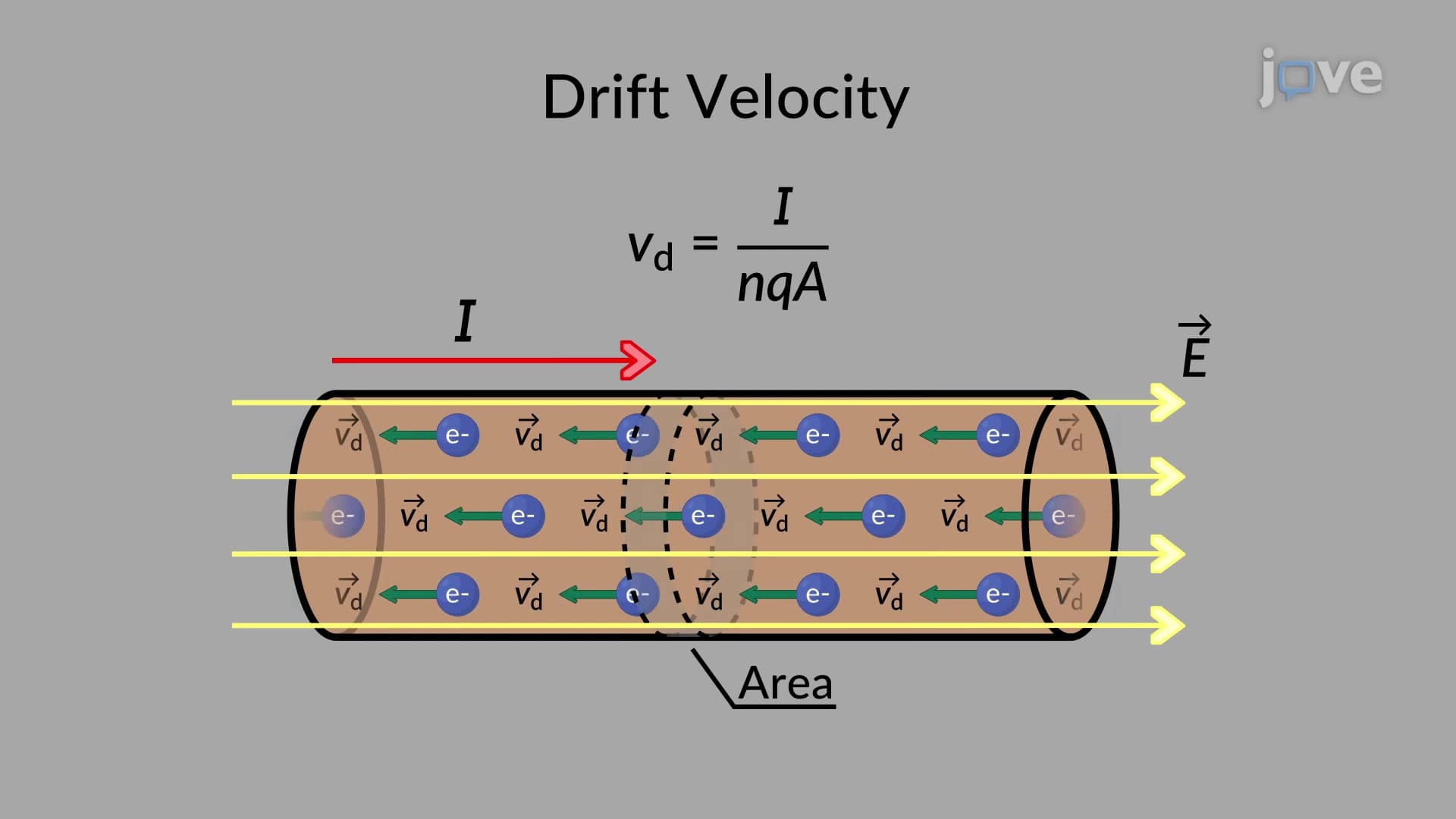

Video Summary: What Is Drift Velocity
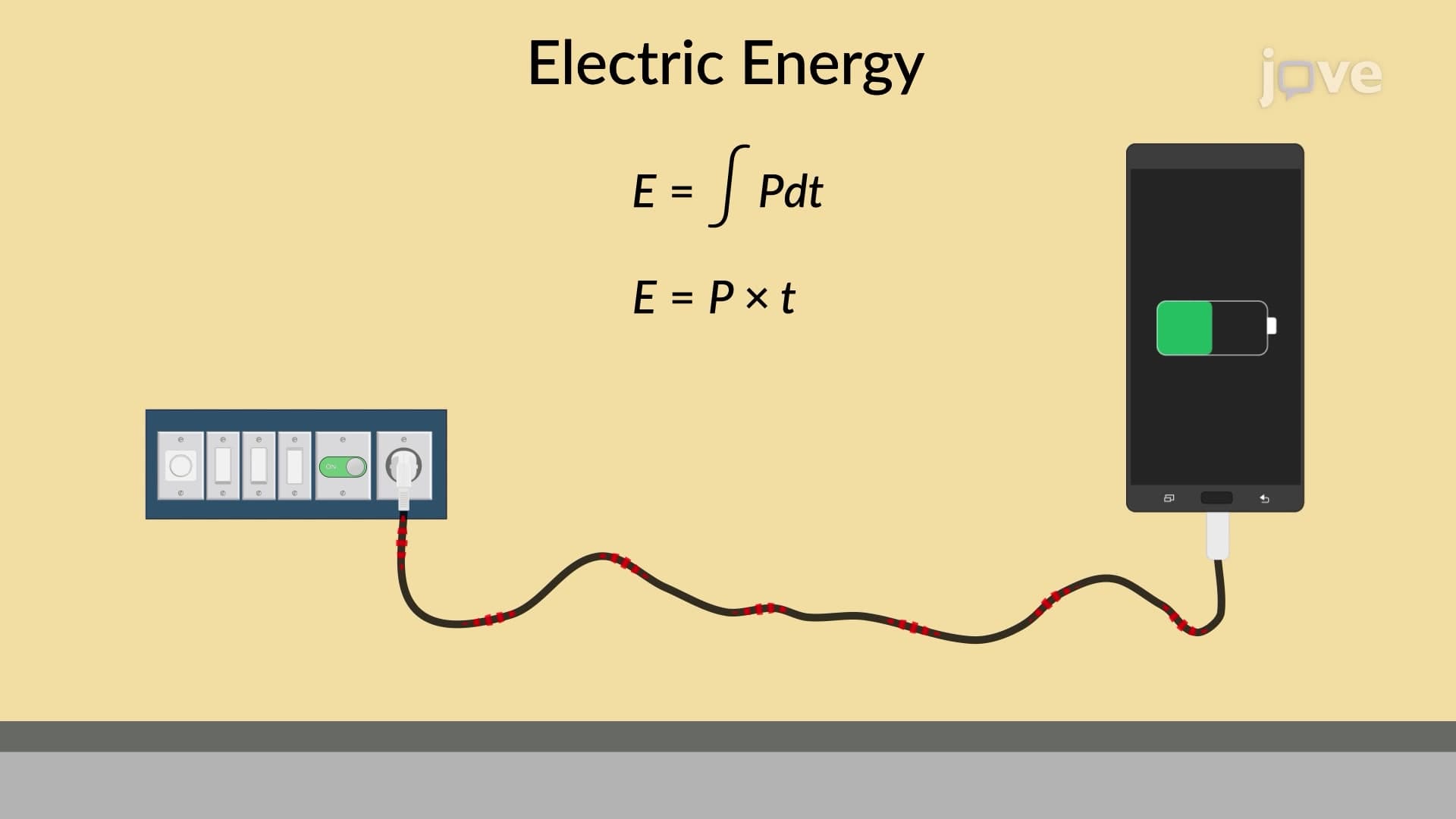
Ever wonder how electricity flows through your smartphone charger at just millimeters per second, yet the lights turn on instantly? Drift velocity explains this fascinating phenomenon of how electrons actually move through conductors like the copper wiring in your home. Despite their sluggish average speed, electrons create immediate electrical effects through coordinated motion in electric fields. Watch the full video on JoVE Coach to master this concept with expert-led visuals and step-by-step explanations.
Drift velocity represents the average velocity of charge carriers (typically electrons) as they move through a conductor under the influence of an electric field. This fundamental concept bridges the gap between microscopic particle behavior and macroscopic electrical phenomena we observe daily.
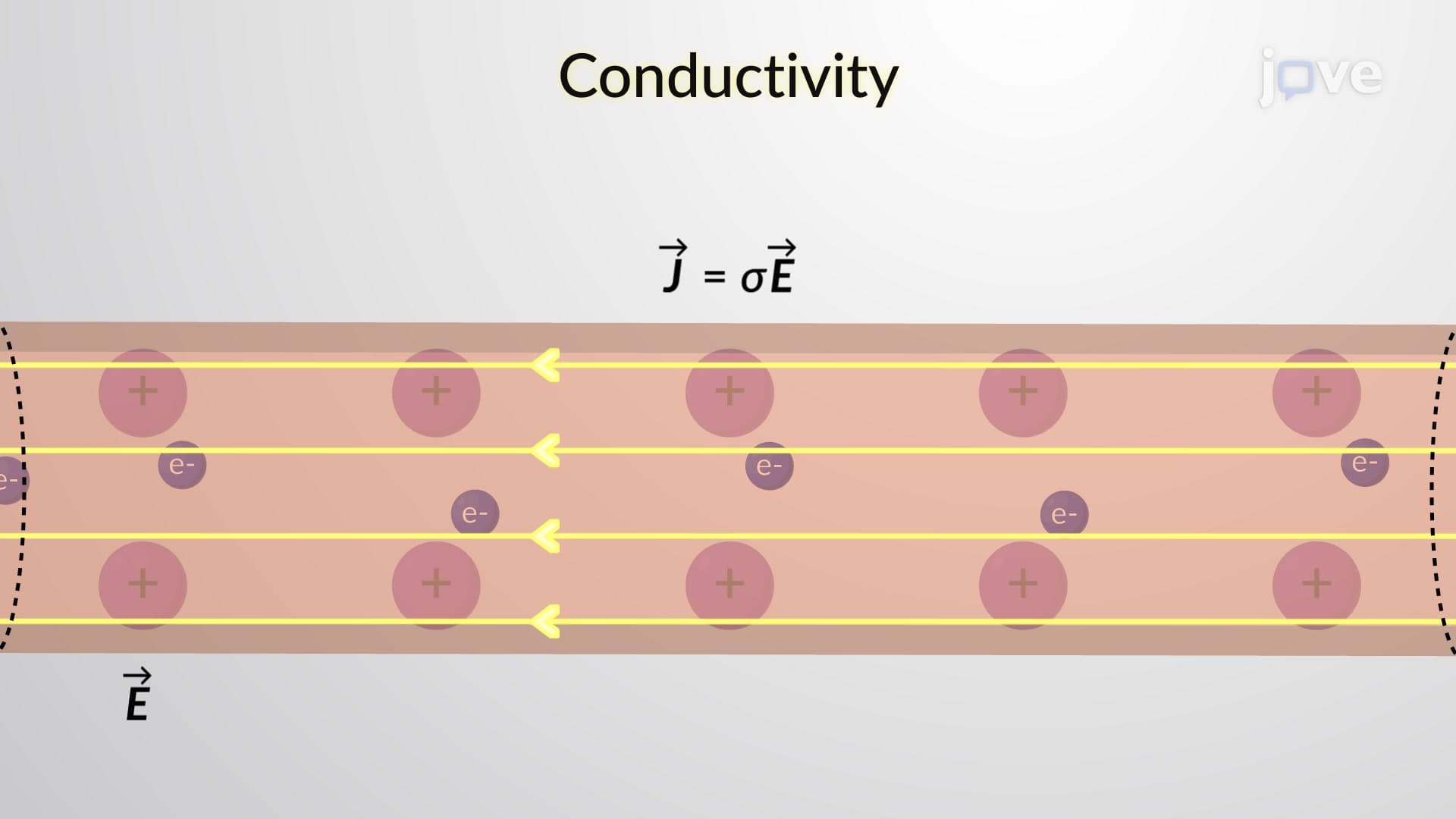
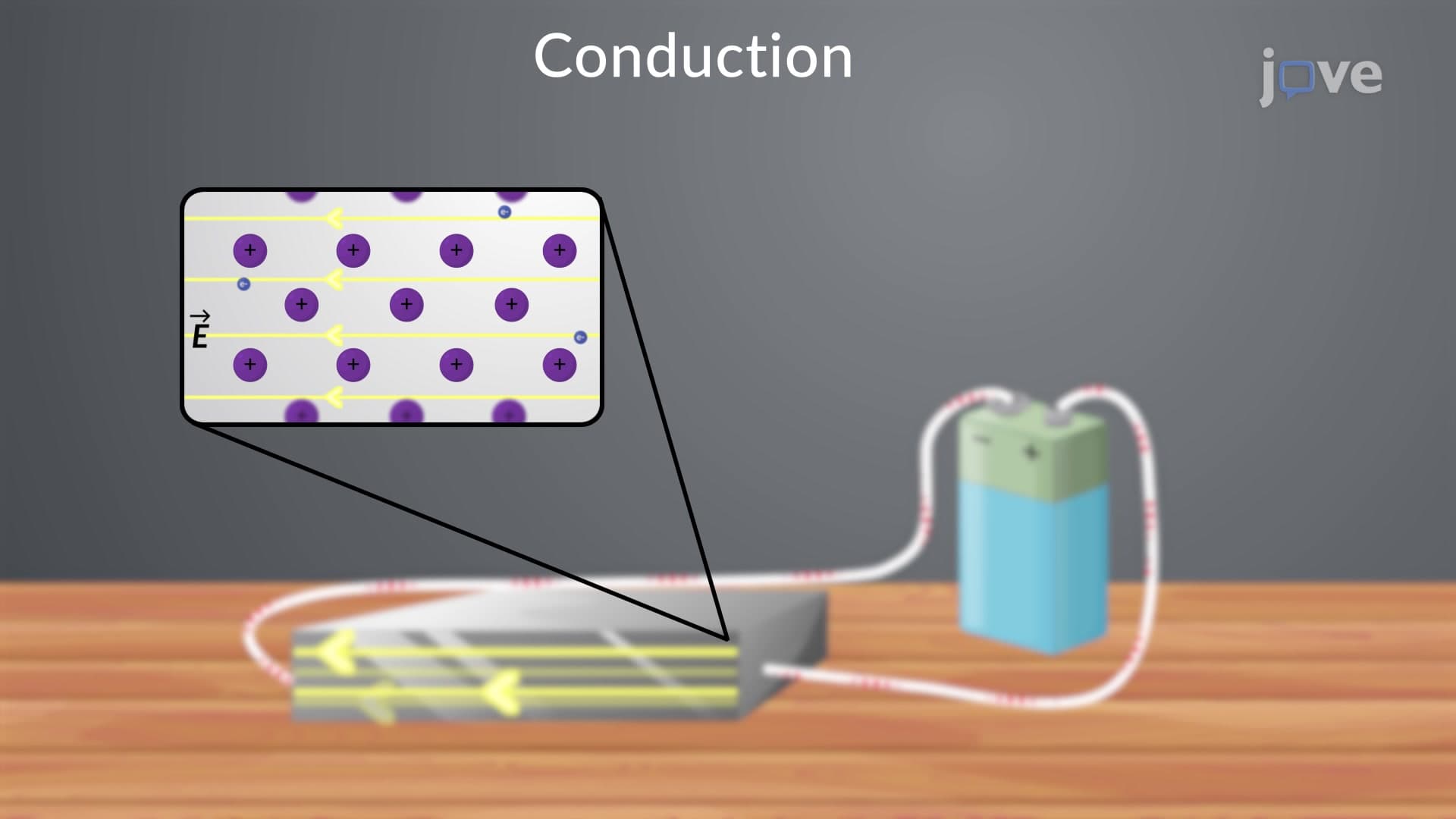
In normal conditions, free electrons in metals like copper move randomly at extremely high speeds (around 10^6 m/s) due to thermal energy. However, when an electric field is applied across a conductor-such as when you plug in your laptop charger-these electrons develop a slight bias in their motion. This small, coordinated component of movement is the drift velocity, typically measuring just millimeters per second.
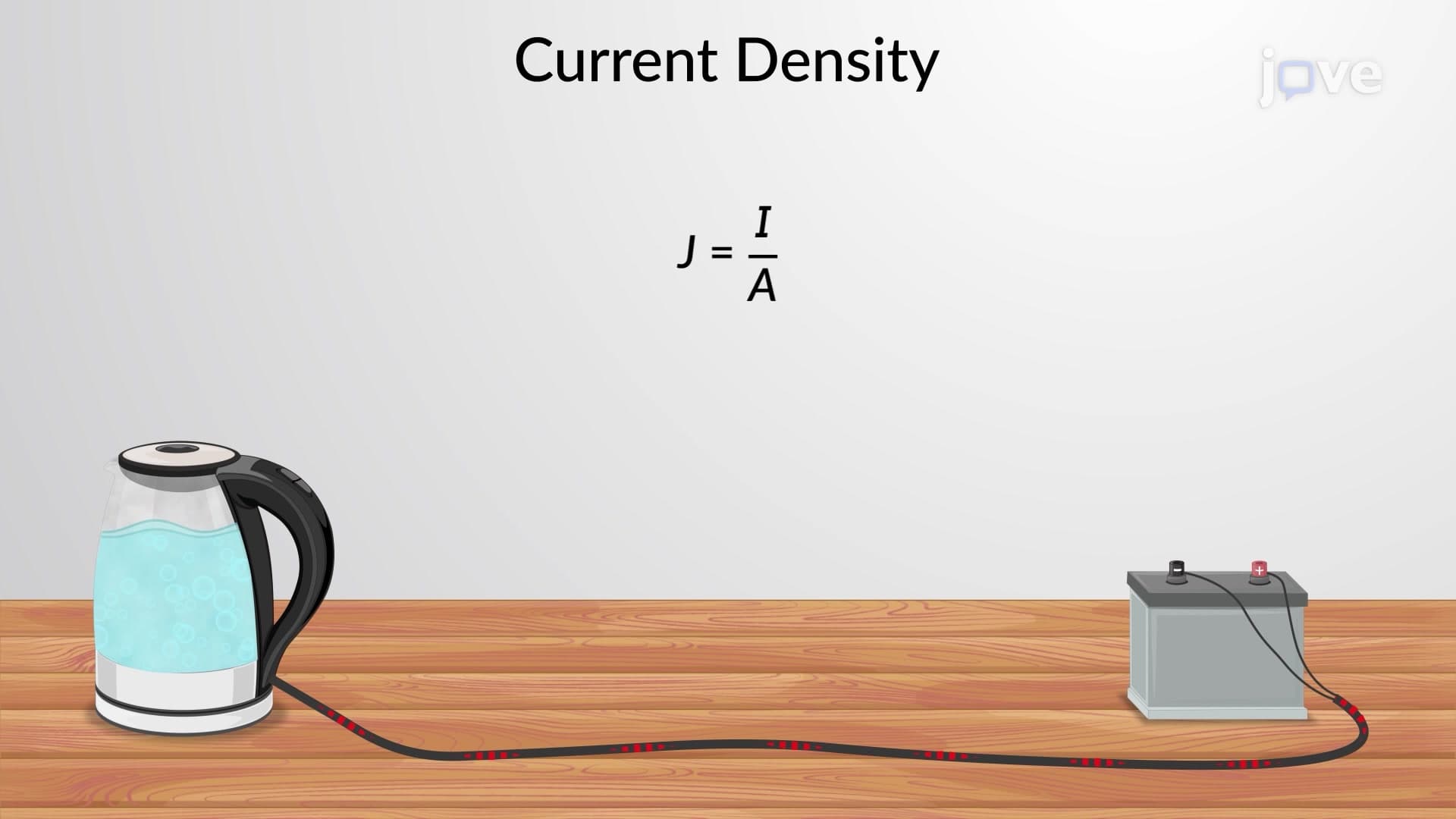
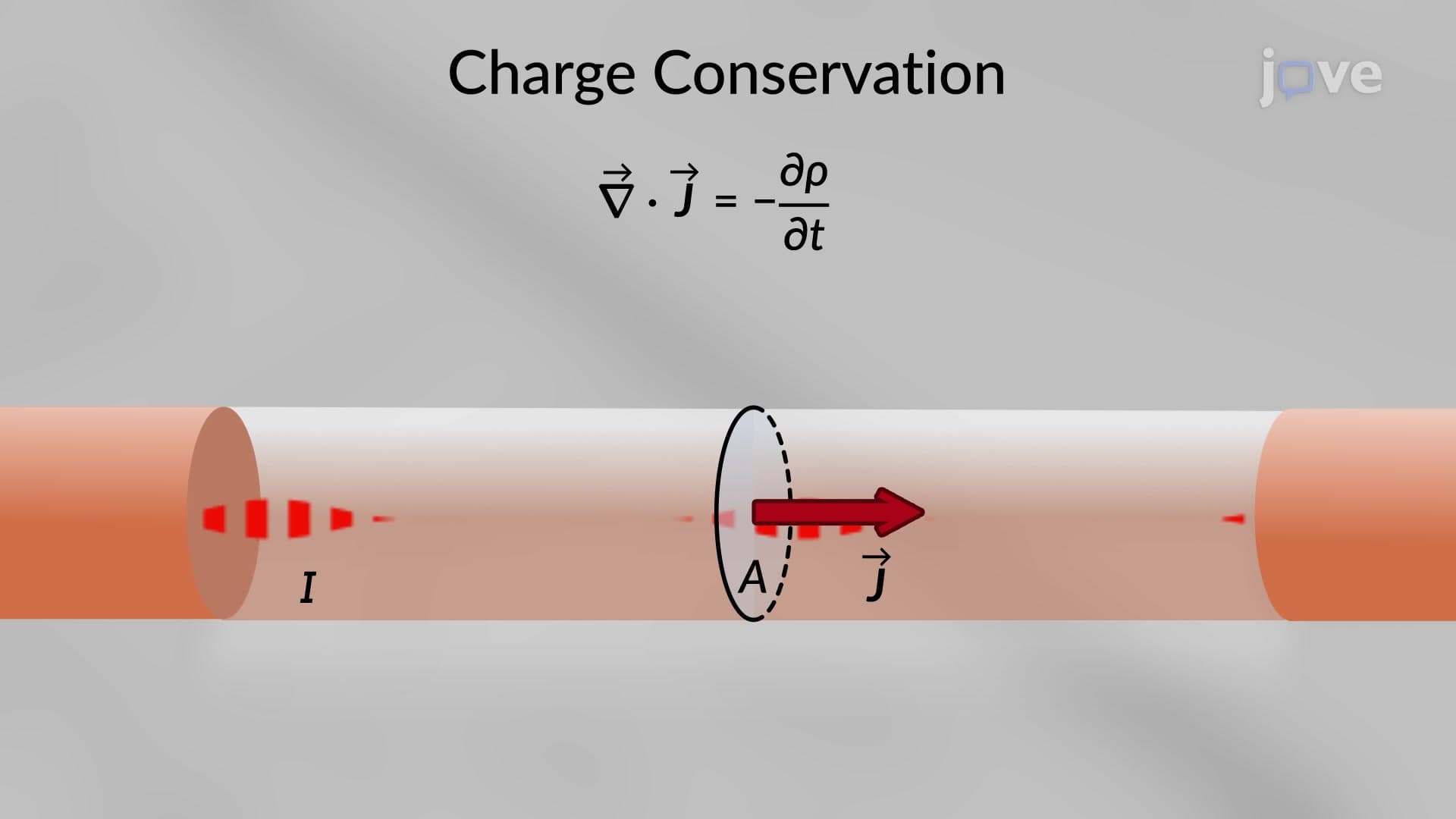
The mathematical relationship for drift velocity is elegantly simple: v_drift = I/(nAq), where I represents current, n is the number density of charge carriers, A is the cross-sectional area, and q is the elementary charge. This equation reveals why household electrical wires work effectively despite electrons moving so slowly.
Consider a typical 12-gauge copper wire used in American homes (diameter ≈ 2.05 mm). When carrying 15 amperes-near its rated capacity-electrons drift at approximately 0.5 mm/s. Yet electrical signals propagate at nearly the speed of light because the electric field itself moves rapidly, causing coordinated electron motion throughout the entire conductor simultaneously.
Understanding drift velocity proves crucial for electrical engineering applications, from designing efficient power transmission systems to optimizing semiconductor devices. The concept frequently appears on AP Physics exams and college-level electricity and magnetism courses, where students must calculate drift velocities in various scenarios.
For instance, engineers at companies like Intel must consider drift velocity when designing microprocessors, where precise control of electron flow through silicon channels determines computing speed and power efficiency. Similarly, power grid engineers across the United States factor drift velocity calculations into transmission line designs to minimize energy losses over long distances.
The negative sign in drift velocity calculations indicates that electrons move opposite to the conventional current direction-a historical convention established before scientists understood that electrons, not positive charges, carry current in metals.
Related Micro-courses