Loading video…


 14 Concepts
 79.9K views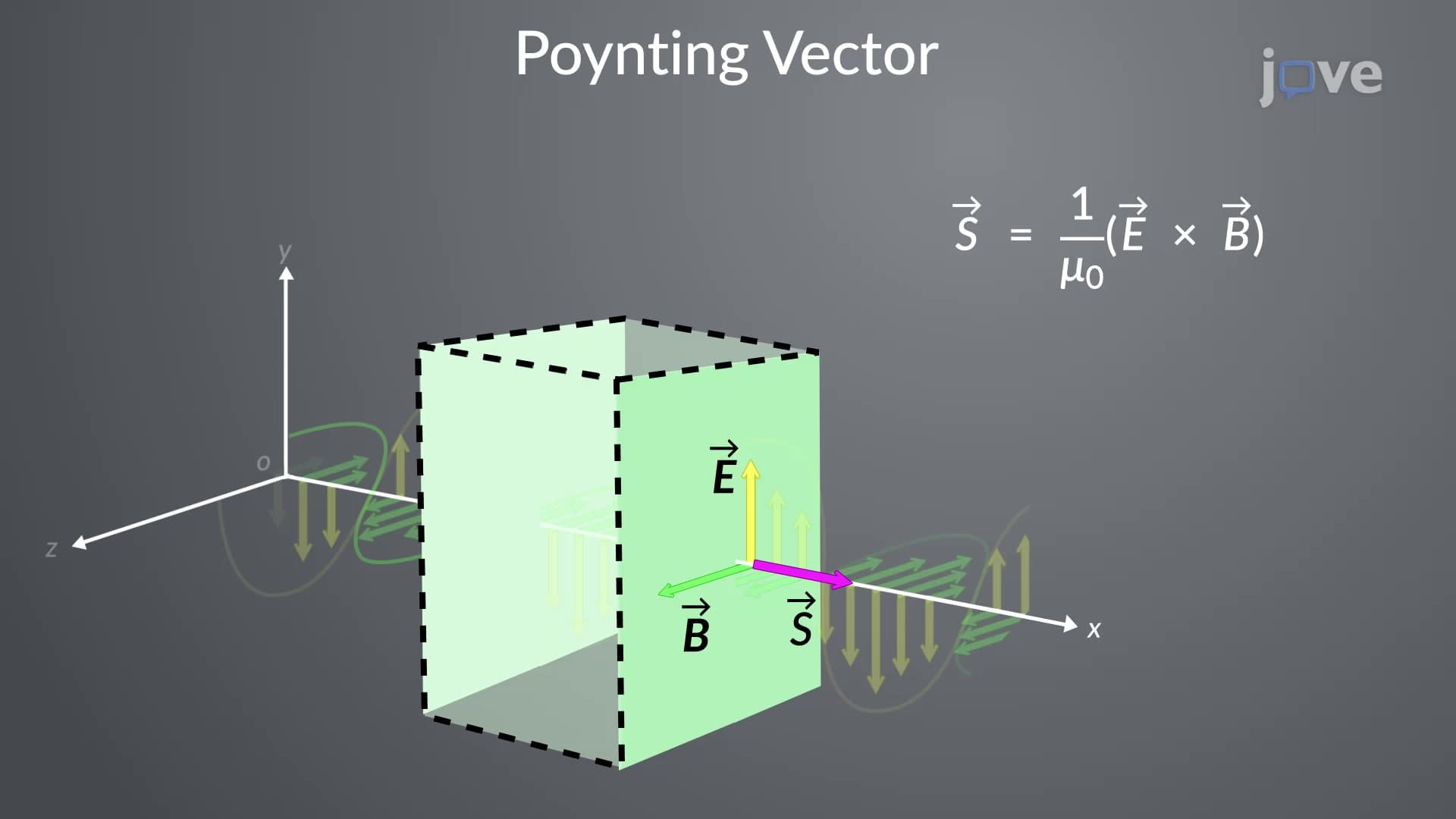

Video Summary: Energy Carried by Electromagnetic Waves Explained
Ever wonder how your smartphone receives signals from cell towers miles away? The energy carried by electromagnetic waves makes wireless communication possible across vast distances. From radio broadcasts in New York City to GPS satellites orbiting Earth, electromagnetic waves transport energy through space at the speed of light. This fundamental physics concept explains how energy density relates to electric and magnetic field strengths, and how the Poynting vector quantifies energy flow. Watch the full video on JoVE Coach to master this concept with expert-led visuals and step-by-step explanations.
Electromagnetic waves represent one of nature's most elegant energy transport mechanisms. Unlike mechanical waves that require a medium, electromagnetic waves carry energy through vacuum at light speed, enabling everything from satellite communications to medical imaging technologies used in US hospitals.
The energy stored in electromagnetic fields follows a fundamental square-law relationship. For electric fields, energy density equals (1/2)ε₀E², where ε₀ represents the permittivity of free space and E is the electric field magnitude. Similarly, magnetic field energy density equals (1/2μ₀)B², with μ₀ being the permeability of free space and B the magnetic field strength.
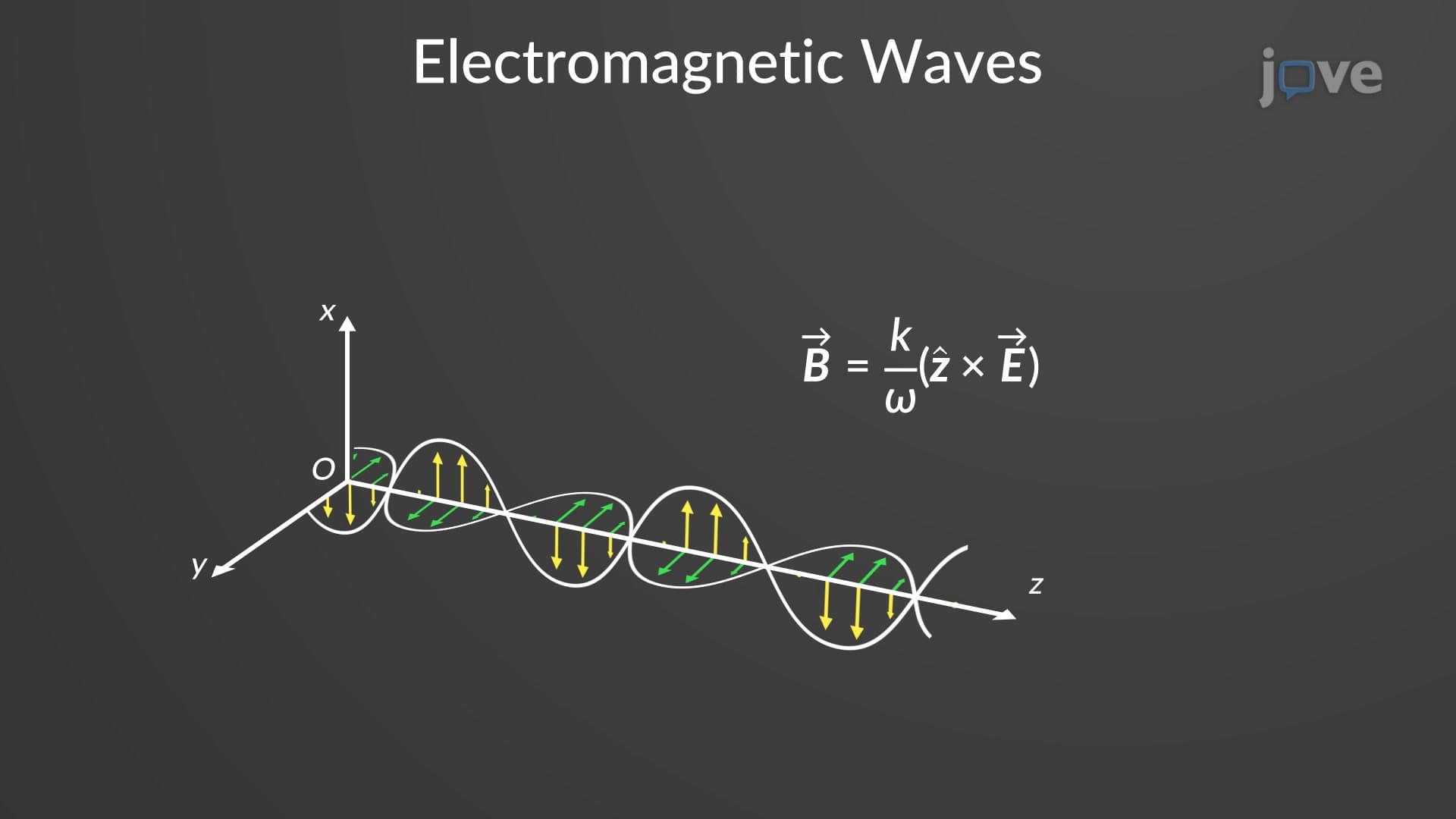
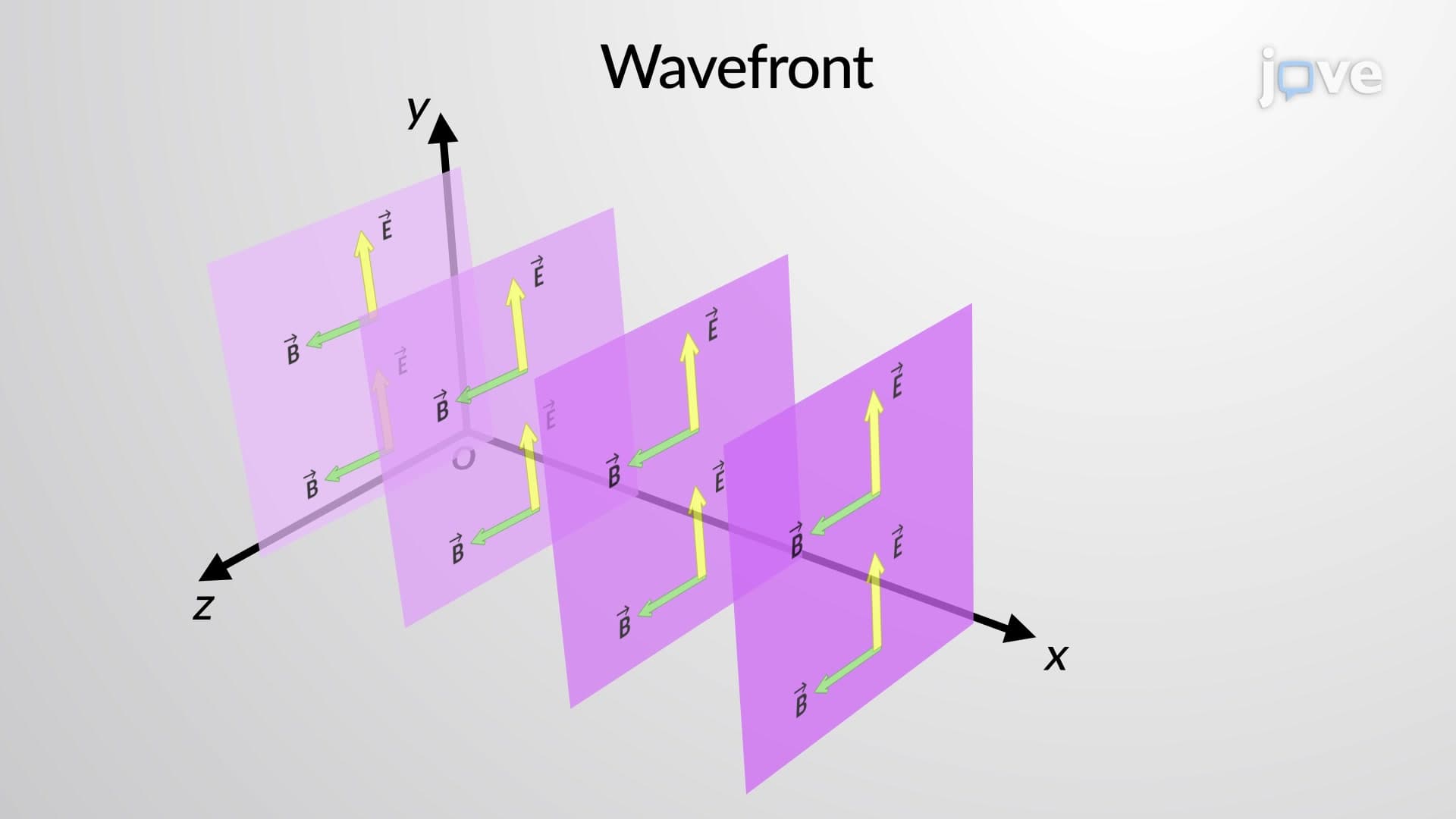
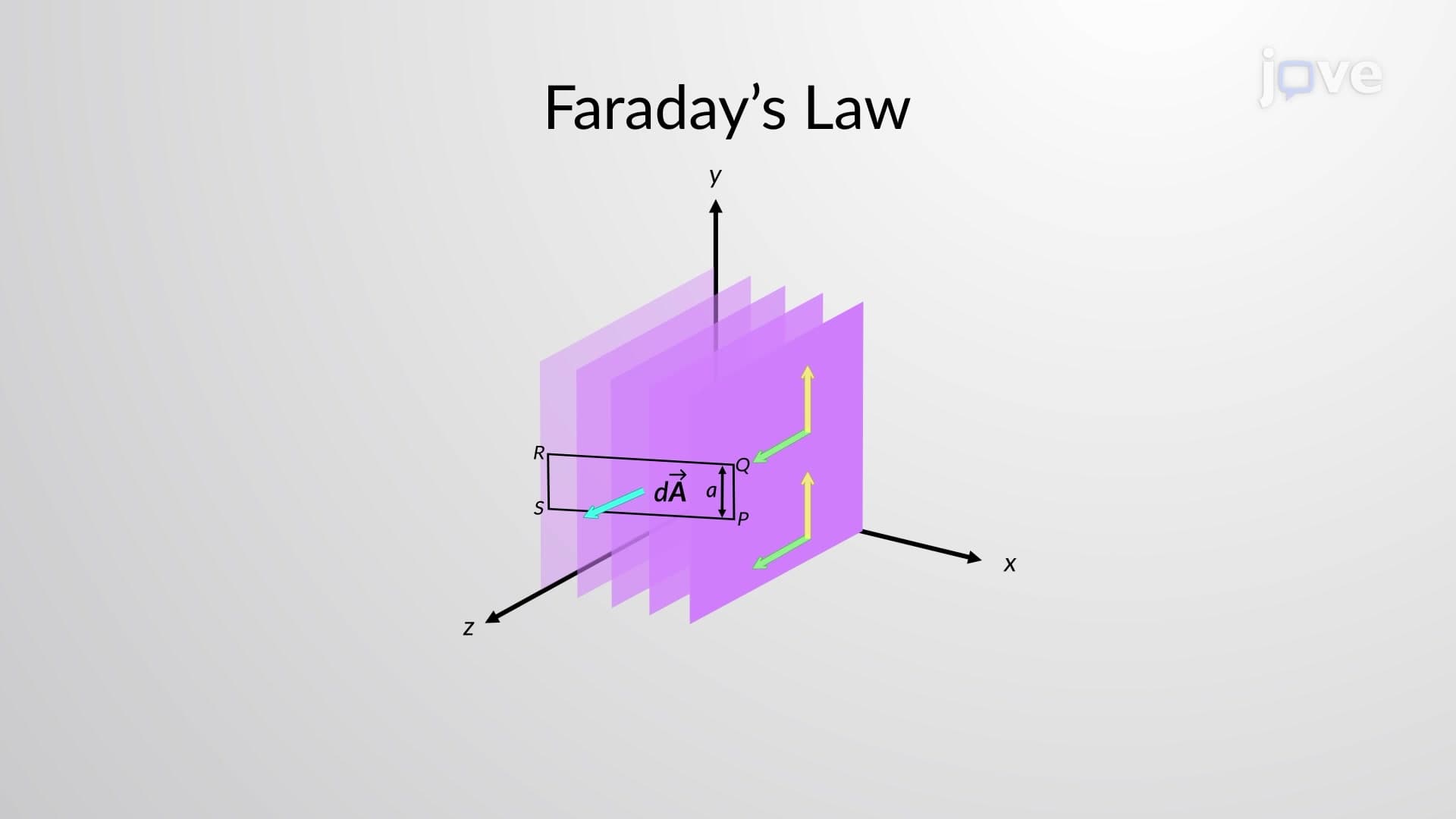
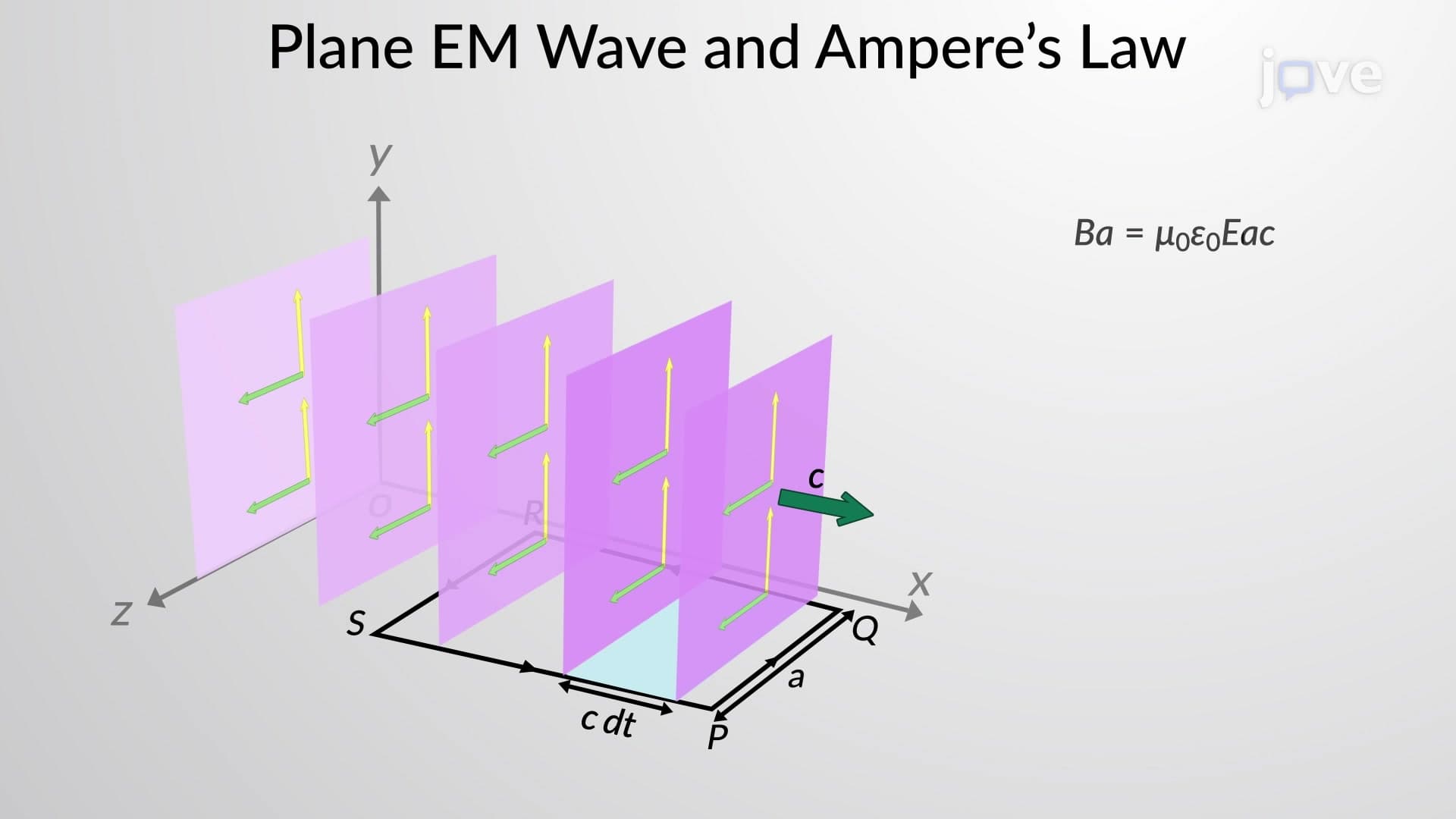
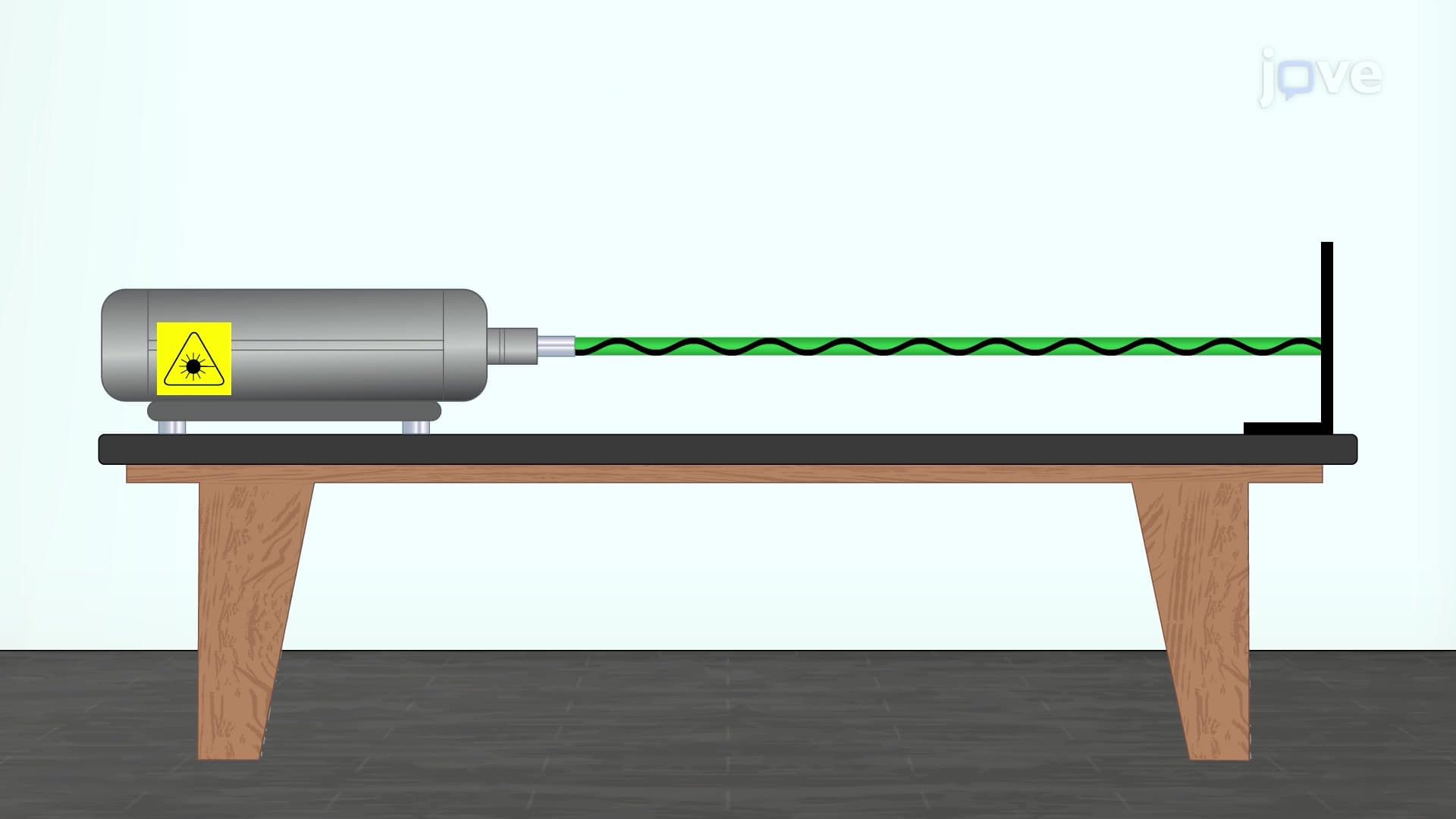
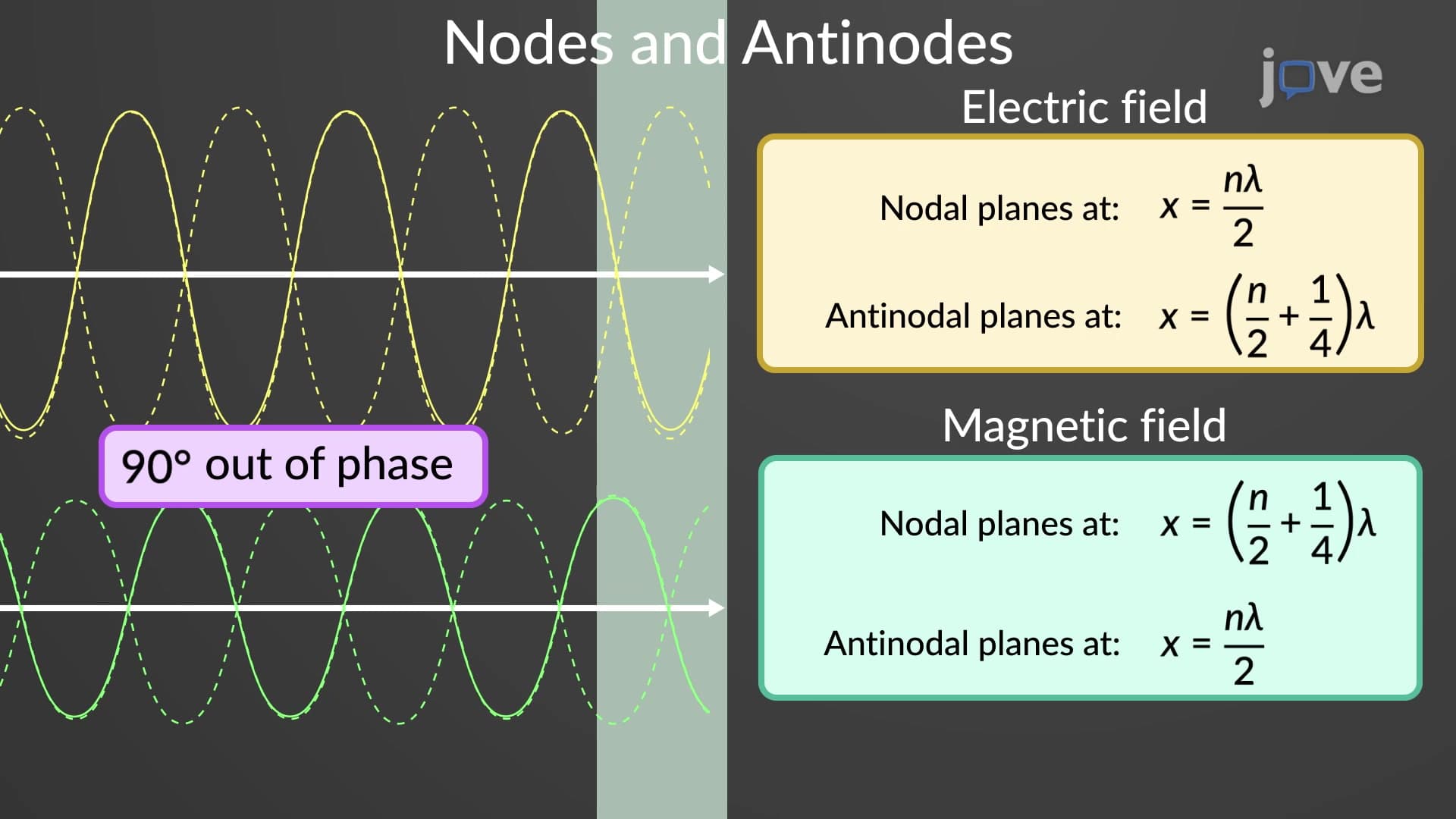
In electromagnetic waves, these field components oscillate perpendicular to each other and to the propagation direction. Maxwell's equations reveal that E and B magnitudes relate through E = cB, where c represents light speed. This relationship demonstrates that electric and magnetic field energy densities remain equal throughout wave propagation, making total energy density exactly double the individual field contributions.
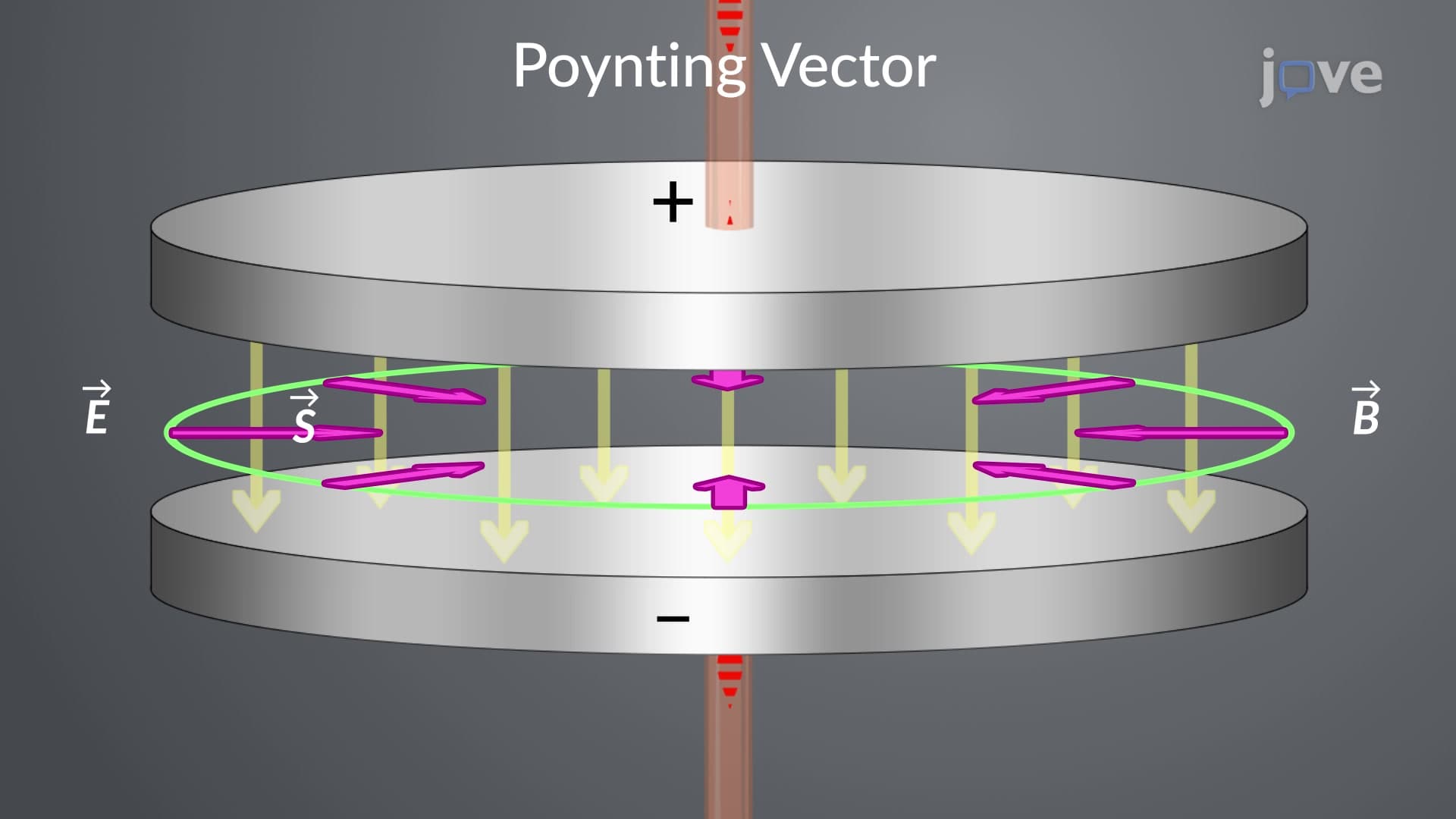
Energy flux-the rate of energy flow per unit area-is quantified by the Poynting vector S = (1/μ₀)(E × B). This cross-product naturally points along the wave propagation direction, with magnitude indicating energy flow rate. For plane waves, this simplifies to S = (1/μ₀)EB = (ε₀c)E².
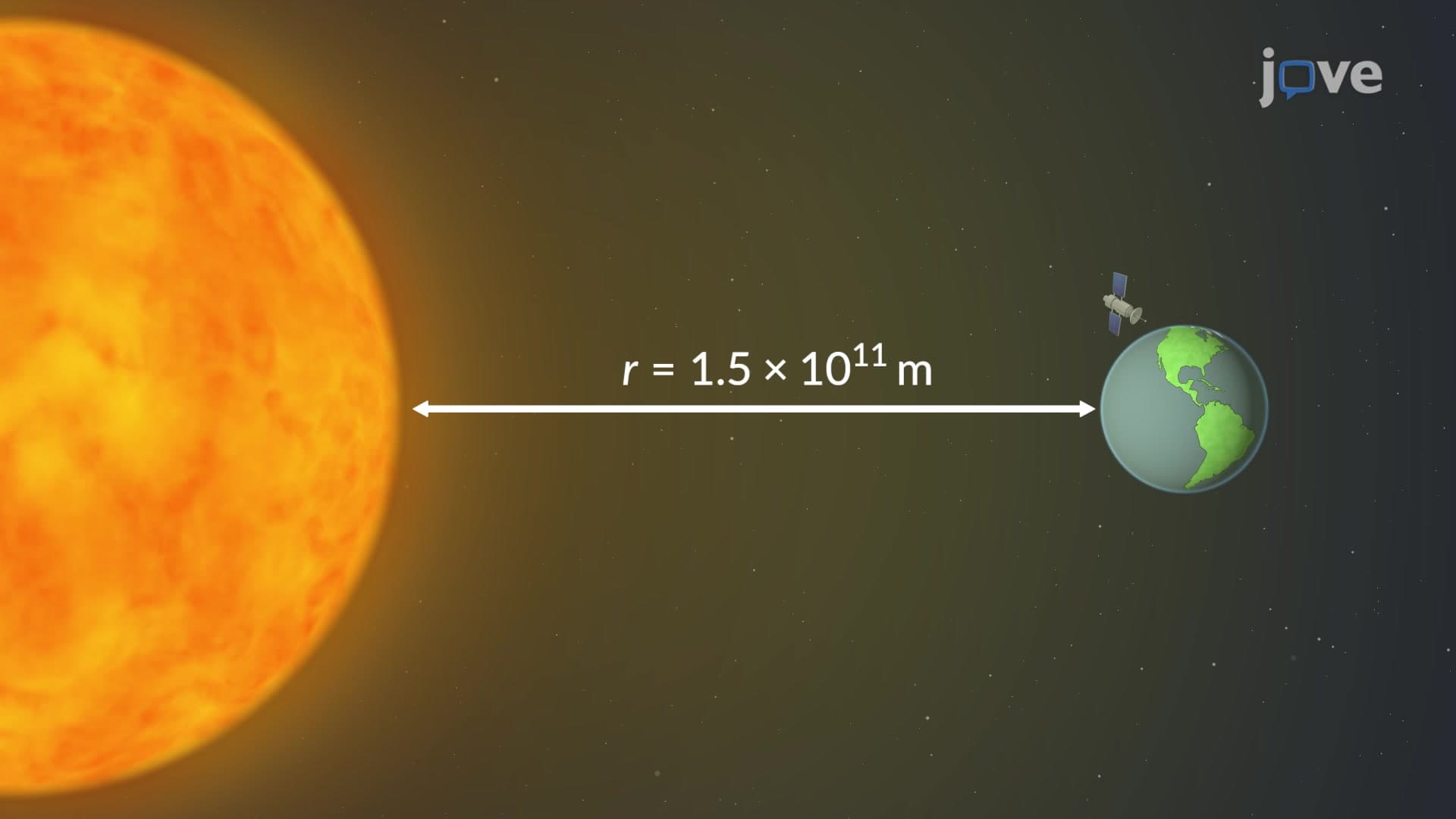
Consider a radio station broadcasting from Chicago: the Poynting vector describes how electromagnetic energy radiates outward, decreasing with distance squared as the wave spreads over larger spherical surfaces. This inverse-square law explains why radio signals weaken with distance and why satellite dishes need precise alignment.
Students preparing for AP Physics C or college electromagnetic theory courses encounter these concepts in problem sets involving energy transport calculations. MCAT preparation also includes electromagnetic wave energy density in light-matter interactions relevant to medical imaging. Engineering students at institutions like MIT and Stanford apply these principles in antenna design and wireless communication systems.
Medical applications include MRI machines, where controlled electromagnetic fields create detailed body images, and radio-frequency treatments targeting cancer cells. Solar panel efficiency calculations also rely on understanding how electromagnetic energy from sunlight converts to electrical power, crucial for renewable energy engineering programs across US universities.
Related Micro-courses