Loading video…


 17 Concepts
 36.7K views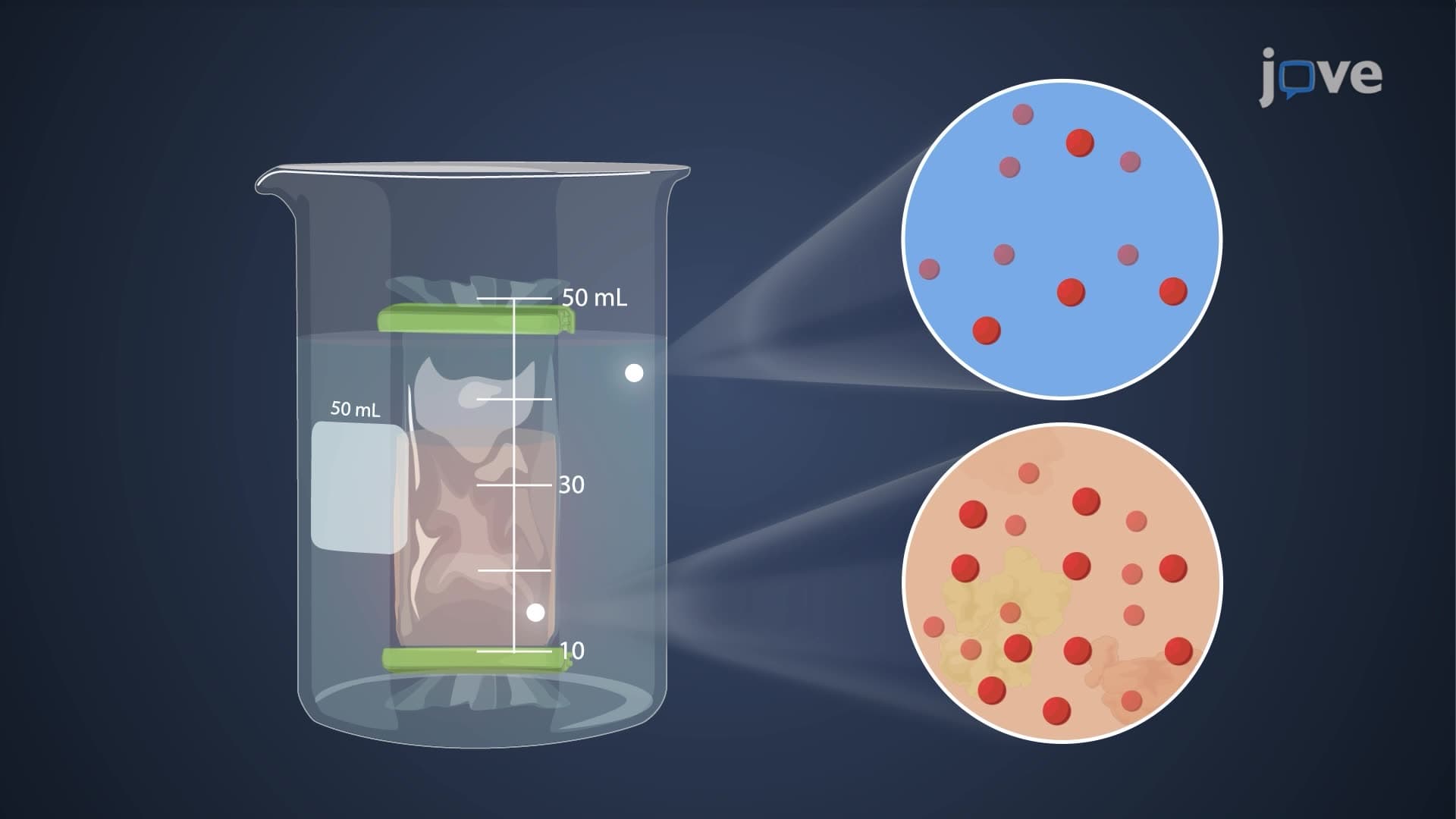

Video Summary: What Is Dialysis
Ever wondered how kidney dialysis machines remove toxins from blood while keeping essential proteins intact? Dialysis chemistry explained reveals this life-saving separation technique that uses concentration gradients and semipermeable membranes to selectively remove unwanted molecules. From treating kidney failure patients at the Mayo Clinic to purifying pharmaceutical compounds, what is dialysis demonstrates how molecular size determines what passes through specialized membranes. Watch the full video on JoVE Coach to master this concept with expert-led visuals and step-by-step explanations.
Dialysis separation technique represents one of the most elegant molecular separation methods in analytical chemistry. At its core, this process exploits the fundamental principle that molecules of different sizes behave differently when encountering barriers with specific pore dimensions. Unlike filtration, which relies on pressure, dialysis harnesses the natural tendency of molecules to move from areas of high concentration to low concentration-a process that continues until equilibrium is established.
The magic of how dialysis works in analytical chemistry lies in the semipermeable membrane's selective permeability. These membranes, typically constructed from cellulose acetate or cellulose nitrate, feature precisely controlled pore sizes ranging from 1 to 5 nanometers. This size selectivity means that small interferents like sodium ions (diameter ~0.2 nm) pass through easily, while larger protein molecules (diameter >10 nm) remain trapped on their original side.
When preparing for the MCAT or AP Chemistry exams, students should understand that the diffusion dialysis process follows Fick's laws of diffusion. The rate depends on the concentration gradient, membrane surface area, and molecular properties. US pharmaceutical companies like Pfizer routinely use this principle in drug purification, where unwanted salt impurities are removed from valuable drug compounds.
The dialysis purification method extends far beyond laboratory benches. In US hospitals, hemodialysis machines treat over 750,000 Americans with kidney failure, using synthetic membranes to remove urea and excess electrolytes while preserving essential proteins like albumin. This clinical application perfectly demonstrates the size-selective nature of dialysis membranes.
For college biochemistry students, understanding equilibrium dialysis technique becomes crucial when studying protein-drug interactions. Researchers use this method to determine binding constants between medications and blood proteins-data essential for determining proper dosing in clinical trials conducted by the FDA.
Advanced students preparing for graduate studies should appreciate how environmental factors influence dialysis performance. Heating the dialysate solution increases molecular kinetic energy, accelerating diffusion rates. Similarly, reducing membrane thickness decreases the diffusion path length, improving separation efficiency. These principles guide the design of modern dialysis equipment used in biotechnology companies throughout California's Silicon Valley and Boston's biotech corridor.
Related Micro-courses