Loading video…


 17 Concepts
 36.7K views

Video Summary: What Is Electrodeposition
Ever wondered how your smartphone's gold-plated connectors maintain their conductivity? Electrodeposition explained reveals the fascinating process where metal ions from solution transform into pure metal coatings through controlled electrical current. This electrolytic deposition method powers everything from decorative chrome bumpers on classic American cars to precision copper circuits in Silicon Valley semiconductors. What is electrodeposition becomes clear when you see ions selectively migrate to electrodes, allowing chemists to separate and purify metals with remarkable precision. Watch the full video on JoVE Coach to master this concept with expert-led visuals and step-by-step explanations.
Electrodeposition represents a cornerstone technique in analytical chemistry where dissolved metal ions undergo reduction and physically deposit onto electrode surfaces within an electrolytic cell. This electrogravimetry method harnesses electrical energy to drive non-spontaneous chemical reactions, enabling precise separation and quantification of metals from complex mixtures.
The process relies on applying controlled voltage across two electrodes immersed in an electrolyte solution. At the cathode (negative electrode), metal cations gain electrons through reduction reactions, forming solid metal deposits. Simultaneously, the anode (positive electrode) facilitates oxidation reactions, often involving water molecules or other solution components. This electroplating principle forms the foundation for countless industrial applications, from automotive chrome plating to semiconductor fabrication.
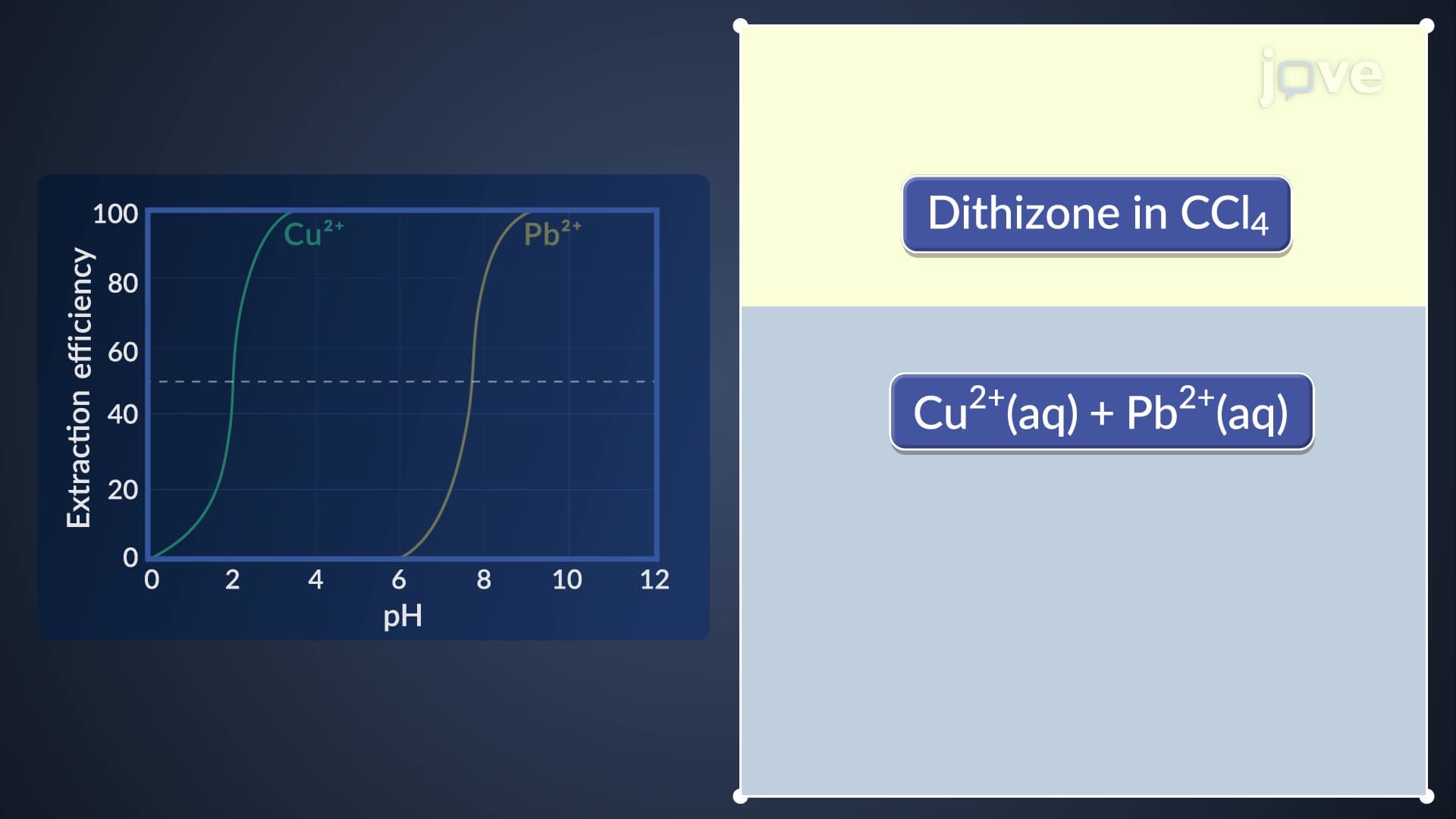
Electrodeposition in analytical chemistry excels at separating metals with different reduction potentials. Consider copper (Cu²⁺/Cu = +0.34 V) versus nickel (Ni²⁺/Ni = -0.25 V) separation. Under acidic conditions, copper deposits preferentially at the cathode due to its higher reduction potential, while nickel remains in solution. By subsequently adjusting the solution to basic conditions and applying appropriate voltage, nickel can then be deposited on the same electrode.
This sequential deposition strategy proves invaluable for analyzing metal alloys used in American manufacturing industries. Ford Motor Company, for instance, relies on such analytical techniques to ensure precise copper and nickel ratios in automotive electrical components. The controlled potential electrolysis method allows quality control laboratories to determine exact metal compositions, ensuring products meet stringent safety and performance standards.
Electrode material and geometry significantly influence deposition efficiency and accuracy. Platinum gauze electrodes dominate analytical applications due to their chemical inertness, high surface area, and excellent conductivity. The expanded surface area accelerates deposition rates while maintaining uniform metal distribution, crucial for accurate gravimetric analysis.
How electrodeposition is used in analysis extends beyond simple metal separation. Environmental laboratories across the United States employ electrodeposition to quantify heavy metal pollutants in drinking water supplies. The EPA mandates precise lead and copper measurements in municipal water systems, where electrodeposition provides the accuracy required for regulatory compliance. Students preparing for AP Chemistry exams frequently encounter electrodeposition problems involving calculation of deposited metal masses using Faraday's laws, connecting theoretical principles to practical analytical chemistry applications.
This fundamental technique bridges academic learning with professional practice, preparing students for careers in materials science, environmental monitoring, and quality control across America's diverse industrial landscape.
Related Micro-courses