Loading subject page…


389,001 views

Video Summary: Cell Potential and Free Energy Explained
Ever wondered how your smartphone battery "knows" when it's fully charged? The relationship between cell potential and free energy determines whether electrochemical reactions in lithium-ion batteries will occur spontaneously. In a zinc-copper galvanic cell used in educational labs across US high schools, the 1.10-volt cell potential directly correlates with the system's ability to perform electrical work, measured through Gibbs free energy changes of -212 kJ/mol. Watch the full video on JoVE Coach to master this concept with expert-led visuals and step-by-step explanations.
The connection between electrochemical cell potential and Gibbs free energy represents one of chemistry's most elegant thermodynamic relationships. When electrons flow through an external circuit in a galvanic cell, they perform electrical work that can be quantified through both voltage measurements and free energy calculations. This dual perspective provides chemists and engineers with powerful tools for predicting reaction spontaneity and calculating maximum work output.
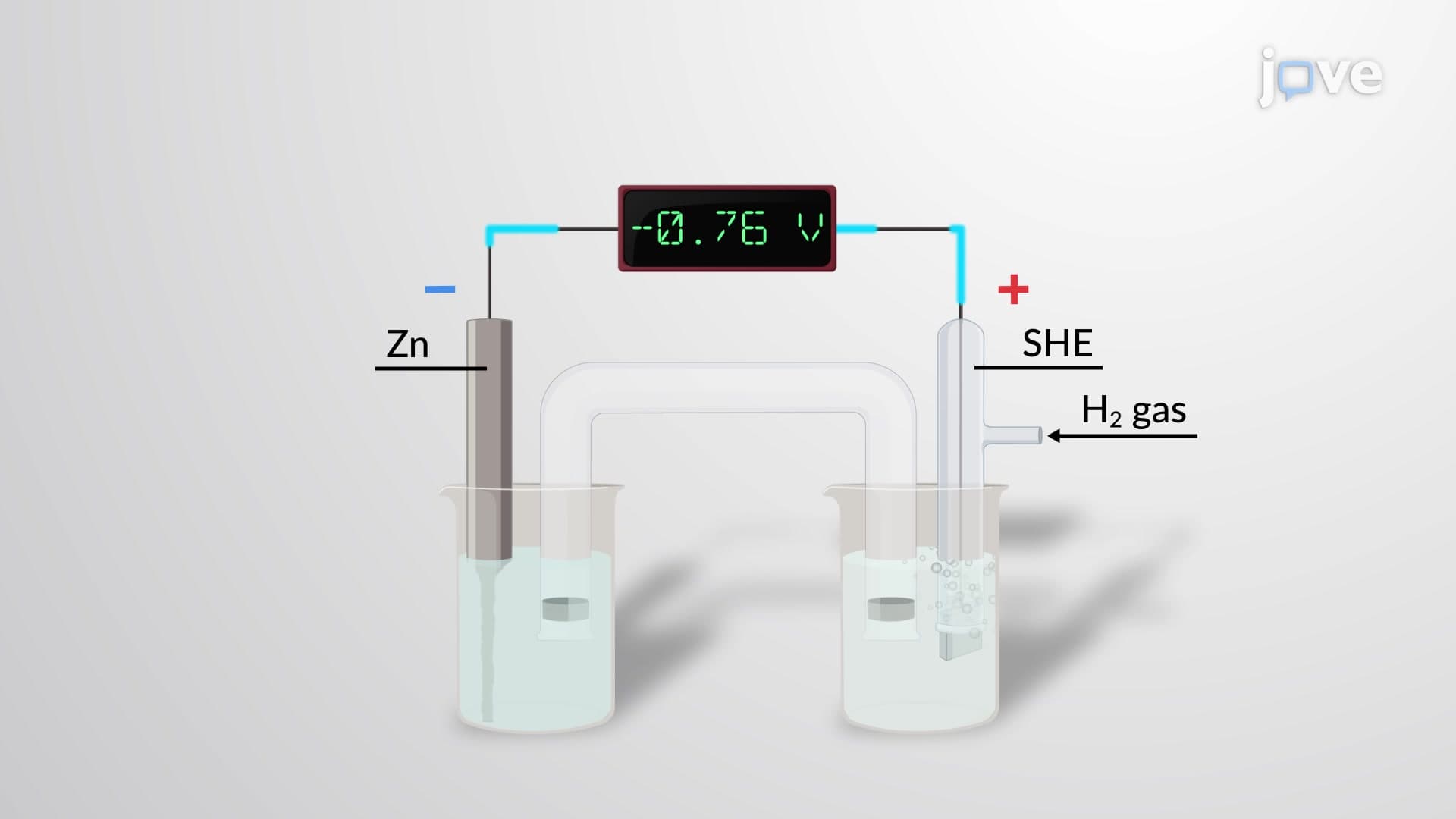
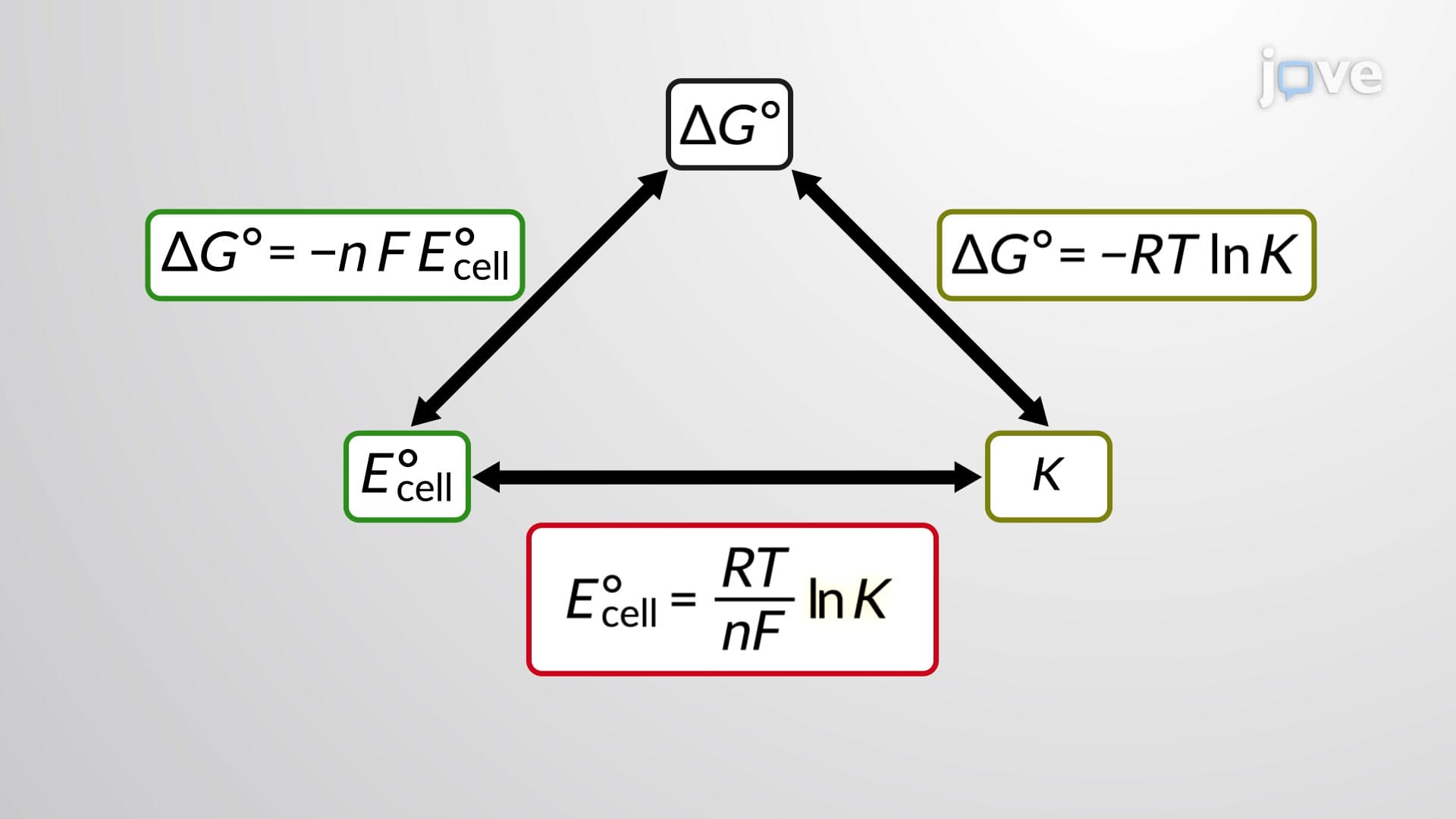
The fundamental equation ΔG° = -nFE° bridges electrochemistry and thermodynamics, where n represents moles of electrons transferred, F equals Faraday's constant (96,485 coulombs per mole), and E° denotes standard cell potential. For the zinc-copper system commonly studied in AP Chemistry courses, two electrons transfer during the reaction Zn(s) + Cu²⁺(aq) → Zn²⁺(aq) + Cu(s). With E° = 1.10 V, the free energy change equals -212 kJ/mol, confirming spontaneous reaction conditions.
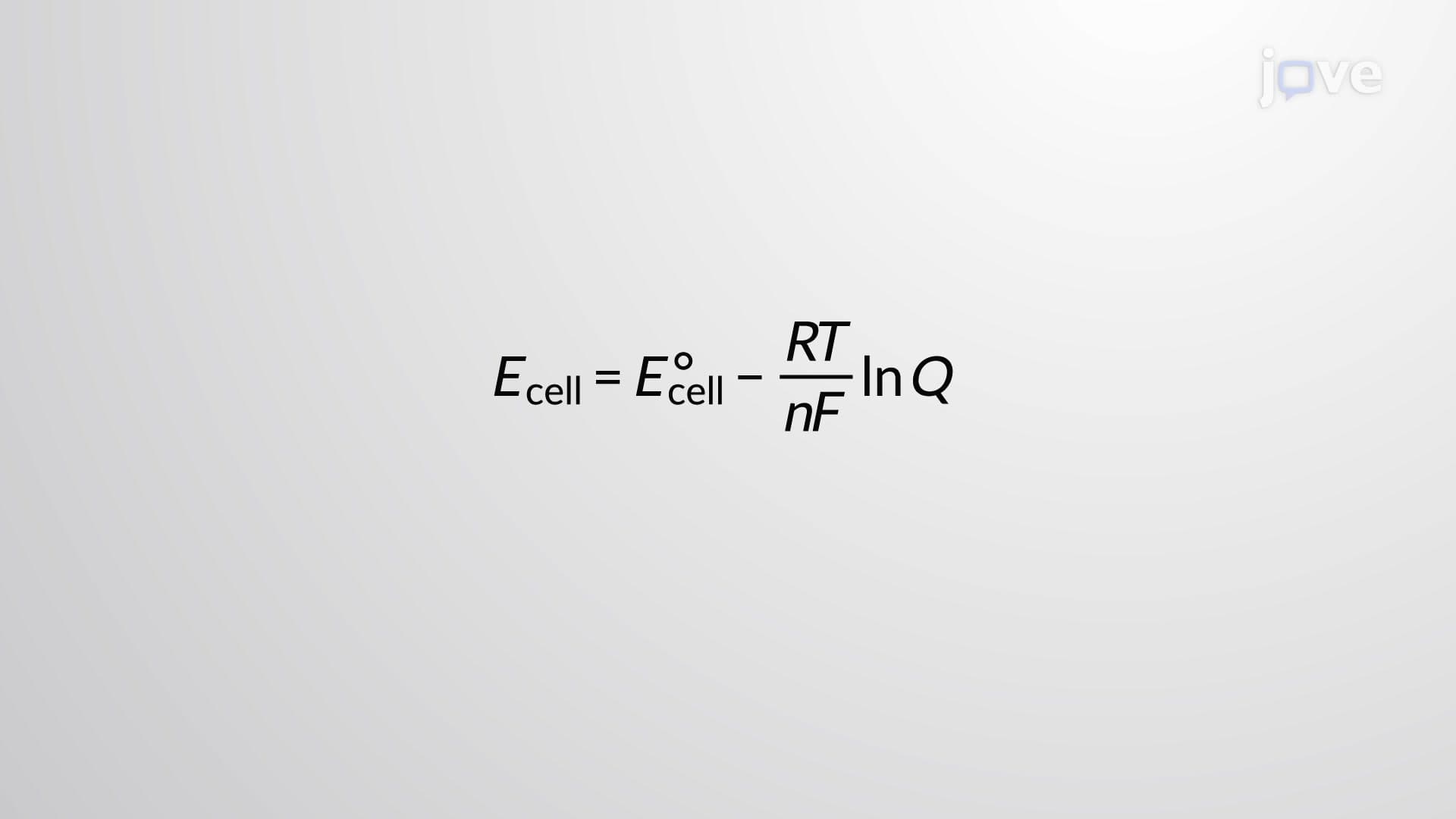
This relationship extends beyond simple calculations to predict equilibrium positions. The equation ΔG° = -RT ln(K) connects free energy to equilibrium constants, while E° = (RT/nF) ln(K) directly relates cell potential to reaction equilibrium. These interconnected relationships frequently appear on MCAT examinations and college physical chemistry exams.
US battery manufacturers rely on these thermodynamic principles when designing lithium-ion cells for electric vehicles. Tesla's battery packs, for example, optimize cell potential and free energy relationships to maximize energy density while ensuring safety. Similarly, corrosion engineers at companies like ExxonMobil use electrochemical thermodynamics to predict and prevent pipeline degradation in harsh environments.
Students preparing for standardized exams should master unit conversions between joules, kilojoules, and electron-volts when working cell potential problems. The SAT Subject Test in Chemistry and AP Chemistry frequently test these concepts through multi-step calculations involving Faraday's constant. Practice problems typically require determining spontaneity from cell potential measurements, calculating maximum work output, and connecting electrochemical data to equilibrium expressions. Understanding sign conventions proves crucial-negative free energy values indicate spontaneous processes, while positive cell potentials suggest favorable electron flow conditions.
Related Micro-courses