Loading video…


 10 Concepts
 389K views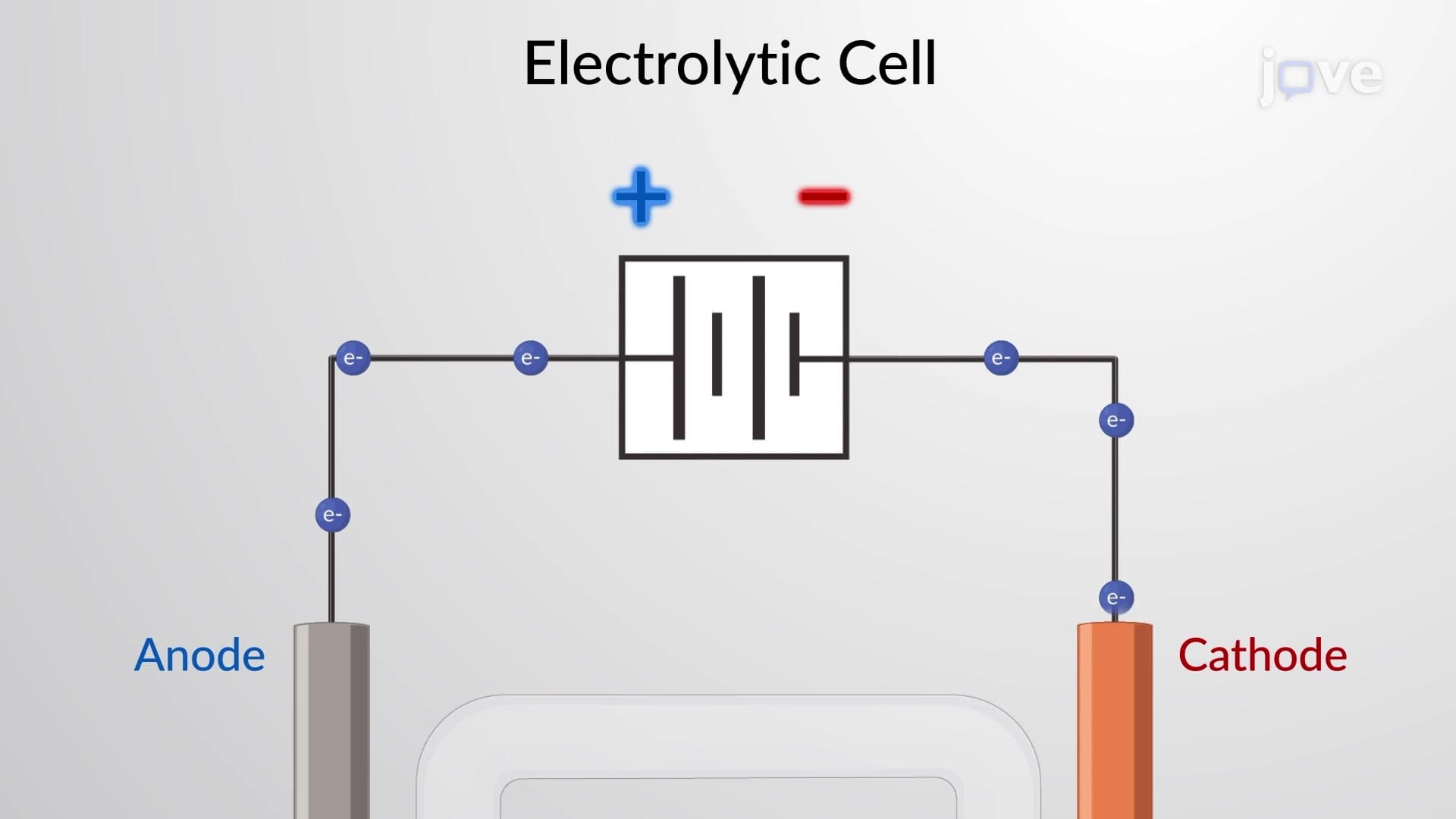

Video Summary: What Is Electrolysis
Ever wonder how your smartphone's lithium-ion battery gets recharged or how aluminum is extracted from bauxite ore? Electrolysis powers these everyday processes by using electrical energy to drive chemical reactions that wouldn't happen naturally. Unlike batteries that generate electricity from chemical reactions, electrolysis reverses this process-external electrical power forces ions to break apart and form new substances. From electroplating jewelry in manufacturing facilities across the US to producing chlorine gas for water treatment plants, electrolysis is essential to modern industry. Watch the full video on JoVE Coach to master this concept with expert-led visuals and step-by-step explanations.
Electrolysis represents one of chemistry's most powerful tools for driving nonspontaneous chemical reactions using electrical energy. While voltaic cells convert chemical energy into electricity spontaneously, electrolysis reverses this process-external electrical power forces chemical reactions that would never occur naturally. This fundamental principle underlies countless industrial processes, from the production of aluminum metal to the purification of copper used in electrical wiring throughout American homes and businesses.
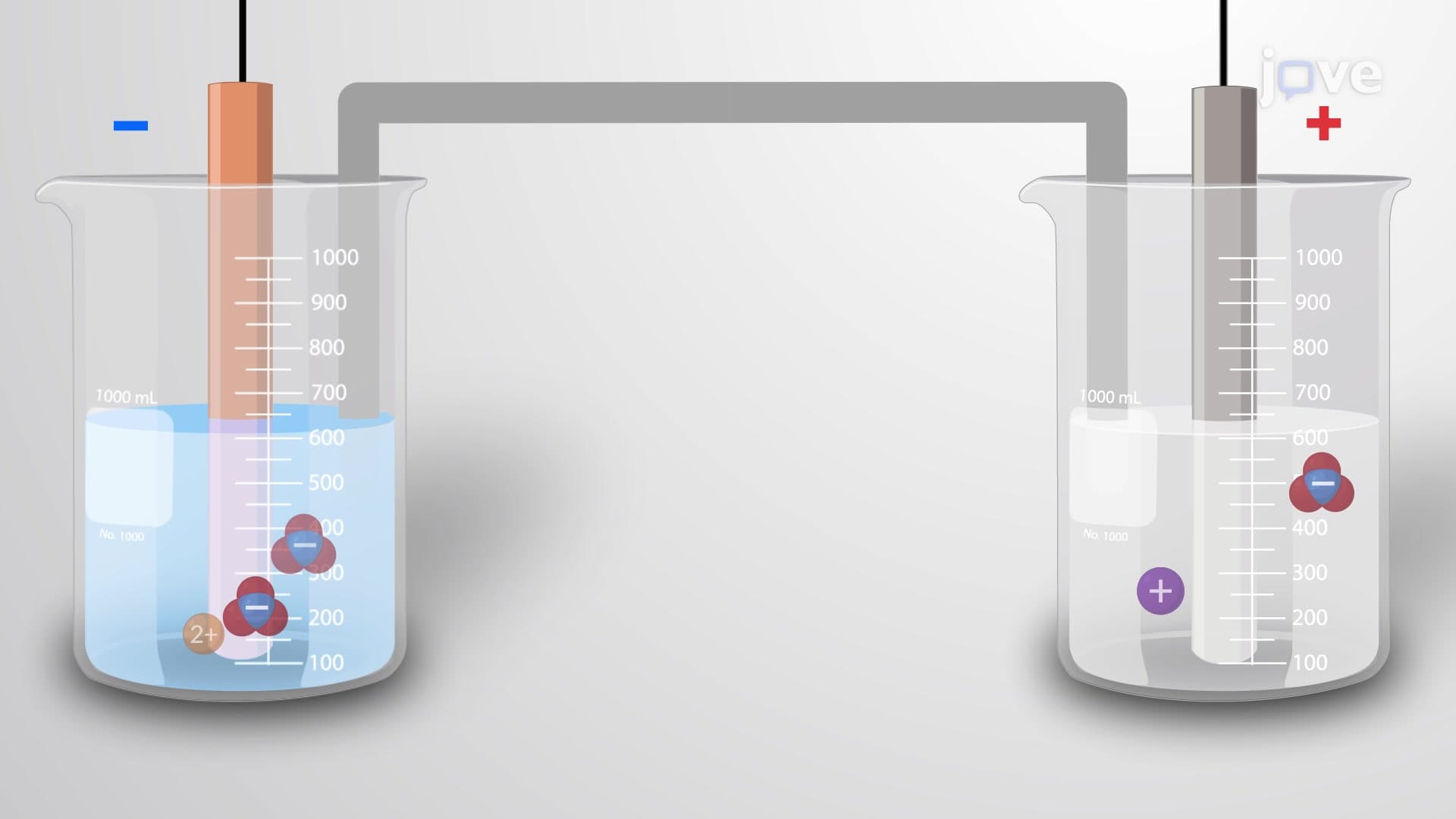
The process requires an electrolytic cell containing an electrolyte (molten ionic compound or aqueous solution), two electrodes (anode and cathode), and an external power source like a battery or DC power supply. Unlike voltaic cells where chemical reactions generate electron flow, electrolytic cells use externally supplied electrons to drive chemical transformations.
In electrolytic cells, the anode connects to the positive terminal of the external power source and serves as the site of oxidation reactions. The cathode connects to the negative terminal and facilitates reduction reactions. This setup forces electrons to flow from the external source through the circuit, creating conditions where thermodynamically unfavorable reactions become possible.
Consider the electrolysis of molten sodium chloride, a process used industrially to produce both sodium metal and chlorine gas. At the anode, chloride ions lose electrons to form chlorine gas (2Cl⁻ → Cl₂ + 2e⁻), while at the cathode, sodium ions gain electrons to form metallic sodium (Na⁺ + e⁻ → Na). This process requires significant energy input because sodium readily oxidizes in air-the reverse reaction occurs spontaneously.
When multiple ions exist in solution, standard reduction potentials help predict which species will react preferentially. Generally, the species with the most negative (least positive) reduction potential will be oxidized at the anode, while the species with the most positive reduction potential will be reduced at the cathode.
Aqueous electrolysis adds complexity because water itself can undergo oxidation (2H₂O → O₂ + 4H⁺ + 4e⁻) or reduction (2H₂O + 2e⁻ → H₂ + 2OH⁻). For AP Chemistry students, this concept frequently appears in free-response questions requiring analysis of competing electrode reactions and product predictions based on standard potentials.
Electrolysis follows precise quantitative relationships described by Faraday's laws. The amount of chemical change directly relates to the quantity of electrical charge passed through the cell. One mole of electrons (96,485 coulombs, called one faraday) produces one equivalent of chemical change. For MCAT preparation, students must master calculations involving current, time, and molar relationships to predict product yields in electrolytic processes.
Related Micro-courses