Loading subject page…


18,577 views

Video Summary: Normal Strain Under Axial Loading Explained
When the Golden Gate Bridge expands by several inches during hot summer days, engineers rely on understanding normal strain under axial loading to ensure structural safety. Normal Strain Under Axial Loading Explained demonstrates how materials deform predictably when pulled or compressed, using the fundamental relationship between applied force and material elongation. From skyscraper construction in New York City to aerospace components manufactured by Boeing, this dimensionless ratio of deformation helps engineers design structures that won't fail under real-world stresses. Watch the full video on JoVE Coach to master this concept with expert-led visuals and step-by-step explanations.
Normal strain represents one of the most fundamental concepts in mechanics of materials, describing how objects deform when subjected to forces along their primary axis. Unlike absolute measurements of deformation, strain provides a normalized measure that allows engineers to compare material behavior regardless of specimen size. When the Statue of Liberty's copper exterior expands during temperature changes or when steel cables in suspension bridges stretch under traffic loads, these phenomena follow predictable strain relationships.
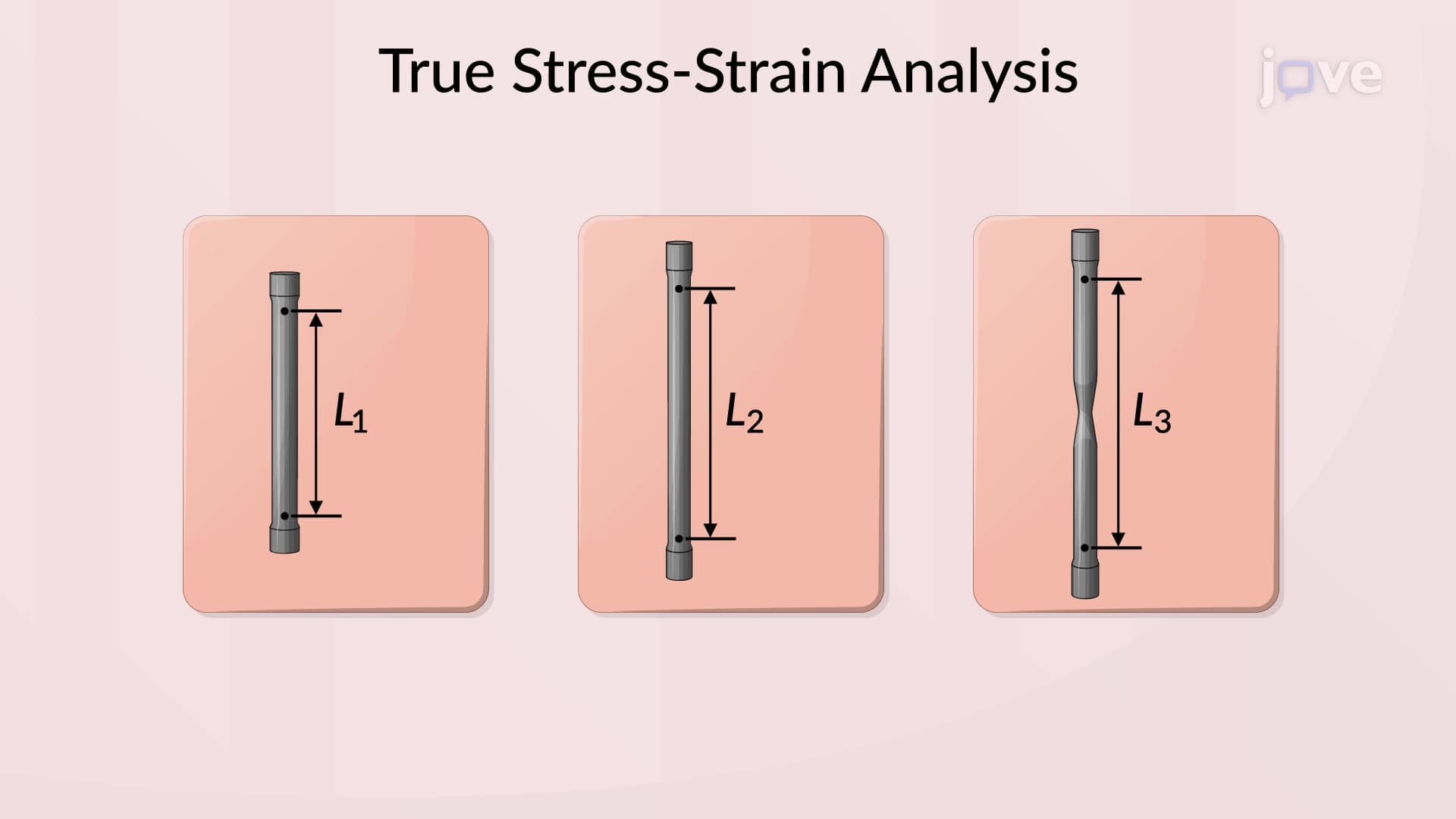
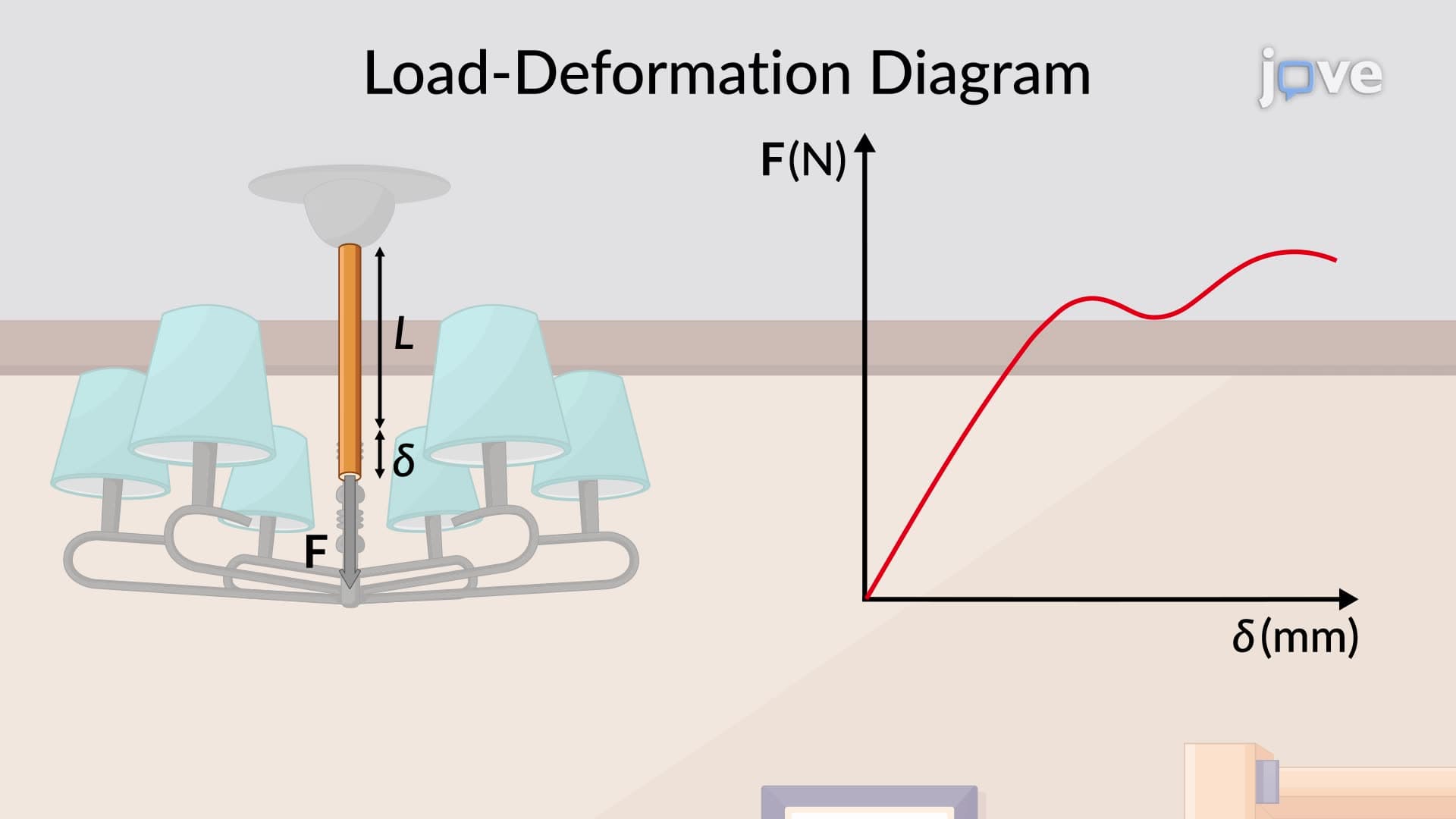
The mathematical expression for normal strain (ε = ΔL/L₀) reveals its elegance: the change in length divided by the original length creates a dimensionless ratio. This ratio proves invaluable because it eliminates size effects, allowing engineers to predict how a massive bridge girder will behave based on laboratory tests of small specimens.
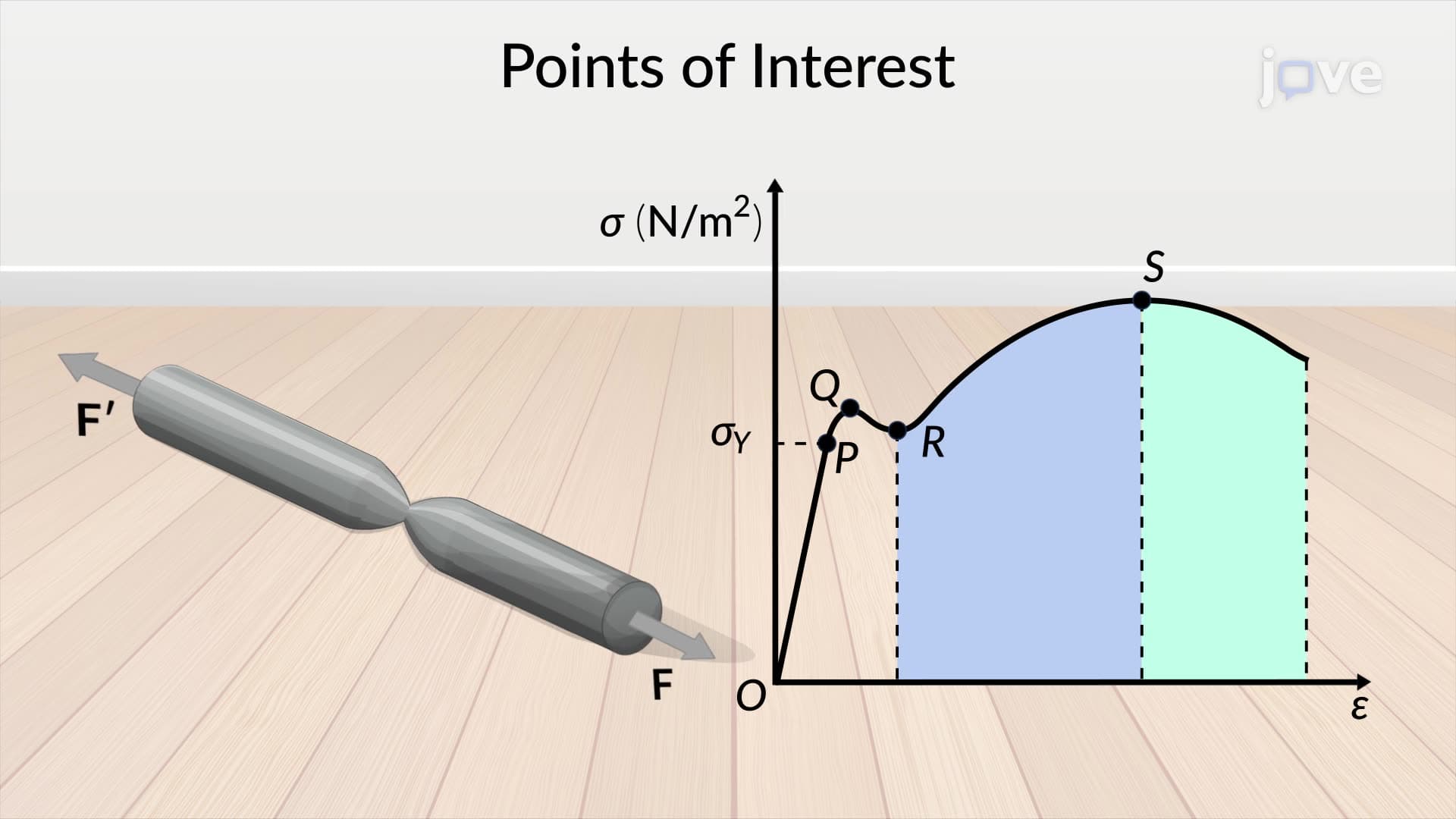
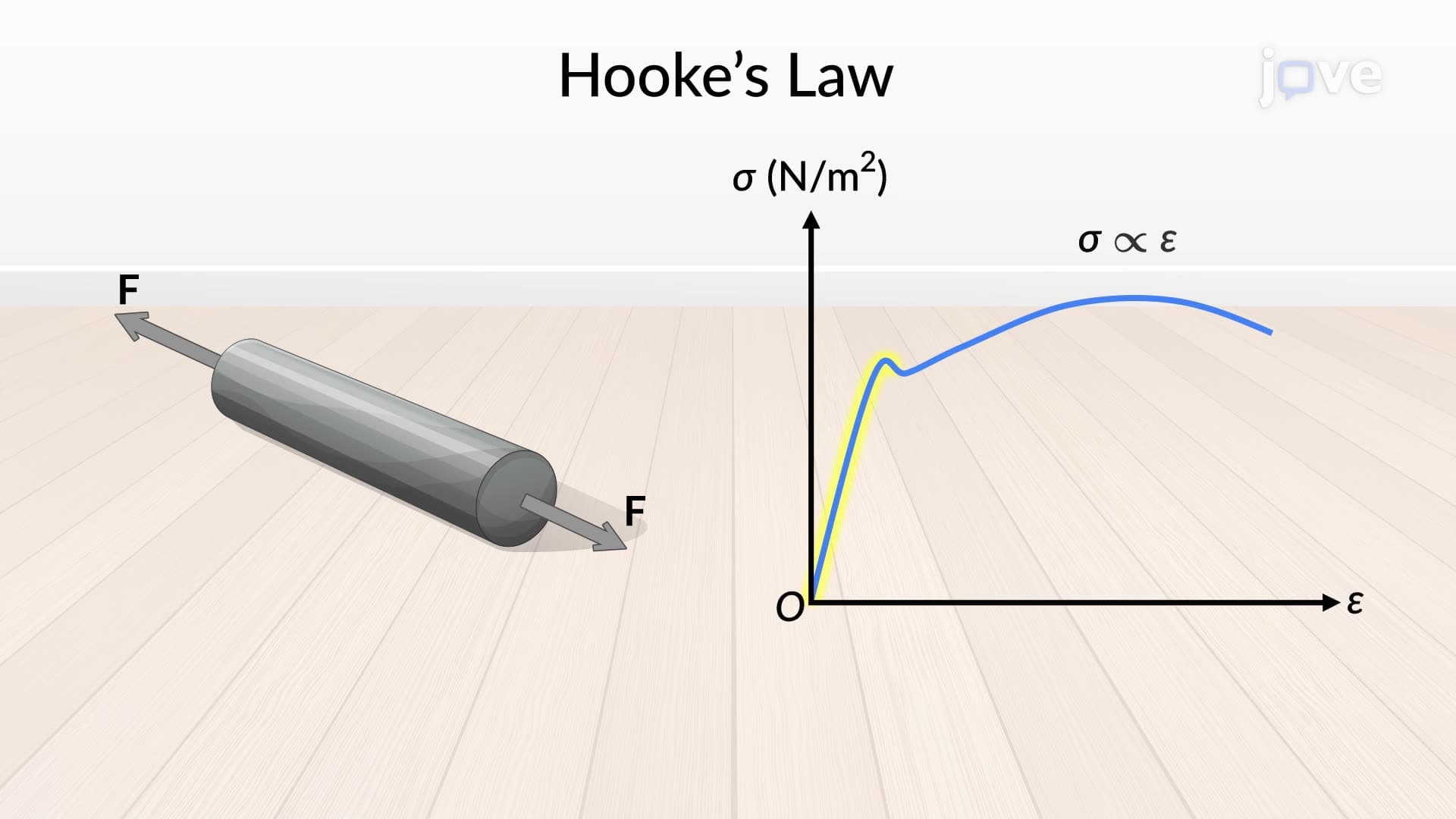
The relationship between stress and strain defines material behavior through Young's modulus (E = σ/ε), a property that quantifies material stiffness. Steel typically exhibits a Young's modulus around 200 GPa, while aluminum shows approximately 70 GPa, explaining why steel structures require smaller cross-sections for equivalent strength applications.
Consider the construction of One World Trade Center in New York: engineers calculated strain distributions throughout the building's steel framework to ensure each component could handle wind loads, seismic forces, and thermal expansion without exceeding safe deformation limits. These calculations directly apply normal strain principles learned in introductory mechanics courses.
American infrastructure projects regularly demonstrate normal strain principles. The expansion joints on Interstate highways accommodate thermal strain, while earthquake-resistant buildings in California incorporate flexible elements that can strain significantly without structural failure. Boeing's aircraft design process extensively uses strain analysis to optimize wing structures that must flex during flight while maintaining structural integrity.
Students preparing for AP Physics C: Mechanics, MCAT physics sections, or undergraduate mechanics of materials courses encounter normal strain problems requiring both conceptual understanding and quantitative analysis. Typical exam questions involve calculating strain in composite materials, determining safety factors for structural elements, or analyzing failure modes in engineering systems. Graduate school entrance exams, including the Fundamentals of Engineering (FE) exam required for professional engineering licensure, frequently test these concepts through practical problem-solving scenarios.
Related Micro-courses